
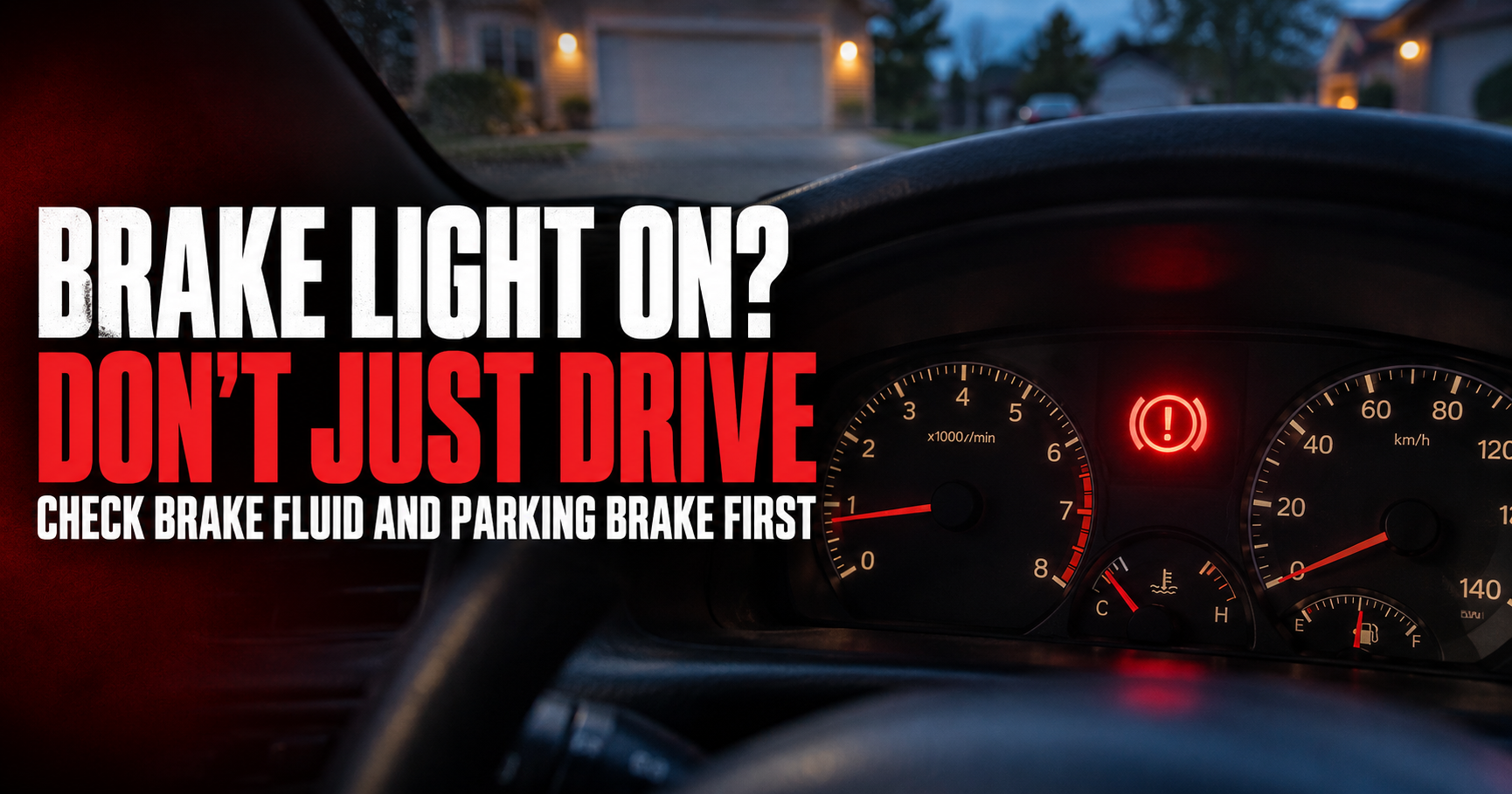
A red BRAKE light comes on while you are driving. You glance at the parking brake control, but it looks released. The car might still seem to stop normally, which makes the warning easy to second-guess.
Check the parking brake first, because the same warning may come on when it is engaged. If the red light stays on after the parking brake is fully released, treat it as a brake system warning. Depending on the vehicle, it may indicate low brake fluid, a hydraulic problem, or another fault. The dashboard light cannot tell you which repair the car needs. You can compare this symptom with other brake warning sign guides when the dashboard message is unclear.
If the warning appeared while driving, slow down smoothly and find a safe place to stop. If the pedal feels different, the car takes longer to stop, or the red light remains on, arrange for the braking system to be checked before continuing your trip.
What the Red BRAKE Light Usually Means
The red brake warning light often serves more than one purpose. It can remind you that the parking brake is applied, but it can also alert you to a problem involving the regular brakes.
The symbol varies. Some dashboards display BRAKE in red letters. Others show an exclamation point inside a circle or a message about the brake system. Your owner’s manual identifies the meaning of the warning on your particular car.
That is why I would start with two questions: Is the parking brake fully released, and does the brake pedal feel normal? If the answer to either is uncertain, stop somewhere safe and check before driving farther.
A light that stays on after the parking brake is released should not be treated as a harmless reminder just because the car made its last stop.


Check the Parking Brake First
Once you have stopped safely, look at the parking brake control. A lever may be slightly raised. A pedal-operated parking brake may not have released fully. On a vehicle with an electronic parking brake, check the indicator and the message shown on the dash.
Release the parking brake according to your owner’s manual and see whether the warning goes out. Do not repeatedly force a control that will not move or continue driving if the car feels held back.
If the red light goes out and the vehicle brakes normally, the parking brake may have been the reason it appeared. If the light remains on, comes back while driving, or the car has another braking symptom, arrange an inspection.
A parking brake control can also appear released even when a component does not release properly at the wheel. A burning smell or a car that feels reluctant to move is another reason to stop and have it checked.
Low Brake Fluid Is More Than a Dashboard Detail
Some vehicles turn on the red brake warning light when the brake fluid level drops too low. Brake fluid is part of the hydraulic system that applies the brakes when you press the pedal.
The level can change as brake parts wear, but a leak is another possibility. You cannot tell the cause from the light alone. If you see fluid near a wheel or beneath the car, or the pedal feels soft or travels farther than it used to, do not continue driving.
Topping off the reservoir without finding out why the level fell can hide a problem temporarily. A shop needs to check the fluid level, inspect for leaks, and examine brake wear.
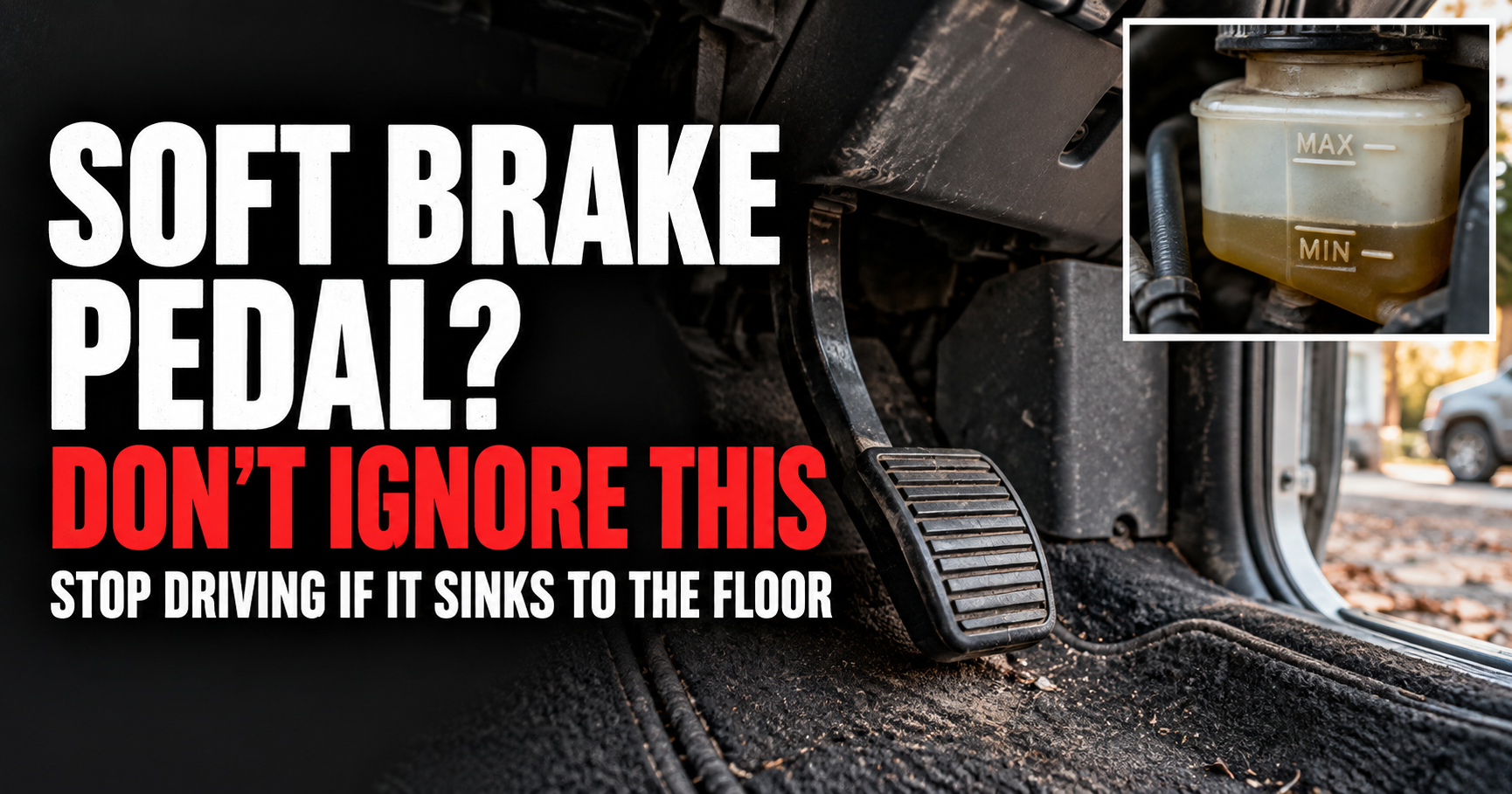
Our guide to what a soft brake pedal can mean covers the pedal changes that make a brake warning especially urgent.
The Light Is On but the Brakes Feel Normal
This is the situation that tempts drivers to keep going. A warning appears, yet the car stops at the next intersection as expected.
A normal-feeling stop does not identify why the light is on or guarantee the system will behave the same way under a hard stop. Pull over safely, verify that the parking brake is released, and check your owner’s manual for that warning. If the red brake system warning stays on, contact a repair shop or roadside assistance about getting the car inspected.
Tell them whether you saw the light at startup or it appeared after you had been driving. Mention any recent brake work and whether another warning light came on at the same time.
Do not plan a long drive around a persistent red brake warning simply because you have not noticed a pedal change yet.
The Light Appeared While You Were Driving
A warning that comes on partway through a trip deserves particular attention. Ease off the accelerator, leave more room around your car, and head for a safe place to stop. Avoid sudden braking unless traffic demands it.
Pay attention to whether the pedal suddenly goes lower, takes more force, pulses, or fails to slow the car as expected. These details can help you describe the problem once you have stopped. Your first job is to get the vehicle out of traffic safely.
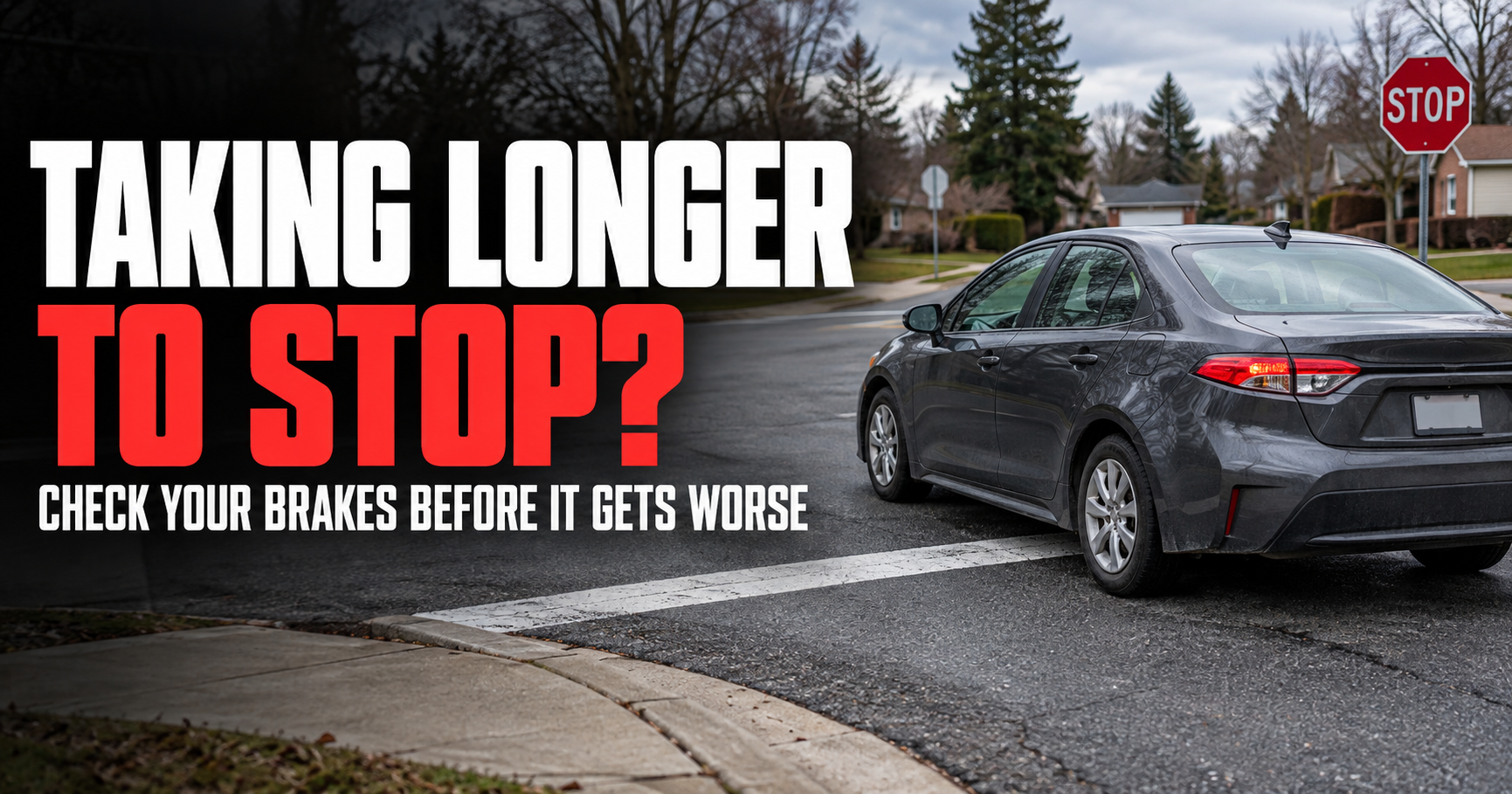
If the red light remains on after you have checked the parking brake, do not continue a normal trip. Arrange professional advice and, if braking has changed, a tow. Our guide to a car taking longer to stop explains why a change in stopping performance needs its own inspection.
Red BRAKE Light Versus Yellow ABS Light
The red BRAKE warning and the yellow or amber ABS warning are not interchangeable. The red warning may relate to the parking brake or the regular braking system. The ABS light points toward a problem with the antilock braking system, although the exact warning behavior depends on the vehicle.
A car with an ABS fault may still have conventional braking, but you should not assume ABS will be available if the system has reported a problem. Follow the owner’s manual and arrange diagnosis.
If both the red brake light and ABS light appear, take the combination seriously. Depending on the vehicle and fault, more than one braking function may be affected. Stop safely and arrange an inspection rather than guessing that one light explains the other.
Tell the shop which lights appeared and whether they stayed on. A photo of the dashboard taken while the car is parkedcan help preserve the exact warning or message.

What If the Red Light Flashes?
A flashing light can mean something different from a steady light on some vehicles. Electronic parking brake systems may also display messages or flashing indicators when the brake cannot apply or release as expected.
The owner’s manual is the best place to identify the meaning of the flash pattern for your car. Do not assume it is less serious because the light is not continuously on.
If the warning flashes while driving or comes with a change in braking, stop safely and seek help. If it happens while you are parked, do not set out until you understand whether the parking brake has released and the regular brakes respond normally.
Could Worn Brake Pads Turn the Light On?
Worn pads need attention, but the answer depends on what warning your vehicle is displaying. Some cars have a separate brake pad wear message or indicator. The red BRAKE light may be tied to fluid level or another brake system condition instead.
As pads wear, the fluid level in the reservoir can change. That does not mean you should order pads based only on the dashboard light. A mechanic should measure pad thickness, inspect the rotors and calipers, and check for leaks before recommending work.

If you also hear squealing or grinding, tell the shop. Our article on what different braking noises can mean will help you describe the sound, but the warning light and noise both need to be considered during the inspection.
Why the Light May Come On During Turns or Stops
If the light appears briefly when you turn a corner or brake, then disappears, write down that pattern. A fluid level close to a warning threshold is one possible reason a level sensor could report a change as the fluid moves, but the behavior does not prove that is the cause.
A loose electrical connection or another intermittent fault is also possible. Because the warning concerns the braking system, arrange an inspection even if it is not on continuously.
Tell the mechanic whether the light appears on left turns, right turns, hills, or while braking. Mention whether the pedal feel changes at the same time. A repeatable pattern gives the shop something specific to investigate.
Do not make extra turns or stops solely to trigger the warning again.
What If It Started After Brake Service?
Call the shop that performed the work and describe the warning. Tell them what was replaced, when the light first appeared, and whether braking feels different.
The warning could be related to the recent work or to another issue that appeared around the same time. The invoice gives the technician a useful record of which parts were serviced. Ask the shop to check the warning and explain the finding rather than assuming it only needs a reset.
If the red light is on and the pedal is low, soft, or otherwise changed, arrange a tow. Do not drive back to the shop just because the work was done there.

Can You Check the Brake Fluid Yourself?
Many vehicles have a translucent brake fluid reservoir with level markings that you can inspect while the car is safely parked. Your owner’s manual can help you locate it.
You can report whether the level appears below the marked range, but leave the diagnosis to the inspection. A full-looking reservoir does not rule out every brake system problem, and a low-looking reservoir does not tell you whether the cause is wear or a leak.
Do not open the reservoir unnecessarily or add fluid based on a guess. Using the wrong fluid or introducing contamination can create another problem, while adding fluid will not repair a leaking line or failed component.
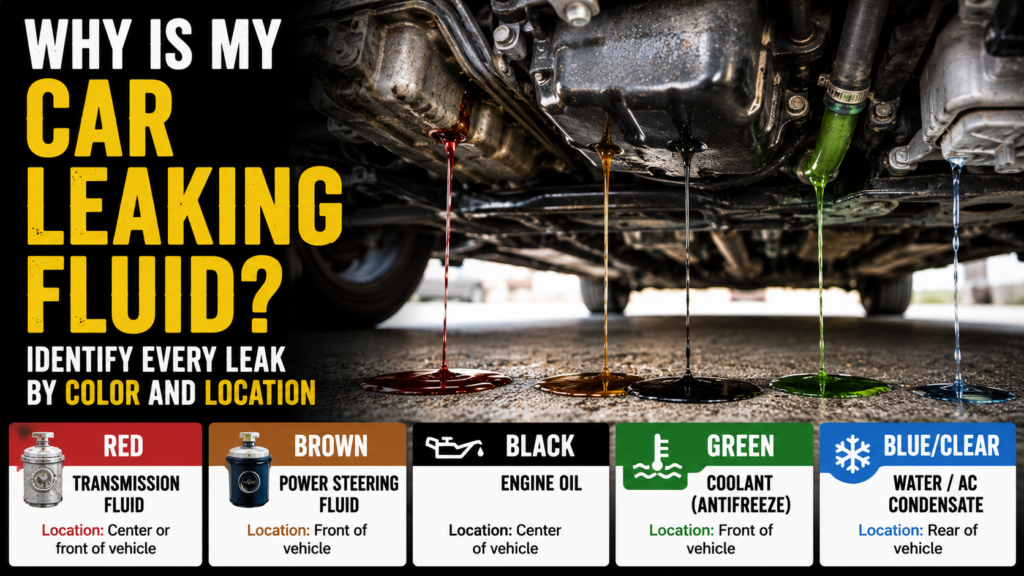
If you have also noticed a spot under the car, our guide to identifying car fluid leaks may help you describe its location to the shop. Do not touch an unknown fluid to identify it.
What Other Symptoms Should You Mention?
The warning light is only part of the picture. Tell the shop if the car pulls when you brake, the pedal pulses, the steering wheel shakes, the brakes smell hot, or the vehicle takes more distance to stop.
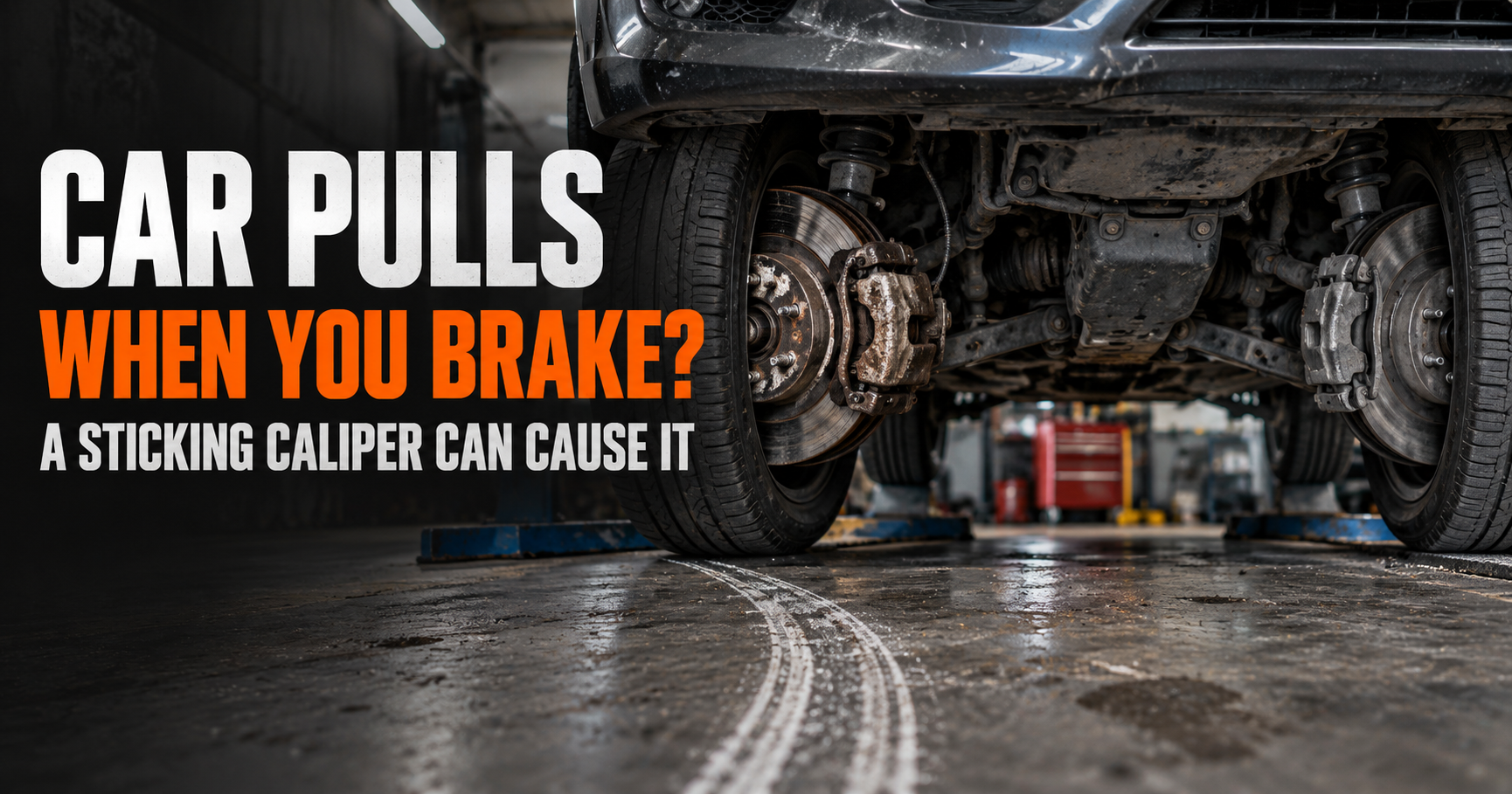
A pull while braking may indicate uneven braking or another issue affecting the tires and steering. Our guide to why a car pulls to one side during braking explains the details worth noting.
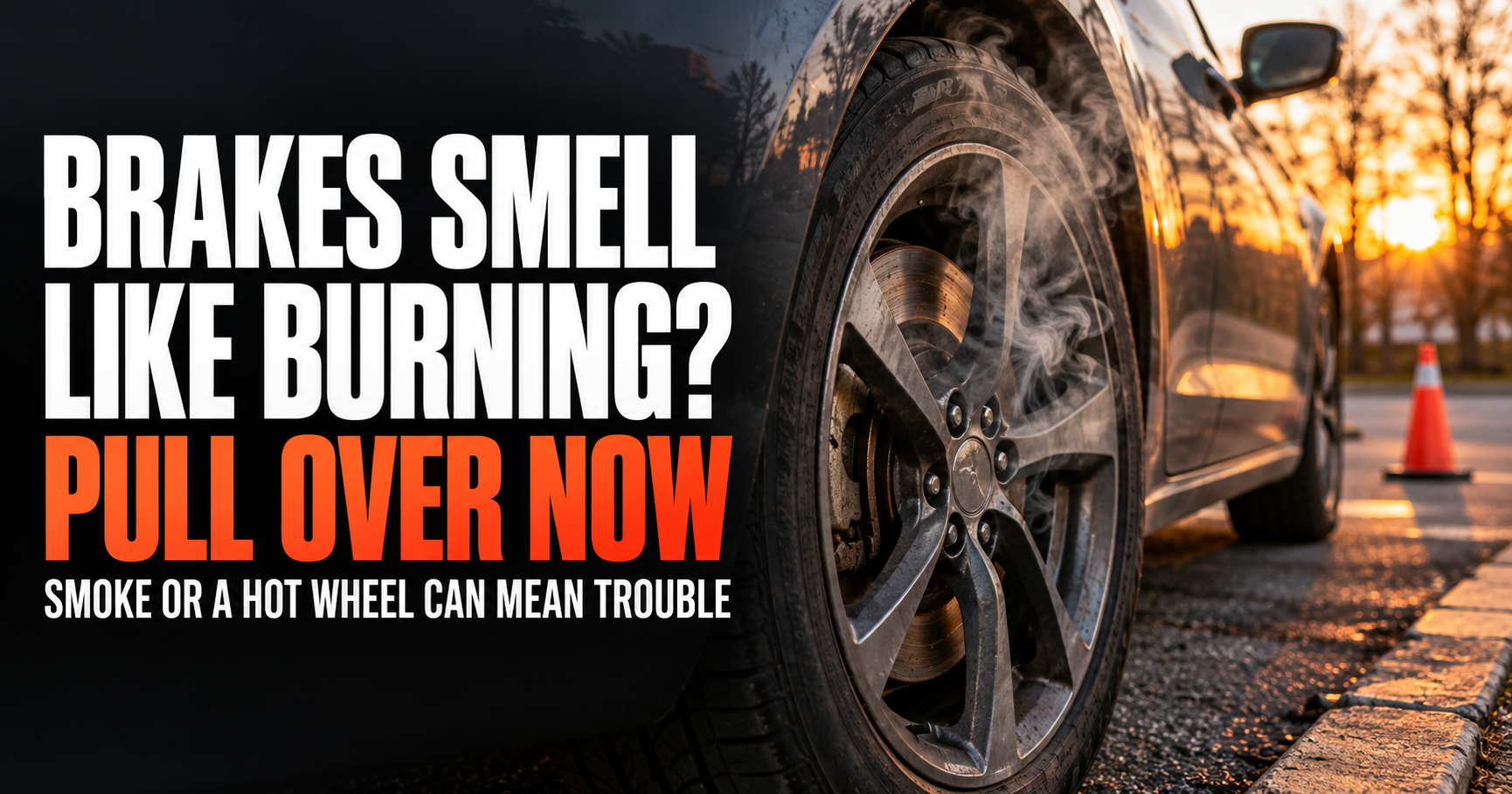
A strong burning smell can indicate a brake that has overheated or is dragging. If that happened with the warning light, read our guide to brakes that smell like burning and arrange an inspection before using the car again.
Even if these symptoms happened on different trips, mention them together. The shop needs to know the full history rather than diagnosing the dashboard light in isolation.
What a Repair Shop Should Confirm
A useful diagnosis starts with the exact warning, its timing, and how the car brakes. A technician can check the parking brake indication, fluid level, evidence of leaks, brake wear, and the fault information available on your vehicle.
The right checks vary by model. A shop may need to inspect the regular hydraulic brakes, parking brake components, or electronic systems. A stored code, if present, is a clue to investigate rather than an automatic instruction to replace the named part.
Ask what turned the light on and what finding confirms the recommended repair. If you are told the fluid was low, ask why it became low. If the parking brake switch or another electrical component is blamed, ask how the shop ruled out a brake system fault.
After the work, the warning should be off under the conditions where it previously appeared, and the car should brake normally. Report it promptly if the light returns.
When to Arrange a Tow
Arrange a tow if the brake pedal sinks or feels unusually soft, you must push much harder to stop, the car takes noticeably longer to slow, or you see evidence of a fluid leak. A red brake warning that remains on along with an ABS warning also calls for prompt professional guidance before driving.
If you are already on the road, focus on getting to a safe stopping place. You do not need to diagnose the warning on the shoulder. Once parked, check the parking brake control and contact a repair shop or roadside assistance.
A brake warning is a poor place to gamble on “it will probably make it home.” The cost of a tow is easier to manage than an unpredictable stop.
Questions About the Brake Warning Light
Why is my brake light on when the parking brake is off?
The red dashboard warning may indicate low brake fluid or another brake system problem. Confirm that the parking brake is fully released, then have a persistent warning inspected. Check your owner’s manual for the meaning on your vehicle.
Can I drive with the red brake warning light on?
If it stays on after the parking brake is released, do not treat it as a normal driving condition. Stop safely and arrange professional guidance. If braking feels different or another brake warning appears, arrange a tow.
Is the BRAKE light the same as the ABS light?
No. They are different warnings. ABS relates to the antilock braking system, while the red brake warning can indicate the parking brake or a problem with the regular brake system. If both appear, have the car checked promptly.
Why does the light go off when I restart the car?
An intermittent warning still deserves attention. Note when it came on, any messages shown, and whether the pedal or stopping distance changed. Restarting the vehicle does not establish that the underlying problem is fixed.
Will adding brake fluid turn the light off?
It might affect a low-fluid warning, but it will not explain why the level dropped or repair a leak. Have the cause inspected before assuming the car is safe to drive.
By Dana Callahan, an automotive troubleshooting writer for Why Is My Car. Dana’s guides help drivers connect warning lights with the changes they can observe, recognize when to stop driving, and ask what a repair shop found before approving work.

