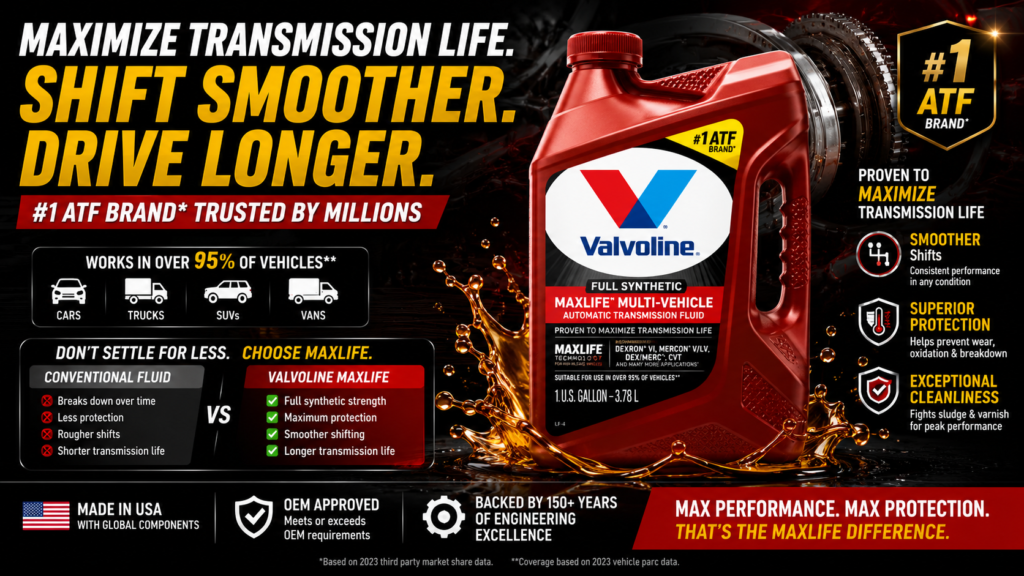
Valvoline MaxLife Multi-Vehicle ATF is engineered for high-mileage transmissions — conditions seals, restores smooth shifting, and resists heat. Here’s what you need to know.
Transmission fluid is the lifeblood of your automatic transmission — and it’s one of the most neglected fluids in most vehicles. By the time a transmission starts slipping, shuddering, or struggling to shift, the damage from old degraded fluid has often already been done. Valvoline MaxLife Multi-Vehicle ATF is one of the best transmission fluids available for high-mileage vehicles — and keeping fresh fluid in your transmission is far cheaper than replacing one.
Automatic transmission replacement runs $2,000–$5,000 or more depending on the vehicle. A transmission fluid service costs $100–$200 at a shop, or the cost of a gallon of fluid if you do it yourself. The math on regular fluid maintenance is extremely clear.
What Makes MaxLife ATF Different for High-Mileage Vehicles
Seal Conditioners
High-mileage transmissions develop hardened and shrunken seals over time — a natural consequence of heat cycles and age. These hardened seals leak and allow fluid to bypass where it shouldn’t. MaxLife ATF contains seal conditioning additives that soften and recondition aging seals, reducing or eliminating minor seepage that would otherwise get worse over time.
Enhanced Friction Durability
Automatic transmissions shift gears using clutch packs — stacks of friction discs that engage and disengage under hydraulic pressure. The ATF itself lubricates these clutches and must maintain precise friction characteristics to produce smooth, consistent shifts. As fluid degrades, those characteristics break down, causing shuddering, harsh shifting, or delayed engagement. MaxLife maintains friction performance longer than conventional ATF.
Thermal Stability
Transmission fluid operates under extreme heat — especially in towing, stop-and-go driving, and performance applications. Fluid that breaks down under heat loses viscosity and lubrication properties, accelerating internal wear. The full synthetic formulation in MaxLife resists thermal breakdown significantly better than conventional ATF.
Signs Your Transmission Fluid Needs Changing
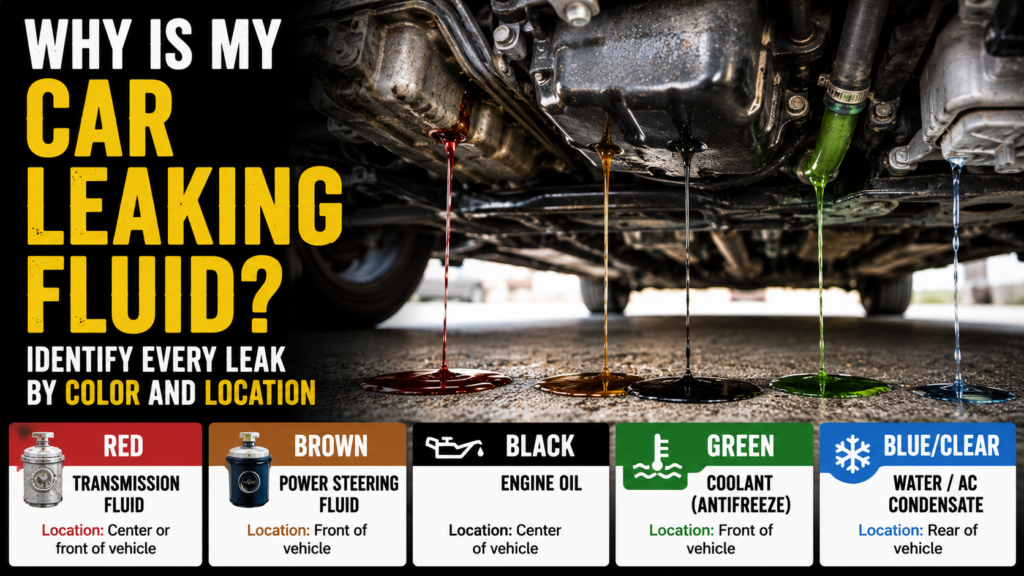
Dark or burnt-smelling fluid: Healthy ATF is red or light pink and has a slightly sweet smell. Dark brown or black fluid with a burnt odor is severely degraded and needs immediate replacement. If you also find fluid on the ground, Why Is My Car Leaking Fluid? Identify Every Leak by Color and Location explains how transmission-fluid color and location help identify the problem.
Delayed or harsh shifting: Sluggish engagement when shifting from park to drive, harsh shifts between gears, or momentary slipping between shifts all point to degraded fluid.
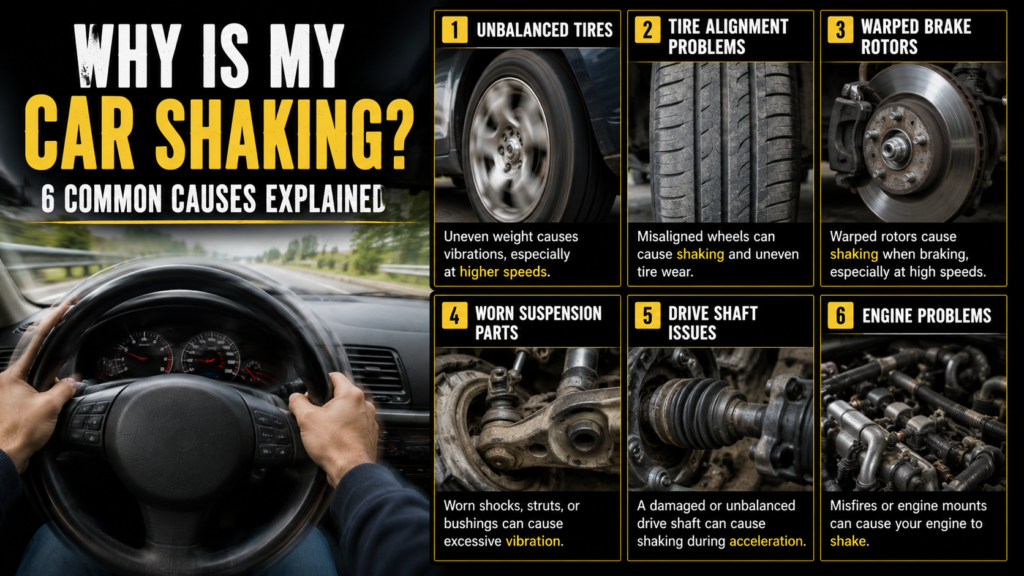
Shuddering during acceleration: A torque converter shudder — a vibration or shaking sensation during light throttle acceleration at highway speeds — is a classic symptom of ATF that has lost its friction modifiers. If the vibration has other timing or handling clues, compare them with why your car is shaking before assuming the transmission fluid is the cause.
Transmission running hot: Some vehicles with transmission temperature displays show elevated temps when fluid is old and degraded. More heat means faster fluid breakdown — a cycle that accelerates damage rapidly.

How to Check Your Transmission Fluid
Many modern vehicles have a sealed transmission with no dipstick — fluid level must be checked by a shop using a specific procedure. But many older and domestic vehicles still have a dipstick, typically located toward the rear of the engine bay with a red handle.
With the engine warmed up and running, in park on level ground, pull the dipstick, wipe it clean, reinsert fully, and pull again. The level should be in the HOT range. Note the color and smell — this tells you more than the level alone.
See Valvoline MaxLife ATF on Amazon →
Frequently Asked Questions
Is this compatible with my vehicle?
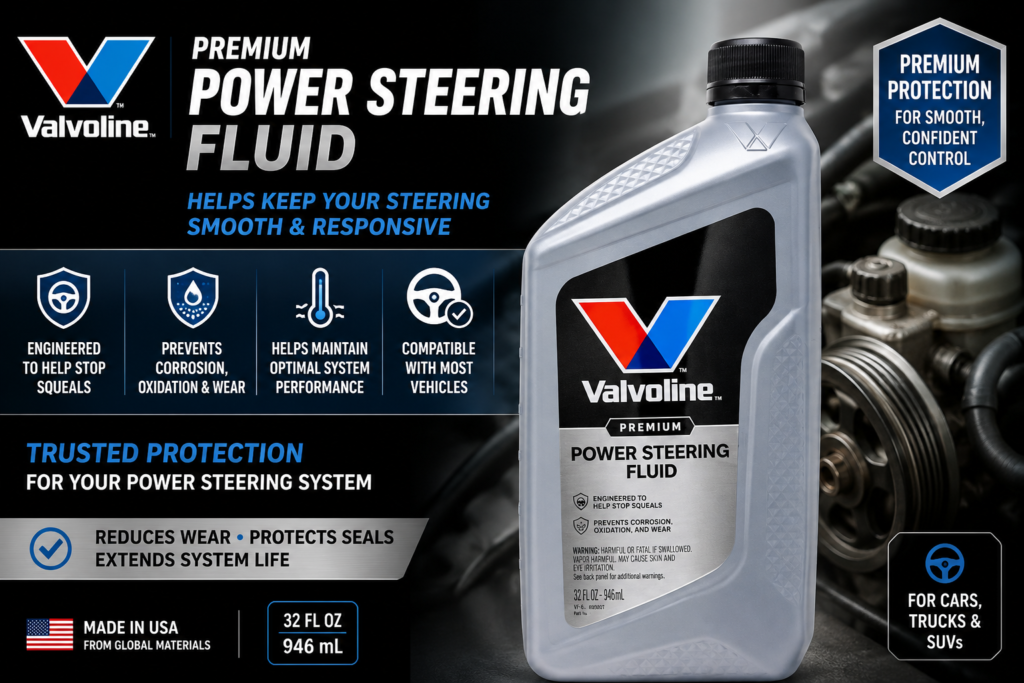
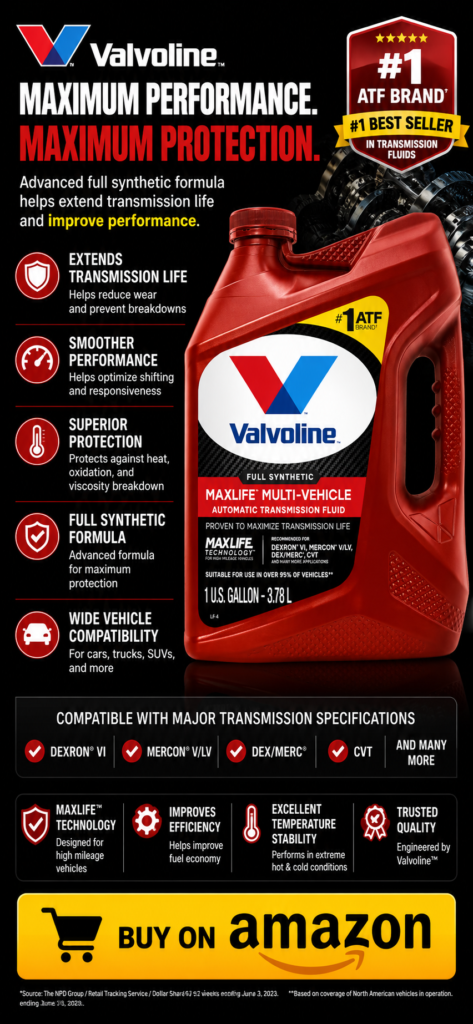
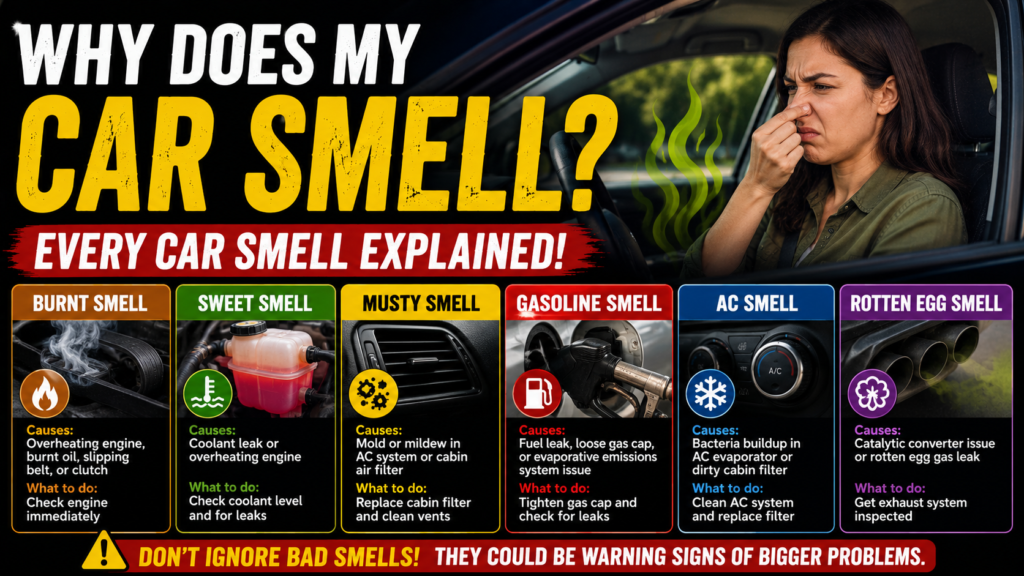
Valvoline MaxLife Multi-Vehicle ATF is compatible with most domestic automatic transmissions and many imports. It meets or exceeds specifications for Dexron VI, Mercon V, Mercon LV, and several other common ATF specs. Always verify your vehicle’s required ATF type in the owner’s manual before adding any fluid. Because fluid specifications also matter in hydraulic steering systems, see the Valvoline steering fluid guide before topping off a reservoir.
Can I use this in a CVT transmission?
No. CVT (continuously variable) transmissions require a specific CVT fluid. Using standard ATF in a CVT will damage the transmission. Check your owner’s manual to determine if your vehicle has a CVT.
Will fresh ATF fix a slipping transmission?
If the slipping is caused by degraded fluid that has lost its friction properties, fresh fluid often improves or resolves it. If slipping is caused by worn clutch packs or mechanical damage, fluid alone won’t fix it — but fresh fluid can slow further deterioration.
How often should automatic transmission fluid be changed?
Manufacturer recommendations vary widely — from 30,000 miles to “lifetime fill” on sealed units. For most vehicles driven in normal conditions, a fluid change every 30,000–60,000 miles is reasonable. Vehicles used for towing, frequent stop-and-go, or performance driving benefit from more frequent changes.
Dana has been diagnosing car problems for over a decade — first out of necessity (three kids, one income, no money for shop rates) and eventually out of genuine passion. She’s the person her whole neighborhood texts when a warning light comes on. Dana writes for WhyIsMyCar.com to give everyday drivers the kind of straight talk she wishes she’d had when she first started figuring this stuff out on her own. Based in Ohio.