You walk out to your car and notice a puddle on the ground. Your stomach drops a little. Is it serious? Is it safe to drive? Do you need to call a tow truck right now or can it wait until the weekend? The answer depends entirely on what kind of fluid it is — and the color, location, and smell tell you almost everything you need to know before you even open the hood. For symptoms that do not involve a visible puddle, more car warning signs offers another way to narrow down what may be wrong.
This guide breaks down every fluid your car can leak, how to identify each one, what causes it, and exactly what to do about it. By the end you’ll know the difference between a puddle that’s completely harmless and one that means stop driving immediately.
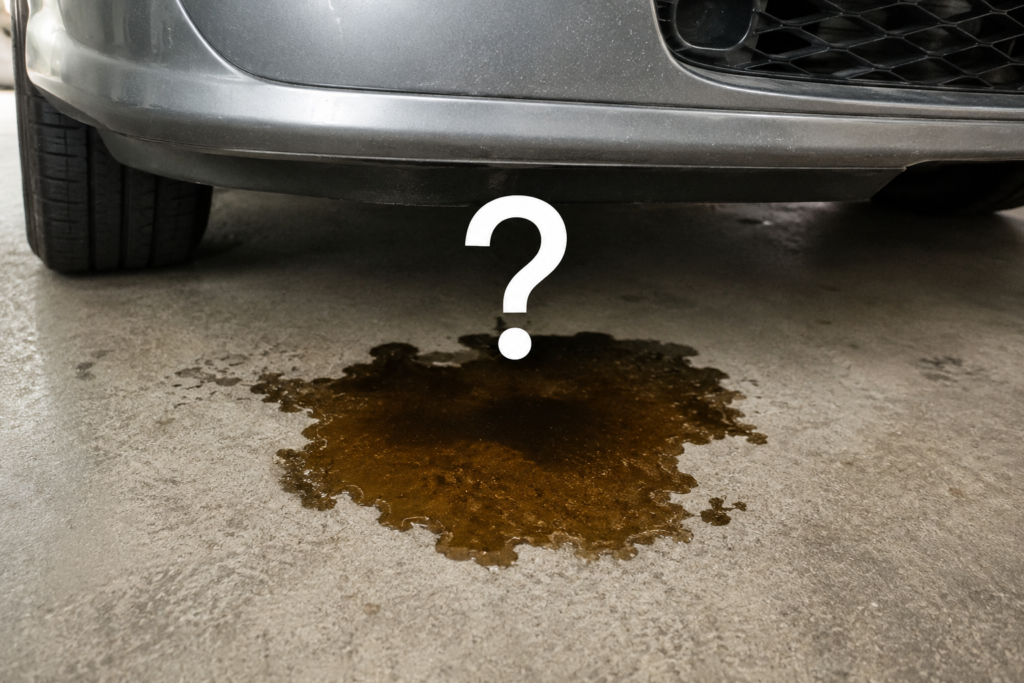
Quick Answer: Identify your leak by color — oil is dark brown or black, coolant is green/orange/pink and smells sweet, transmission fluid is red or pink, brake fluid is clear to light yellow and feels slippery, power steering fluid is thin and reddish, fuel smells strongly of gasoline. Location under the car narrows it further. Water under the car on a hot day is almost always normal A/C condensation.
How to Identify a Fluid Leak — Start Here
Before diving into individual fluids, here’s the fastest way to narrow down what you’re dealing with. Three things tell you almost everything: color, location under the car, and smell.
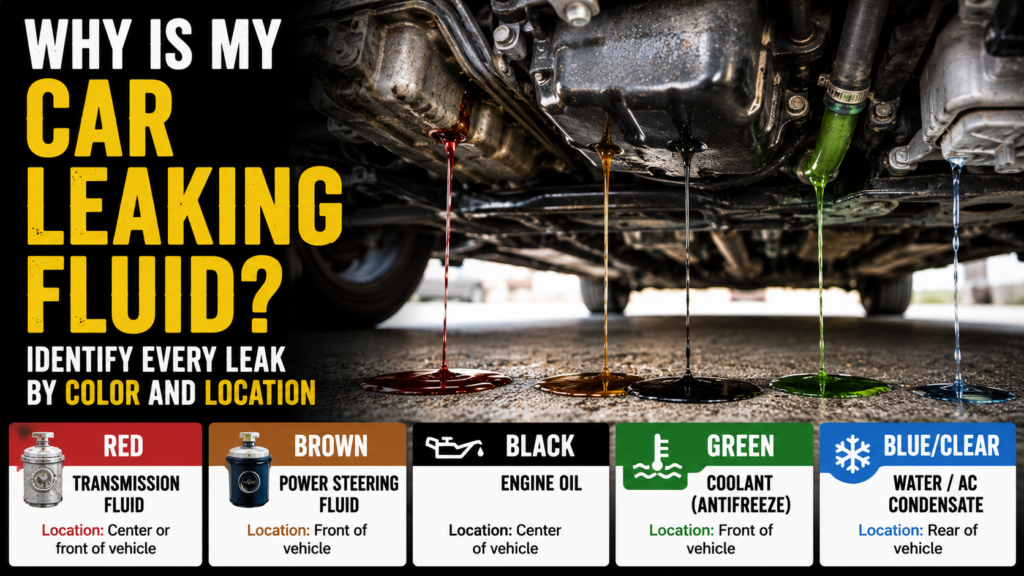
Color is your first clue. Fresh oil is amber, old oil is dark brown to black. Coolant is bright green, orange, pink, or blue depending on the type. Transmission fluid is red or pink when fresh, dark brown when old. Brake fluid is nearly clear to light yellow. Power steering fluid is thin and reddish. Fuel is clear with an unmistakable gasoline smell.
Location narrows it down further. Leaks at the very front of the car point to the cooling system or power steering. Leaks under the center of the engine are usually oil. Leaks toward the middle of the car under the transmission tunnel are transmission fluid. Leaks near the wheels are brake fluid. A puddle directly under the tailpipe after running the A/C is just water — normal condensation.
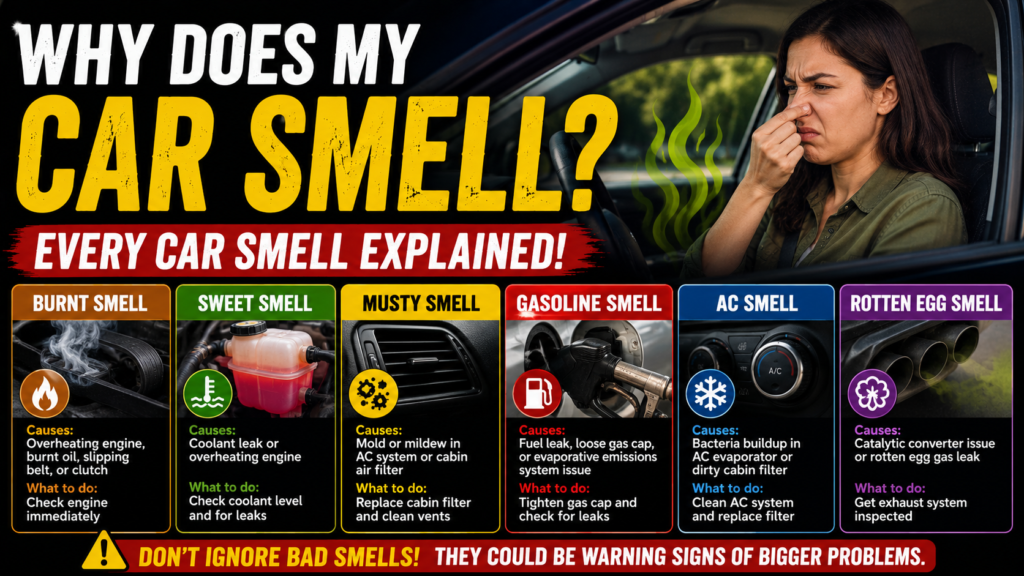
Smell closes the loop. Coolant has a distinctive sweet, slightly syrupy smell. Fuel smells exactly like gasoline — you’ll know immediately. Gear oil and differential fluid smell sulfuric and harsh. Engine oil has a hot, burnt smell when it hits hot components. Brake fluid has a faintly chemical, almost fishy smell. Use what different car smells mean to connect these odors with their likely causes and urgency.
Now let’s go through each fluid one by one.


Engine Oil Leak — Dark Brown or Black, Under the Engine
Engine oil is the most common car fluid leak and also one of the most variable in severity. A slow seep from a valve cover gasket is completely different from a cracked oil pan gushing oil onto the road.
What It Looks Like
Fresh engine oil is amber to light brown. Oil that’s been in the engine for a while is dark brown to black. It’s slick and oily to the touch and leaves a stain on pavement that doesn’t evaporate. You’ll typically find it directly under the engine — toward the front or center of the vehicle depending on where in the engine the leak is originating.
Common Causes
Valve cover gaskets are the most common source on high-mileage engines — they dry out and crack over time, allowing oil to seep down the sides of the engine. Oil pan gaskets fail similarly. The drain plug can weep if it’s been overtightened or if the crush washer wasn’t replaced at the last oil change. Rear main seals — the large seal between the engine and transmission — leak on older high-mileage engines and can cause significant oil loss.
How Serious Is It
Depends entirely on the rate of loss. A slow seep that drops your oil level by half a quart over several thousand miles is a monitor-and-maintain situation. An active drip that’s visible while the car is running or that drops your oil level significantly between oil changes needs prompt attention. Running an engine low on oil causes rapid internal wear and can lead to catastrophic engine failure. Check your oil level with the dipstick whenever you notice a leak — that tells you more than the puddle does.
If you’re not sure whether oil is leaking or burning, an OBD2 scanner can reveal codes related to oil pressure or PCV system issues that contribute to oil consumption and leaks.
Coolant Leak — Bright Green, Orange, Pink, or Blue — Sweet Smell
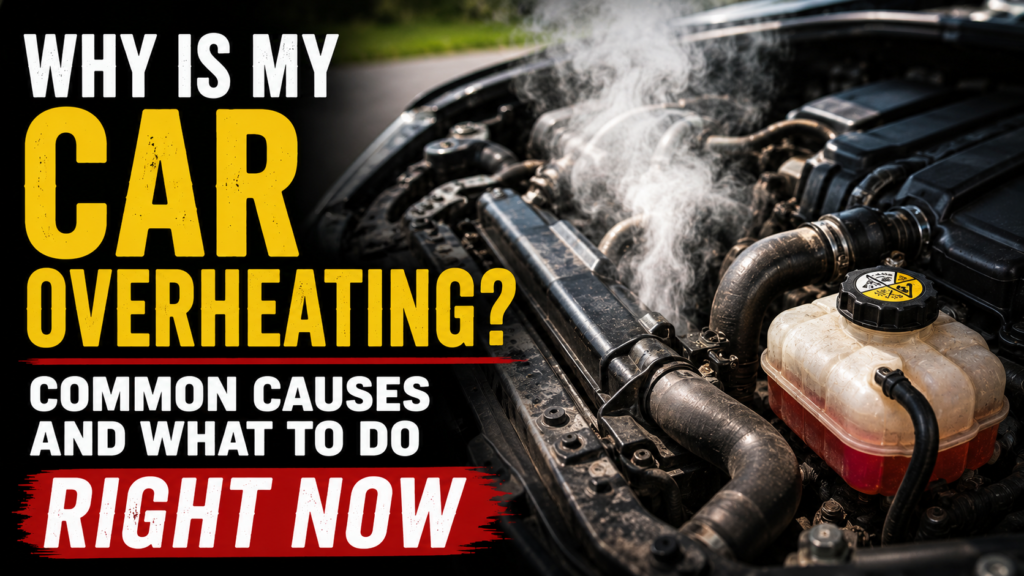
Coolant leaks are one of the more urgent fluid leaks you can have. Your engine generates enormous heat and depends entirely on the cooling system to keep temperatures in a safe range. Lose enough coolant and the engine overheats — and overheating causes damage that ranges from a blown head gasket to a warped cylinder head to a completely destroyed engine. Because a coolant leak can quickly lead to engine damage, Why Is My Car Overheating? Common Causes and What To Do Right Now outlines the immediate steps to take when the temperature rises.
What It Looks Like
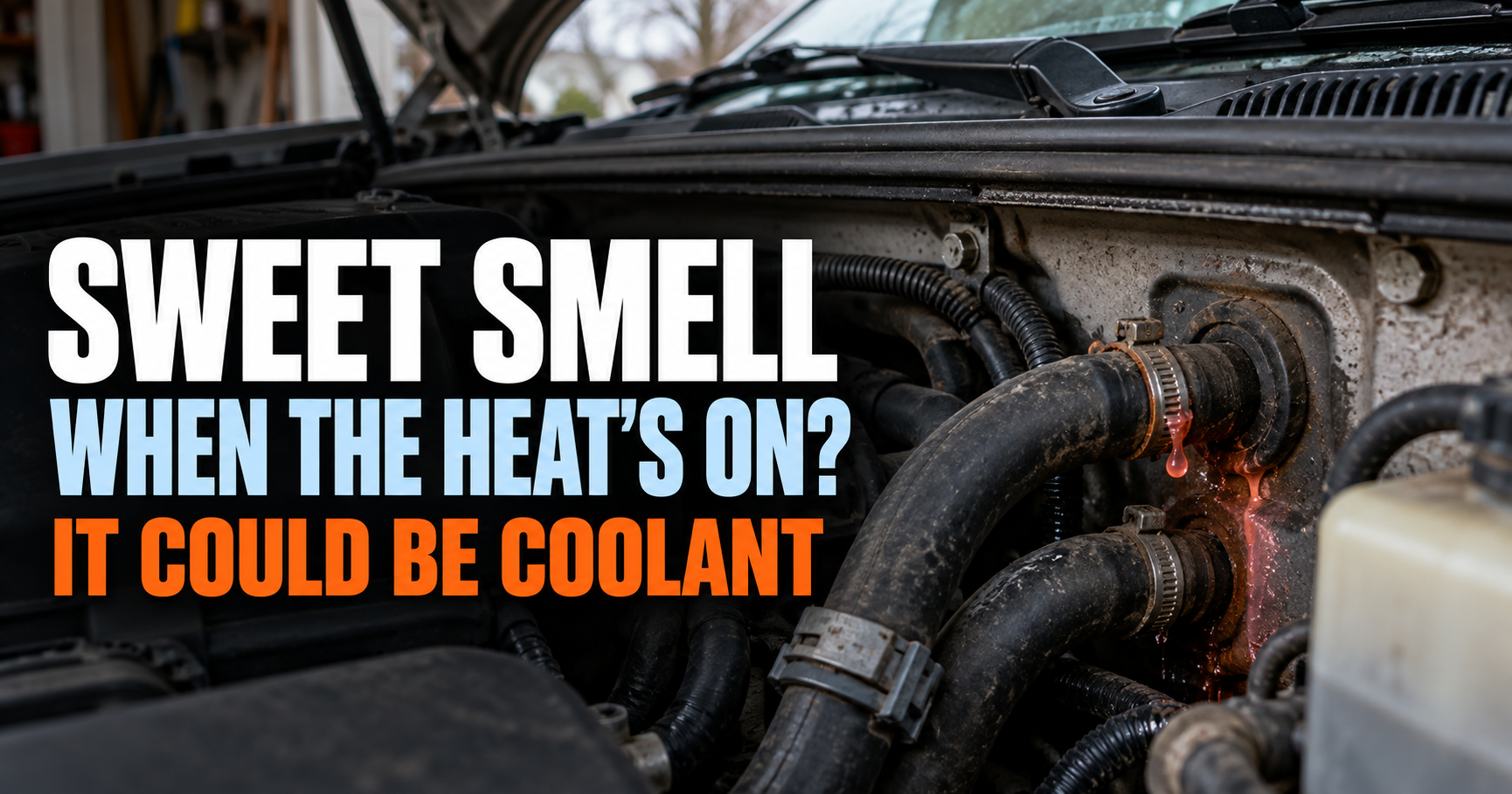
Coolant color depends on the formulation — traditional coolant is bright green, extended-life coolants are orange, pink, red, or blue. It has a distinctive sweet smell that’s unlike any other automotive fluid. It feels slightly slippery and leaves a sticky residue when it dries. You’ll find it under the front of the car near the radiator, under the engine if a hose has failed, or sometimes inside the car on the passenger floor if the heater core is leaking.
Common Causes
Radiator hoses crack and split over time — especially the lower hose, which runs hotter and takes more stress. The radiator itself develops leaks at the seams between the plastic end tanks and the aluminum core — a very common failure point on vehicles over 8–10 years old. The water pump seal fails and leaks from the pump weep hole. Heater core leaks are less common but more expensive — the heater core is buried behind the dashboard and replacing it is a major job on most vehicles. For a minor radiator or heater-core seep, the Liqui Moly radiator stop-leak review explains when a chemical treatment may be appropriate and when physical repair is still necessary.
How Serious Is It
Very. A coolant leak that’s actively dropping your level between checks is an urgent situation. Check the coolant reservoir level regularly — it’s a translucent plastic tank in the engine bay with MIN and MAX markings. If the level is dropping and you can’t find an obvious external leak, the coolant may be going into the combustion chamber through a failing head gasket — look for white smoke from the exhaust and a sweet smell from the tailpipe as confirmation.
Transmission Fluid Leak — Red or Pink, Center of the Car
Automatic transmission fluid leaks are identifiable by their color and location. Fresh ATF is bright red and slightly sweet-smelling. Older fluid darkens to dark red or brown. You’ll typically find it toward the center or rear of the vehicle, dripping from the transmission pan, the cooler lines, or the rear seal.
Common Causes
The transmission pan gasket dries and cracks over time — a very common leak point on older vehicles. Transmission cooler lines — the metal and rubber lines that run from the transmission to the radiator — corrode and crack, especially in rust-prone climates. The front and rear transmission seals fail on high-mileage vehicles, causing fluid to leak out around the input and output shafts.
How Serious Is It
A transmission running low on fluid slips, shifts harshly, and overheats internally. Transmission damage from low fluid is expensive — rebuilds run $2,000–$4,000 or more. Check the transmission fluid level if you notice a red leak and address the source promptly. Fresh fluid maintenance keeps the transmission healthier between leak repairs.
Brake Fluid Leak — Clear to Light Yellow, Near the Wheels
Brake fluid is the one fluid leak on this list that is always an immediate safety concern. Your brakes are a hydraulic system — they depend on fluid pressure to function. Lose enough brake fluid and your brakes stop working. This is not a monitor-and-maintain situation.
What It Looks Like
Brake fluid is clear to very light yellow — it looks almost like water but feels distinctly slippery and has a faintly chemical smell. You’ll find it near the wheels if a caliper seal or wheel cylinder is leaking, under the master cylinder at the very front of the engine bay near the firewall, or along the brake lines if a line has corroded through.
Common Causes
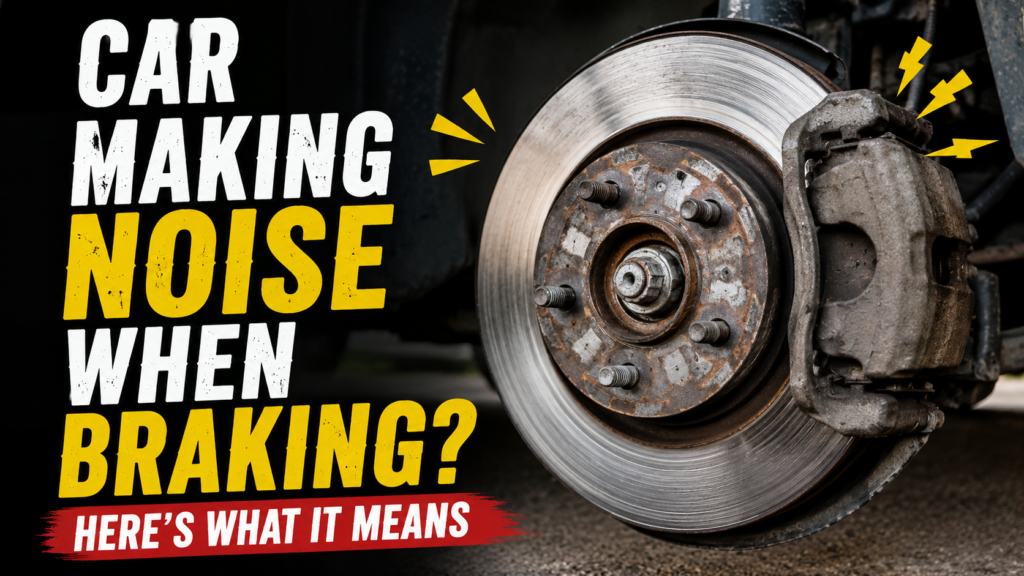
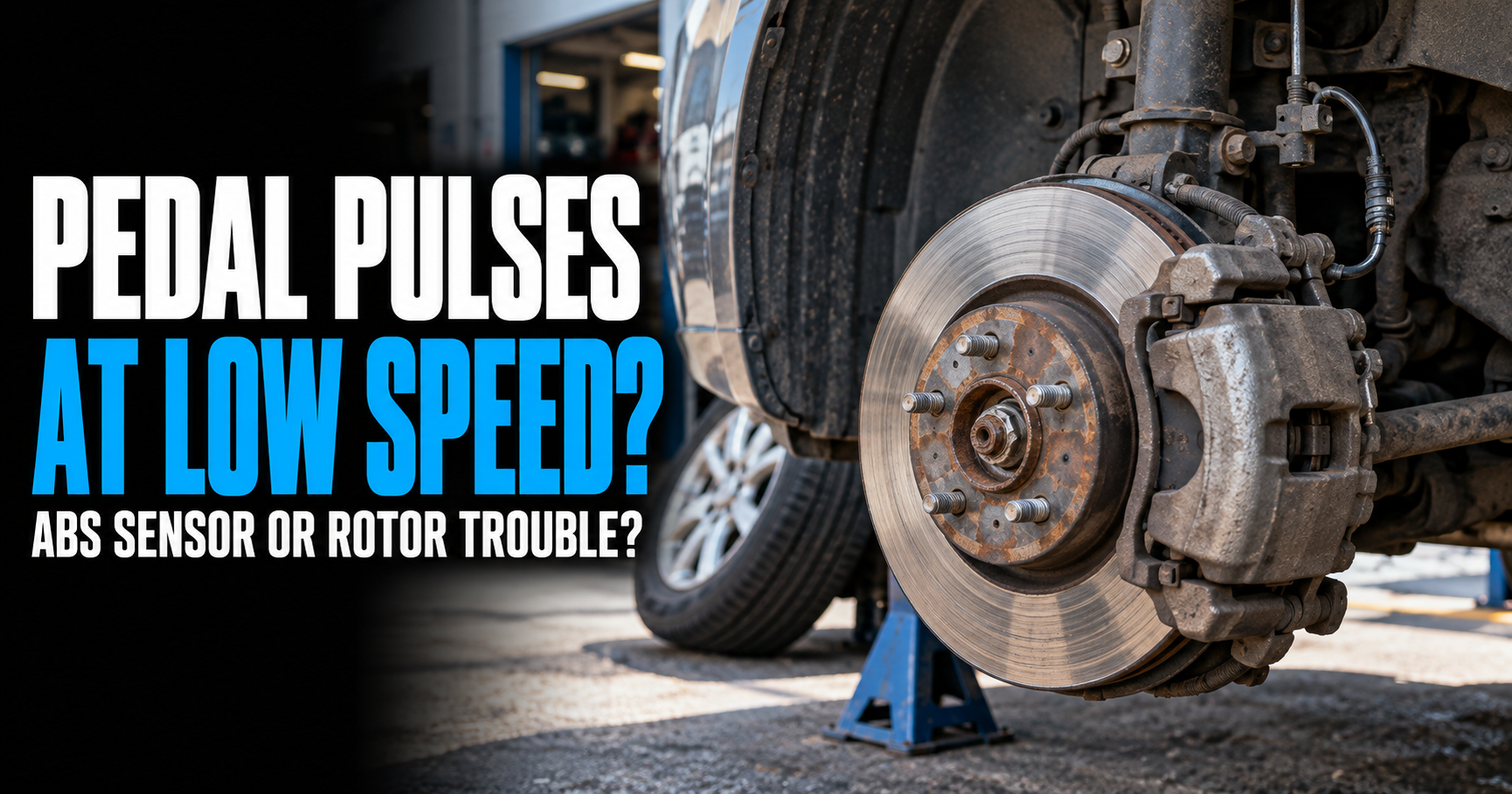
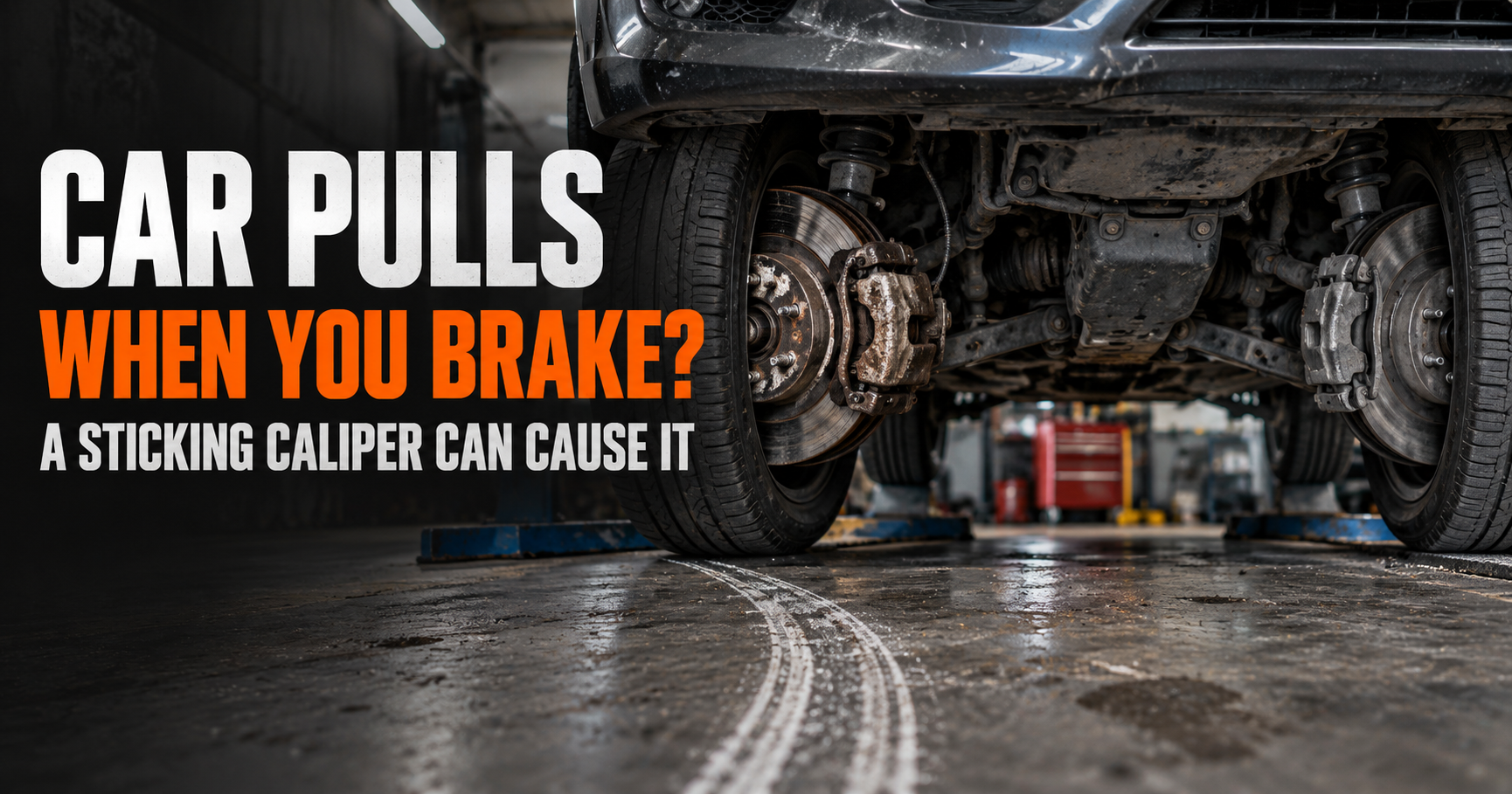
Brake caliper seals harden and crack over time, allowing fluid to seep past them — you may notice brake dust mixed with fluid residue on the inside of the wheel. Brake lines on older vehicles corrode from the outside in — a serious problem in states that use road salt. The master cylinder — the reservoir that holds brake fluid — can develop internal leaks that bypass fluid without visible external puddles, causing a spongy pedal that slowly sinks to the floor. Brake fluid leaks can also affect braking behavior, so review these brake noise warning signs before deciding whether it is safe to drive.
How Serious Is It
Stop driving and get it inspected immediately. A brake system that’s losing fluid will eventually lose braking ability — there is no safe threshold for brake fluid loss. Check your brake fluid reservoir in the engine bay — if it’s low, there’s a leak somewhere in the system. Do not drive until it’s found and fixed.
During brake inspections and service, brake cleaner spray is the right tool for cleaning contaminated components before reassembly.
Power Steering Fluid Leak — Thin and Reddish, Front of the Car
Power steering fluid leaks are most common on older vehicles with traditional hydraulic power steering systems. If your car has electric power steering — increasingly common on vehicles made after 2010 — there’s no fluid to leak.
What It Looks Like
Power steering fluid is thin and reddish — similar in color to transmission fluid but thinner. You’ll typically find it near the front of the car under the engine, dripping from the power steering pump, the steering rack, or the high-pressure hose that connects them.
Common Causes
The steering rack seals are the most common failure point — they dry out and crack over time, allowing fluid to seep past and drip from the rack boots. The high-pressure power steering hose develops cracks and pinhole leaks, especially near the crimped fittings. The pump itself can leak from the shaft seal or the reservoir.
How Serious Is It
A whining or groaning sound when turning — especially at low speeds or when turning to full lock — is the most common symptom of low power steering fluid. Topping off with the correct fluid is a short-term fix while you address the leak source. Running the pump dry accelerates pump wear significantly. See our guide on power steering fluid for what to use and how to check the level correctly.


Fuel Leak — Clear to Light Brown, Strong Gasoline Smell
A fuel leak is one of the most serious situations on this list — not because of what it does to your car’s performance, but because of fire risk. Gasoline is extremely flammable and a fuel leak near hot exhaust components is a genuine fire hazard.
What It Looks Like
Fuel is clear to very light amber. The smell is unmistakable — raw gasoline. You may smell it before you see it. The puddle evaporates faster than oil or coolant because fuel is volatile. You might find it anywhere along the fuel system — under the fuel tank at the rear of the vehicle, under the engine near the fuel rail or injectors, or along the fuel lines that run from the tank to the engine.
Common Causes
Fuel injector O-rings dry out and crack — especially on high-mileage engines — causing fuel to seep at the injector base. Fuel lines corrode or crack, especially in older vehicles. The fuel tank itself can develop leaks from corrosion or physical damage from road debris. Fuel filler neck gaskets fail on older vehicles.
How Serious Is It
Do not drive with a fuel leak. Turn off the engine, don’t start it again, and get it towed. A fuel leak near a hot exhaust manifold or catalytic converter can ignite. This is one situation where the answer is unambiguous — stop, tow, fix before driving again.
Differential or Gear Oil Leak — Dark and Thick, Near Axles
Differential fluid — also called gear oil — leaks from the front or rear differential housing and axle seals. It’s thick, dark, and has a distinctly harsh sulfuric smell that’s hard to confuse with anything else once you’ve encountered it.
What It Looks Like
Very thick and dark — similar consistency to heavy engine oil. The smell is harsh and sulfuric. On rear-wheel-drive vehicles you’ll find it dripping from the rear differential housing or the axle tube seals. On all-wheel-drive vehicles both front and rear differentials can leak, as can the transfer case.
How Serious Is It
Differential fluid doesn’t get checked or changed as often as engine oil, which means leaks can go unnoticed for a long time. Running a differential low on fluid causes bearing and gear wear that leads to expensive rebuilds. If you hear a whining or howling noise from the rear of the vehicle — especially under load or at highway speed — low differential fluid may be the cause.


Water or Condensation — Clear, Under the Tailpipe or Center of the Car
Not every puddle under your car is a problem. Two situations produce completely normal water puddles that require no action at all.
Air Conditioning Condensation
When you run the A/C, the evaporator core inside the dash removes moisture from the cabin air — the same way a cold glass sweats on a humid day. That water drains through a tube and drips onto the ground, typically from the passenger side front area of the vehicle. A clear water puddle under the car after running the A/C on a humid day is completely normal.
Exhaust Condensation
On cold mornings, water vapor in the exhaust condenses inside the exhaust system and drips from the tailpipe. White steam from the exhaust on a cold morning is normal and disappears once the exhaust heats up. A large puddle of water under the tailpipe on a cold morning is just this condensation draining out. If white smoke continues after the engine is fully warm, that’s a different situation — coolant in the combustion chamber from a head gasket issue.
How to Find Where a Leak Is Coming From
If you can see fluid under the car but can’t locate the source, a few techniques help narrow it down. Clean the suspected area thoroughly with brake cleaner or engine degreaser — a clean surface makes fresh leaks immediately visible. Place a piece of cardboard under the car overnight and mark where the drip lands — then look directly above that spot on the car.
A UV dye leak detection kit is the professional approach — dye is added to the fluid system, the car is driven, and a UV light reveals the exact leak path as a glowing trace. Many shops use this method for leaks that are hard to find by visual inspection alone.
An OBD2 scanner won’t directly find a fluid leak, but it can reveal codes related to fuel system pressure, coolant temperature sensors, and oil pressure that point you toward the right system to inspect.

When to Drive and When to Stop Immediately
Stop driving immediately: Brake fluid leak of any size. Fuel leak of any size. Coolant leak that’s dropping the level rapidly or causing the temperature gauge to rise. Oil leak that’s dropping oil pressure (oil pressure warning light on).
Monitor carefully but can drive short distances: Slow oil seep with normal oil level and pressure. Minor coolant seep with stable temperature and coolant level. Power steering fluid seep with steering still functioning normally.
Normal — no action needed: Clear water under the front passenger area after running the A/C. Water dripping from the tailpipe on a cold morning that stops once the engine is warm.
When in doubt, check the relevant fluid level before driving. A fluid that’s still at the correct level despite a visible puddle is telling you the leak is slow. A fluid that’s significantly low is telling you the leak is fast and driving isn’t safe until it’s addressed.
Frequently Asked Questions
Is it normal for an older car to have small leaks?
Gaskets, seals, and hoses degrade over time and minor seepage on high-mileage vehicles is common. What matters is the rate of fluid loss. Check your fluids regularly — if levels are holding steady despite a visible seep, it’s a monitor situation. If levels are dropping noticeably between checks, it needs repair regardless of how minor the puddle looks.
Can I drive with a small oil leak?
Possibly, but only if you check the oil level frequently and keep it topped off. The risk isn’t the leak itself — it’s the engine running low on oil. Check the level every few hundred miles if you know you have an active leak. If the oil pressure warning light comes on, stop immediately.
Why does my car only leak when it’s parked?
Most fluid leaks are worse when the car is stationary because fluid isn’t circulating and pressure differences allow it to seep past seals. Some leaks only appear when the engine is warm and components have expanded. Parking on clean cardboard after a drive reveals active leaks that don’t show up during cold starts.
My coolant reservoir keeps going down but I can’t find a leak — what’s happening?
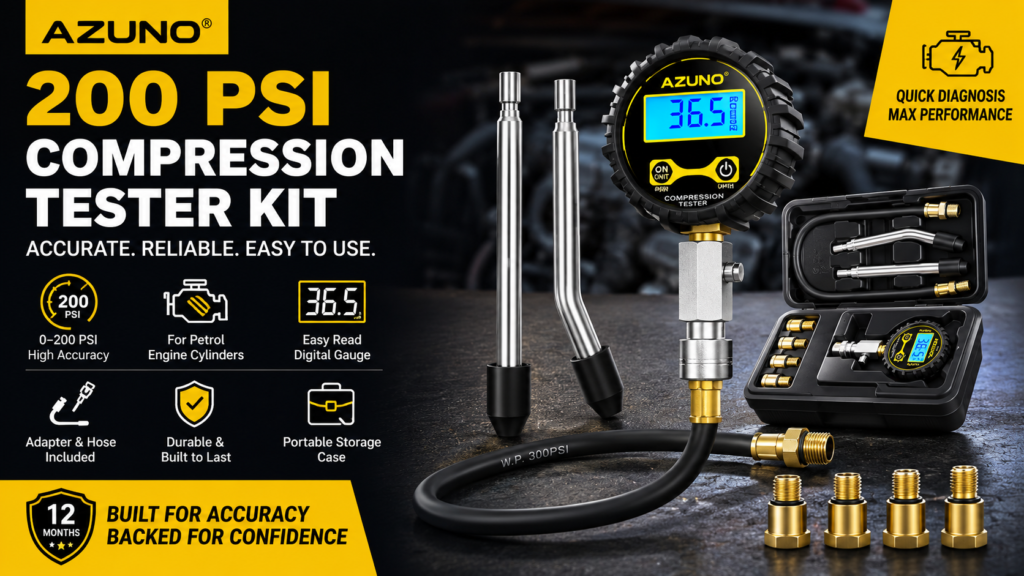
Coolant that disappears without a visible external leak is almost always going into the combustion chamber through a failing head gasket. Signs include white sweet-smelling smoke from the exhaust, a milky film on the underside of the oil cap, and the engine running hotter than normal. This requires immediate diagnosis — continued driving with a blown head gasket leads to severe engine damage. A compression test is one practical way to investigate the suspected internal leak; see testing for combustion-chamber damage for the testing procedure and interpretation.
How much does it cost to fix a fluid leak?
Completely depends on the fluid and the source. A valve cover gasket runs $100–$300 at a shop. A rear main seal is $400–$900. A transmission pan gasket is $150–$400. Brake line repair varies widely by how much line needs replacement. Heater core replacement is $500–$1,000 or more due to labor. Getting the leak diagnosed before authorizing repairs helps ensure you’re fixing the actual source rather than a guess.
Can I use stop-leak products for any of these leaks?
Stop-leak products work for minor coolant seeps and minor power steering leaks — see our breakdown of when radiator stop-leak is appropriate. They are not appropriate for brake fluid leaks ever, fuel leaks ever, or major mechanical failures. They buy time on minor seeps, not solutions for significant leaks.
About the Author: Jake Merritt
Jake spent eight years as a service advisor at a regional auto dealership before going independent. He’s owned everything from a ’98 Civic with 240,000 miles to a diesel truck that taught him more than any training course. He started writing for WhyIsMyCar.com because he was tired of watching people get talked into repairs they didn’t need — or ignore problems that were genuinely serious. Jake lives in Tennessee with his wife, two kids, and a garage that’s never quite organized enough.