
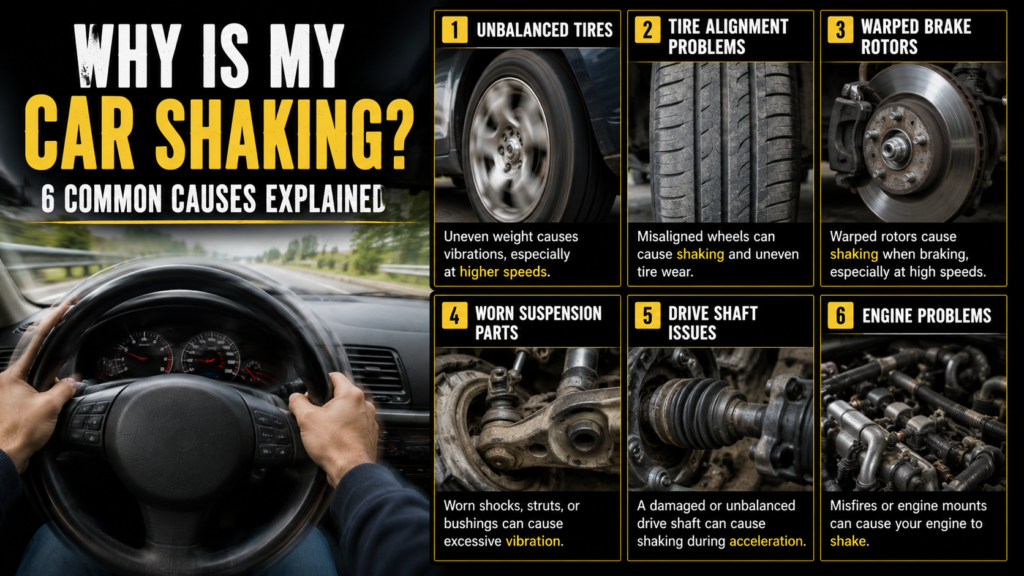
Quick Answer: A shaking car is almost always caused by one of six things — worn tires or wheels out of balance, warped brake rotors, bad spark plugs, damaged CV axles, worn engine or transmission mounts, or suspension problems. The timing and feel of the shake tells you a lot about which one you’re dealing with. Some are cheap and easy fixes. A few need immediate attention.
You’re driving along and suddenly your steering wheel is vibrating in your hands. Or maybe the whole car shudders when you hit the brakes. Or it only shakes at highway speeds and seems totally fine around town. Whatever version you’re experiencing, that shake is your car trying to tell you something — and ignoring it usually means a bigger bill down the road.
The good news is that a shaking car is one of the more diagnosable problems out there. You don’t need to be a mechanic to narrow it down. The when and where of the shake gives you a huge head start — and this guide will walk you through exactly what each scenario means.
Let’s figure out what’s going on with your car.

The Most Common Reasons Your Car Is Shaking
There’s no single answer here because “shaking” covers a lot of ground. But these six causes account for the vast majority of cases. Work through them based on when your shake happens and you’ll land on your answer fast.
1. Tires Out of Balance or Unevenly Worn
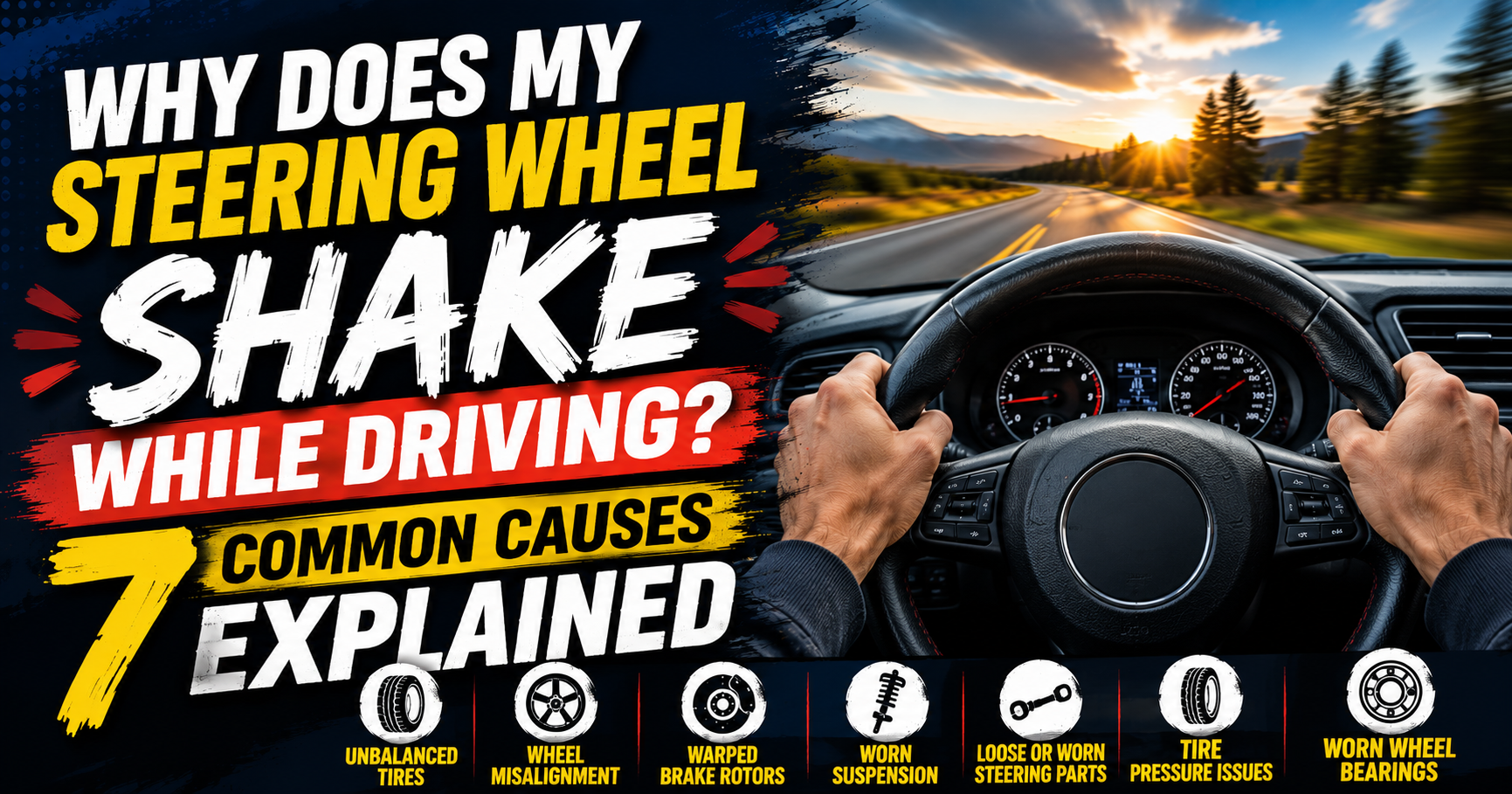
This is the number one cause of highway shaking and the first thing any honest mechanic will check. When a tire loses a wheel weight — those small metal pieces attached to your rim — that wheel becomes slightly heavier on one side. At low speeds you’d never notice. At 60 or 70 mph, that imbalance turns into a vibration that travels right through the steering wheel and floorboard. When the vibration is concentrated in the wheel, highway steering wheel vibrations explains the steering-specific causes to check next.
What it feels like: A steady hum or vibration that gets worse as you speed up, usually most noticeable between 55 and 75 mph. Sometimes it smooths out at higher speeds, sometimes it just gets worse.
What causes it: Hitting a pothole, a curb, or even just normal tire wear over time. Wheel weights fall off more than most people realize.
What it costs to fix: A tire balance is typically $15–$25 per tire at most shops, sometimes free if you bought the tires there. If the tires themselves are worn unevenly — from an alignment problem or just age — you may be looking at new tires, which varies widely depending on size and brand.
Before you panic about anything else on this list, get your tires balanced. It solves the problem more often than not.
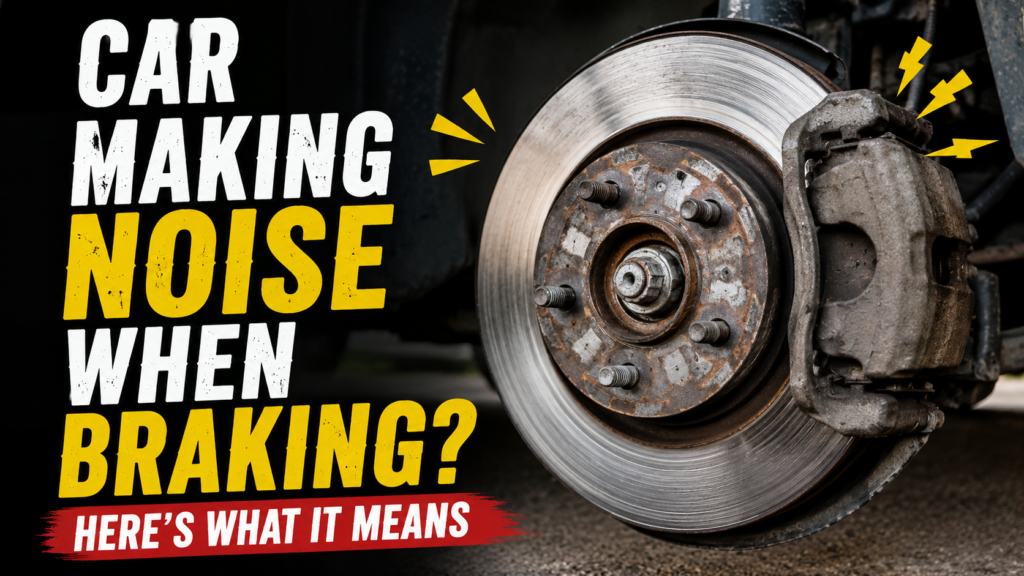
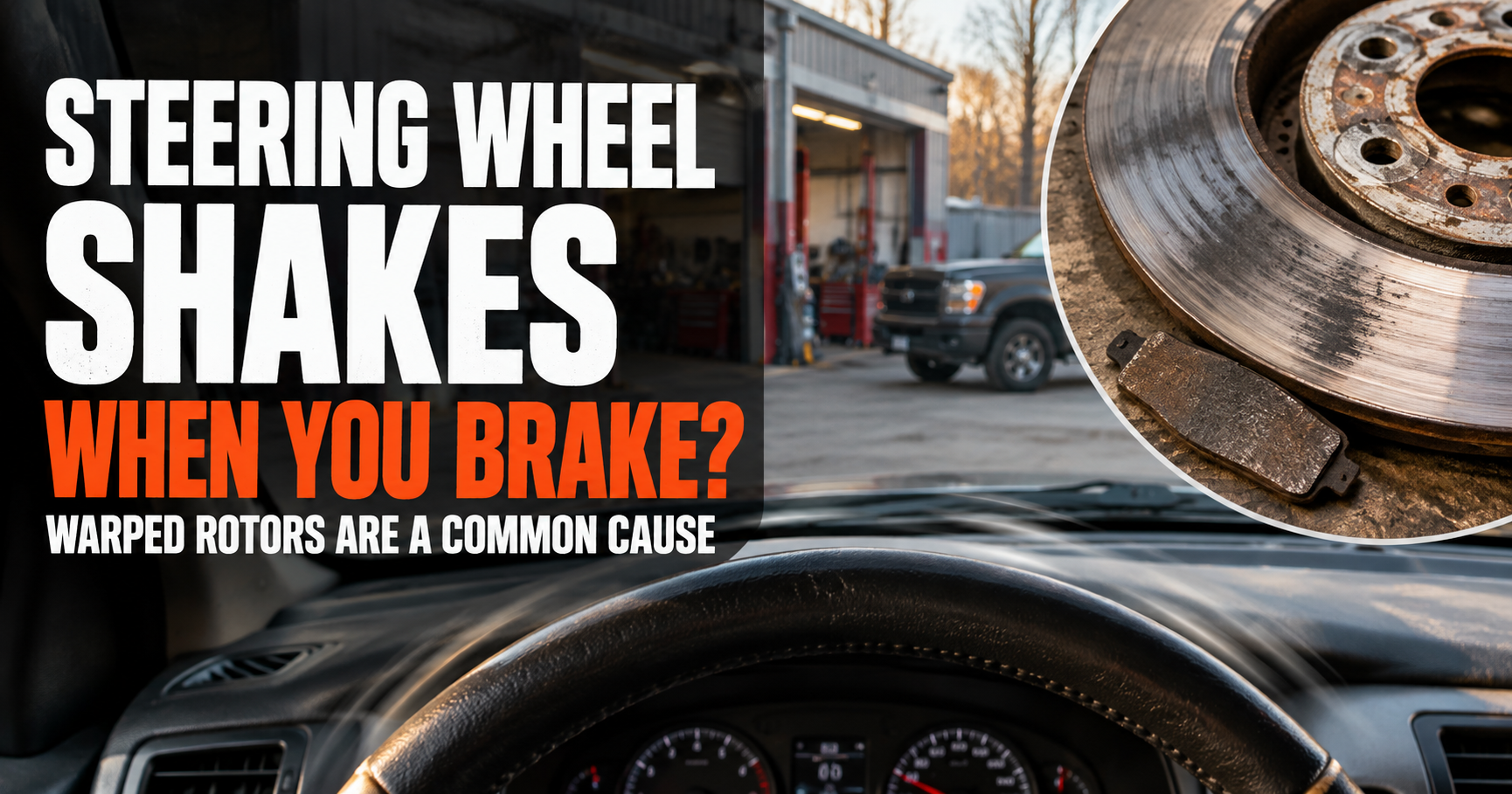
We have an entire article on reasons why your car is shaking when you push the brakes!
2. Warped Brake Rotors
If your car shakes specifically when you apply the brakes — and feels mostly fine the rest of the time — warped rotors are almost certainly your culprit. Rotors are the large metal discs your brake pads clamp against to stop the car. When they get too hot repeatedly (towing, mountain driving, or just a lot of hard stops over the years), they can warp slightly. Even a tiny amount of warping creates a pulsing, shuddering feeling when you brake.
What it feels like: The steering wheel or brake pedal pulses rhythmically under your foot when slowing down. Sometimes you feel it more in the seat than the wheel, which usually means it’s the rear rotors.

What it costs to fix: Rotors run $150–$400 for a front axle replacement including labor, depending on your vehicle and the shop. Some shops can resurface rotors instead of replacing them, which is cheaper, but many modern rotors are too thin to safely resurface once they’ve warped.
This one you don’t want to let go. Warped rotors mean compromised braking, and that’s a safety issue.
3. Worn or Fouled Spark Plugs
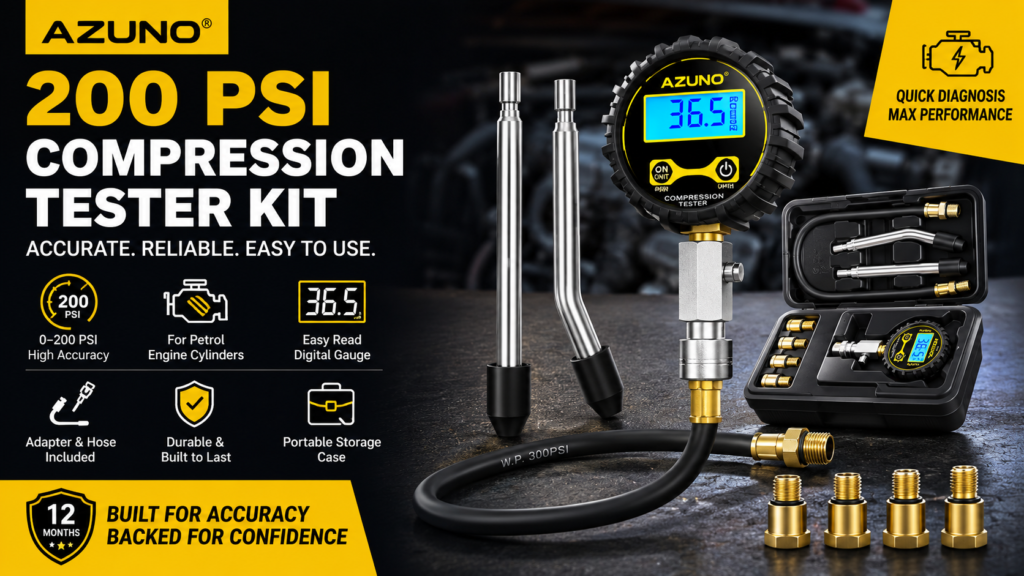
When a spark plug is worn out or covered in deposits, it misfires — meaning the fuel in that cylinder doesn’t ignite the way it should. One misfiring cylinder throws off the whole engine’s rhythm. The result is a shake or shudder that comes from the engine itself, not the wheels or suspension. When ignition checks do not explain the misfire, compression tester guide can help compare cylinder health.
What it feels like: Shaking that’s present at idle or at low speeds, often worse when you first start the car or when you accelerate from a stop. You might also notice the engine feels rough, fuel economy has dropped, or the check engine light has come on.
What it costs to fix: Spark plugs are one of the cheaper fixes on this list. Plugs themselves are usually $20–$60 for a full set depending on the vehicle. Labor adds more if they’re difficult to access — some engines make this a straightforward 20-minute job, others require half a day of work.
If your car is over 60,000 miles and you don’t know when the spark plugs were last changed, this is worth checking regardless of whether you’re shaking or not.
4. Damaged CV Axle or CV Joint
CV joints — constant velocity joints — are what allow power to transfer from your transmission to your wheels while still letting the wheels turn and your suspension move. They’re protected by rubber boots filled with grease. When those boots crack and the grease leaks out, the joint starts wearing fast. A damaged CV joint is a very specific kind of shake.
What it feels like: A clicking or clunking sound combined with vibration, specifically when you’re turning or accelerating out of a turn. The shake often gets worse the sharper the turn. Sometimes you’ll hear a loud clicking when turning at slow speeds in a parking lot — that’s a classic CV joint symptom.
What it costs to fix: A CV axle shaft replacement (which includes the joint) typically runs $250–$600 depending on the vehicle and whether it’s front or rear. Catching a torn boot early — before the joint itself is damaged — can sometimes be repaired for much less.
5. Worn Engine or Transmission Mounts
Your engine and transmission don’t just sit loose in the engine bay — they’re bolted to the vehicle through rubber-cushioned mounts specifically designed to absorb vibration. When those mounts wear out or crack, metal starts making contact with metal, and the vibration from the engine transfers directly into the cabin.
What it feels like: A shaking or shuddering that’s most noticeable when you start the car, when you shift into gear, or when you accelerate hard. You might also feel a thud or clunk when you put the car in drive or reverse. The shake tends to come from inside the car rather than through the steering wheel.
What it costs to fix: Motor mount replacement typically runs $250–$600 per mount including labor. Most vehicles have two to four mounts total. It’s worth having them all inspected at the same time — they wear at similar rates.
6. Suspension Problems

Your suspension system is what keeps your tires in contact with the road and your ride smooth. It includes components like ball joints, tie rods, control arm bushings, and struts or shocks. Any of these can wear out over time, and when they do, they create looseness in the steering and a shaking or wandering feeling — especially on rough roads or at higher speeds. When the wandering feeling is more pronounced than the shaking, steering and suspension causes can help narrow down the possible steering, tire, and suspension causes.
What it feels like: A more general, loose shake — like the car doesn’t feel planted. The steering might feel vague or wander slightly. You may also hear clunking over bumps or feel the car bounce more than it should after hitting a dip.
What it costs to fix: Varies widely depending on which component has failed. A pair of front struts might run $400–$900 installed. Ball joints, tie rod ends, and bushings vary by vehicle but are generally in the $150–$500 range per component.


How to Figure Out Which One Is Causing Your Shake
You don’t need a mechanic’s lift to start narrowing this down. Pay attention to these three things:
When Does the Shake Happen?
- Only when braking: Almost certainly warped rotors. Start there.
- Only at highway speeds (55–75 mph): Tires out of balance or unevenly worn. Get a balance first.
- At idle or low speeds, especially from a stop: Spark plugs or engine mounts.
- When turning or accelerating out of a turn: CV joint.
- All the time, on rough roads, with wandering steering: Suspension components.
Where Do You Feel It?
- Steering wheel: Usually front tires, front brakes, or front suspension.
- Brake pedal or seat: Often rear brakes or rear wheels.
- Whole cabin, engine area: Engine mounts, spark plugs, or transmission.
Did Anything Change Recently?
New tires that weren’t balanced properly, a recent pothole hit, a long trip with a lot of braking — these are all clues. If the shake started right after something specific, that something is usually the starting point for your diagnosis.
An OBD2 scanner can also help if your check engine light is on alongside the shake — it reads the fault codes and can tell you if a misfire is being detected in a specific cylinder, which points straight to spark plugs or ignition coils.
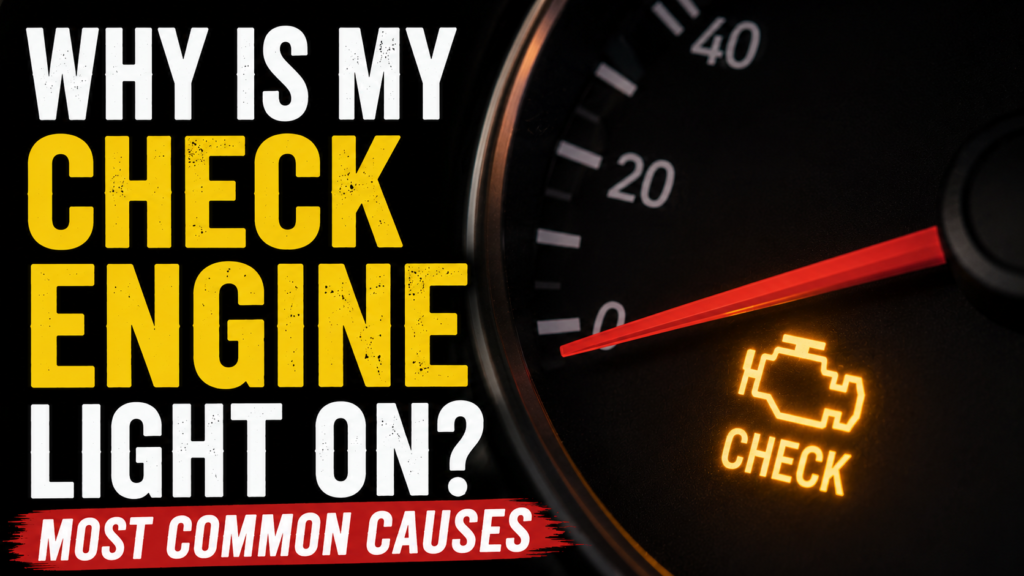
Did you know your check engine light being on could be something very serious, but could also be something super simple? Either way, it’s best to not ignore it! Check out the top reasons for the check engine light coming on!


Is It Safe to Drive a Shaking Car?
Honestly, it depends entirely on the cause — and that’s exactly why diagnosing it matters.
Generally okay for a short time: Tires out of balance. Annoying and hard on your tires long-term, but not immediately dangerous on normal roads.
Get it checked soon, within a week or two: Spark plugs, motor mounts. Your car won’t suddenly fail, but these will get worse and start affecting other things if ignored.
Don’t ignore this: Warped rotors. If your braking is compromised, your stopping distance is longer. That’s a real safety issue especially in emergencies.
Get it looked at right away: CV joint that’s clicking loudly. A badly damaged CV joint can separate, which means you lose the ability to accelerate and potentially lose control. Suspension components that make the steering feel loose or vague fall into this category too.
When in doubt, get it checked. A diagnosis at most shops is free or low-cost, and it’s far better than finding out the hard way what the shake was.
What To Do Next
Here’s a practical sequence to work through before you spend any money:
1. Check your tire pressure. Under-inflated tires can cause a rough ride that mimics a shake. Takes two minutes with a tire pressure gauge and costs nothing.
2. Look at your tires visually. Do any of them look more worn on one edge? Any obvious damage, bulges, or flat spots? Uneven wear tells you about alignment and suspension problems.
3. Think about when you last had service. If it’s been a while since new spark plugs, a tire rotation, or a brake inspection, those are natural starting points.
4. Get a free brake inspection. Most national chains — Midas, Meineke, Firestone — will inspect your brakes for free. If rotors are the issue, they’ll tell you.
5. Get your tires balanced. If the shake is highway-speed and you haven’t done this recently, it’s the cheapest first step. Under $100 total for all four tires at most places.
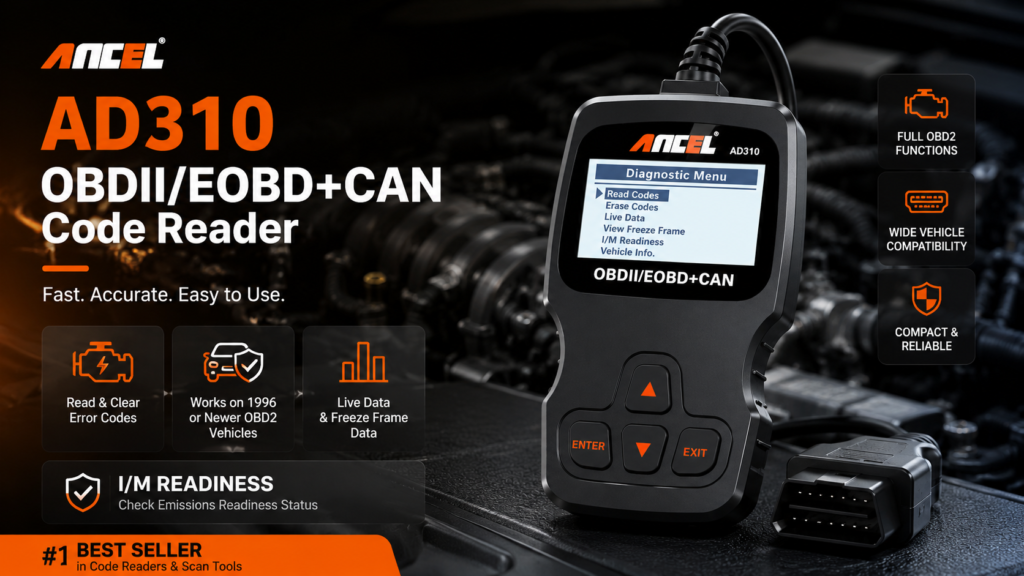
6. Pull codes if the check engine light is on. AutoZone and O’Reilly will read your codes for free. If you want to do it yourself anytime, a basic OBD2 scanner is worth having in the glove box.


Frequently Asked Questions
Why is my car shaking at idle but fine when driving?
Shaking at idle that smooths out when you drive usually points to an engine issue rather than a wheel or suspension problem. The most common culprits are misfiring spark plugs, a vacuum leak, or worn engine mounts. If your RPMs look low or erratic on the gauge while idling, a misfire or vacuum leak is likely. If the shake is more of a thud or clunk when you first start the car, mounts are worth checking.
Why does my car shake only at high speeds?
High-speed shaking — typically between 55 and 80 mph — is almost always a wheel balance or tire issue. At low speeds the imbalance isn’t noticeable, but centrifugal force amplifies it as speed increases. Get your tires balanced first. If that doesn’t fix it, have the tires inspected for uneven wear or damage, and check the wheel bearings on older vehicles.
Can low tire pressure cause my car to shake?
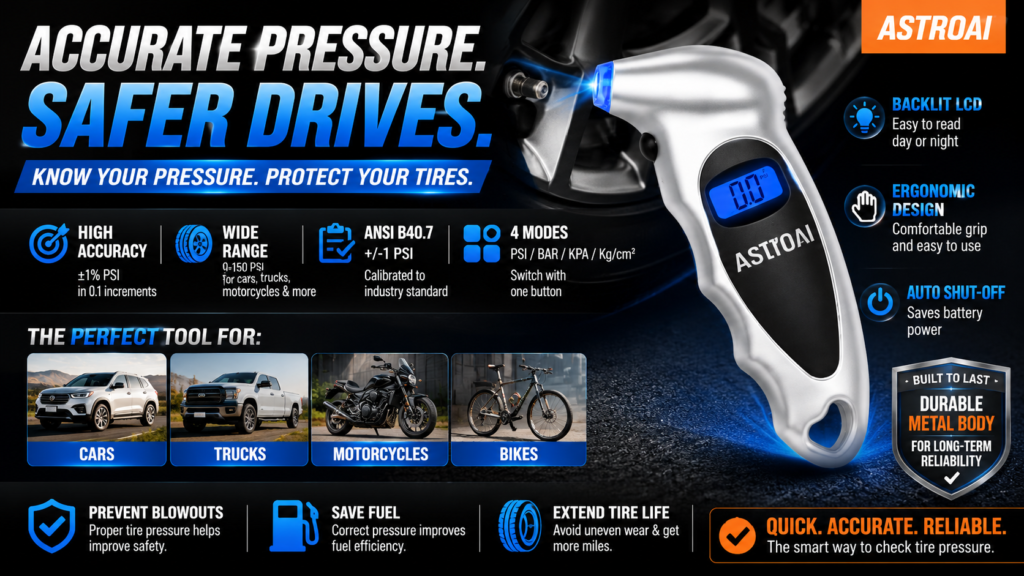
Yes, though it’s usually more of a rough or floaty feeling than a distinct vibration. Severely underinflated tires can shake noticeably and also create a dangerous handling situation. Check your tire pressure with a gauge and inflate to the PSI listed on the sticker inside your driver’s door jamb — not the number on the tire sidewall, which is the maximum, not the recommended pressure.
Why does my car shake when I accelerate but not at a steady speed?

Shaking specifically during acceleration — when you press the gas — is a strong indicator of a CV joint problem or a worn motor mount. CV joints are most stressed during acceleration, especially through turns. Motor mounts absorb the torque from acceleration, and when they’re worn, that force transfers into the cabin as a shudder. A transmission issue can also cause this in some cases. If the suspected transmission issue involves shuddering or slipping, transmission issue explains how degraded ATF can contribute to those symptoms.
My car shakes after getting new tires. What’s going on?

New tires that weren’t properly balanced are the most common reason. It happens more than it should — a wheel weight can be applied incorrectly or fall off shortly after installation. Go back to wherever you got the tires and ask for a rebalance, which should be covered under the installation service. Also check that all lug nuts were torqued to spec — improperly torqued lug nuts can cause a wobble that feels like a balance issue. For a reliable way to achieve accurate lug nut tightening, accurate lug nut tightening covers the torque settings and technique to use after wheel work.
Is a shaking car expensive to fix?
It completely depends on the cause. A tire balance is $60–$100 for all four wheels — one of the cheapest car fixes there is. Spark plugs are similarly affordable. On the higher end, suspension repairs or rotor and brake pad replacement can run $400–$900 or more. The key is diagnosing it correctly before spending money, since treating the wrong cause wastes both time and money.
About the Author: Jake Merritt
Jake spent eight years as a service advisor at a regional auto dealership before going independent. He’s owned everything from a ’98 Civic with 240,000 miles to a diesel truck that taught him more than any training course. He started writing for WhyIsMyCar.com because he was tired of watching people get talked into repairs they didn’t need — or ignore problems that were genuinely serious. Jake lives in Tennessee with his wife, two kids, and a garage that’s never quite organized enough.