
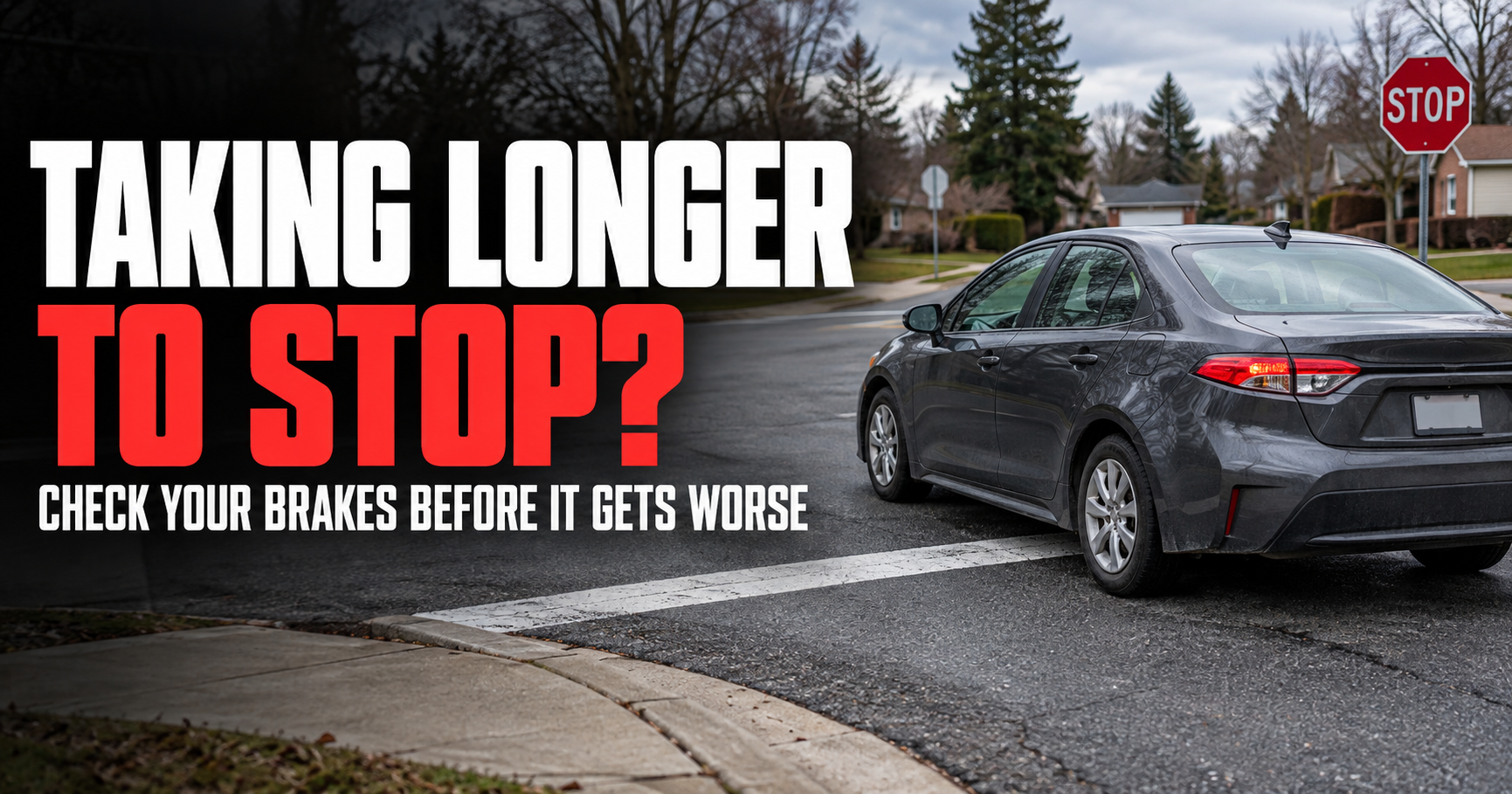
You press the brake pedal at a familiar intersection, but the car rolls farther than you expect. Maybe you have to push harder, start braking earlier, or leave extra space before a stop sign.
That change deserves attention. Longer stopping can come from the brakes, the tires, or the road surface. A soft pedal points toward a different set of problems than a firm pedal with poor grip on wet pavement. Heat after repeated braking can change performance, too.
If stopping ability has suddenly dropped, the pedal sinks, or you cannot confidently stop the car, pull over safely and arrange a tow. Do not use the next trip to find out whether the problem happens again. If the change is gradual but repeatable, schedule a brake and tire inspection promptly.
Was It the Car, the Road, or Both?
Before naming a failed part, think about where you noticed the longer stop. Was it on the same dry road where the car normally stops well? Or was it during the first rain after a dry spell, on gravel, over ice, or while braking downhill?
Road grip has a major effect on how quickly a vehicle can stop. Even fully functioning brakes cannot make worn tires grip a slippery road the way healthy tires grip dry pavement. Speed and the distance you leave ahead of the car also matter.
That does not mean you should blame the weather for a clear change in your car. If it repeatedly needs more distance on ordinary dry roads, or the brake pedal feels different, have it inspected.
I would give the shop both pieces of information: “It takes longer to stop” and “This is when I noticed it.” That helps them check the right parts instead of guessing from one broad symptom.

What Does the Brake Pedal Feel Like?
The pedal is one of your best clues because it tells you how the system responds when you ask the car to slow down.
A pedal that goes farther toward the floor, feels spongy, or needs a second push may suggest a hydraulic brake problem. A pedal that barely moves and requires much more leg force may indicate reduced brake assistance. A pedal that kicks rapidly near the end of a gentle stop can raise a question about ABS activity. None of those sensations proves one particular part has failed.
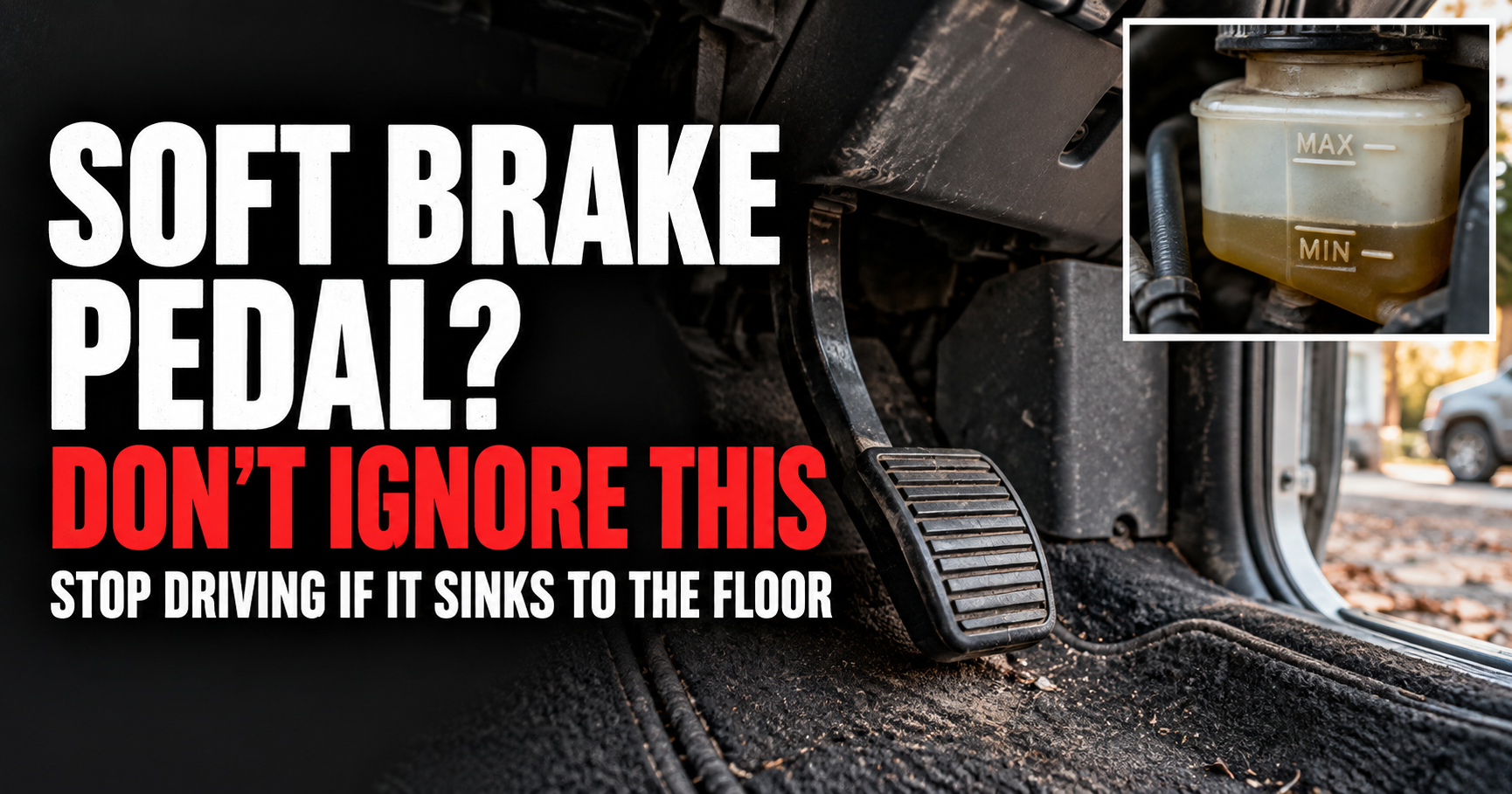
If yours has become low or spongy, our guide to what a soft brake pedal means explains the signs that call for immediate attention. Tell a mechanic how the pedal feels compared with its normal behavior in your car.
Do not keep driving because pressing harder still manages to stop it. The extra effort or travel may matter most when you have the least time to react.
A Pedal That Has Become Hard to Push
Some drivers describe longer stopping distance when the real change is how much force it takes to press the pedal. The car may still brake, but the usual power assistance is reduced, so an ordinary press no longer gives the response you expect.
That can happen when the brake booster or the system supplying its assistance has a problem. Vehicle designs differ, so a shop should check the assist system fitted to your car.
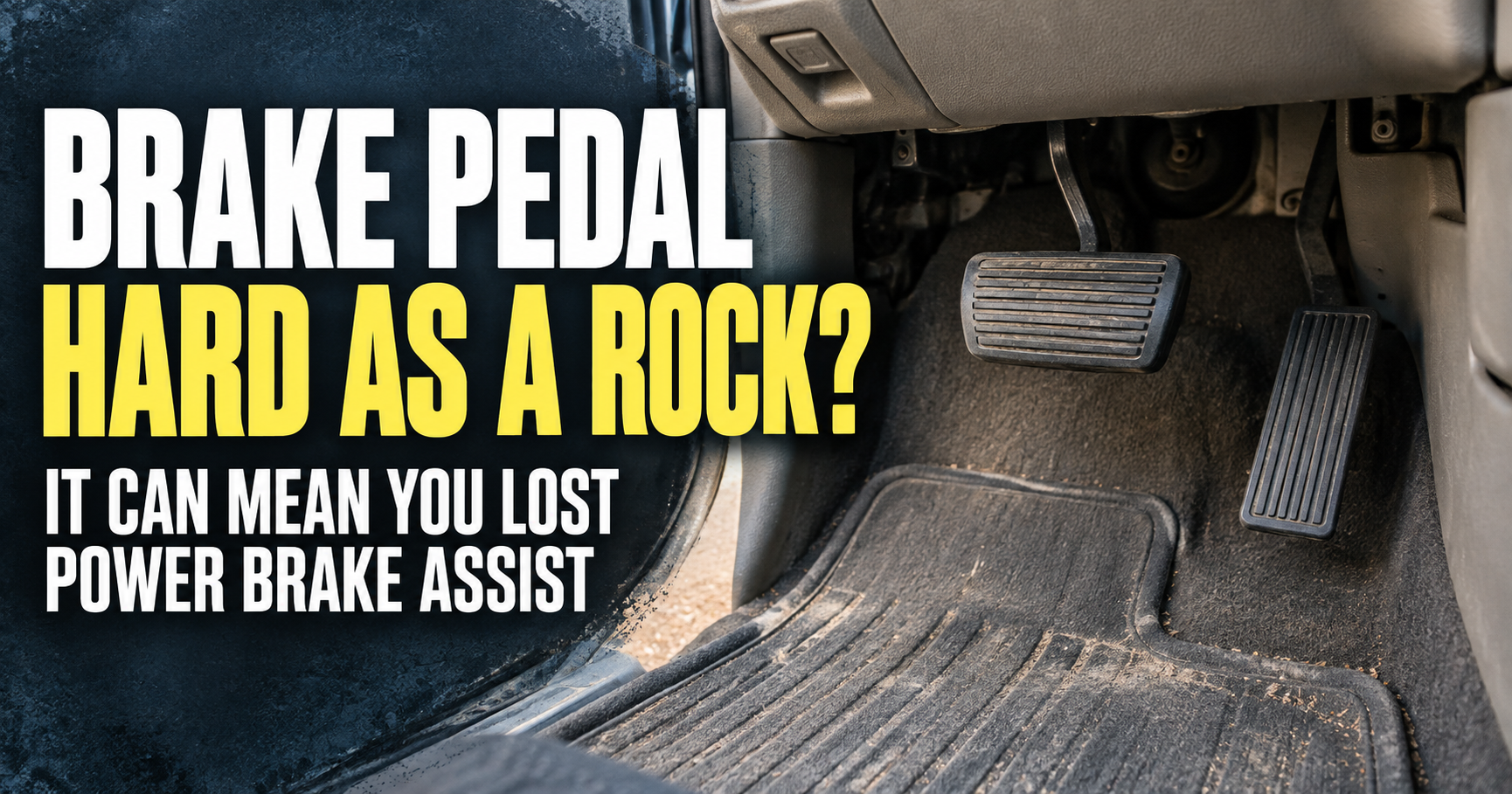
Our article on a brake pedal that is hard to push goes through the clues, including whether the engine was running when the pedal changed. If the pedal became hard while driving and the car needs unusual effort to stop, arrange a tow after reaching a safe place.
Worn Pads and Damaged Braking Surfaces
Brake pads and rotors need to make effective contact to slow the wheels. Worn pads, damaged surfaces, or parts that are not moving correctly may reduce braking performance.
Do not assume that every longer stop calls for new pads. The mechanic needs to inspect their remaining thickness and wear pattern, check the rotors, and look at how the calipers apply and release. An unevenly worn pad may be evidence of another problem that also needs repair.

Noise adds context. A new grinding sound during braking deserves prompt attention because it can indicate serious wear or contact between parts that should not be rubbing. Our guide to car noises when braking can help you describe whether you hear squealing, scraping, or grinding.
A brake job should address what caused the poor stopping, not simply replace the most familiar parts.
A Caliper That Is Not Doing Its Job
A brake caliper helps press pads against a rotor. Problems with its movement can prevent a brake from applying or releasing as intended.
If braking force differs from side to side, the car may pull while stopping. If a brake remains partly applied after you release the pedal, heat can build during the drive. You might notice a burning smell near a wheel, a sluggish feeling, or a pull that grows more obvious after several stops.
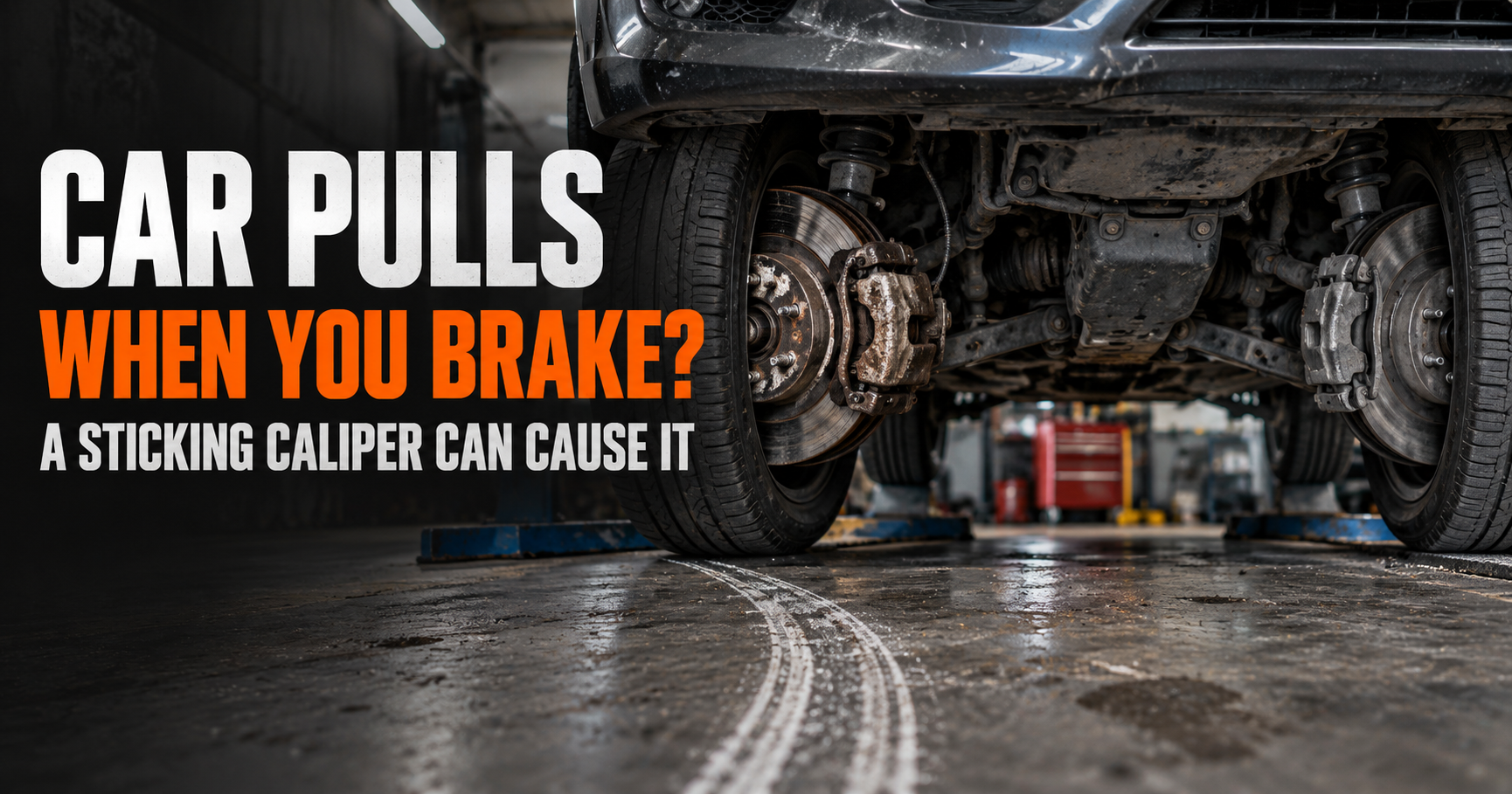
Tell the shop if the car veers in a particular direction. Our guide to a car pulling when braking explains why the direction is a useful clue but does not identify the failed side by itself.
If you notice smoke or a strong burning odor, stop safely. Do not touch the wheel or brake parts to check their temperature.
Brake Fluid Leaks and Pressure Problems
The hydraulic brake system uses fluid pressure to apply the brakes. A leak or another pressure problem may leave the pedal low, change how it responds, and reduce stopping ability.
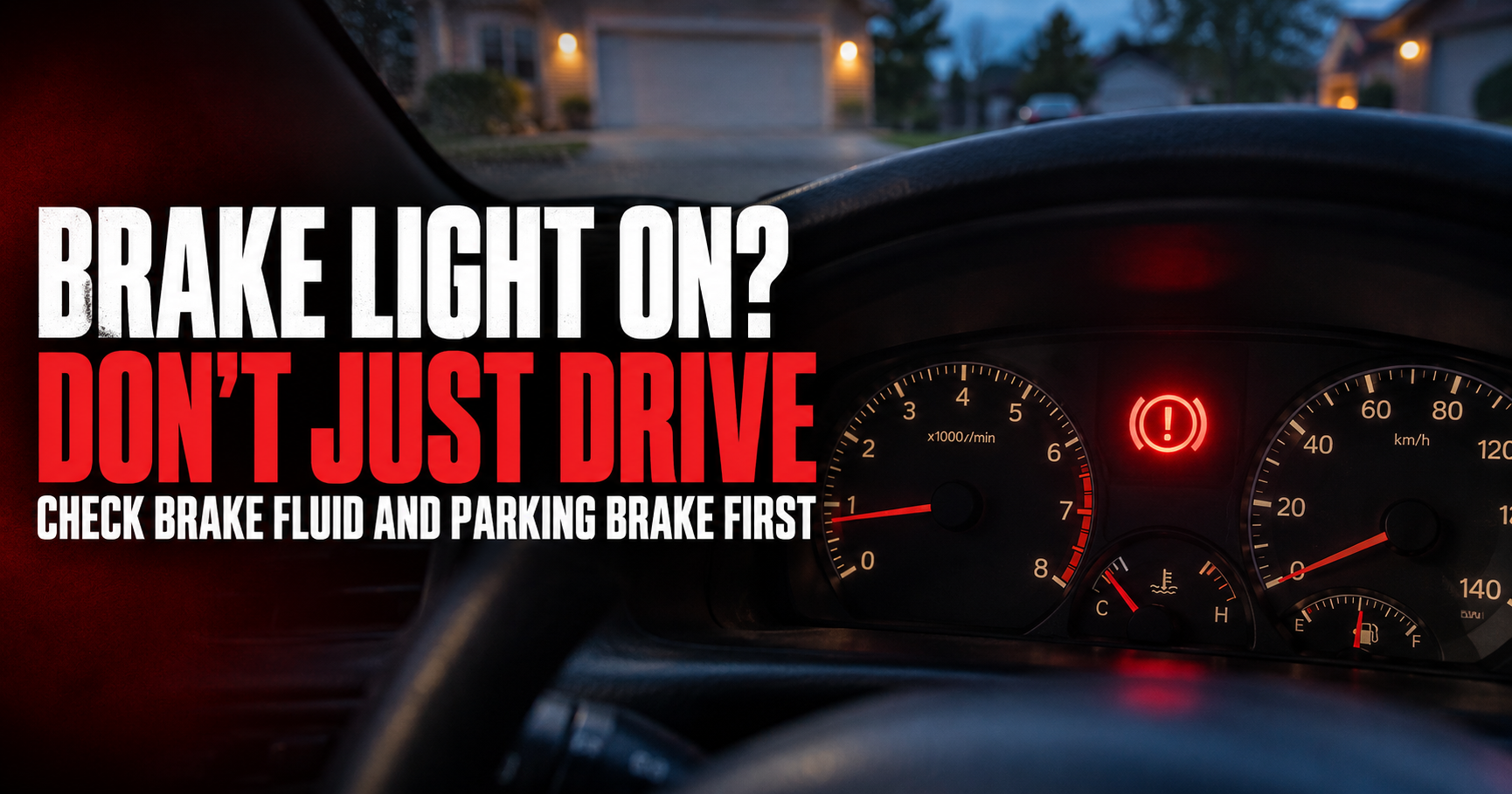
You might see fluid near a wheel or beneath the vehicle, but an absence of a puddle does not prove the system is sound. A brake warning light or a pedal that sinks under steady pressure also deserves immediate attention.
Do not simply top off a low reservoir and continue driving. A lower level can have different explanations, including brake wear or a leak. A shop needs to identify why it changed.
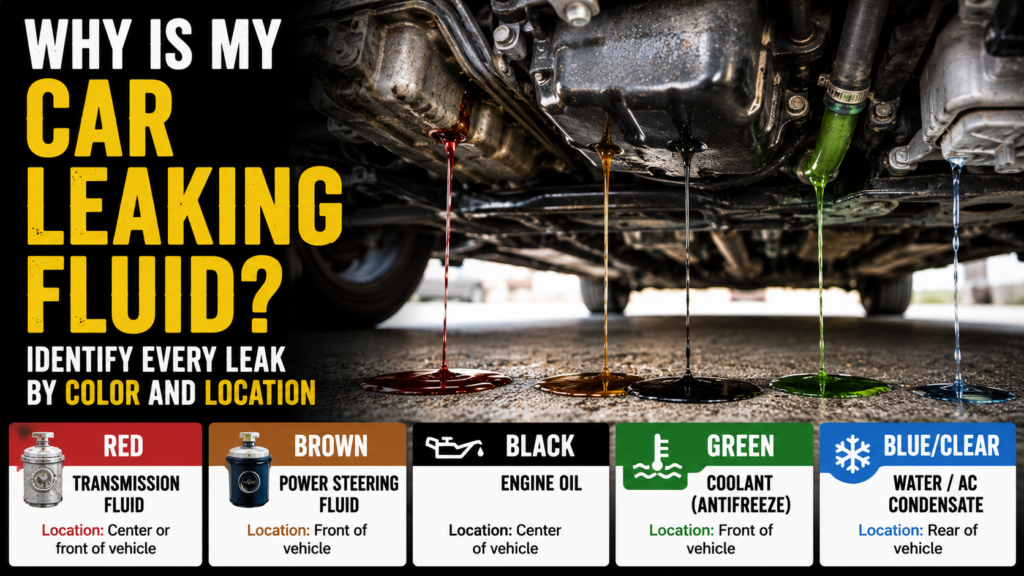
If you noticed an unidentified spot where the car was parked, our guide to identifying a car leak by color and location may help you describe it. A fluid spot plus a change in braking is a reason to stop using the car until it is checked.
Brakes That Fade After Repeated Stops
Does the car brake normally at the beginning of a trip but need more distance after traffic, a long downhill drive, or repeated hard stops? Tell the shop about that pattern.
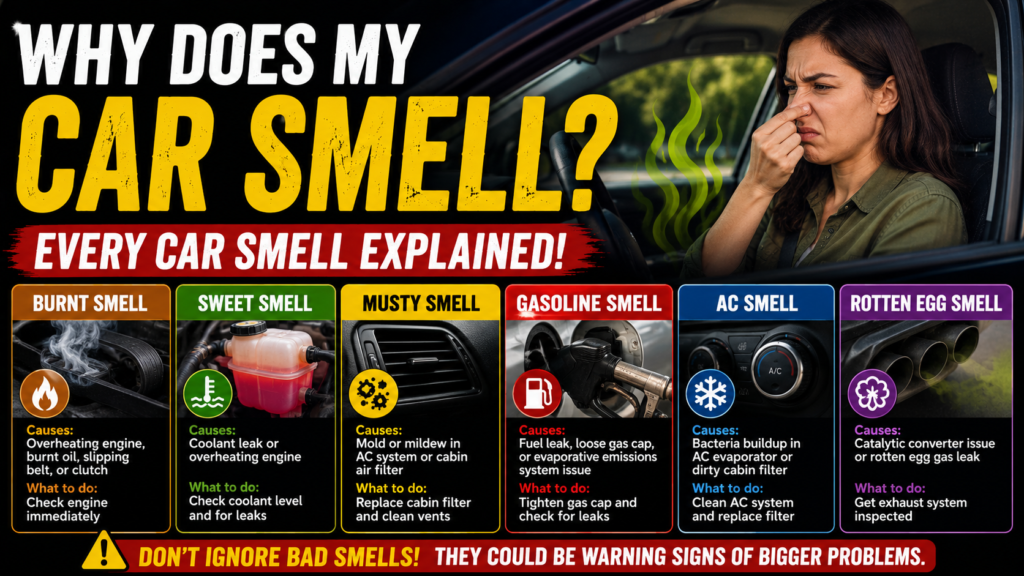
Brakes turn motion into heat. Under severe or sustained use, excessive heat can reduce their effectiveness. A burning odor may be another sign that something got too hot. A brake that drags can also create heat during an ordinary drive, without any mountain road or hard stopping.
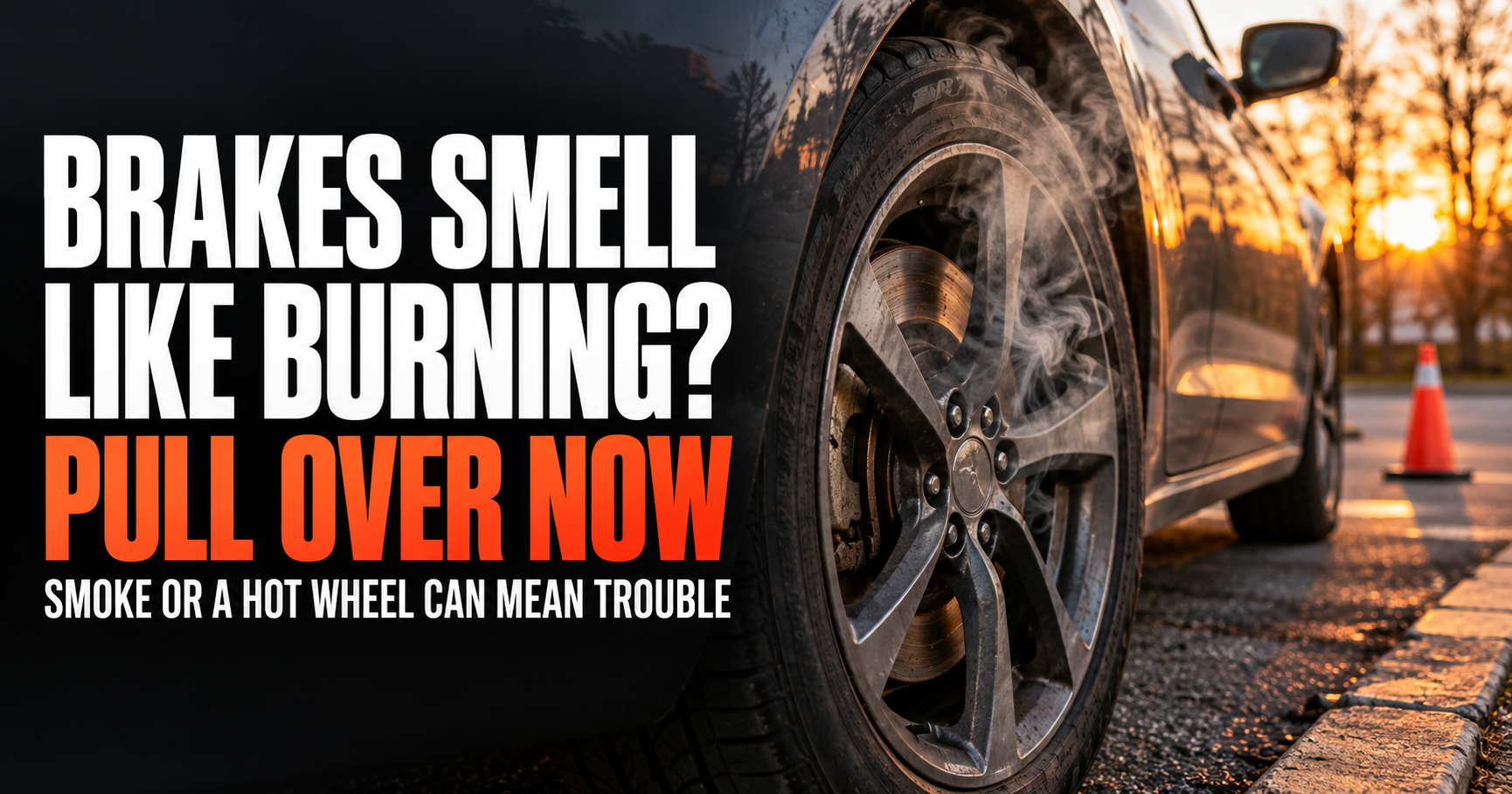
Our article on brakes that smell like burning covers what to do when odor or smoke appears. If stopping has become weaker at the same time, pull over safely, let the brakes cool without touching them, and arrange an inspection before continuing.
Cooling down may make the immediate symptom less obvious. It does not establish that the brakes escaped damage or that a dragging part has released correctly.
Tires Determine How Much Braking Reaches the Road
Brakes slow the wheels, but the tires have to grip the pavement to slow the car. This is why longer stopping is not always a brake parts problem.
Worn tread can make a particularly noticeable difference on wet roads. Tire damage, improper inflation, and uneven wear can also affect grip and handling. If you notice the change primarily in rain, ask for the tires to be inspected along with the brakes.
You can check cold tire pressures against the vehicle’s door placard while the car is safely parked. Look for visible cuts, bulges, or unusually worn tread. Do not use the maximum pressure printed on the tire sidewall as the pressure target for your car.
A tire that looks acceptable from a distance can still have inadequate tread or another issue. Ask the shop for actual tread measurements and an explanation of anything it finds.
Why Wet Roads Reveal a Problem First
A driver may first notice a longer stop in the rain even though the car felt ordinary on dry pavement. Tires have less grip available on a wet road, so declining tread can become more apparent there.
A wet stop also differs depending on speed, standing water, pavement texture, and how heavily you brake. One unusually long stop does not diagnose worn tires. It does tell you to pay attention to the tires and whether the car responds normally in other conditions.
If the car has begun sliding or ABS activates frequently during ordinary wet-road braking, leave much more room and get the tires and brakes inspected. Do not perform deliberate hard stops on a public road to compare performance.
Why Stopping Distance Changes So Much With Speed
It is easy to overlook a brake or tire problem in a parking lot. At higher speeds, the car has more motion to shed before it stops, and a loss of grip or braking performance can become much more consequential.
If you have noticed that you must brake earlier on a familiar road, treat that as useful evidence. You do not need to measure an exact distance or compare the car against a number found online. Road grade, weather, tire condition, vehicle load, and the way the stop begins all affect a real-world result.
Tell the mechanic what changed under similar conditions: “I used to slow easily for this exit, and now I need noticeably more pedal pressure on the same dry approach.” That is a stronger description than a guessed stopping-distance measurement.
What If the Pedal Pulses While the Car Takes Longer to Stop?
A pedal that rapidly kicks back can be normal ABS feedback during a hard stop on slippery pavement. A repeating pulse during ordinary braking can also signal a problem that needs diagnosis.
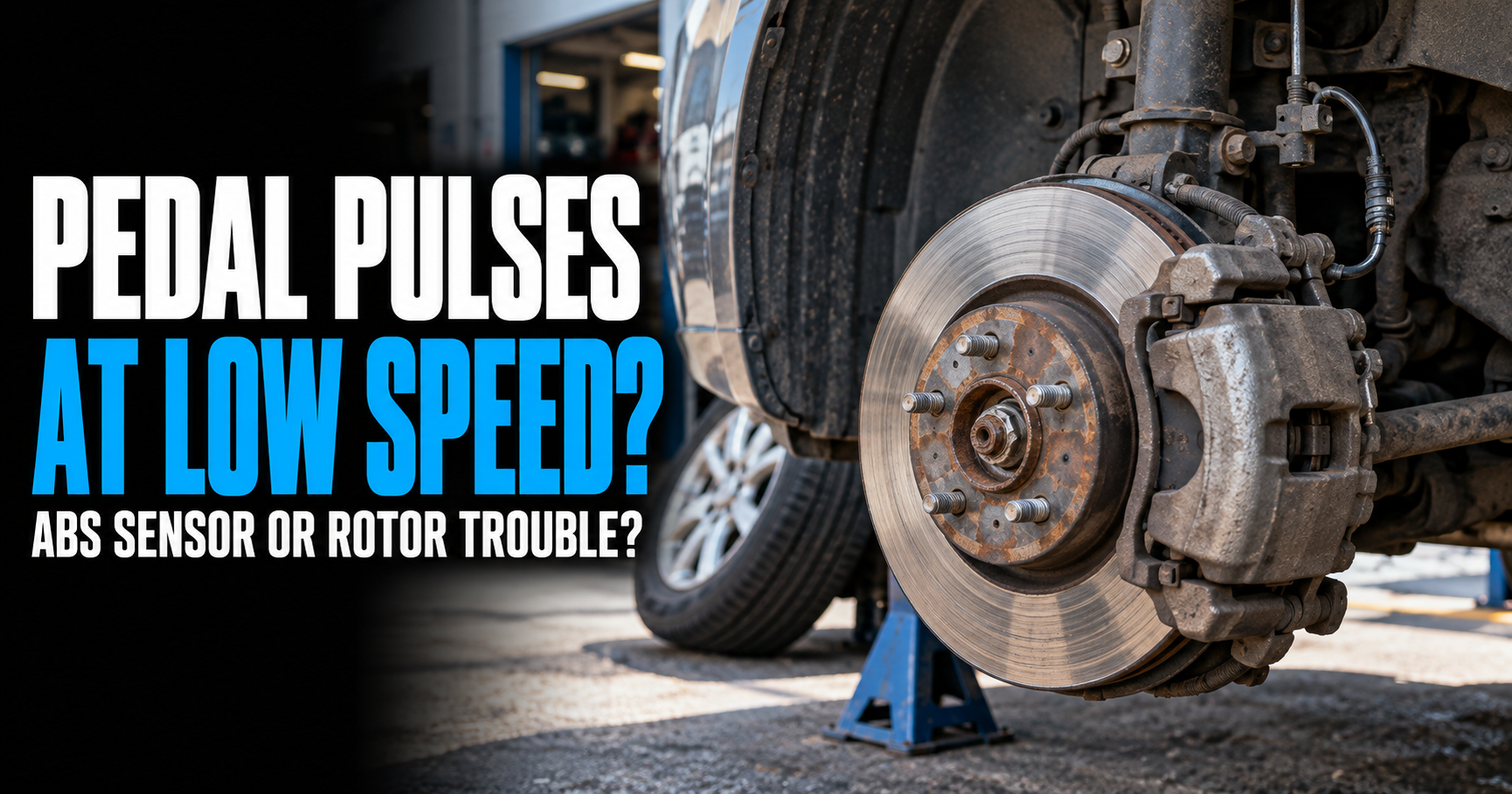
If it happens only in the final few feet of a gentle stop on dry pavement, our guide to a brake pedal that pulses at low speed explains the difference between possible ABS activity and mechanical brake pulsation.
Tell the shop whether you also felt the car hesitate to slow. A sensation in the pedal and a measurable loss of stopping confidence together deserve more attention than an isolated noise or vibration.
What If the Steering Wheel Shakes?
A steering wheel that shakes during braking can point toward uneven brake contact or another part affecting how the front of the car responds. It is a separate clue from how far the vehicle travels before stopping.
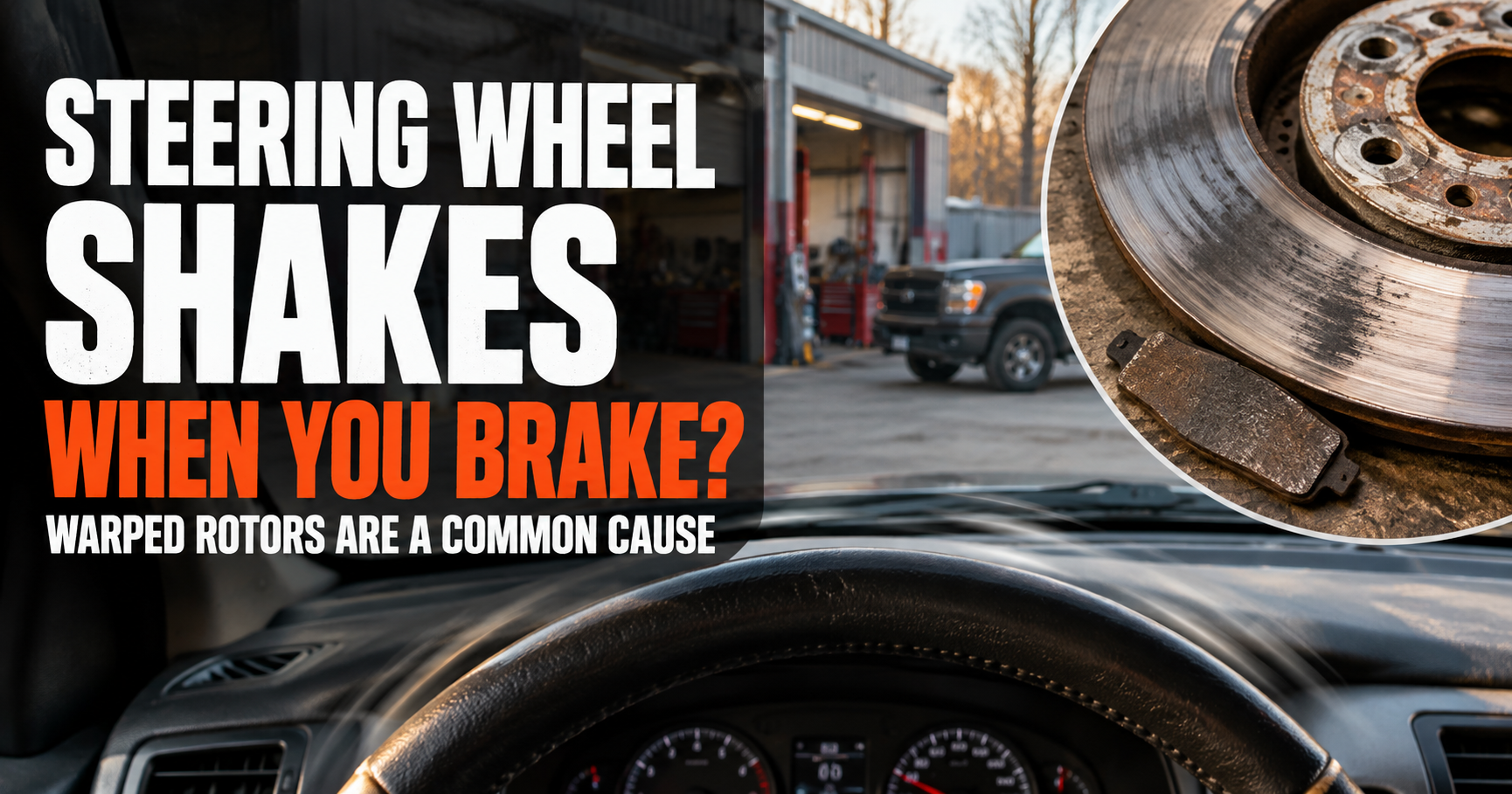
Our guide to steering wheel shake while braking covers why replacing rotors based on vibration alone can be a guess. If you notice both a shake and longer stops, make sure the shop knows about both symptoms.
Mention whether the shake begins as soon as you press the pedal, happens mainly from highway speed, or appears after repeated stops. The timing helps a technician reproduce it.
Could Extra Weight Be the Reason?
A heavily loaded car may take more distance to stop than the same car with only the driver inside. If the vehicle is carrying an unusually heavy load or towing, account for that change and allow more room.
Weight is not an explanation for a pedal that suddenly becomes soft, a brake warning light, a pull, or grinding. Nor should a vehicle struggle with a normal load that it handled comfortably before.
Check the vehicle’s loading guidance and tell the shop what you were carrying when you noticed the change. If poor stopping persists with the car unloaded, have it inspected.
How to Describe the Problem Without Guessing at a Repair
A useful description covers the conditions, pedal feel, and any other symptoms. For example:
“Over the last week, my car has needed more distance to stop on dry roads. The pedal feels firm, but I have to push harder than I used to. I haven’t heard grinding or seen a warning light.”
Your car may tell a different story. You might report that the pedal sinks, the car pulls left, the problem appears only after a long drive, or the tires slide more readily on wet pavement.
Include recent brake or tire work. A problem that began immediately after a repair gives the shop a different starting point from one that developed gradually over several months. Bring the invoice if you have it.
What a Proper Inspection Should Cover
The shop should investigate the symptom rather than assume “longer stop” means “new pads.” The relevant checks depend on your car and what you described.
For the brakes, that may include measuring pad and rotor condition, looking for uneven wear or fluid leaks, checking caliper operation, evaluating pedal feel, and checking the assist system when extra pedal force is required. For the tires, it means looking beyond a dashboard pressure light to assess inflation, tread, damage, and uneven wear.
Ask what the technician found and how the proposed repair improves the stopping problem. If the estimate lists pads and rotors, were they measured or visibly damaged? If it lists a hydraulic part, where was pressure or fluid being lost? If it lists tires, what were the tread measurements and condition?
Those questions help you approve a repair for a documented reason instead of paying for the first plausible guess.
When to Stop Driving Instead of Scheduling a Visit Later
Stop safely and arrange a tow if the car cannot slow as expected, the pedal goes toward the floor, it takes dramatically more force to brake, a red brake warning appears with changed performance, or you notice a fluid leak along with pedal changes.
A sharp pull, grinding, smoke, or strong burning smell also calls for immediate attention. Once the car is stopped, do not drive another loop to see whether the symptom clears.
If the change is gradual and the vehicle still brakes predictably, schedule a prompt inspection rather than waiting for the next routine oil change. Leave more space on any necessary trip, and stop driving if braking gets worse.
Questions About a Car Taking Longer to Stop
Why does my car take longer to stop when the brakes do not squeak?
Brake noise is only one possible symptom. Tire grip, brake heat, hydraulic pressure, worn parts, and reduced brake assistance can affect stopping without producing a squeak. Have the brakes and tires inspected based on the change you feel.
Why does it stop normally at first but poorly later?
Repeated braking can build heat and reduce performance. A dragging brake may also grow hotter as you drive. Tell the shop how long it takes for the problem to appear and whether you noticed an odor or pedal change.
Can tires make a car take longer to stop?
Yes. The tires must grip the road for braking to slow the car effectively. Worn tread and other tire problems can become especially noticeable on wet pavement.
Will changing brake pads fix the longer stopping distance?
It will help if worn or damaged pads are the confirmed cause and any related problem is addressed. New pads will not fix a fluid leak, loss of brake assistance, or worn tires. An inspection should come before ordering parts.
What if I cannot tell whether the pedal has changed?
Describe what you can tell: where the longer stops occur, whether the car pulls or vibrates, whether the issue is worse in rain, and whether it changes later in the drive. A technician can evaluate pedal feel and the rest of the braking system during the inspection.
By Dana Callahan, an automotive troubleshooting writer for Why Is My Car. Dana’s guides connect the symptoms drivers can observe with the checks a repair shop can perform, so readers know when to stop driving and what to ask before approving a repair.

