
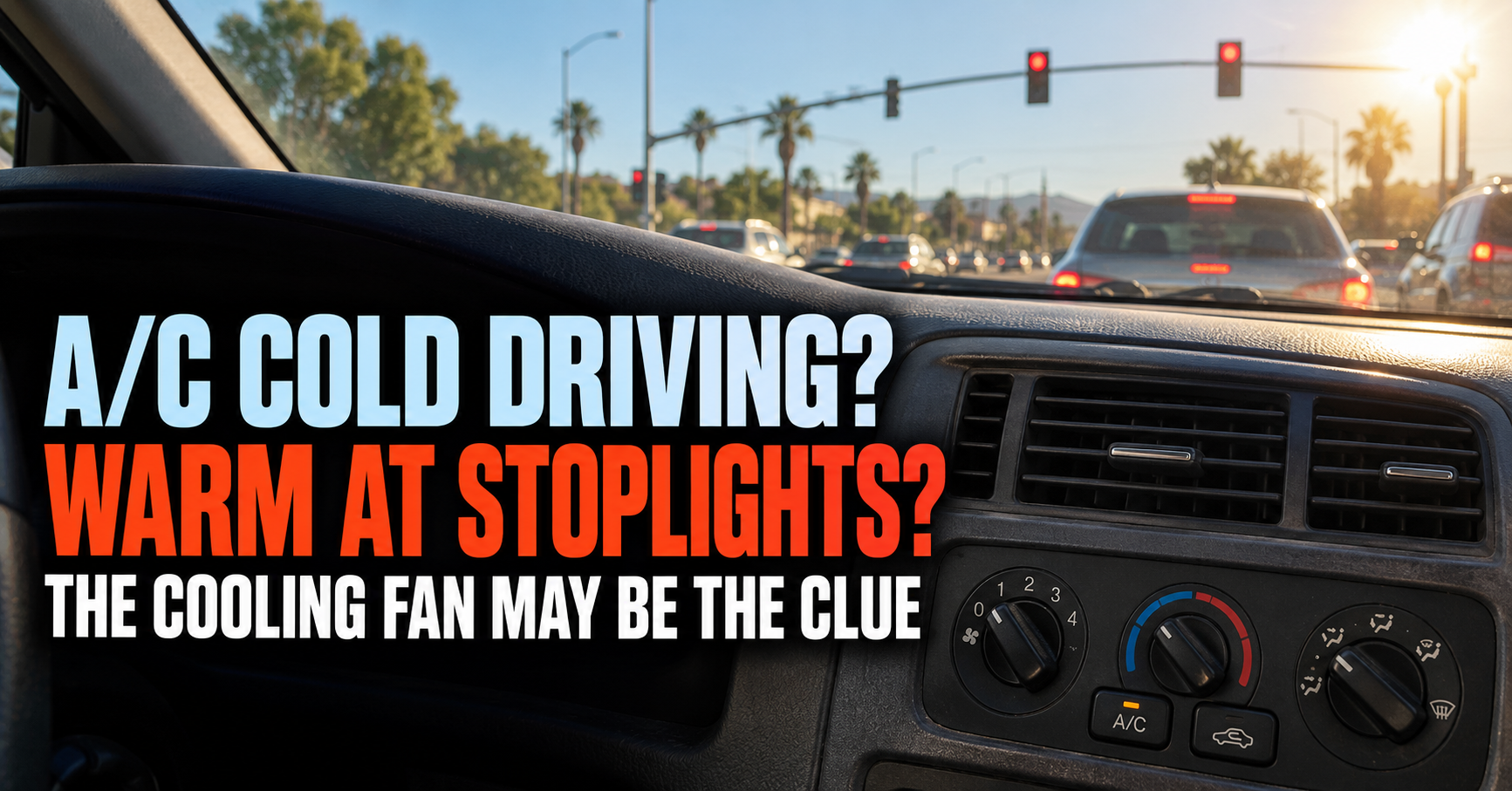
You’re moving down the road with cold air coming from the vents. Traffic stops, and a minute later the A/C starts feeling warm. As soon as you get moving again, the cold air returns.
That timing is the clue. While the car moves, outside air flows through the condenser at the front of the vehicle. When the car stops, its fans have to help move air through that area. Poor condenser airflow is one reason A/C can work on the road and struggle at a stoplight. It is not the only reason, so I would watch what else changes before deciding the fan is bad.
Look at the engine temperature first
The A/C can wait. An overheating engine cannot.
The next time cooling fades in traffic, glance at the engine temperature gauge or warning display. Does it stay where it normally does, or start climbing while the car is stopped?
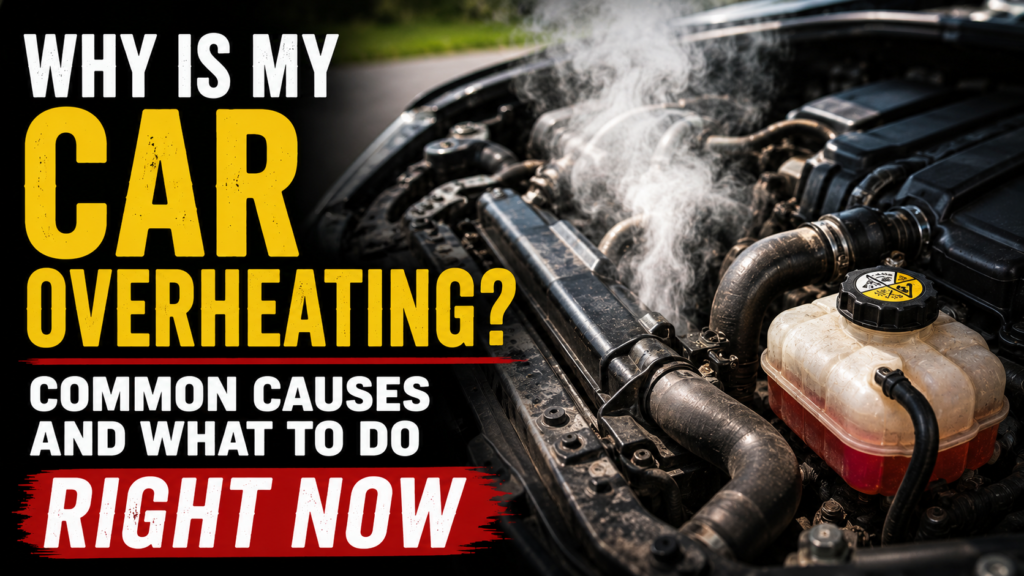
If a high-temperature warning appears, the gauge reaches the hot range, or you see steam, pull over safely and shut off the engine. Turning the A/C off may reduce the load, but it is not a repair and does not make an overheating warning safe to ignore. Follow the steps in our car-overheating guide.
If engine temperature remains normal, the A/C still needs diagnosis, but the situation is less urgent. Make a note of that stable gauge reading. It helps the shop understand whether the problem appears limited to cabin cooling.

Why a stoplight changes A/C performance
The condenser releases heat from the A/C refrigerant. It sits near the front of the car, where it gets airflow as you drive.
At a stop, that road-speed airflow disappears. Depending on the vehicle, one or more electric fans help move air through the condenser and radiator. If a fan does not operate when needed, cooling can weaken noticeably at idle and improve as soon as the car moves. A heavy-truck example of the same cold-while-driving, warm-at-idle pattern shows how lost condenser airflow affects A/C performance: cold while driving warm at idle
That makes the fan a sensible thing to test, not an automatic replacement. A low refrigerant charge, compressor issue, debris blocking airflow, or a problem with how the system commands the fans can also produce poor cooling at idle.
The pattern is most useful when it repeats: cold during a normal drive, warm during a long stop, cold again once you move.

Make sure the air itself is turning warm
I would separate two complaints that sound similar.
The fan still blows strongly, but the air gets warmer. That points toward cooling performance or temperature control. The A/C is moving air into the cabin; it simply is not making that air cold enough at the stop.
The air coming out of the vents gets weaker. That could involve the blower, an airflow restriction, or another ventilation problem. If the airflow slowly dwindles after the A/C has run for a while and returns after the system is off, tell the shop that exact sequence.
Keep the cabin fan on one setting while you compare driving and stopping. Otherwise, it is easy to mistake a change in fan speed for a change in A/C temperature.
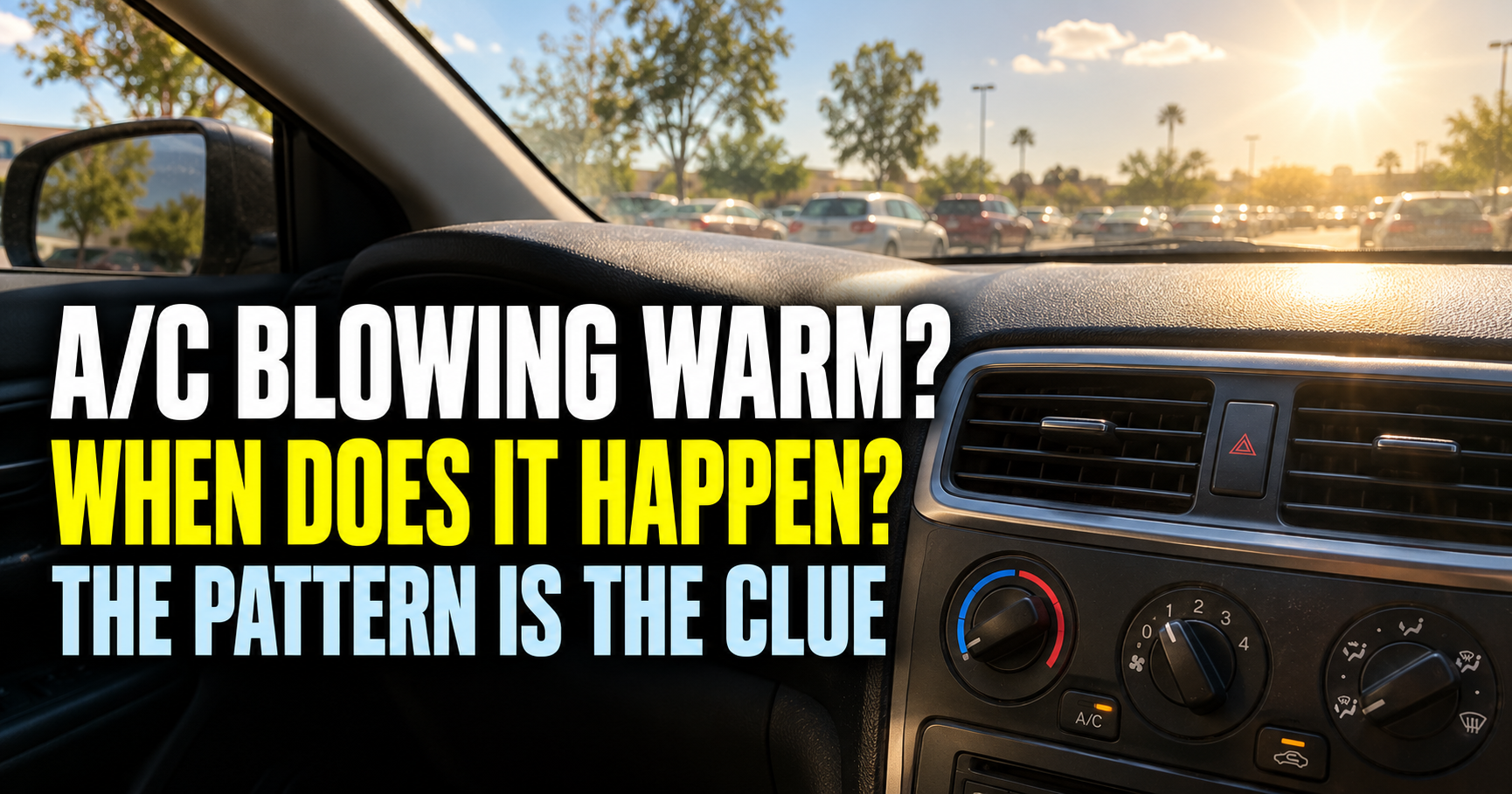
Our broader guide to A/C blowing warm air covers the other patterns, including A/C that never cools at all.
Does it happen only in heavy traffic?
A quick red light and twenty minutes of crawling traffic are different tests.
If the A/C warms only after a long period of idling on a very hot day, write down roughly how long it takes. Does the engine temperature also rise? Does cooling return immediately when traffic starts moving, or only after several minutes?
If the A/C turns warm at every stop, even on a mild day, mention that too. A repeatable change may be easier for a shop to reproduce than a complaint that appears only after the car has been heat-soaked in traffic.
Outside temperature matters. So does how hot the cabin was before the drive. A car that has sat in direct sun can take time to cool, but a system that consistently loses previously cold air whenever you stop deserves inspection.
Could the cooling fan be the problem?
Yes. A fan that fails to run when the A/C system needs it can leave the condenser without enough airflow at idle.
But you cannot reliably diagnose that by briefly looking under the hood. Fan operation varies by vehicle, temperature, A/C demand, and control strategy. Some vehicles use more than one fan or more than one fan speed.
There is also a safety issue: an electric fan can start unexpectedly. Keep hands, clothing, and tools away from the fan and belts. A technician can check whether the fan is being commanded on and whether it responds as intended.
Ask the shop whether it tested the fan with the A/C fault present. A fan that happens to run during one glance does not prove every speed and operating condition is working properly.
What about leaves or debris in the front grille?
After the car is parked, shut off, and cool, take a look through the grille. A buildup of leaves, plastic, or road debris in front of the condenser can interfere with airflow.
If you see obvious damage or a blocked section, take a photo for the shop. Do not reach into the grille near fans or try to straighten delicate fins by hand.
A dirty condenser can reduce performance, especially when the car is not moving. It is still worth having the whole system checked if clearing visible debris does not resolve the symptom. The grille view shows only part of what is happening.



Could low refrigerant act this way too?
It can. The A/C system needs the correct refrigerant charge to work under different conditions. A charge that is low may leave cooling marginal, and idle in hot weather can make that weakness more noticeable.
I would be cautious about calling it a “simple recharge.” If the system is low, ask why. Refrigerant may have escaped through a leak, and adding more will not fix the place it leaked from.
A shop can check system performance, confirm the refrigerant type and charge specified for your car, and investigate leaks when the findings point that way. The EPA describes professional evacuation and recharge as a process that removes and measures the refrigerant rather than guessing from the vent temperature alone.
If someone suggests a recharge without checking fan operation or trying to reproduce the stoplight symptom, ask how they ruled those possibilities out.
A compressor or control problem is possible
Some A/C problems show up differently at idle because engine speed and operating conditions change. A compressor that is not working properly, or a control that stops requesting cooling at the wrong time, can leave the vents warm.
That does not mean you can confirm a bad compressor by revving the engine in the driveway. Modern vehicles control A/C in different ways, and an engine-speed change can affect several parts of the system at once.
Tell the technician what happens in normal driving. If cooling returns the moment you move, say so. If it takes several minutes, say that instead. The shop can compare the system’s commands and performance at idle with what happens at a higher engine speed.
Should you test it by leaving the car idling?
You do not need to sit in a hot car for half an hour just to prove the point. If the pattern already happens during ordinary driving, record it and arrange an inspection.
If you do make a short observation while parked, stay outside enclosed spaces. Never run a vehicle in a garage, even with the door open. Watch the engine temperature, and stop the test if it rises toward hot or a warning appears.
The shop should be able to reproduce the complaint under controlled conditions. Your job is to describe when it occurs, not to diagnose an operating fan or handle refrigerant yourself.
What I would tell the repair shop
A useful description sounds like this: “The A/C starts cold. After two or three minutes stopped in traffic, the vent air turns warm, but the blower stays strong. It gets cold again when I’m moving. The engine temperature stays normal.”
Change those details to match your car. Mention how hot it was outside, how long you had driven, and whether the engine gauge moved. Say whether the A/C recently had a recharge or any work near the radiator or front bumper.
Then ask whether the shop checked condenser airflow and fan operation at idle, measured A/C performance, and confirmed the refrigerant charge before recommending parts. Those answers are more useful than “we think it needs a fan” or “it probably needs gas.”


Frequently asked questions
Why does my car A/C get cold when I accelerate?
Moving the car increases airflow through the condenser, and a change in engine speed can affect A/C operation too. The symptom makes condenser airflow worth checking, but it does not identify one failed part on its own.
Does this mean my radiator fan is broken?
Possibly, but fan behavior depends on the vehicle and conditions. The shop needs to test whether the relevant fan and its controls work when the A/C becomes warm at idle.
Can I drive with A/C that turns warm at stoplights?
Usually, if the only issue is cabin cooling and the engine temperature stays normal. Watch the gauge. If the engine overheats or a temperature warning appears, pull over safely and shut it off.
Will an A/C recharge fix the problem?
Only if an incorrect refrigerant charge is the cause. It will not repair a failed fan or blocked condenser, and refrigerant added to a leaking system may escape again. Ask for a diagnosis before paying for a recharge.
Why is my A/C worse in traffic on very hot days?
Hot conditions and long periods without road-speed airflow make it harder for a marginal system to cool. Note whether it happens only during extended traffic or at every stop; that timing helps the shop reproduce the problem.
About the Author: Morgan Ellis writes practical troubleshooting guides for Why Is My Car, helping drivers describe a symptom clearly and ask what testing supports the proposed repair.


