
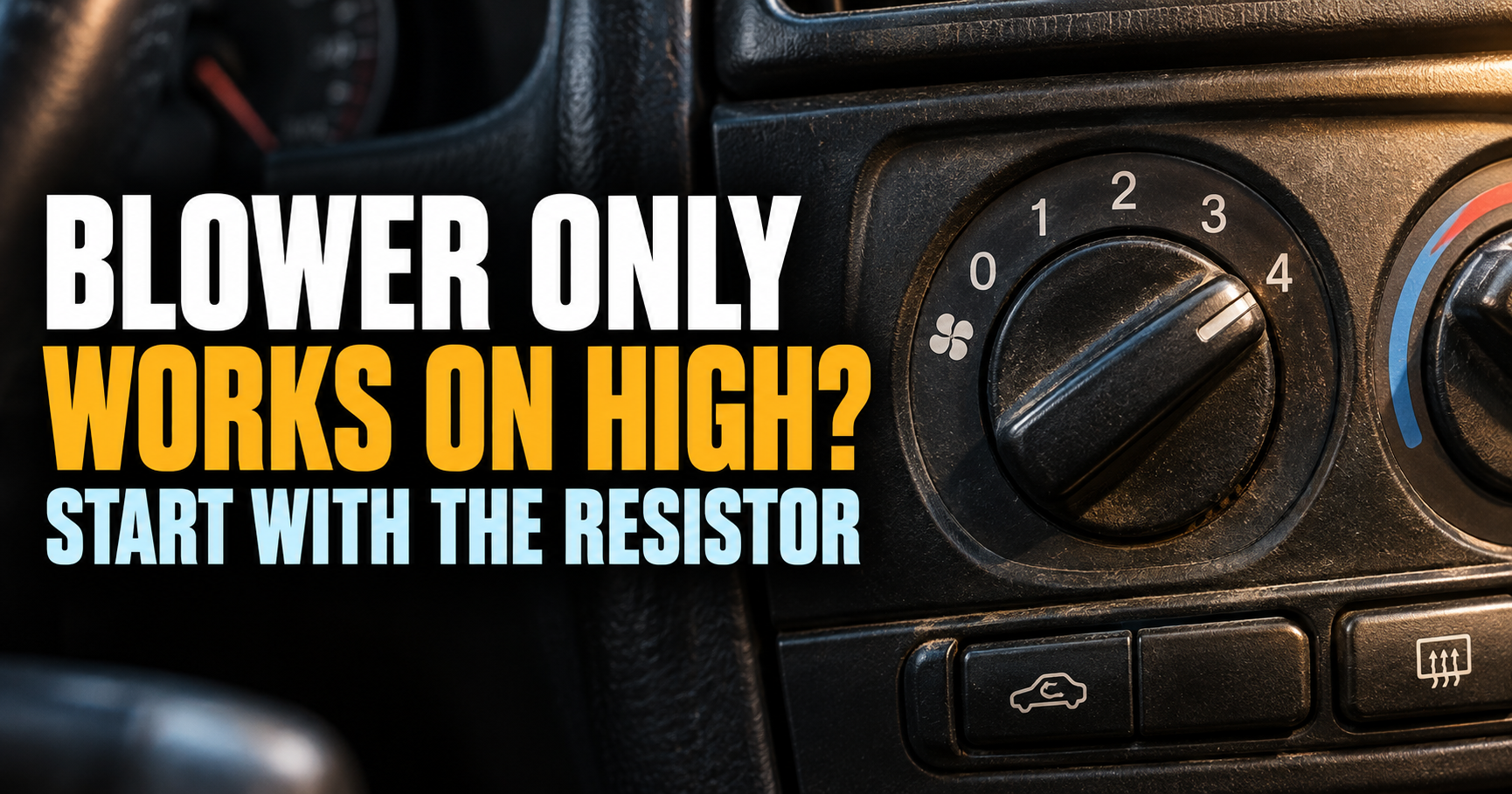
You turn the fan to one, then two, then three. Nothing. Turn it to high and suddenly the vents roar to life.
The heat may still be hot. The A/C may still be cold. What you have lost is control over the cabin fan speed. On many cars, that pattern points toward the blower-speed resistor or its electrical connections. I would still want the blower motor checked before replacing a resistor, because a motor that draws too much current can damage the new part.
Here is how to describe the problem and sort it from the other things people call “the fan not working.”
First, make sure you mean the cabin fan
Cars have more than one fan. The blower fan moves air through the dashboard vents. A separate cooling fan near the radiator helps manage engine and A/C temperatures. When the cabin blower works but the A/C becomes warm only while stopped, A/C that warms at stoplights explains how to separate a cooling-fan problem from a blower-speed fault.
This article is about the one you hear inside the car when you change the climate-control fan setting.
Try both heat and A/C with the vehicle safely parked. If neither setting produces airflow on low or medium, but both move air on high, the problem is in the shared cabin airflow controls, not in the heater core or refrigerant alone.
If air comes out strongly on every fan speed but stays warm with the A/C selected, see our guide to A/C blowing warm air. That is a cooling complaint, not a missing fan-speed complaint.



The “high only” pattern is a useful clue
On vehicles that use a traditional blower resistor, lower speeds send electricity through different parts of the resistor circuit. High speed may use a different path. When the lower-speed circuit fails, high can keep working.
That explains why “only works on high” is often associated with a blower resistor. It does not prove that every car with this symptom needs that exact part. Some vehicles use an electronic blower control module instead, and switches, connectors, and wiring can also fail.
Write down which positions work. Does high work every time? Does one middle setting work? Do the lower speeds return if you turn the control back and forth? Those details help a technician test the correct circuit.
Before buying a resistor, ask about the blower motor
I would be wary of a repair that consists of swapping the resistor without looking at the motor and connector.
The motor can become worn or difficult to turn. If it draws more current than it should, the speed-control components and electrical connections may overheat. In some vehicle-specific service guidance, manufacturers tell technicians to address the blower motor and resistor together when the motor is causing repeat resistor failures.
That does not mean everyone needs both parts. It means the shop should inspect the motor, wiring connector, and signs of heat damage before promising that a resistor alone will last.
If the same fan speeds failed again shortly after a previous resistor replacement, tell the shop. That repair history is one of the most useful clues you can give them.
Does the fan work on some speeds, but not others?
A different set of working speeds can still point toward the speed-control circuit. For example, you might have low and high but nothing in between, or lose only one setting.
I would test each position once while parked and note the result. Keep the temperature set the same way while you do it. You are checking how much air moves, not how warm or cold the air feels.
If your car has an automatic climate system with a smooth range of fan speeds rather than a simple numbered dial, describe the behavior in plain language: “The fan stays off until the display is near maximum, then jumps to full speed.” The system may use an electronic controller, so naming a traditional resistor without testing would be a guess.
What if the blower does not work at any speed?
That is a different pattern. A blown fuse, failed blower motor, speed-control unit, switch, or wiring fault could leave the fan completely silent.

Check your owner’s manual for the correct blower fuse location if you are comfortable checking fuses. Replace a blown fuse only with the specified rating. If it blows again, the circuit needs diagnosis. A larger fuse is not a fix. A multimeter for automotive testing can help check whether the fuse and related circuit are receiving power before parts are replaced.
Listen as well. Does the fan make a brief sound and stop? Does it start after the car has been running a while? Does tapping a setting make it cut in and out? Tell the shop, but do not reach under the dashboard to tap the motor while driving.
If the blower is completely dead, there may be no effective airflow for heat, A/C, or windshield defrost. That can become a visibility problem quickly in rain or cold weather.
Could a clogged cabin air filter cause this?
A dirty cabin filter can make airflow weak, and it can make the fan sound as though it is working harder. It usually does not explain a fan that is completely silent on three settings and runs normally on high.
Here is the comparison I’d use: if you can hear the fan changing speed but very little air comes out of the vents, check the filter and air path. If the fan makes no sound at all on the lower settings, the electrical speed-control side deserves attention.
The filter is still worth inspecting if airflow has been weak for months. Restricted airflow can make the windshield harder to clear. But do not pay for a filter change as the entire answer to a clearly missing fan-speed setting unless the symptom actually goes away afterward.


Pay attention to burning smells or a hot connector
An electrical burning smell, smoke from the vents or dash, or a fan that cuts in and out with a hot-plastic odor needs prompt attention. Turn the climate fan off, park safely, and have the vehicle inspected.
Do not keep forcing the fan to run on high to see whether it “clears out.” A damaged connector or overheating electrical component can get worse.
If there is no burning smell and high works consistently, you may be able to arrange an appointment rather than an emergency tow. The important exception is whether you can keep the windshield clear.
Can you drive with the fan stuck on high?
Often you can, provided high speed works, there is no electrical smell or smoke, and you can maintain a clear windshield. It is inconvenient and noisy, but losing low speed by itself does not necessarily mean the engine or A/C compressor is failing.
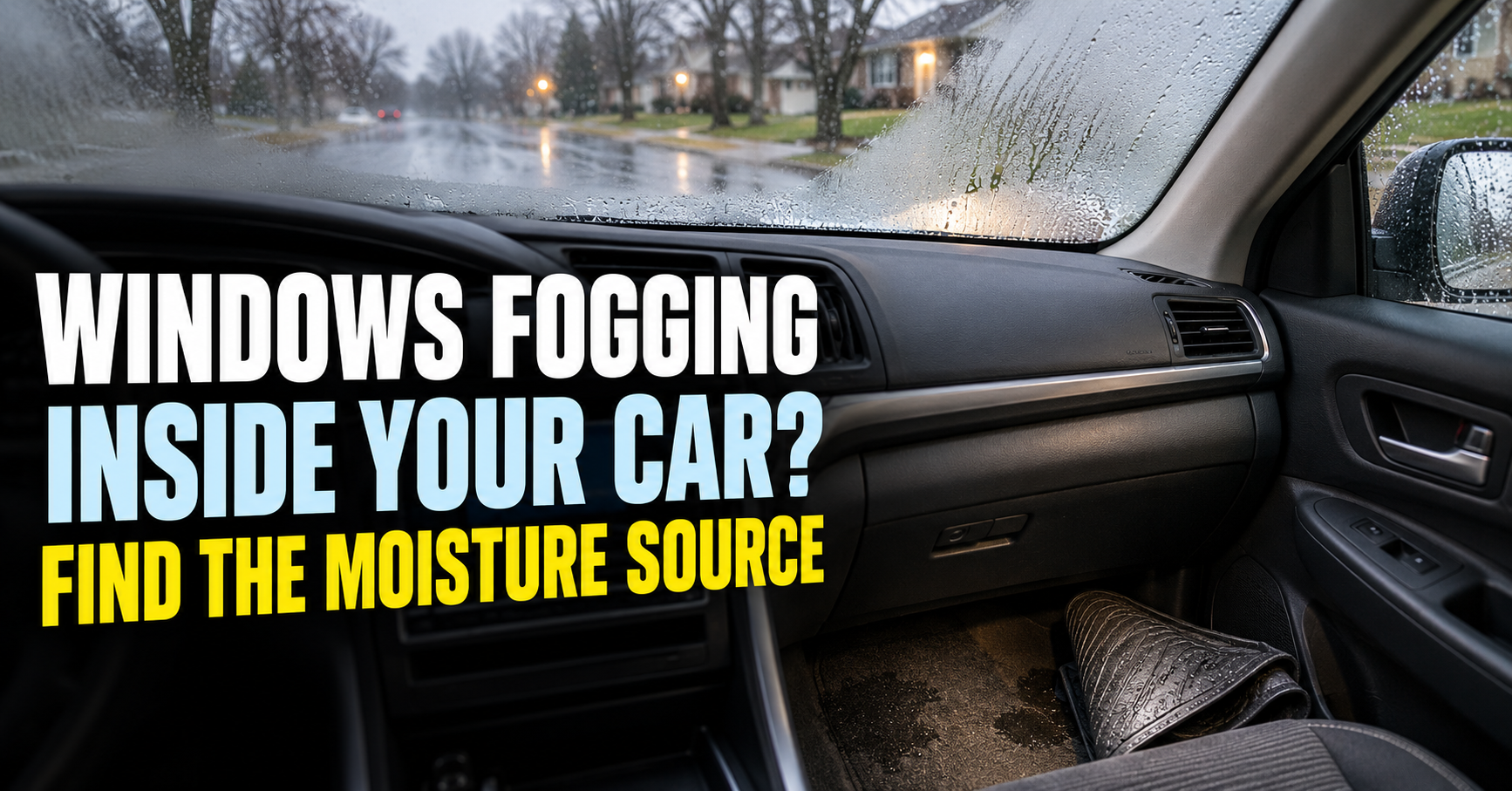
If no fan speed works and the windshield starts fogging, stop somewhere safe. You need visibility more than you need to reach your destination on time. Our guide to windows that keep fogging up inside covers moisture sources too, but a dead blower prevents the defroster from doing its job.
If you smell burning or see smoke, turn the system off and get it checked before continuing.


What a shop should check
Tell the shop which fan speeds work and whether the behavior is the same with heat and A/C. Mention any clicking, squealing, intermittent starts, burning odor, or previous resistor replacement.
Then ask what failed and why. Was the resistor or electronic controller tested? Is its connector discolored or melted? Does the blower motor run freely and draw the expected current for your vehicle?
That last question matters. If a failing motor damaged the speed controller, replacing only the controller may bring the fan back briefly and leave you with the same problem later.
Also tell the shop if the fan runs after the car is shut off. Some vehicles have features that briefly run ventilation after shutdown, but unexpected prolonged operation can point toward a control fault. Your car’s make, model, and year matter here.
The difference between a noisy fan and missing speeds
A fan that squeaks, chirps, or rattles is not automatically the same problem as a fan that has lost low speed. Noise can come from debris contacting the blower wheel or a worn motor.
If the sound changes with fan speed, say so. If low and medium still work but the noise becomes loud on high, that is different from complete silence until you reach high.
A shop may remove the cabin filter to check for visible debris and inspect the blower. Avoid putting fingers or objects into the fan housing. The fan can start when the controls are changed, and forcing the wheel can damage it.

Frequently asked questions
Why does my heater fan work only on high?
A failed blower resistor or speed-control circuit is a common possibility on vehicles designed so high speed uses a different electrical path. The motor and connector also need checking, particularly if a resistor has failed before.
Does “high only” mean the blower motor is good?
It means the motor can run under at least one condition. It does not prove the motor is healthy or drawing the correct current. A worn motor may contribute to repeat speed-controller failures.
Will a cabin air filter fix missing fan speeds?
Usually not. A clogged filter restricts airflow, but it generally does not make specific electrical fan settings stop working. Check it if the fan is audible yet airflow is weak.
Why do my fan speeds work sometimes and disappear later?
An intermittent connector, switch, controller, or blower motor can cause changing behavior. Note whether bumps, temperature, or the length of the drive affect it, and mention any burning smell.
Is the radiator fan the same as the blower fan?
No. The cabin blower moves air through the interior vents. A cooling fan near the radiator helps move air through the radiator and A/C condenser. Tell the shop which fan is misbehaving.
About the Author: Morgan Ellis writes practical troubleshooting guides for Why Is My Car, helping drivers describe what their car actually does and ask what testing supports the proposed repair.


