The NOCO GB40 jump starts your car without another vehicle — 1000 amps, foolproof safe, works on dead batteries. Here’s the full honest review.
A dead battery in a parking lot, on a back road, or in a grocery store parking lot at night is one of the most helpless feelings a driver can experience. Waiting for roadside assistance, flagging down a stranger, fumbling with jumper cables — none of it is fun. The NOCO Boost GB40 eliminates all of that. It’s a portable jump starter that fits in your glove box and gets your car running in seconds — no other vehicle required. Before using a jump starter, the meaning of rapid clicks can help you tell whether rapid clicking is consistent with a battery problem.
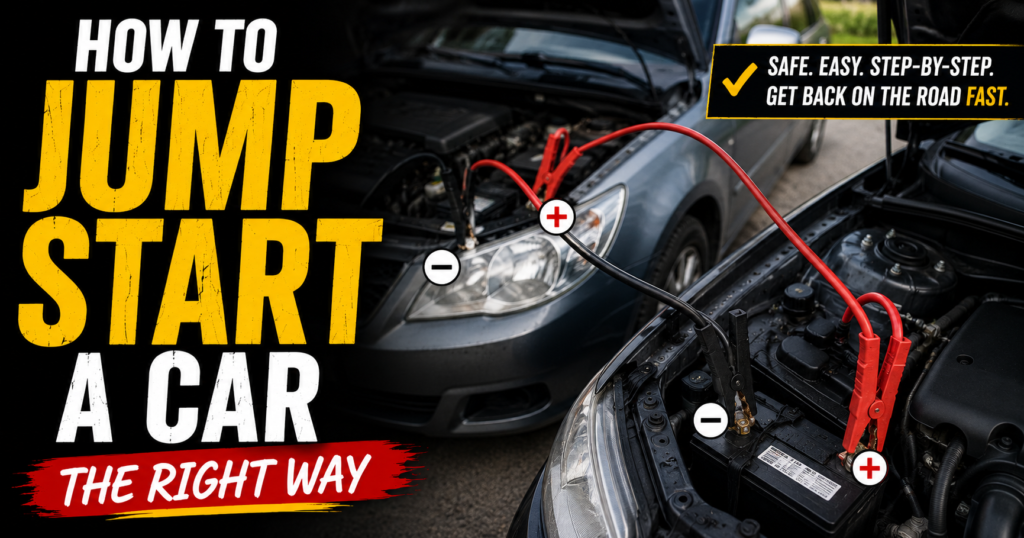
Traditional jumper cables require a second vehicle, the right positioning, and someone who actually knows how to connect them correctly. The GB40 requires none of that. You connect two clamps, press a button, and start your car. That’s genuinely it. Even if you’ve never jumped a car in your life, you can do this. If you need the traditional cable method or want the complete sequence for using a portable unit, follow these proper jump-starting steps.
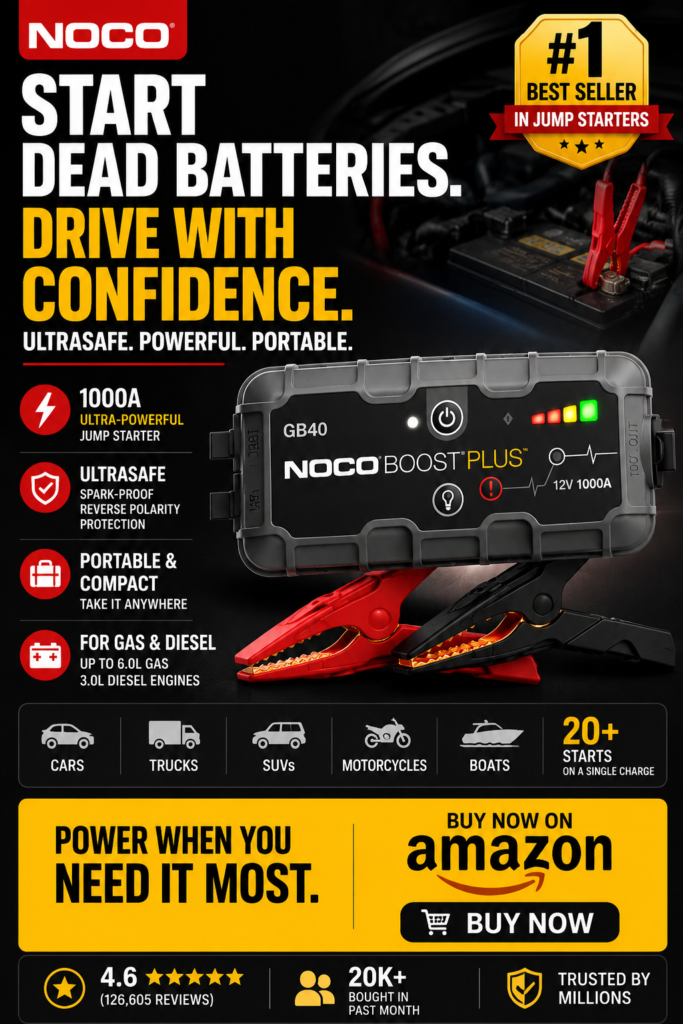
What Makes the NOCO GB40 Different
UltraSafe Technology
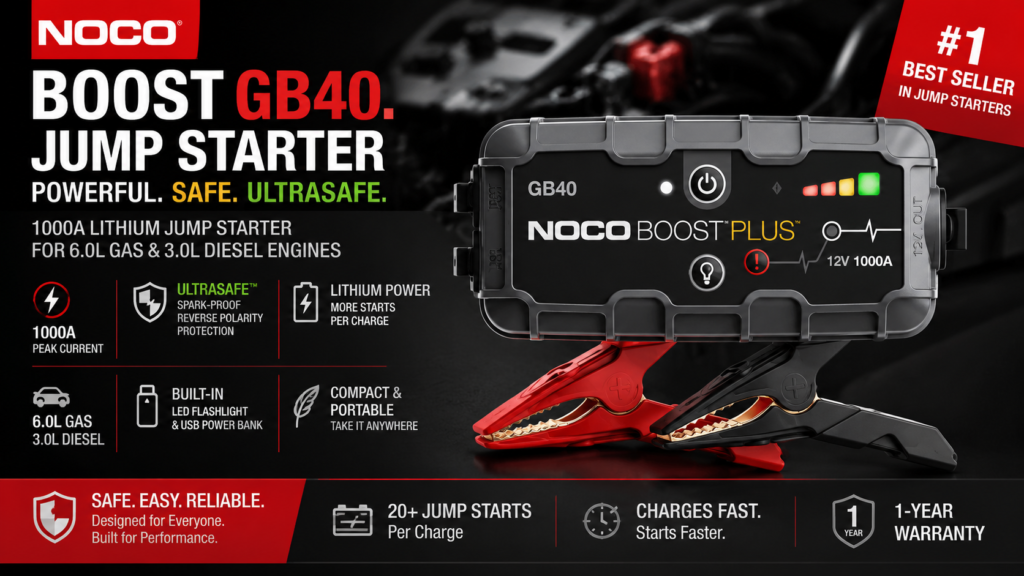
The biggest worry with jump starters is doing something wrong and frying your car’s electronics. The GB40 eliminates that risk entirely. It has spark-proof connections and reverse polarity protection — if you connect the clamps backwards, it simply won’t work rather than sending a damaging surge through your electrical system. For anyone who’s nervous about jumping a car, this is the feature that matters most.
Works on Completely Dead Batteries

Most portable jump starters struggle or fail entirely on a battery that’s completely dead — they need a minimum voltage to detect the battery and activate. The NOCO GB40 has a manual override mode specifically for completely dead batteries. Connect the clamps, hold the button for a few seconds to activate override mode, and it works even on a battery showing zero volts. Before reaching for a jump starter, testing a car battery's voltage can help confirm whether the battery is actually discharged.
1000 Amp Peak Current
Peak amperage is what actually cranks the engine. The GB40’s 1000 amps handles gas engines up to 6.0 liters and diesel engines up to 3.0 liters — covering the vast majority of passenger cars, trucks, and SUVs on the road. Larger diesel trucks may need the bigger GB70 or GB150, but for typical family vehicles the GB40 is more than sufficient.
Compact Size
The GB40 is roughly the size of a large smartphone — small enough to store in a glove box, center console, or the pocket of a backpack. It comes with a nylon carrying case and fits neatly out of the way until you need it.
What Else It Does

Beyond jump starting, the GB40 functions as a USB power bank. It has a USB-A output port for charging phones and other devices, and a built-in LED flashlight with emergency strobe and SOS modes. In a roadside situation, all three functions are genuinely useful — charge your phone while you wait, use the flashlight to see what you’re doing, and use the strobe if you need to signal for help. Pairing it with a Everlit Roadside Emergency Kit Review – What’s Actually Inside? adds tire, visibility, first-aid, and other roadside essentials to the jump starter.
How to Jump Start Your Car With the GB40
Step 1: Make sure the GB40 is charged. NOCO recommends charging it every 3 months during storage to maintain capacity.
Step 2: Connect the red clamp to the positive (+) battery terminal. Connect the black clamp to the negative (-) terminal or a clean metal ground point away from the battery.
Step 3: The indicator light will show green if connected correctly. If it shows red, you have a reverse polarity connection — swap the clamps.
Step 4: Turn on the GB40 by pressing the power button.
Step 5: Start your vehicle normally. If the battery is completely dead, hold the boost button for 3 seconds to activate override mode first.
Step 6: Once the engine starts, remove the clamps in reverse order — black first, then red.
Step 7: Drive for at least 20–30 minutes to allow the alternator to recharge the battery.
Keeping It Ready
The GB40 holds its charge well in storage, but NOCO recommends checking and topping up the charge every 90 days if the vehicle it’s stored in isn’t being driven regularly. A lithium battery that’s been stored completely discharged for an extended period may lose capacity permanently — a quick quarterly charge prevents that.
In hot climates or vehicles that sit in the sun, store it in the cabin rather than the trunk to avoid excessive heat exposure.

Frequently Asked Questions
How many times can it jump start a car on one charge?
NOCO rates the GB40 for approximately 20 jump starts on a single charge under normal conditions. Real-world results vary based on battery condition and engine size, but most users report multiple successful jumps before needing to recharge the unit itself.
Will it work on my truck?
The GB40 handles gas engines up to 6.0L and diesel up to 3.0L. Most standard pickup trucks with gas engines fall within this range. Heavy-duty diesel trucks with large displacement engines may require the NOCO GB70 (2000A) or GB150 (4000A) for reliable results.
How long does it take to charge the GB40 itself?
Using the included wall charger, approximately 3 hours from empty to full. It can also be charged via USB-C, which is slower but convenient.
Can it damage my car’s electronics?
The UltraSafe technology with spark-proof connections and reverse polarity protection makes it extremely safe for modern vehicles with sensitive electronics. Connect correctly (green light = good) and there’s no risk to your car’s systems.
Is it worth it over traditional jumper cables?
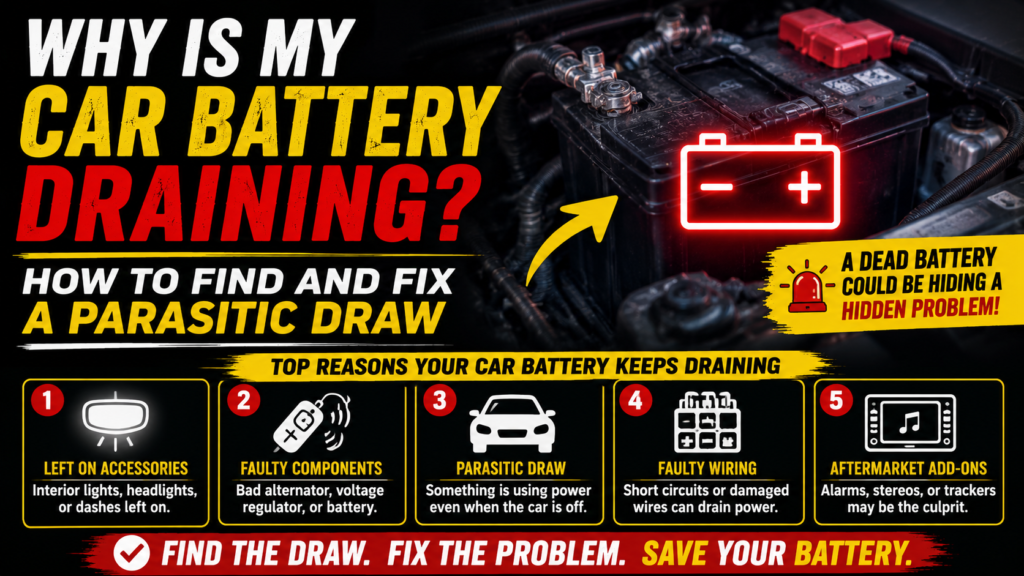
For most people, absolutely. Jumper cables require a second vehicle in the right position with a willing driver. The GB40 requires nothing but itself and takes less than a minute. The peace of mind alone is worth the price — especially for anyone who drives alone regularly or lives in a cold climate where batteries fail more frequently. If the battery keeps going dead after repeated jump-starts, recurring battery discharge can help identify whether an electrical draw is causing the problem.
Jake spent eight years as a service advisor at a regional auto dealership before going independent. He’s owned everything from a ’98 Civic with 240,000 miles to a diesel truck that taught him more than any training course. He started writing for WhyIsMyCar.com because he was tired of watching people get talked into repairs they didn’t need — or ignore problems that were genuinely serious. Jake lives in Tennessee with his wife, two kids, and a garage that’s never quite organized enough.