
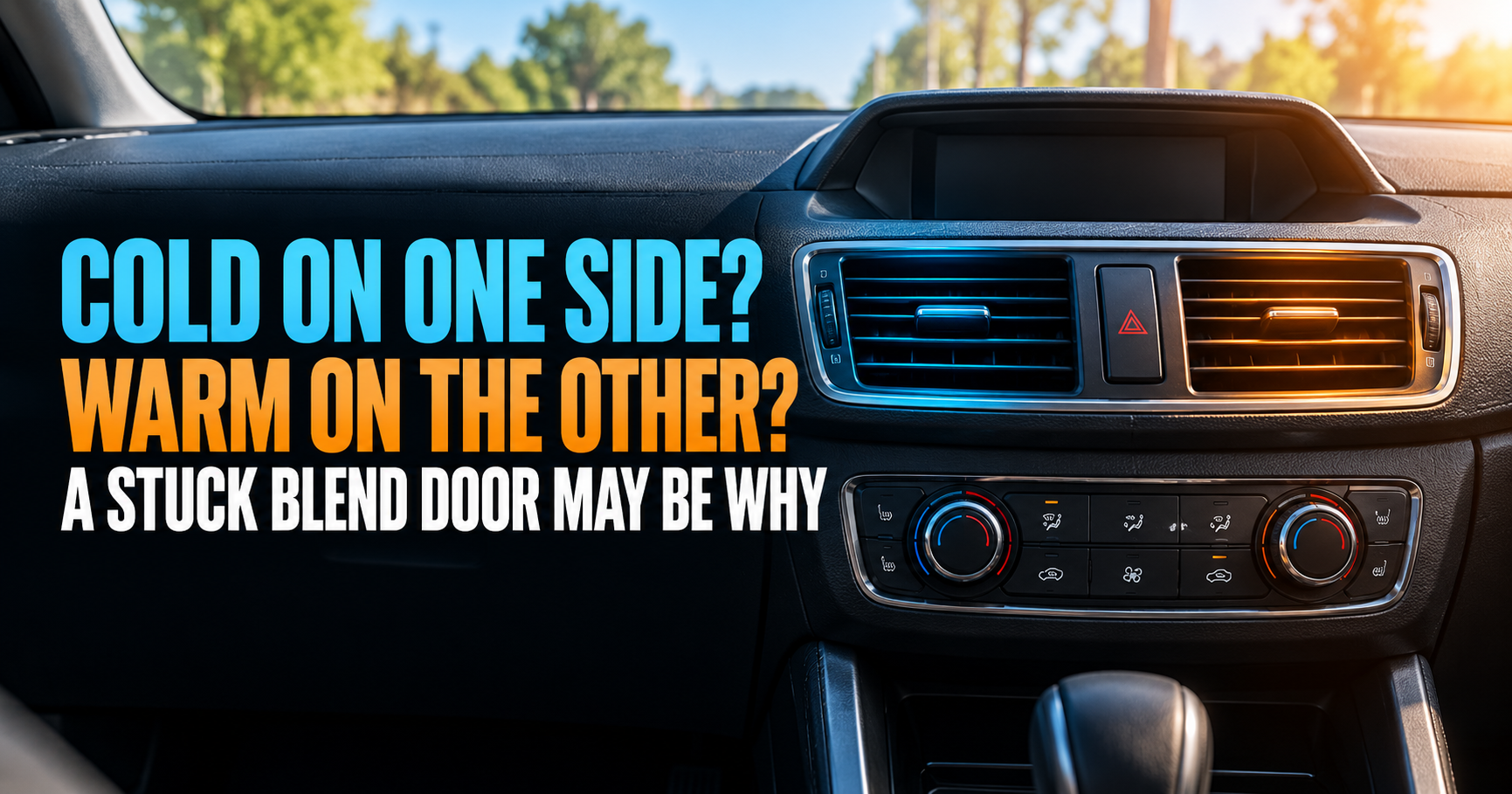
The driver’s vent feels cold. The passenger’s vent feels like the A/C never turned on. You put your hand in front of both, just to make sure you are not imagining it.
That difference is useful. It can come from separate climate settings, a door inside the dashboard that is not moving correctly, or an A/C system that is not cooling as it should. One warm side does not automatically mean you need a blend door actuator. I would start with two simple comparisons before paying for a repair.
Set both sides the same way
If your car has dual-zone climate control, check the driver and passenger temperature displays. One side may simply be set warmer.
Select SYNC if your car has that option, or manually set both sides to the same cold temperature. Turn on the A/C, select the dash vents, and use a medium fan speed. If there is a rear climate zone, check its setting separately.
Give the system a few minutes, especially if the car has been sitting in the sun. Then compare the driver and passenger dash vents, rather than comparing a dash vent with a floor vent. Different vent locations may not feel identical even when the system is working.
If the two sides now cool normally, you have your answer. If one remains clearly warmer, remember which side it is. That detail matters when a shop tries to reproduce the problem.
For the wider problem of A/C that stays warm at every vent, see our guide to car A/C blowing warm air. A consistent left-to-right difference calls for a more focused check.


Does the warm side respond when you change its setting?
While parked, move the warm side’s temperature setting from cold to hot, then back again. Give it a moment at each end. Does the vent temperature change at all?
If it responds to hot but will not return to cold, tell the shop exactly that. If it stays at the same temperature no matter what you request, that is another useful clue. Either behavior can point toward a problem in the controls or the door that mixes heated and cooled air.
Listen too. A repeated clicking or tapping from behind the dashboard when you change the setting can accompany a door or actuator problem. The sound does not identify which part failed, but it helps locate the complaint.
I would avoid repeatedly cycling the control for ten minutes, hoping it will free itself. One careful comparison is enough to describe the symptom.

Check what happens when you ask for heat
This is the comparison many people skip.
With the engine warmed up, set both sides to hot. Do they both deliver heat? Then return both to cold with A/C on. Does the same side stay warm?
If one side cannot follow temperature changes in either direction, an air-mixing or control problem becomes more plausible. The system may be producing heat and cold but failing to direct the right amount of each to that side.
If both sides heat normally, yet one side is noticeably warmer only when A/C is selected, the shop should also check the A/C system’s cooling performance. You cannot rule out a refrigerant problem just because only one side feels wrong.
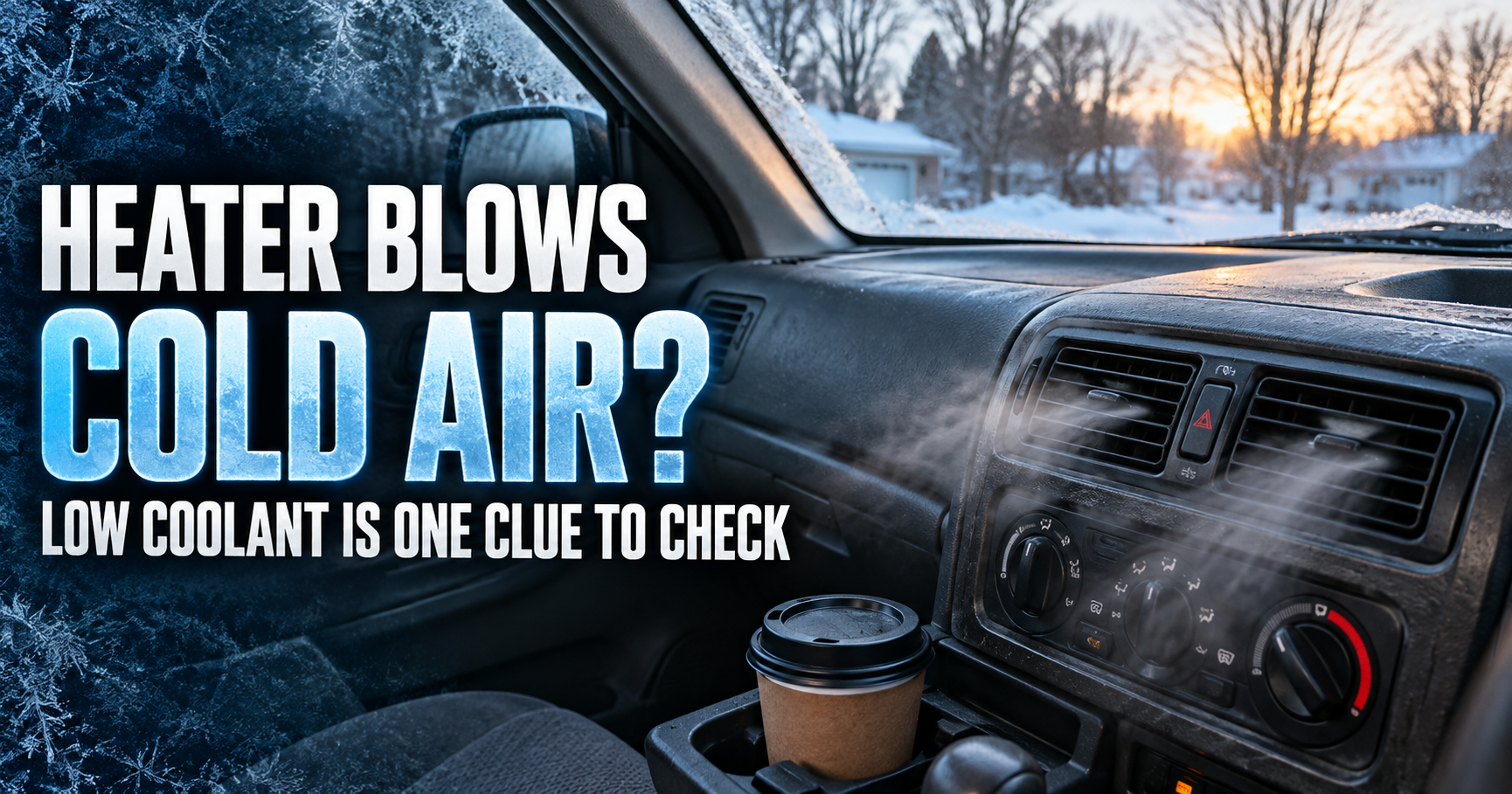
Do not use a cold engine to judge the heater portion of this test. In many vehicles, cabin heat depends on hot engine coolant. Our guide to a heater that blows cold air explains what to watch if neither side produces heat after the engine warms.
What does a blend door actually do?
Inside the climate-control housing, doors direct air along different paths. A temperature blend door helps determine how much air passes through the heated part of the system before reaching the cabin. An actuator moves the door when the controls request a change.
On a vehicle with separate left and right temperature control, one side can misbehave while the other works. That is why a failed actuator is often mentioned when A/C is cold on one side and warm on the other.
But there are several places a fault could occur. The actuator might fail to move. The door itself could bind. A control may not send the expected command. The design also varies by model.
The repair should follow a test, not a guess based on the vent temperature. Reaching some of these parts can require dashboard work, so confirming the problem first is worth the effort.

Could low refrigerant make only one side warmer?
Yes, on some vehicles. A system with a low refrigerant charge may cool unevenly across the evaporator, leaving air delivered to one part of the cabin warmer than air delivered to another.
That possibility is easy to miss if everyone assumes a left-to-right difference must be a dashboard door. Vehicle manufacturers have issued diagnostic guidance telling technicians to verify the temperature difference and check A/C pressures and leaks before moving to other causes.
I would not take that to mean every one-sided temperature complaint needs a recharge. Low charge must be measured and diagnosed. If refrigerant has escaped, the shop should look for a leak. Adding more without understanding why the charge is low may only give you a temporary improvement.
When you call the shop, ask it to check both A/C performance and temperature-door operation before recommending a part.
Is a small difference between vents normal?
Two vents do not always deliver precisely the same measured temperature. Their position, duct length, sunlight on one side of the car, and automatic climate settings can affect what you feel.
There is a difference between “the passenger vent feels a little less chilly” and “one side is clearly cold while the other blows warm air for the entire drive.” The second is easier to reproduce and more worth investigating.
If you have a simple thermometer, you can note readings from comparable left and right dash vents with both zones on the same settings. You do not need to diagnose the system from a particular number. You are recording whether the difference is consistent and substantial.
Tell the shop the conditions when you measured it. A car parked in direct sun with one door open is a different test from a car driven long enough for the cabin to stabilize.
Does it change while driving or idling?
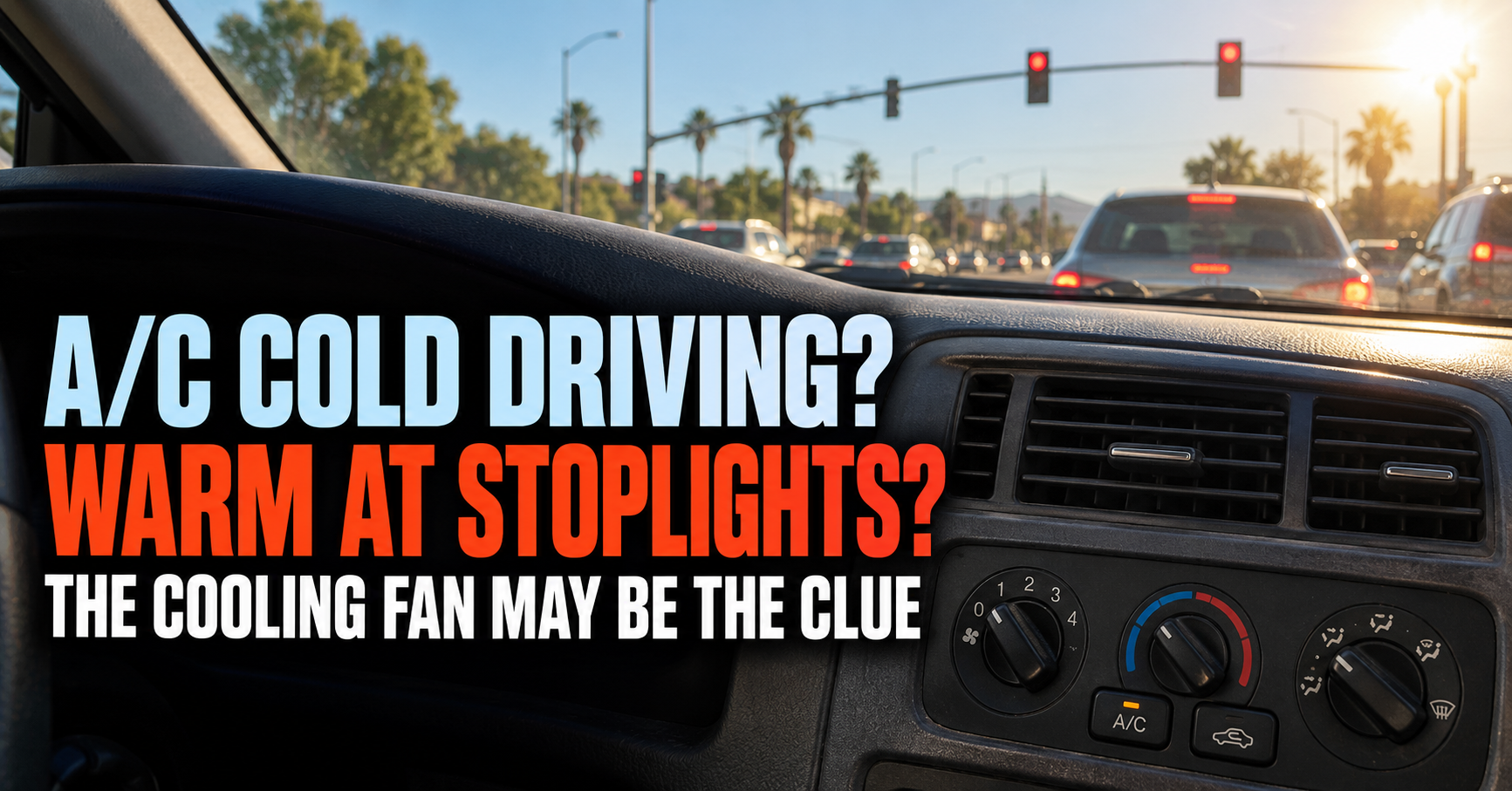
If both sides get warmer at stoplights and colder on the road, the whole A/C system may be struggling at idle. That is the pattern covered in our A/C warm-at-stoplights guide.
If the driver’s side remains cold in traffic while the passenger side stays warm, describe it as a persistent side-to-side difference. The shop can still check refrigerant charge, but it should also investigate how air is directed to that side.
Try to notice when the difference first appears. Is it there from the moment the A/C starts? Does it begin after twenty minutes? Does it change after you adjust a temperature setting? Those details are more helpful than saying the A/C “sometimes works.”
Can I fix it by resetting the climate controls?
Some vehicles have model-specific procedures for calibrating climate-control doors after a battery disconnect or repair. Those procedures are not universal. Pulling fuses or disconnecting the battery based on a tip for a different car can erase settings without repairing the fault.
Start with the controls you can see: match the temperature settings, select the intended vents, and check whether the affected side responds when you change its temperature. If the problem persists, use your vehicle’s owner information or let a shop follow the correct procedure for its make, model, and year.
If the trouble began immediately after a battery replacement or dashboard repair, tell the shop. That timing can help it decide what to check first.
What about the cabin air filter?
A clogged cabin air filter usually restricts airflow to the ventilation system more broadly. It can make cooling feel weak, but it is less convincing as the sole explanation for strong airflow that is cold on one side and warm on the other.
There is no harm in checking a filter that is overdue for replacement. Just do not assume a new filter has fixed the temperature difference unless you test both vents afterward.
The same distinction applies to the blower motor. If both vents blow strongly, the blower is moving air. The question is why the air delivered to one side is warmer.
Can I keep driving?
A side-to-side A/C temperature difference is usually a comfort issue. Arrange a diagnosis rather than replacing parts at random.

Visibility is the exception. If the windshield fogs and the defroster cannot keep it clear, pull over safely. A problem with air direction or weak cooling can affect defogging, although moisture inside the cabin can cause fogging too. Our guide to windows fogging up inside helps sort through those clues.
Also watch the engine temperature if the A/C becomes warm throughout the cabin while idling. A high-temperature warning calls for immediate attention, regardless of what the vents are doing.



What I would tell the repair shop
I would give the shop one clean description: “Both zones are set to the same cold temperature. The driver’s dash vent blows cold, the passenger’s blows warm, and the fan is strong on both sides.”
Add what happened when you tried heat. Mention any clicking behind the dash, whether the problem changes at idle, and whether the A/C was recently recharged or the battery was disconnected.
Then ask: Did you confirm a consistent temperature difference? Is the refrigerant charge correct? Does the affected temperature door move when commanded? Those checks can separate a cooling problem from a control problem before the shop orders parts.
Frequently asked questions
Why is my driver’s A/C cold but the passenger side warm?
First check whether the two climate zones are set differently. If both are set to cold, a temperature-door or control fault is possible. Low refrigerant can also produce a side-to-side difference on some vehicles, so the shop should test before replacing an actuator.
Does one warm vent mean I need refrigerant?
No. Refrigerant may be low, but a cabin control or air-door issue can cause a similar symptom. Have the charge and system operation checked rather than adding refrigerant based on one vent.
Will a blend door actuator make a clicking noise?
A failing actuator can click or tap when the temperature setting changes. Other parts behind the dashboard can make noise too. Report when it occurs so the shop can verify the source.
Why does one side have heat but no A/C?
That detail helps narrow the fault, but it does not prove one part has failed. Check that both zones are set to cold, then have the A/C performance and the affected side’s temperature controls tested.
Can a cabin air filter cause one side to be warm?
A clogged filter more commonly reduces airflow. If both sides have strong airflow but different temperatures, a filter alone is unlikely to explain the entire problem.
About the Author: Morgan Ellis writes practical troubleshooting guides for Why Is My Car, helping drivers make useful observations and ask what testing supports a repair recommendation.


