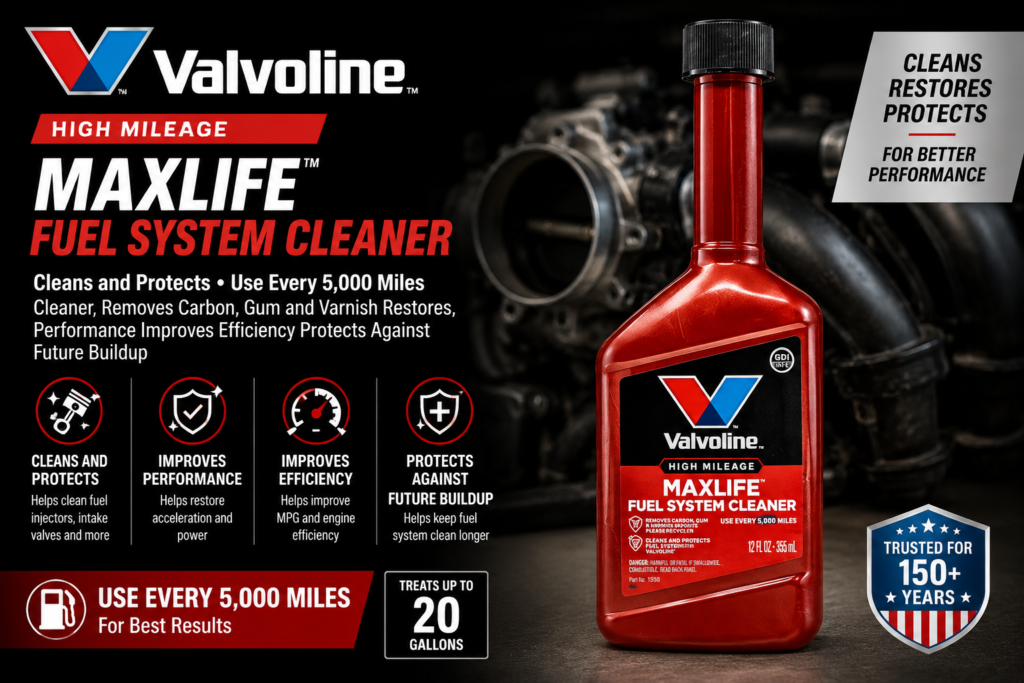
Valvoline MaxLife Fuel System Cleaner removes carbon deposits from injectors, valves, and combustion chambers in one treatment. Here’s an honest look at whether it works.
Carbon buildup is something that happens to every engine over time — it’s just a byproduct of combustion. But when it builds up on fuel injectors, intake valves, and combustion chamber surfaces, you start to feel it. Rough idle, hesitation on acceleration, reduced fuel economy, and eventually misfires. Valvoline MaxLife Fuel System Cleaner is designed to dissolve that buildup and restore performance without pulling the engine apart. If rough running or misfires continue after cleaning, diagnostic trouble codes can help identify whether the engine computer has recorded a related fault.
Carbon and varnish deposits are invisible but real. They restrict fuel flow through injectors, reduce combustion efficiency, and cause the kind of subtle performance loss that sneaks up gradually — you don’t notice it until the car gets a good cleaning and suddenly runs noticeably better. That’s the Valvoline MaxLife experience for a lot of drivers.
What Fuel System Cleaner Actually Does
Cleans Fuel Injectors

Fuel injectors spray a precise pattern of atomized fuel into each cylinder. Varnish and carbon deposits disrupt that pattern — turning a fine mist into a dribble or uneven spray. The result is incomplete combustion, rough idle, and misfires. Cleaning agents in the formula dissolve these deposits and restore proper spray patterns without professional ultrasonic cleaning equipment. When injector symptoms persist, fuel pressure testing can help distinguish a delivery-pressure problem from deposits affecting the spray pattern.
Removes Intake Valve Deposits
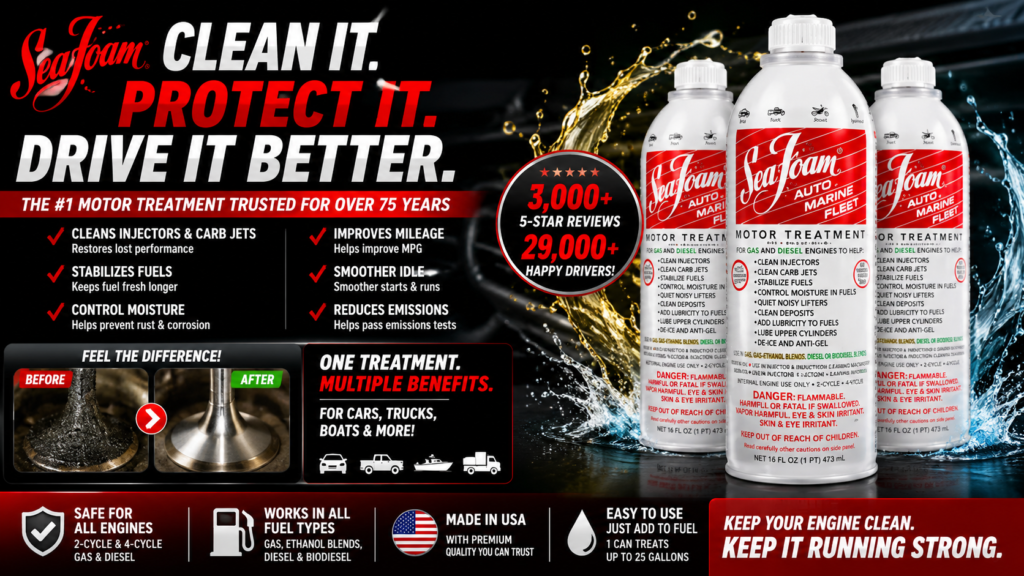
On port-injected engines, fuel washes over the intake valves with every injection cycle — this natural washing keeps valves relatively clean. On direct-injected engines, fuel bypasses the intake valves entirely, so carbon from oil vapors builds up unchecked. This is a known issue on many modern direct-injection engines and a major reason fuel system cleaners have become more popular in the past decade. The Sea Foam Motor Treatment Review – 3 Ways to Use It and Why It Works review adds context on intake cleaning methods that fuel-tank additives may not fully address on direct-injection engines.
Cleans Combustion Chamber Surfaces
Carbon deposits on combustion chamber surfaces and piston tops act as heat sponges — absorbing heat that should be going into driving the piston. They also create hot spots that can cause pre-ignition (knock). Removing them restores proper combustion and can eliminate the kind of light knocking that shows up on high-mileage engines.
Protects Against Future Buildup
Beyond cleaning, the formula deposits a protective coating that slows future carbon and varnish accumulation. Regular use — every 3,000–5,000 miles — keeps the system cleaner between treatments than letting deposits accumulate over tens of thousands of miles.
How to Use It
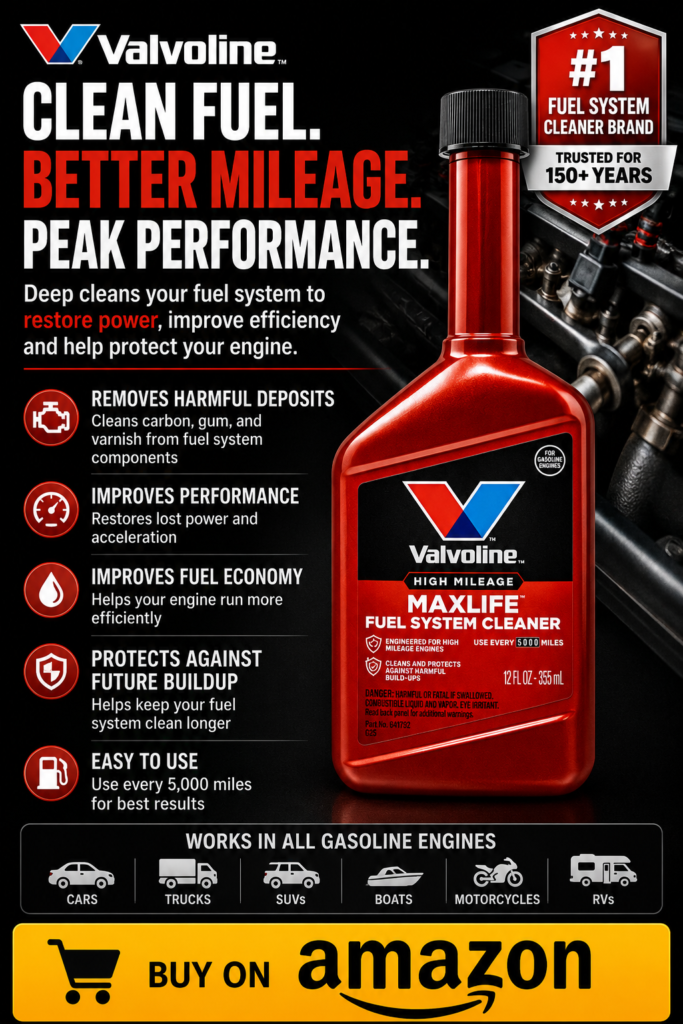
Pour the entire 12oz bottle into a nearly empty gas tank, then fill the tank with gasoline. Drive normally — the cleaner works its way through the fuel system over the course of the tank. No special driving required, no tools, no disassembly. The tank should be low when you add it so the concentration is higher during initial mixing.
For severe buildup on very high-mileage vehicles, a second treatment after the first tank is used can help complete the cleaning. Ongoing use every 3,000–5,000 miles keeps deposits from returning.



Who Should Use This
Any driver with a vehicle over 50,000 miles who has never used a fuel system cleaner. Anyone experiencing rough idle, hesitation, or fuel economy that has dropped off over time. Anyone running on lower-quality fuel regularly — discount gas stations with lower additive packages accelerate deposit buildup. And specifically any owner of a direct-injection engine — BMW, Audi, VW, Ford EcoBoost, GM direct injection — where intake valve carbon is a known maintenance issue.
See Valvoline Fuel System Cleaner on Amazon →
Frequently Asked Questions
How often should I use fuel system cleaner?
Valvoline recommends every 3,000 miles for maintenance use. For an initial cleaning on a high-mileage vehicle that’s never had treatment, use it for two consecutive tanks, then switch to the maintenance interval.
Will it damage my engine or fuel system components?
No. Fuel system cleaners formulated by reputable brands like Valvoline are safe for all gasoline fuel system components including rubber seals, fuel lines, injectors, and catalytic converters. Follow the dosing instructions — more is not better.
How quickly will I notice results?
Some drivers notice smoother idle and better throttle response within a tank. More significant deposits take 1–2 full treatments to fully dissolve. Fuel economy improvement, if deposit buildup was significant, typically becomes apparent after the first full tank.
Is this the same as an injector cleaning service at a shop?
Not exactly. Shop injector cleaning uses direct flushing equipment that’s more aggressive for severely clogged injectors. This cleaner works through normal combustion over a full tank and is effective for maintenance cleaning and moderate buildup. Severe injector clogging may require a professional cleaning service. The fuel system cleaner guidance FAQ also puts routine fuel-system cleaning in context, including what these products can and cannot address.
Does it work on direct injection engines?
The combustion chamber cleaning components work on DI engines, but the injector cleaning portion works differently since DI injectors spray directly into the cylinder rather than the intake port. For intake valve carbon on DI engines, some mechanics use a walnut blasting service for severe buildup, with fuel system cleaner as ongoing maintenance to slow reaccumulation.
Jake spent eight years as a service advisor at a regional auto dealership before going independent. He’s owned everything from a ’98 Civic with 240,000 miles to a diesel truck that taught him more than any training course. He started writing for WhyIsMyCar.com because he was tired of watching people get talked into repairs they didn’t need — or ignore problems that were genuinely serious. Jake lives in Tennessee with his wife, two kids, and a garage that’s never quite organized enough.