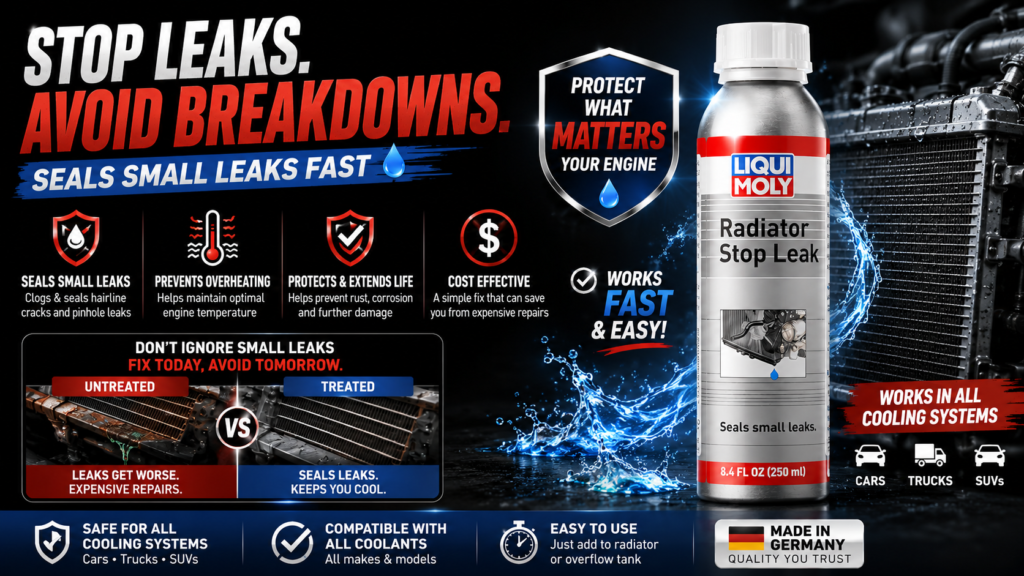
A slow coolant leak can turn into an overheated engine faster than you think. Here’s how Liqui Moly Radiator Stop Leak works — and when it actually fixes the problem.
A coolant leak is one of those problems that starts small and turns catastrophic fast. A slow seep from a radiator, hose connection, or cooling system seal can go from a low coolant warning to an overheated engine in less time than you’d expect. Liqui Moly Radiator Stop Leak is a professional-grade cooling system additive that seals minor leaks from the inside — buying you time and often a permanent fix without pulling the radiator or replacing hoses. Before choosing a stop-leak product, Why Is My Car Leaking Fluid? Identify Every Leak by Color and Location explains how color, location, and smell can help narrow down the source.
Not all stop-leak products are created equal — some use fibrous particles that can clog narrow passages in modern cooling systems. Liqui Moly uses a chemical sealing approach rather than particulates, which makes it safe for modern vehicles with aluminum components, plastic tanks, and narrow coolant passages.
What It Seals and What It Doesn’t
What It Works On
Minor radiator leaks — small cracks or pinhole leaks in the radiator core. Seeping heater core leaks — the heater core is expensive and labor-intensive to replace, and a chemical seal can buy significant additional life. Leaking gaskets and hose connections with minor seepage. Slow leaks from plastic tank-to-core seams on modern radiators.
What It Won’t Fix
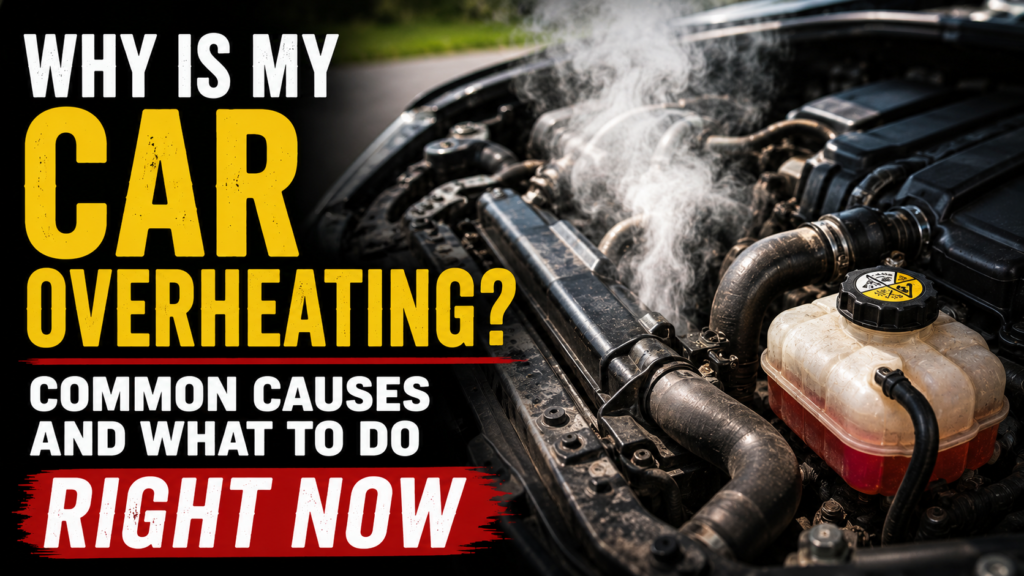
Major radiator damage — large cracks, significant corrosion, or physical damage from impact. Blown head gaskets with heavy coolant loss into the combustion chamber. Large hose leaks or fully failed connections. If you’re losing a quart of coolant every few days, stop-leak is not going to keep up — you need a physical repair. Because severe coolant loss can quickly lead to overheating, Why Is My Car Overheating? Common Causes and What To Do Right Now covers the safest immediate response.
Think of it as a tool for minor seepage, not a substitute for proper repair on serious failures.
How to Use It
Step 1: Let the engine cool completely before opening the cooling system. Opening a hot pressurized system causes severe burns. Before attempting any cooling-system treatment, review the site's broader vehicle repair safety guidance: Disclaimer.
Step 2: Check the coolant level and top off if low before adding the treatment.
Step 3: Shake the Liqui Moly bottle well. Pour the entire 250ml contents directly into the coolant reservoir or radiator fill neck.
Step 4: Start the engine and run at operating temperature for 15–20 minutes with the heater set to maximum heat — this circulates the treatment through the heater core as well as the main cooling circuit.
Step 5: Check for continued leaking. Minor seepage typically seals within one to two heat cycles. If the leak continues after a full tank of driving, the leak is likely too significant for a chemical repair.
Is It Safe for Modern Engines
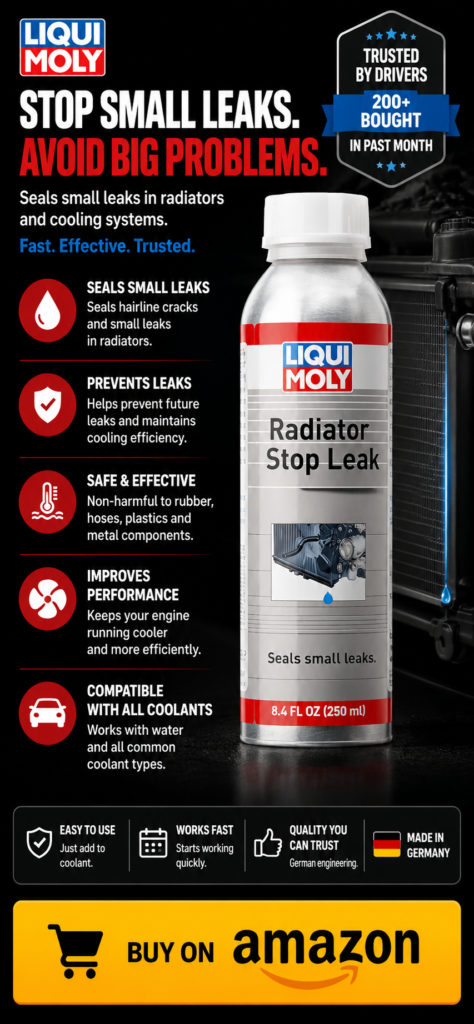
Yes — this is one of the reasons Liqui Moly specifically stands out in the stop-leak category. It’s compatible with all standard coolants including green, orange, pink, and blue formula antifreeze. It doesn’t contain fibrous or particulate sealing agents that can clog narrow passages, thermostat housings, or heater core tubes. Safe on aluminum, cast iron, plastic, and rubber cooling system components.
See Liqui Moly Radiator Stop Leak on Amazon →
Frequently Asked Questions
How long does the seal last?
For minor leaks, the chemical seal can be permanent. Results vary based on the nature and location of the leak, system pressure, and temperature cycling. Many drivers report years of use after a single treatment on a minor seep.
Will it clog my heater core?
Liqui Moly’s chemical sealing formula is specifically designed to be safe in heater cores. It seals at the leak point under pressure rather than randomly throughout the system, which is why it doesn’t clog passages the way fiber-based products can.
Can I use it if my coolant is mixed colors?
Yes. It’s compatible with all common coolant formulations. However, if your coolant is mixed or discolored, a flush before adding treatment is ideal — you get a cleaner system and the treatment works more effectively.
My car is using coolant but I can’t find a leak — will this help?

If you’re losing coolant with no visible external leak, it may be going into the combustion chamber through a head gasket leak. Coolant in combustion produces white smoke from the exhaust and often a sweet smell. This is beyond what stop-leak handles — have it diagnosed before adding any treatment. For help distinguishing coolant odor from other warning smells, see diagnosing sweet coolant smells.
Can I use the whole bottle at once on a small car?
Yes. The 250ml bottle is sized for passenger vehicles up to approximately 10 liters of coolant capacity. For larger trucks or vehicles with very large cooling systems, two bottles may be appropriate.
Ryan is a former fleet mechanic who spent twelve years maintaining commercial vehicles before transitioning to writing about automotive issues for regular drivers. He’s worked on everything from economy sedans to full-size diesel trucks and has a particular obsession with electrical gremlins that make no sense until suddenly they do. Ryan contributes to WhyIsMyCar.com because most car content online is either too technical or too vague — he aims for the middle ground where people actually learn something.