
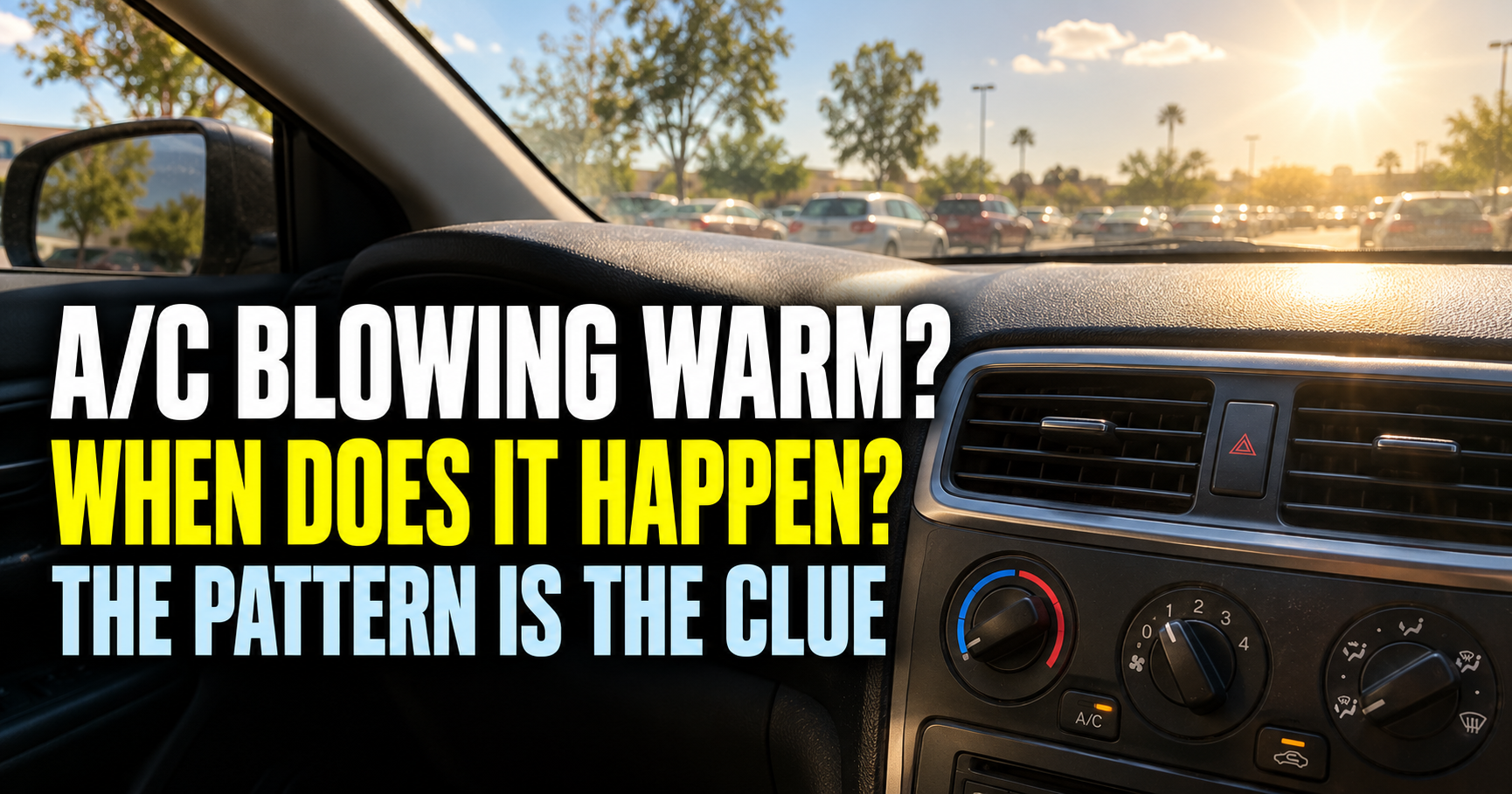
You turn the A/C on, wait for that first blast of cold air, and get nothing but warm air. Or maybe it starts cold and gives up halfway through the drive.
I wouldn’t buy a refrigerant can based on that symptom alone. Warm air tells you the A/C is not cooling properly. It does not tell you why. The timing often helps: did the cooling fade over weeks, quit all at once, or disappear only when the car stopped moving?
Before looking for a repair, make sure the system is actually set to cool. Then pay attention to both the temperature and the strength of the airflow.
Give the settings one honest check
With the car running in a safe, open area, select A/C, set the temperature to its coldest setting, and turn the fan to a middle or high speed. If your car has separate driver and passenger controls, set both sides to cold.
For a quick comparison, use the dashboard vents and turn off any setting that may be sending most of the air to the floor or windshield. If the cabin has been parked in the sun, allow some time for the hot interior to cool. Air that feels unimpressive in the first minute may improve as the car sheds heat.
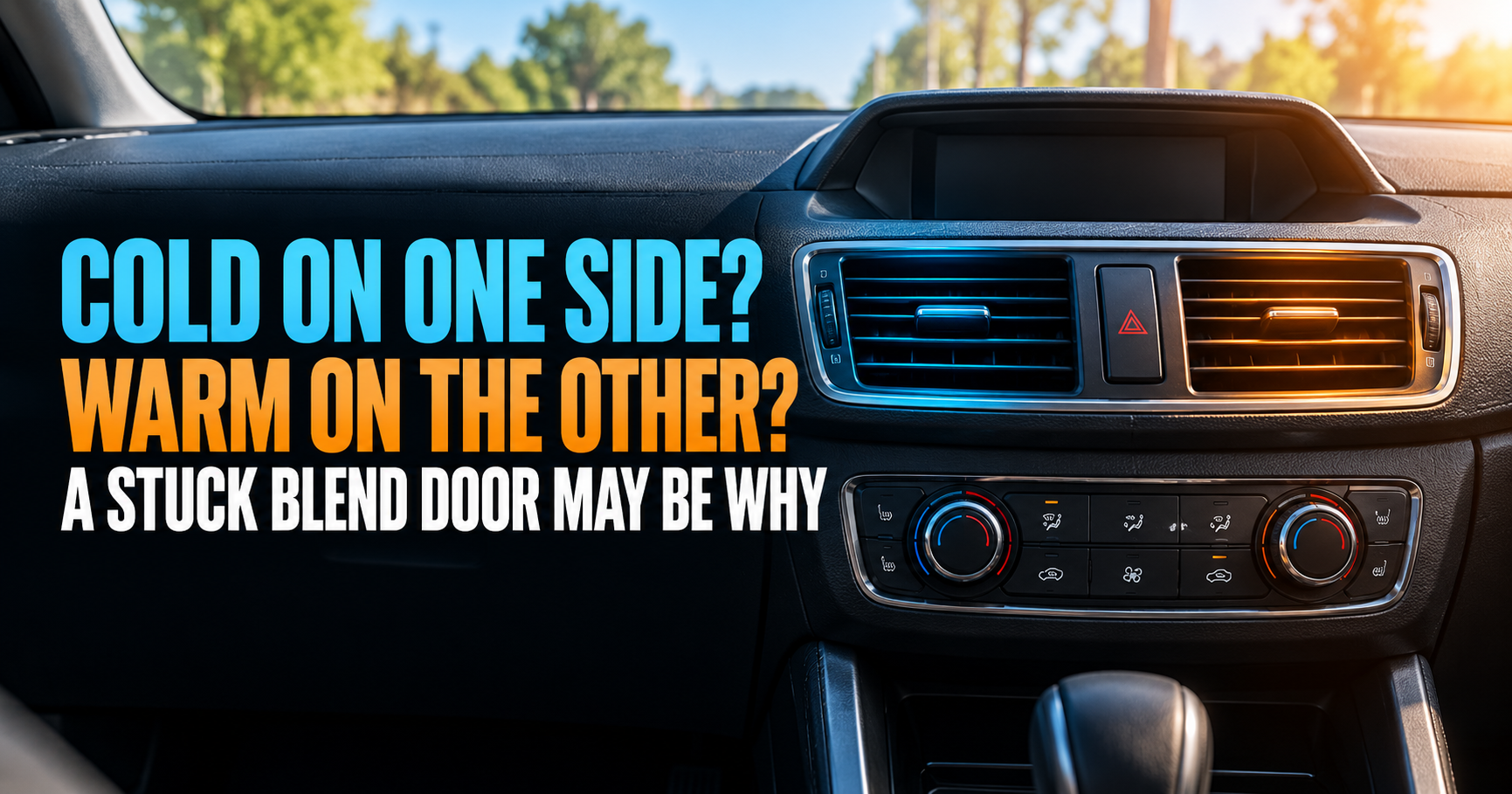
If one side blows cold and the other blows warm, stop there for a moment. That is a different pattern from every vent blowing warm. Separate temperature controls or an air-mixing door may be involved, and adding refrigerant without a diagnosis may not fix it.
If every vent continues to blow warm, the next question is whether the air moves normally.


Strong warm air or barely any air?
Put your hand in front of a dash vent and change the fan speed.
Strong airflow that stays warm suggests the blower is moving air, but the system is failing to cool it or is mixing in unwanted heat. That is where refrigerant level, compressor operation, condenser airflow, and temperature controls become relevant.
Weak airflow, even with the fan turned up, is a different complaint. Check whether air is coming from another vent position. A clogged cabin air filter can restrict airflow, and a blower or air-direction problem can also leave you with little air at the dash vents. The same distinction between restricted airflow and a cooling problem is explained in weak A/C airflow causes.
A filter change can help a car that barely moves air. It is unlikely to repair a strong blast of warm air. I’d make that distinction before spending money on any A/C service.


If cooling faded slowly, ask where the refrigerant went
A car that cooled well last season, cooled only fairly well this spring, and now blows warm may have lost refrigerant. A leak is one possible reason, though cooling performance can also suffer for other reasons.
Refrigerant circulates in a sealed A/C system. When there is too little of it, the system may not cool effectively. A recharge may restore cold air, but it does not repair a leak. If the A/C needs another recharge soon afterward, finding the leak becomes the important job.
Tell the shop how long the decline took and whether the system has been recharged before. Ask how they will check for a leak and confirm the proper charge. That is more useful than requesting “some more refrigerant” without knowing what is already in the system.
The correct refrigerant type and amount depend on the vehicle. Guessing with a refill can introduce a second problem, especially if the system’s charge is not actually low.
If it quit suddenly, tell the shop what happened just before
An A/C system that worked yesterday and blows warm today can have an electrical, control, compressor, or refrigerant problem. The timing alone cannot separate them.
Try to remember whether you noticed a warning light, a new noise, or a recent repair. Did the blower stop too, or does it still push air strongly? Did the A/C fail after the battery was disconnected or after work near the front of the car? Those details may shorten the inspection.
A shop can check whether the system is requesting cooling, whether the compressor and cooling fans operate as expected for that vehicle, and what the refrigerant pressures and temperatures show. I would want those findings before approving a compressor replacement.

Cold on the highway, warm at stoplights?
This is one of the most useful patterns to report. Air moving through the front of the car helps the A/C condenser release heat while you drive. At a stop, the vehicle relies more heavily on its cooling fans and the system’s ability to operate without that road-speed airflow.
A fan problem or poor condenser airflow can make cooling noticeably worse in traffic. Refrigerant or compressor issues can also behave differently under changing conditions, so warm air at idle does not prove the fan has failed.
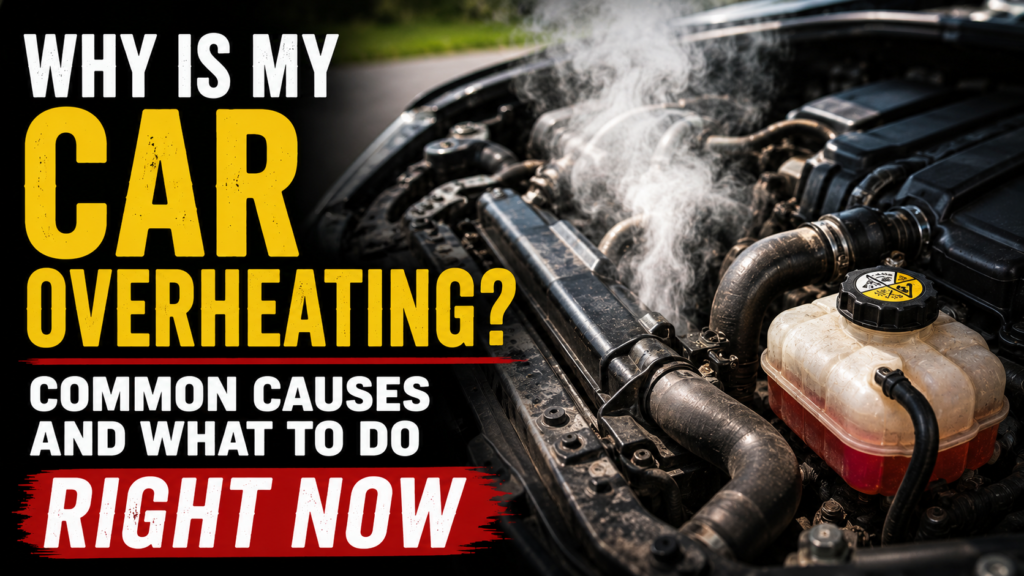
Watch the engine temperature gauge too. If it climbs while you sit in traffic, you may have a cooling-system concern beyond cabin comfort. A temperature warning or hot-range gauge means it is time to pull over safely and address the overheating, not continue testing the A/C. Our overheating guide covers what to do next.
If the engine temperature is normal but A/C cooling reliably disappears at stoplights, tell the shop exactly that. They can test it at idle instead of taking only a short road test.
Cold at first, then warm after several minutes?
Note how long it takes. Does the A/C cool for five minutes every morning and then stop? Does it come back after you turn the system off for a while? Does airflow stay strong when the temperature changes?
Those details can point a technician toward an intermittent control problem, compressor operation, or an evaporator that is icing and restricting airflow. The last pattern may come with airflow that grows weaker before cooling disappears. If airflow stays strong but becomes warm, that is a different clue.
Intermittent faults are easy to miss if the shop tests the car for only two minutes. Write down how long the A/C takes to fail and whether the car was idling or moving. Ask whether they can run it long enough to reproduce your complaint.

Check what is happening at the front of the car
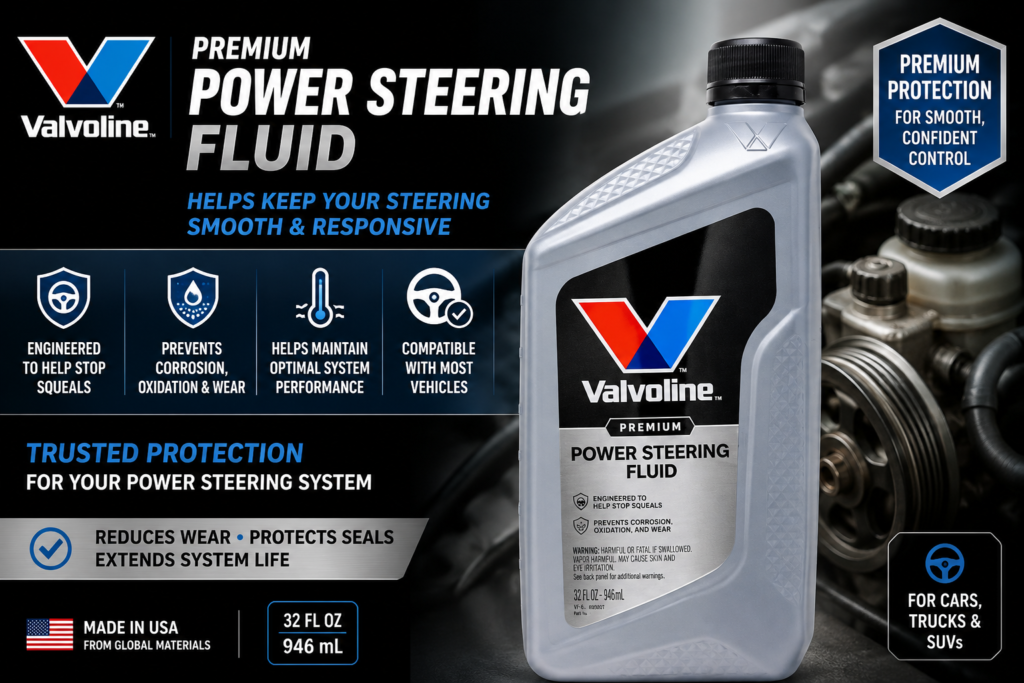
The condenser sits toward the front of the vehicle and releases heat from the refrigerant. Leaves, debris, or damage in that area can hurt performance. After the car is off and cool, you can look through the grille for obvious buildup or damage without removing parts.
Do not reach near fans or belts. Some electric fans can start unexpectedly, and the front of the car contains parts that may be hot after a drive.
Visible debris is worth mentioning to the shop. It is not a reason to assume the condenser needs replacing. Proper diagnosis should establish whether it is blocked, leaking, or working normally.
Could the problem be inside the dashboard?
Yes. If air is cold from one vent and warm from another, or changing the temperature setting makes little difference, the cabin controls deserve attention.
Many vehicles use doors inside the heating and air-conditioning housing to blend or direct air. If a door or its actuator does not move as commanded, the A/C may be making cold air while the vents deliver the wrong temperature.
Listen for repeated clicking behind the dashboard when you change settings, and note whether one side behaves differently. Those are observations to pass along, not proof that a particular actuator needs replacing.


Should you try a DIY recharge can?
I would first find out whether the system is actually low. Warm vents have several possible causes. Adding refrigerant to a system that already has the correct charge will not repair a bad control or fan.
A proper A/C diagnosis can identify the vehicle’s specified refrigerant, evaluate system performance, and check for leaks before deciding whether a recharge is appropriate. If the refrigerant has escaped, you want to know where. Otherwise, the cold air you just paid for may disappear again.
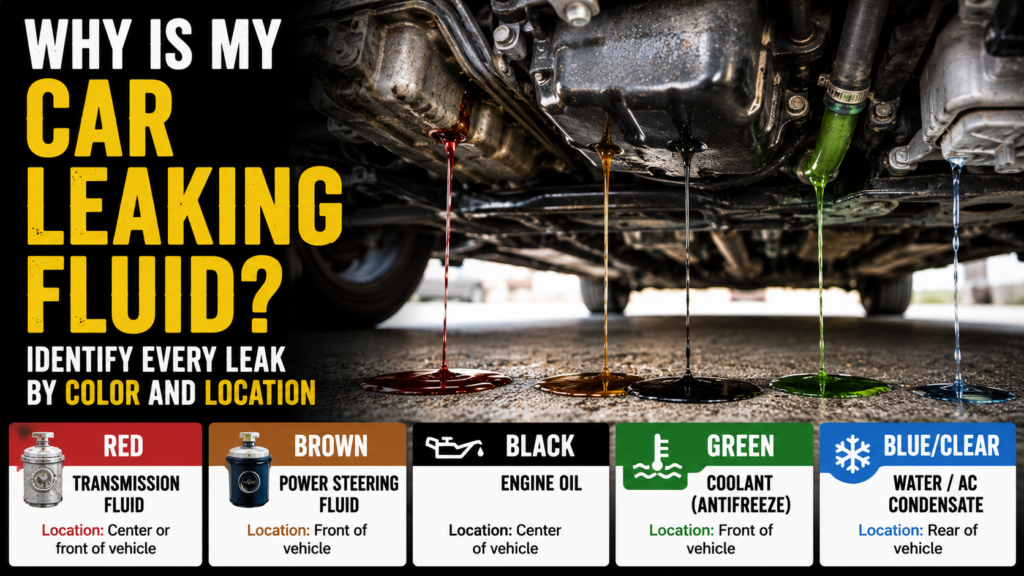
There is also an important difference between clear water dripping beneath a car after A/C use and a refrigerant leak. The clear water is often normal condensation draining from the system. A refrigerant leak generally cannot be identified by looking for an ordinary water puddle. If you are sorting through a puddle beneath the vehicle, our car-fluid leak guidehelps with the visible fluids.
When is warm A/C air more than a comfort problem?
Warm A/C air by itself usually gives you time to arrange an inspection. But pay attention to what accompanies it.
An overheating warning, rising engine temperature, or steam changes the situation. Pull over safely, shut the engine off, and address the engine-temperature problem.

Windows that will not stay clear are a visibility problem. A/C helps remove moisture from cabin air, and poor defogging can matter on rainy or cold days. If you cannot see clearly, stop driving safely. Our guide to windows fogging up inside covers the other causes to check.
A sudden loud mechanical noise is also worth having inspected promptly. Tell the shop when the noise occurs and whether turning the A/C off changes it.



Give the shop a pattern, not a guessed part
The most helpful description is specific: “It blows cold for ten minutes, then turns warm while the fan stays strong.” Or, “It cools on the highway but turns warm every time I idle in traffic.”
Also mention whether both sides behave the same way, whether the engine temperature changes, and whether anyone has recharged or repaired the A/C recently.
Then ask what the inspection found. Was the refrigerant charge low? Was a leak located? Did the cooling fans and compressor operate correctly? Were the vent temperature and controls tested? Those answers connect the proposed repair to your actual symptom.
Frequently asked questions
Does warm air always mean my car needs an A/C recharge?
No. Low refrigerant is one possibility. Fan, compressor, electrical, and cabin temperature-control problems can also leave the vents warm. Diagnose the cause before adding refrigerant.
Why does the A/C blow cold only while I’m driving?

Road-speed airflow can help the condenser release heat. If cooling fades whenever you stop, condenser airflow and cooling-fan operation are worth checking. Other A/C faults can cause a similar pattern, so the fan still needs to be tested.
Can a dirty cabin air filter make the A/C blow warm?
A badly clogged filter mainly reduces airflow. If the air is moving strongly but stays warm, changing the filter is unlikely to solve the main cooling problem.
Is clear water under my car an A/C leak?
Clear, odorless water under the car after running the A/C is commonly condensation draining away. If you see a different fluid, a substantial new leak, or an engine-temperature warning, have the vehicle checked.
Why does one side blow cold and the other warm?
Separate climate settings or an air-mixing door may be involved. Set both sides to the same cold temperature first, then report the persistent difference to a shop. It is a useful clue that a simple recharge may not address the problem.
About the Author: Morgan Ellis writes practical troubleshooting guides for Why Is My Car, helping drivers turn the timing and pattern of a symptom into better questions before they approve a repair.

