It’s cold outside. You’re already running late. You turn the key and nothing happens — or you get slow cranking, clicking, or an engine that cranks forever without firing. Cold weather no-start is one of the most common car complaints every winter, and it almost always has a specific, fixable cause.
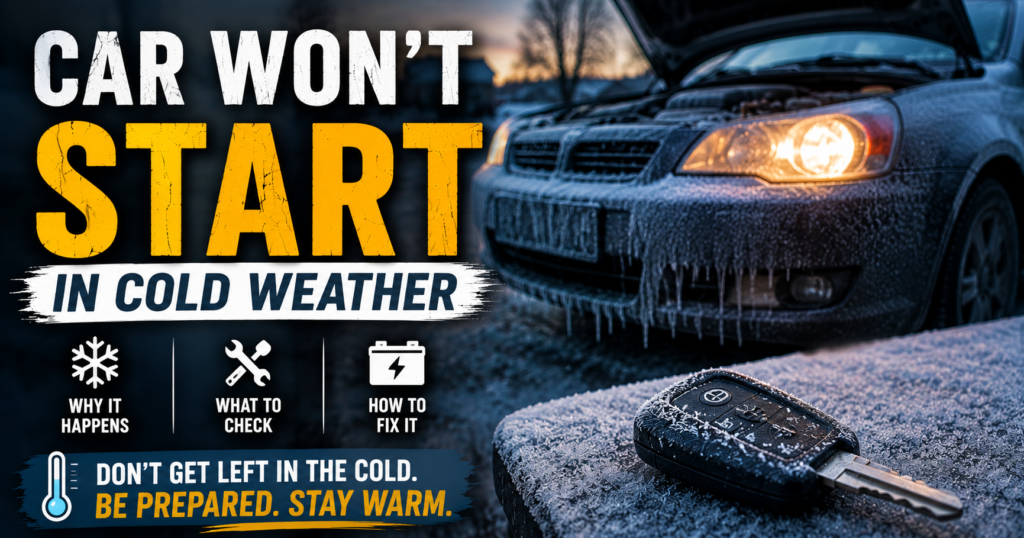
The frustrating part is that a car that starts fine in September can refuse to start in January without anything technically “breaking.” Cold weather doesn’t cause failures — it reveals weaknesses that were already there. This guide explains exactly why cold kills marginal batteries and struggling engines, how to diagnose which specific problem you’re dealing with, and what to do about it both right now and long term.
Quick Answer: Cold weather no-start is almost always one of three things — a battery that’s lost too much capacity in the cold, engine oil that’s too thick to allow easy cranking, or a fuel system problem like a flooded engine or vapor lock. A battery that was borderline in fall almost always fails in winter. Test your battery every fall before temperatures drop.
Why Cold Weather Makes Starting So Much Harder
Two things happen simultaneously in cold weather that make starting harder than any other time of year — and understanding both explains why a car that was fine last week suddenly won’t start this morning.
Cold Reduces Battery Capacity
Car batteries are electrochemical devices — the chemical reactions that produce electrical current slow down in cold temperatures. A battery that delivers 100% of its rated cold cranking amps at 77°F delivers approximately 80% at 32°F and only about 50% at 0°F. That’s not a defective battery — that’s physics. Every battery loses capacity in the cold.
A battery that’s at 80% health in warm weather is at 40% effective capacity on a cold morning. The starter motor needs more current to crank a cold engine — cold oil is thicker and the engine turns harder. So at exactly the moment the battery has less to give, the starter needs more. That’s the cold weather starting equation, and it explains why batteries that seemed fine all summer fail in the first cold snap.
Cold Makes Oil Thicker
Engine oil thickens in cold temperatures. Thick oil creates more resistance when the engine cranks — the starter has to work harder to turn the engine through thick oil than through warm, fully-circulated oil. This additional load is another reason cold starting demands more from the battery than warm starting does.
This is also why manufacturers specify multi-grade oils like 5W-30 rather than straight-weight oils — the “W” stands for winter, and the lower the number before the W, the better the oil flows in cold temperatures. Using the correct oil viscosity for your climate matters for cold starting.
Slow Cranking in Cold Weather
The engine cranks when you turn the key — but slowly. That labored, sluggish cranking sound that makes you wonder if it’s going to make it. This is the most common cold weather starting symptom and almost always points to a battery that doesn’t have enough cold cranking capacity left.
Slow cranking in cold weather that becomes normal cranking once the car warms up and you shut it off and restart is a classic failing battery signature. The battery warmed up enough to recover some capacity and the restart was easier — but the next cold start will be just as hard or harder as the battery continues to degrade.
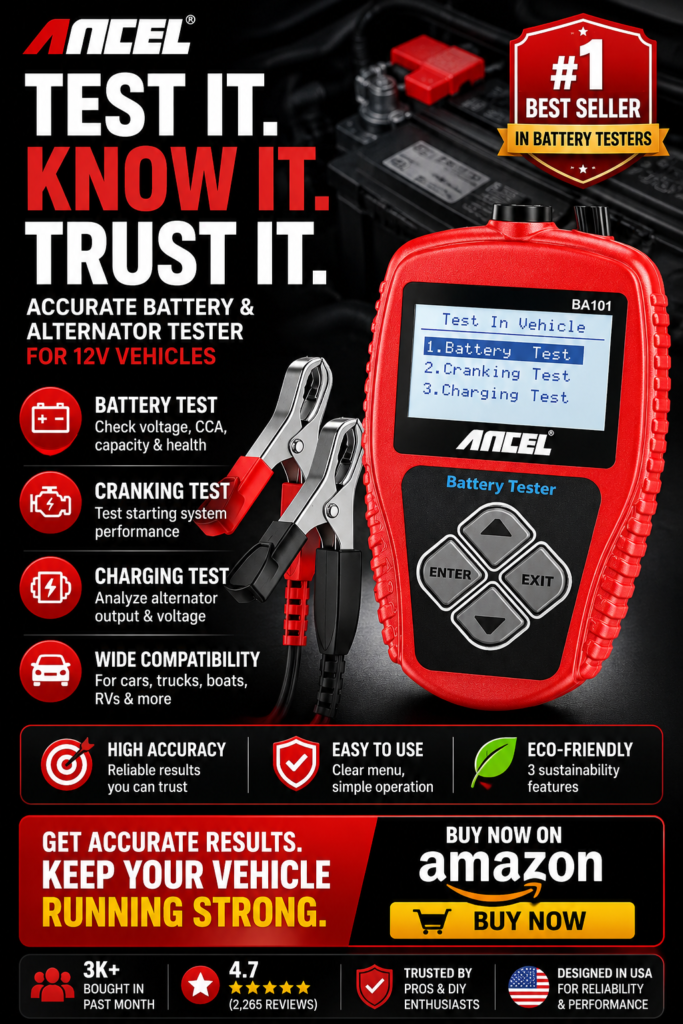
Test the battery before it gets worse. The ANCEL BA101 battery tester measures actual cold cranking amp delivery and compares it to the battery’s rated capacity — giving you a clear result on whether the battery can handle cold starts or needs replacement. Don’t wait for it to fail completely. A battery that’s slow cranking at 30°F will not start your car at 10°F.
Rapid Clicking in Cold Weather
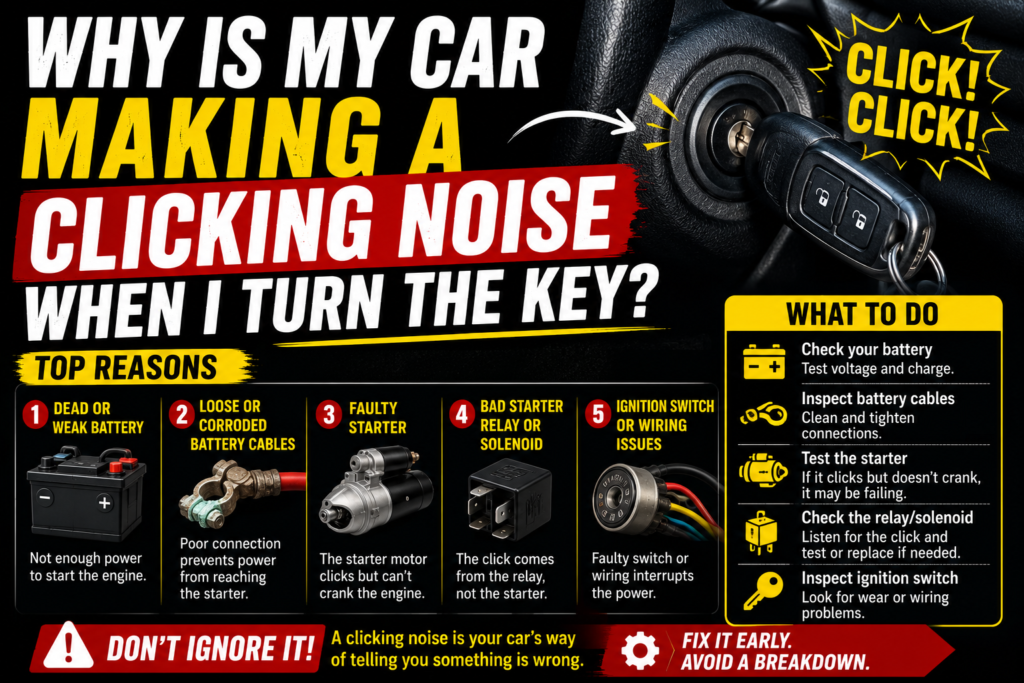
That fast machine-gun clicking when you turn the key in the cold is the battery failing to deliver enough current to hold the starter solenoid engaged. It’s the same rapid clicking you’d hear from a dead battery in warm weather — cold has just pushed a marginal battery below the threshold it needs to start the car. If you need to distinguish a weak battery from a starter problem, Car Clicks But Won’t Start – What It Means and What To Do explains what each type of clicking indicates.
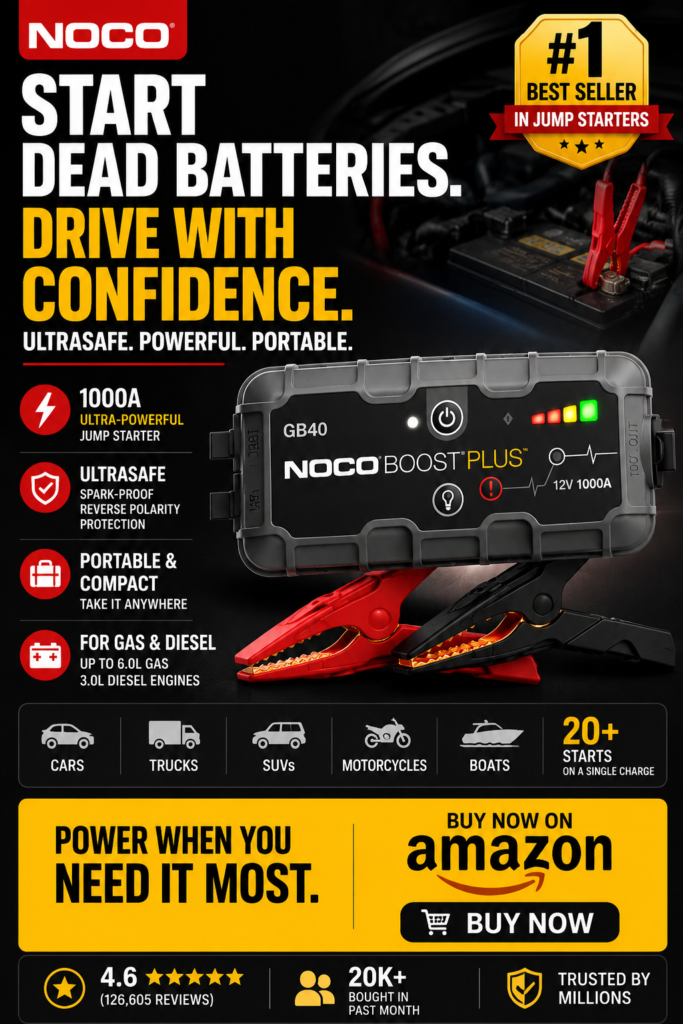
The fix in the moment is a jump start. The NOCO Boost GB40 jump starter handles this without needing a second vehicle — keep it charged in your car from October through March and a cold morning dead battery becomes a five-minute inconvenience instead of a major ordeal. After jumping, drive for at least 30 minutes to let the alternator recharge the battery before shutting off.
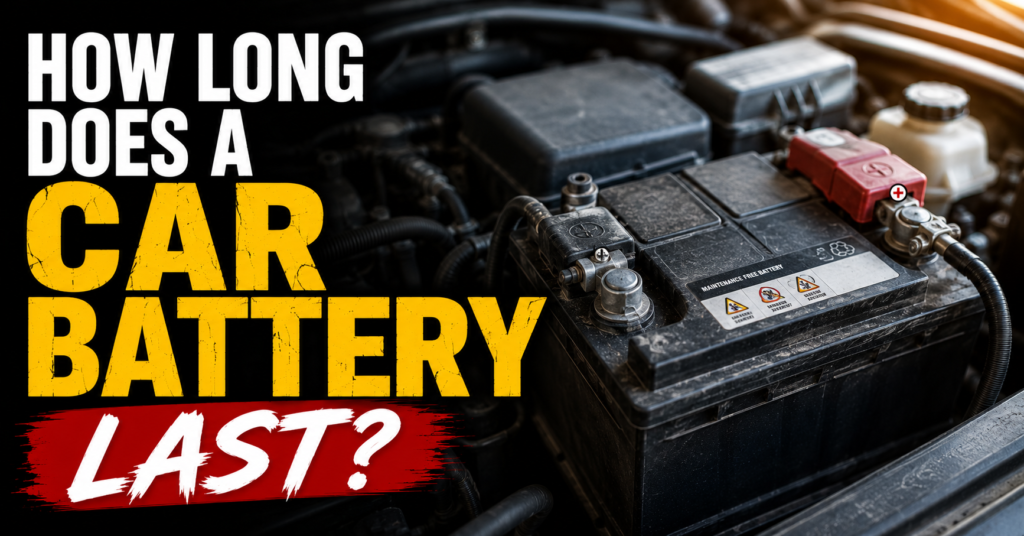
The long-term fix is battery replacement. See our complete guide on how long car batteries last to understand where yours stands and when replacement makes sense.
Engine Cranks Fine But Won’t Fire in the Cold
This is a different scenario — the starter is cranking the engine at normal speed but the engine won’t catch and run. Battery and starter are both working. Something else is preventing combustion.
Flooded Engine
A flooded engine has too much fuel in the cylinders — the mixture is too rich to ignite. This happens most often on cold starts when drivers pump the accelerator repeatedly or crank for extended periods without the engine firing, adding more and more fuel to cylinders that won’t light.
Signs of a flooded engine: strong fuel smell, the engine cranks well but won’t fire, sometimes spitting through the exhaust. The fix on fuel-injected engines is to press the accelerator pedal to the floor — this signals the ECU to cut fuel injection — and crank for 10–15 seconds. This purges excess fuel from the cylinders. Then release the pedal and try a normal start. Do not keep adding throttle inputs if the engine still won’t start — this makes flooding worse.
Cold Affecting Fuel System on Older Vehicles
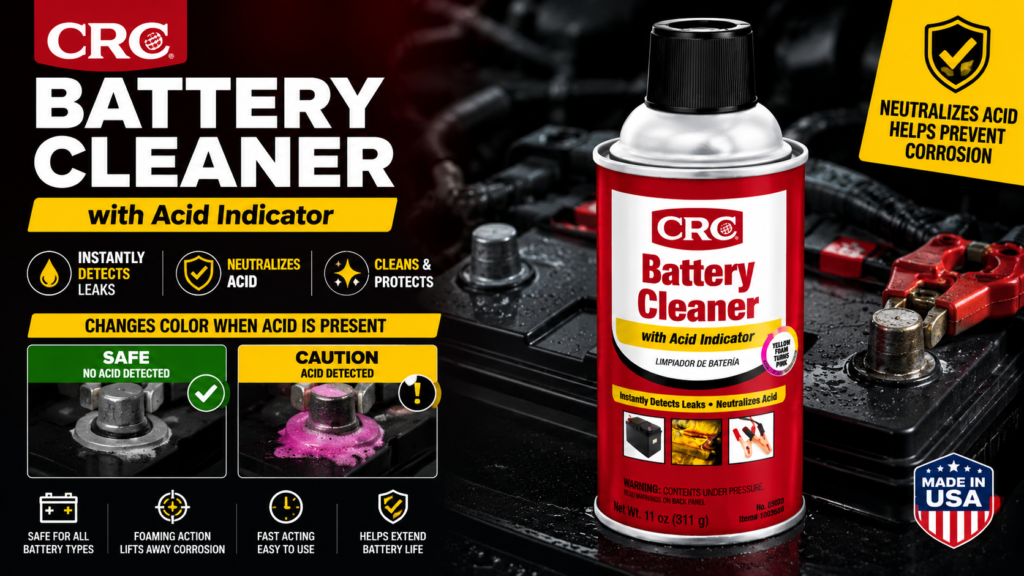
Carbureted engines and older fuel-injected systems can struggle with cold starting due to fuel vaporization issues — cold fuel is harder to atomize into a combustible mist. Vehicles from the 1990s and earlier with cold-start problems often benefit from fuel system maintenance. A quality fuel system cleaner like Valvoline MaxLife Fuel System Cleaner keeps injectors clean and fuel flowing freely — important for cold start performance on older high-mileage engines.
Crankshaft Position Sensor Failing in Cold
Some crankshaft position sensors fail specifically in cold conditions — they work fine when warm but produce no signal when cold. The engine cranks but the ECU gets no position information and can’t fire the injectors or coils. Letting the car sit for 10–15 minutes sometimes allows the sensor to warm enough to work — a classic heat-related (or cold-related) intermittent sensor failure pattern. Scan for P0335 or P0336 codes with an OBD2 scanner.
Car Was Fine Yesterday — Won’t Start This Morning
The overnight temperature drop scenario. The car started fine when you parked it at 50°F and now at 15°F it’s dead. Nothing changed with the car — the temperature changed, and it exposed a battery that was already borderline.
This is overwhelmingly a battery issue. The battery that was marginal — delivering 70–75% of rated capacity — was still enough to start at 50°F but not at 15°F where effective capacity drops another 30–40%. The car didn’t break overnight. The temperature crossed a threshold the battery couldn’t handle.
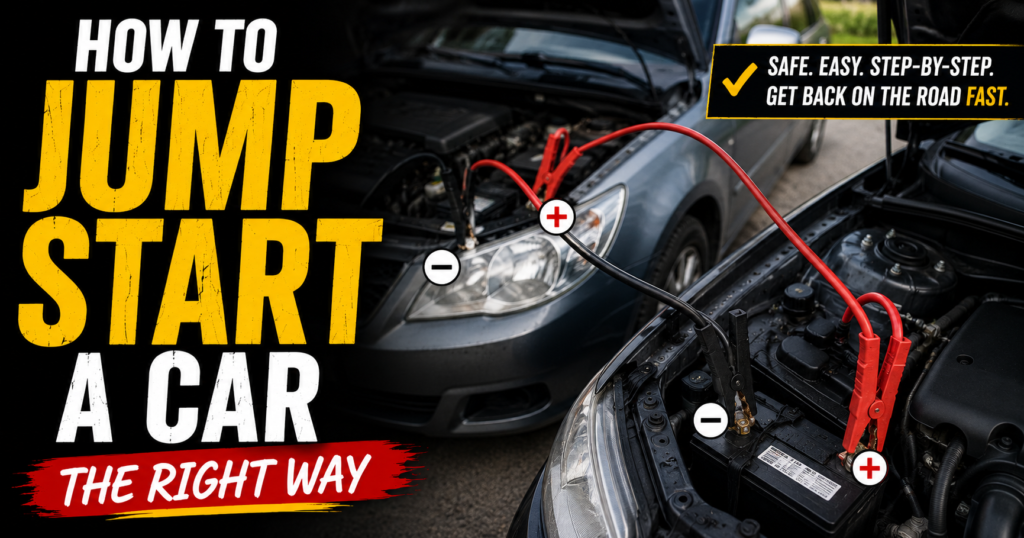
Jump start to get moving, drive to an auto parts store or use a home battery tester, confirm the battery needs replacement, replace it. That’s the complete solution. See our guide on how to jump start a car correctly if you need to get moving first.
Car Starts But Immediately Stalls in Cold Weather
The engine fires on the first crank but dies within seconds. This is different from a no-start — the combustion system is working but something prevents the engine from sustaining idle when cold.
Idle Air Control Valve
Cold engines need a higher idle speed to run smoothly before reaching operating temperature — the idle air control valve manages this on older vehicles. A dirty or failing IAC valve can’t provide the extra air needed for cold idle, and the engine dies as soon as it starts. Cleaning the IAC with throttle body cleaner sometimes resolves this. Replacement is inexpensive on most vehicles.
Mass Airflow Sensor
A dirty or failing MAF sensor gives the ECU incorrect airflow readings, causing the engine to run with the wrong fuel mixture on cold start. The engine may start and immediately stall, or run rough and stall shortly after starting. MAF-related codes show up on an OBD2 scanner — P0100 through P0104 range. Cleaning the MAF sensor with dedicated MAF cleaner spray is worth trying before replacement.
Throttle Body Carbon Buildup
Carbon deposits on the throttle body restrict airflow below what the engine needs for cold idle. The engine fires but can’t sustain combustion with restricted air. Cleaning the throttle body — a 30-minute DIY job on most vehicles — often resolves cold stalling that’s been building gradually.
Diesel Engines and Cold Weather Starting
Diesel engines have unique cold weather starting challenges that gasoline engines don’t share. Diesel ignites through compression heat rather than a spark plug — and cold engines don’t generate enough compression heat to ignite diesel fuel reliably.
Glow plugs pre-heat the combustion chambers before starting — they’re what the wait-to-start light is telling you to do. Letting the glow plugs fully cycle before cranking is essential in cold weather. A failed glow plug — or multiple failed glow plugs — causes hard cold starting on diesel engines that works fine in warm weather.
Diesel fuel also gels in extreme cold — wax crystals form in the fuel and clog the filter. Anti-gel additives mixed into the fuel before cold weather prevents this. If a diesel won’t start in very cold weather and the fuel has been sitting, a fuel gelling problem is worth investigating before assuming mechanical failure.
What To Do Right Now If Your Car Won’t Start in the Cold
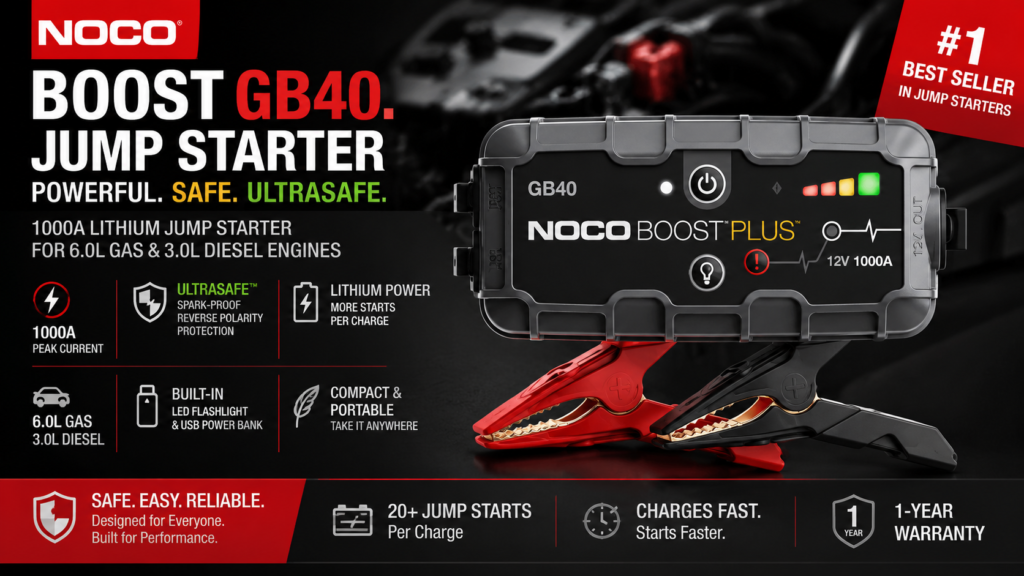
If you hear clicking: Jump start. Use a portable jump starter if you have one — the NOCO GB40 is the one to keep in your car. If you don’t have one, jumper cables and a second vehicle. Our step-by-step guide on how to jump start correctly covers the exact procedure.
If cranking is slow but the engine eventually starts: Let it fully warm up before shutting off again. Get the battery tested that day — slow cold cranking means the battery is on borrowed time.
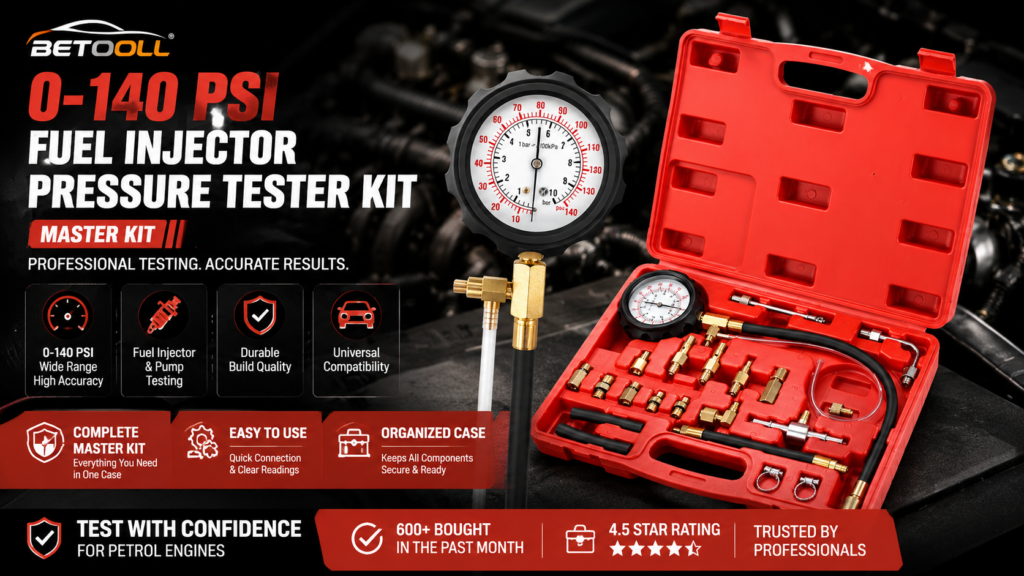
If the engine cranks fine but won’t fire: Don’t keep cranking repeatedly — you’re flooding it. Try the floor-the-accelerator method for a flooded engine. Scan for codes. Check for fuel pump operation.
If completely silent: Check for a blown fuse first. Then check battery connections — cold can contract metal enough to loosen a marginally tight terminal connection. Then test battery voltage.
How to Prevent Cold Weather No-Start Next Year

Test your battery every fall — September or October, before temperatures drop. The ANCEL BA101 does this in two minutes. A battery testing below 70% of rated CCA in fall won’t survive winter. Replace it before temperatures drop rather than after it fails on a cold morning.
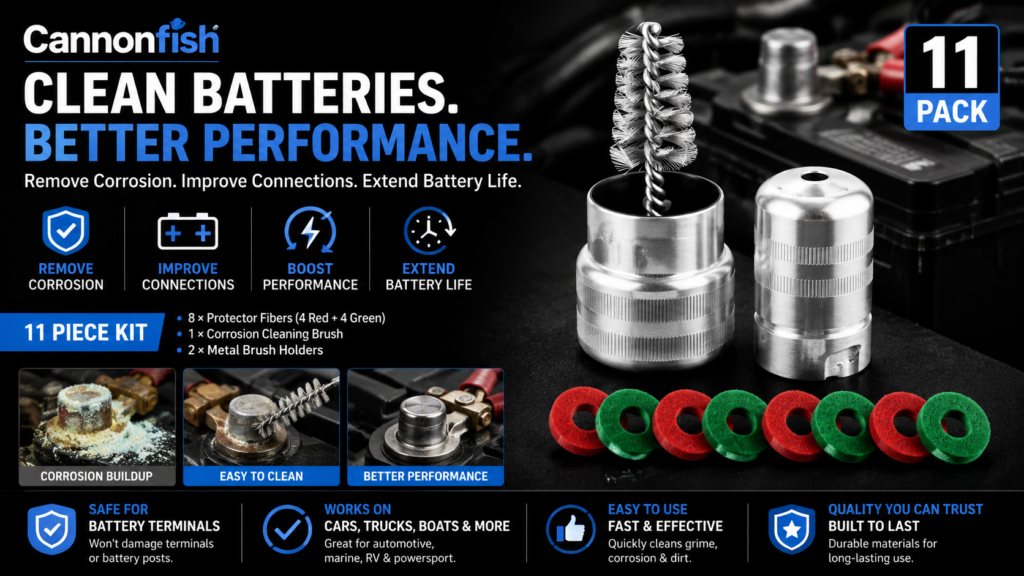
Keep battery terminals clean. Corrosion increases resistance — and in cold weather when the battery already has less to give, extra resistance is the difference between a start and a no-start. Clean them before winter with a terminal brush kit and apply anti-corrosion protection.
Use the correct oil viscosity for your climate. If you live where temperatures drop well below freezing, 0W-20 or 5W-20 oil flows significantly better than 10W-30 in extreme cold — reducing the cranking load on the battery.
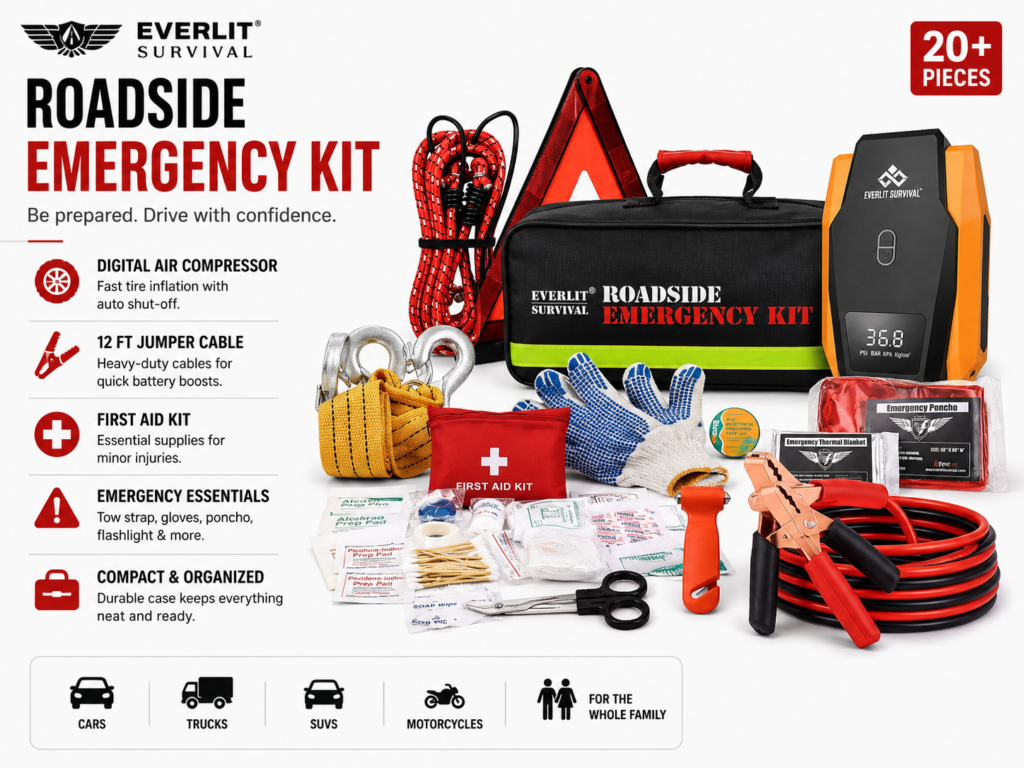
Keep a portable jump starter charged and in the car from October through March. Not because you expect to need it — because when you do need it, you really need it. A complete roadside emergency kit adds jumper cables, tire-inflation equipment, visibility tools, and basic first aid in one organized bag.
Park in a garage if possible. Even an unheated garage is dramatically warmer than outdoor overnight temperatures — keeping the battery warmer maintains more of its cold-weather capacity. A battery that’s 20°F warmer at startup can make the difference between a start and a no-start on a marginal battery.
Frequently Asked Questions
How cold does it have to be before a car won’t start?
It depends entirely on battery health. A healthy battery with full capacity can start a car in temperatures well below 0°F. A battery at 60% health may fail to start at 20°F. There’s no universal temperature threshold — it’s the intersection of battery capacity, oil viscosity, and engine condition that determines the cold starting limit for any specific vehicle.
Will warming up the car help a cold battery?
Once the car starts, yes — the engine heat warms the battery and the alternator recharges it. But a battery that’s too dead to start can’t benefit from warmup it can’t achieve. A brief warm-up period before driving in extreme cold is more about warming the engine oil and cabin than the battery.
My car won’t start in cold but starts fine when I jump it — do I need a new battery?
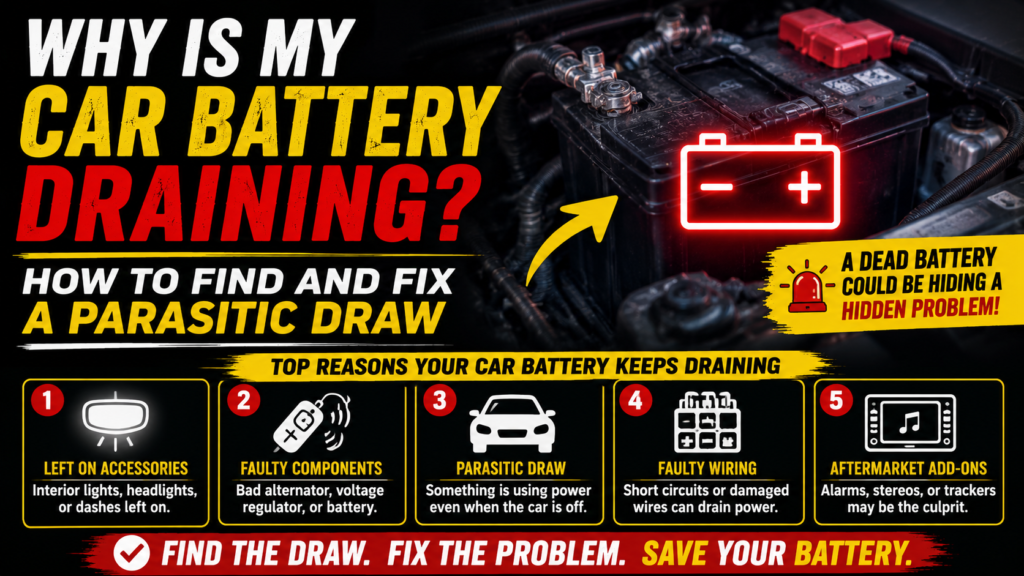
Almost certainly yes. A battery that needs jumping in cold weather but starts fine after a jump — and works normally in warm weather — is a battery that’s lost enough capacity that cold temperatures push it below the starting threshold. It’s not dead, it’s dying. Replace it before it fails completely at a less convenient time. If the battery keeps going dead after replacement or repeated jumps, check for an overnight battery drain rather than assuming cold weather is the only cause.
Can a new battery still fail to start in cold weather?
A brand-new battery of the correct group size and CCA rating for your vehicle should handle cold starting in any temperature your car was designed for. If a new battery struggles in cold, check that it’s the correct CCA rating for your vehicle — an undersized battery struggles in cold even when new.
Does turning the key to on before cranking help cold starting?
On older vehicles with mechanical fuel pumps, briefly cycling the key to on allows the fuel pump to pressurize the system before cranking — which can help cold starting. On modern fuel-injected vehicles the ECU handles this automatically. It doesn’t hurt, but on modern vehicles it doesn’t provide the benefit some drivers think it does.
Why does my car start fine when cold but have trouble after it’s warmed up and sits briefly?
This is heat soak — the engine compartment gets very hot after running, and components like the fuel system and some sensors get hotter than normal operating temperature. This is a different pattern than cold no-start and usually points to a heat-sensitive component like a crankshaft position sensor, fuel pressure regulator, or vapor lock in the fuel system rather than a battery issue.
About the Author: Jake Merritt
Jake spent eight years as a service advisor at a regional auto dealership before going independent. He’s owned everything from a ’98 Civic with 240,000 miles to a diesel truck that taught him more than any training course. He started writing for WhyIsMyCar.com because he was tired of watching people get talked into repairs they didn’t need — or ignore problems that were genuinely serious. Jake lives in Tennessee with his wife, two kids, and a garage that’s never quite organized enough.