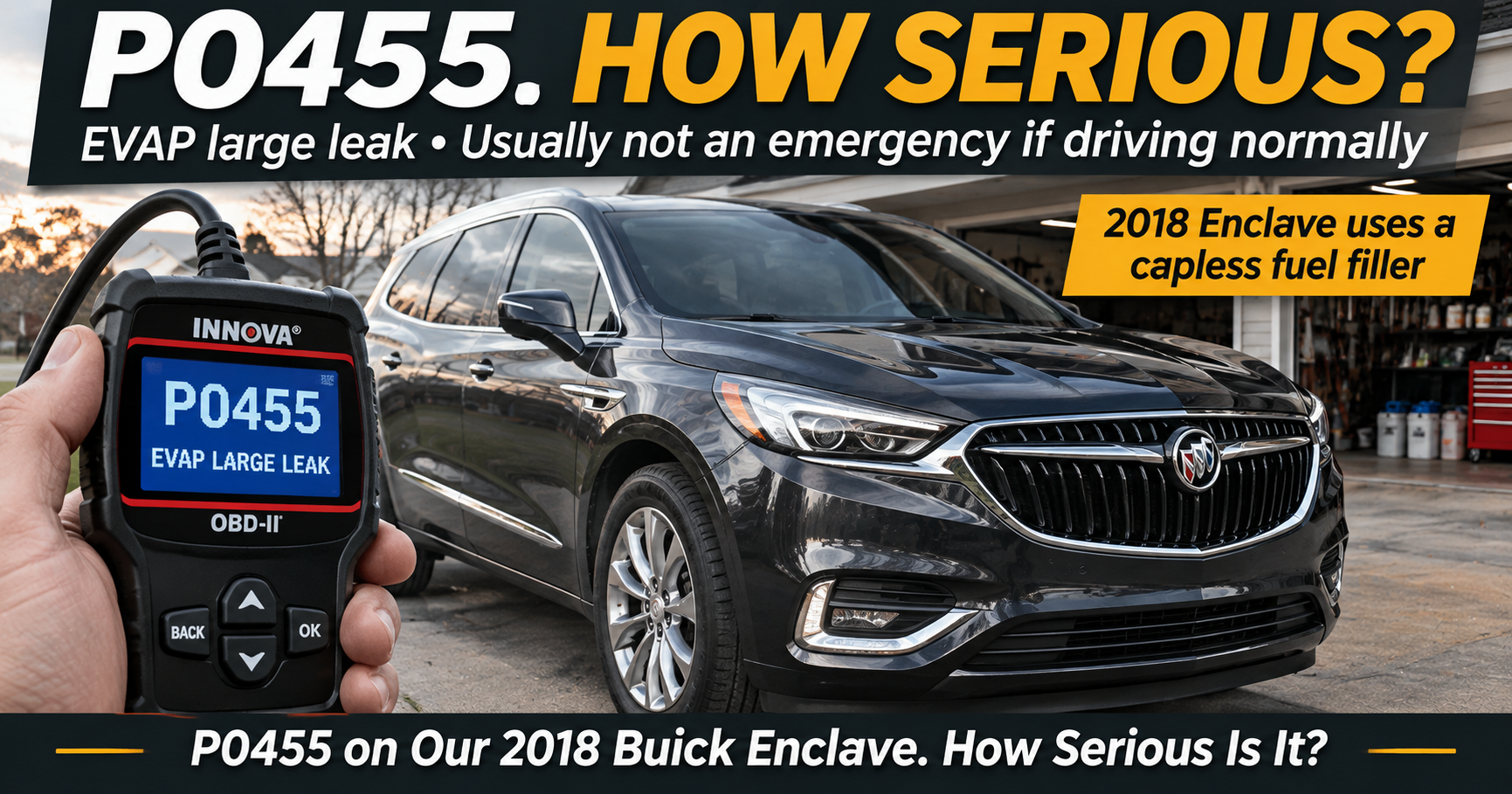
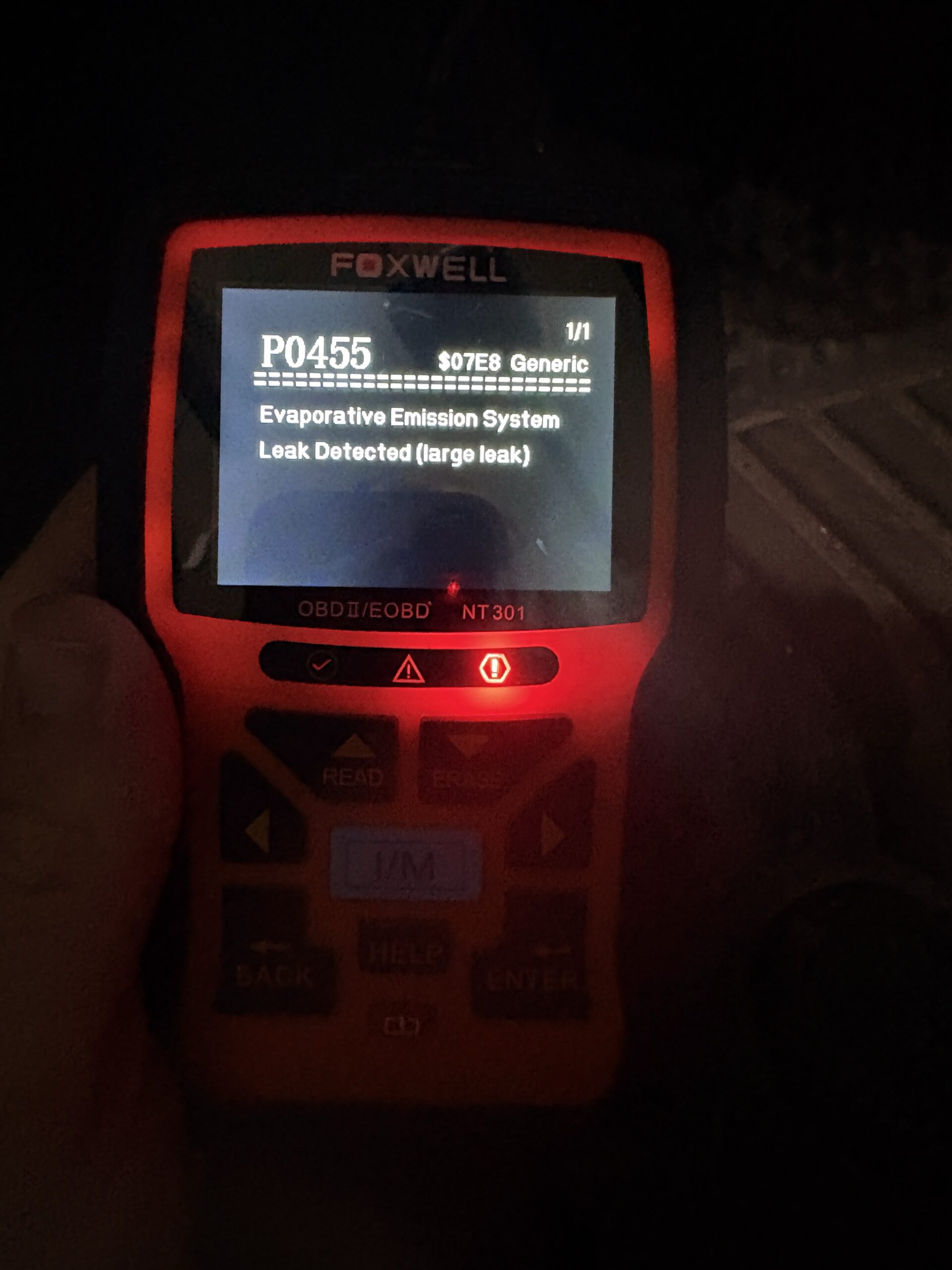
I plugged my code reader into our 2018 Buick Enclave AWD, and P0455 came up on the screen. Under the code, the reader said: “Evaporative Emission System Leak Detected (large leak).”
“Large leak” is the part that gets your attention. My first thought was whether the Enclave was leaking gas and whether we should still drive it.
The code does deserve attention, but it does not tell me that gasoline is dripping from the vehicle. It means the Enclave detected a problem while checking the system that keeps fuel vapors contained. It also doesn’t tell me which part failed.
Here’s how I’m making sense of it before I start buying parts.
What P0455 means in plain English
Gasoline gives off vapors, even while the Enclave is parked. The evaporative emissions system, usually called the EVAP system, is supposed to keep those vapors from escaping into the air. It stores them and, when conditions are right, sends them into the engine to be burned.
The Enclave checks whether that system can hold the pressure or vacuum it expects. P0455 means it detected what the scanner calls a large leak during that check.
That wording describes the test result. It doesn’t mean I should expect to find a large puddle of gas under the vehicle.
A problem at the fuel opening could trigger the code. So could a hose, a valve, or another part of the EVAP system that isn’t sealing or working correctly. The scanner gives me a place to start looking, not the name of a part to order.
Our Enclave doesn’t have a gas cap to tighten
A lot of P0455 advice begins with “tighten the gas cap.” I can’t do that on our Enclave because it doesn’t have a screw-on gas cap.
When we fill it, the pump nozzle pushes open a little spring-loaded door inside the fuel opening. That inner door closes when the nozzle comes out. There’s also the outer fuel door that I shut afterward.
Those are two different things. The outer door covers the opening, but shutting it isn’t the same as tightening a gas cap. The inner opening needs to close and seal as designed.
That makes the fuel opening a reasonable first place to look, especially if the light appeared after a fill-up. I’d check for something obvious around the opening, such as debris or a door that doesn’t appear to close. I wouldn’t jam a screwdriver into it or try to force it open.
I also wouldn’t assume I’d found the problem just because the code appeared after buying gas. The timing is a clue, not proof.
There’s one detail in the 2018 Enclave owner’s manual that’s easy to miss. If someone uses the special funnel adapter to add fuel from a portable gas can, the adapter has to be removed afterward. Buick says leaving it inserted can allow fuel vapor to escape and turn on the check engine light.
I don’t know that this happened to ours. But if I had recently used a gas can, it would be the first thing I’d check.
Does P0455 mean our Enclave is unsafe to drive?
I’d make this decision based on how the Enclave is acting, not just the five characters on the code reader.
If the check engine light is steady, the vehicle starts and drives normally, and there’s no strong fuel smell, P0455 usually gives me time to arrange a diagnosis. I wouldn’t ignore it for months, but the code alone doesn’t tell me to pull over immediately.
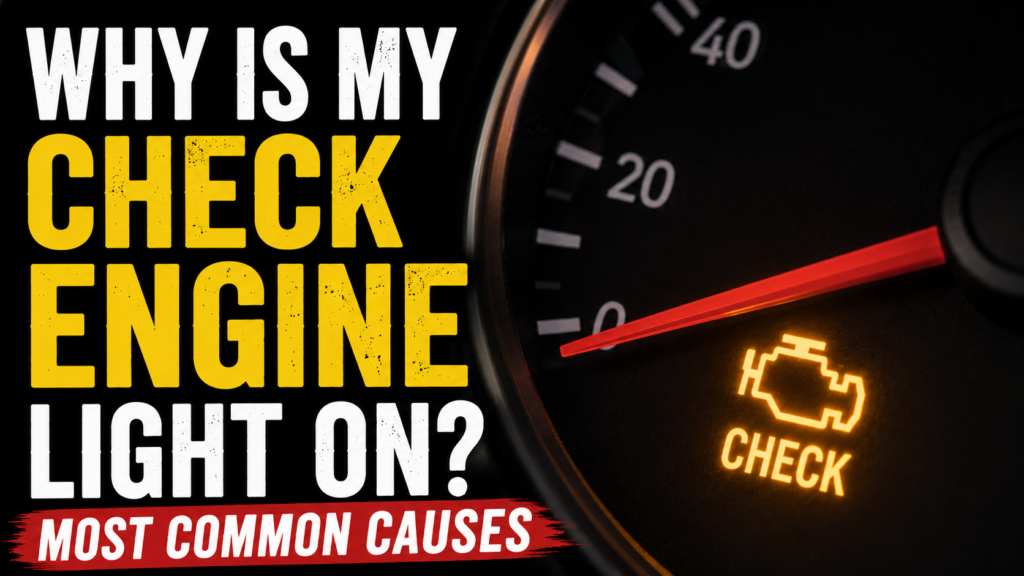
If the check engine light is flashing, I’d treat that differently. Buick warns that a flashing light can indicate a malfunction that could damage the emissions system. I’d ease off the gas, find a safe place to stop if it keeps flashing, and get the vehicle checked promptly. A flashing light could involve another problem even if the reader also shows P0455.
A strong smell of raw gasoline, visible wet fuel, or a vehicle that suddenly runs poorly changes the picture too. I wouldn’t keep driving and assume it’s “just an EVAP code.” I’d stop somewhere safe and have the situation checked.
The photograph of my scanner shows the P0455 reading. It doesn’t establish whether our check engine light was steady or flashing, and I don’t want to pretend that it does.
What I’d check first on our Enclave
I’d start by saving the information I already have. I took a picture of the code, which is useful because I can show a shop exactly what the reader displayed.
Next, I’d check whether the scanner shows any other codes. “1/1” on the screen suggests this reading showed one code in that view, but I’d still look through the reader’s stored, pending, and permanent code menus if available. Another code could change where a mechanic starts.
Then I’d think back to when the light appeared. Was it shortly after filling up? Did someone put gas in from a portable can? Has the Enclave been harder to start right after refueling? Have I noticed a fuel smell around the vehicle?
I’d write those details down rather than try to remember them at the repair counter.
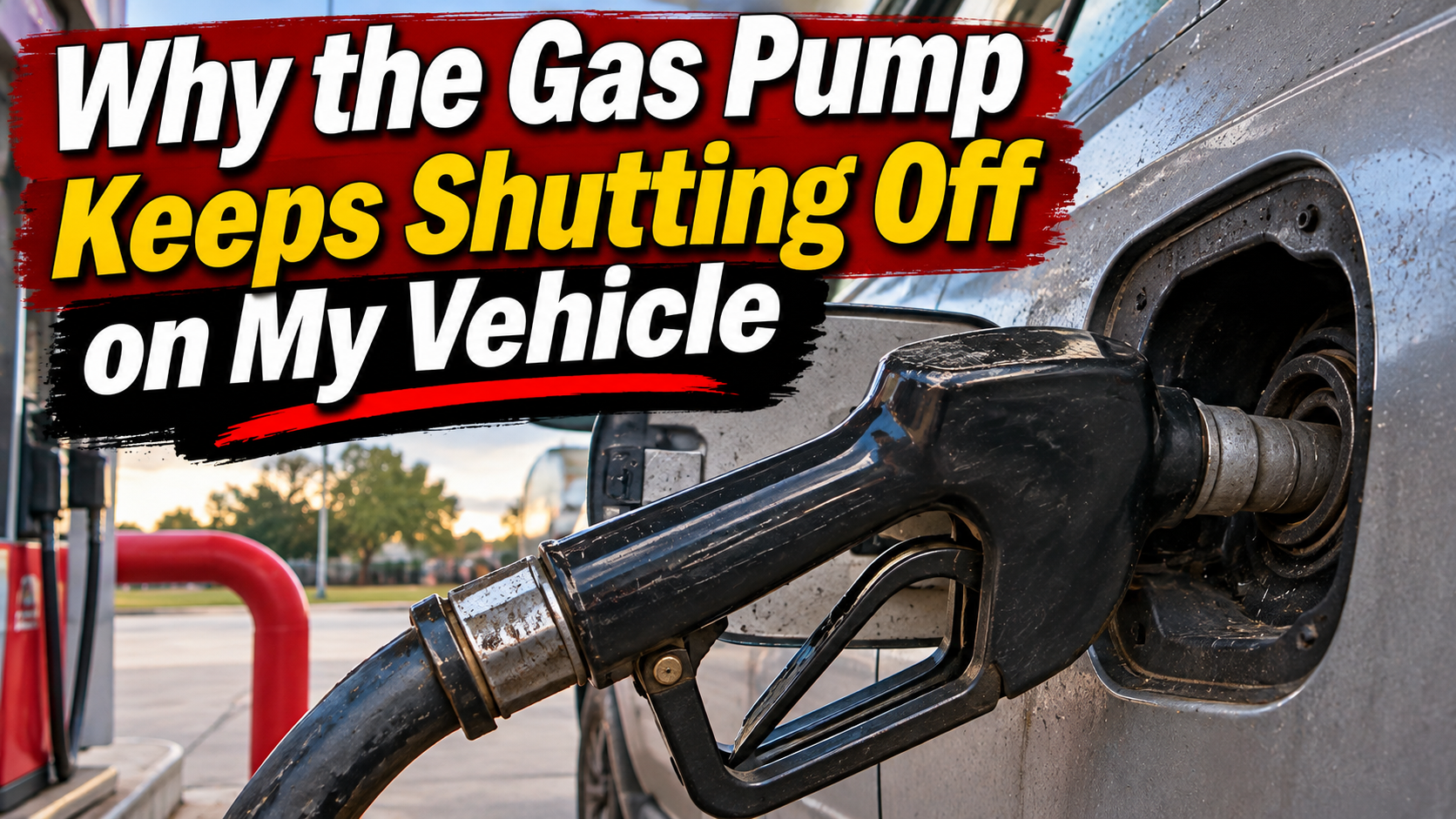
With the engine off, I’d look at the capless filler opening. I’m looking for an obvious obstruction or damage, not trying to take it apart. I’d also look beneath the vehicle for any visible liquid fuel. No puddle doesn’t rule out an EVAP problem, since this code is about fuel vapors. A different kind of fuel-opening problem is described in hard-to-fill fuel filler, where normal filling causes repeated nozzle shutoffs and fuel spray-back.
That’s about as far as I’d go without the right diagnostic equipment. The next step should be finding the actual fault, not buying whichever EVAP part turns up first in a search.
Why I wouldn’t replace the first part someone suggests online
It’s tempting to search “2018 Buick Enclave P0455 fix” and order a valve. I understand the urge. Nobody wants to pay for a diagnosis if the answer turns out to be simple.
The trouble is that several faults can produce the same code. A sealing problem at the capless filler, a disconnected or damaged vapor line, or a valve that isn’t closing properly can all leave the system unable to pass its test.
Even when a part is commonly mentioned online, “common” doesn’t mean it has failed on our Enclave.
If I take it to a shop, I’d tell them the exact code and ask them to diagnose the EVAP leak before replacing parts. Depending on what they find during their initial checks, they may test valve operation and use a smoke test or other EVAP diagnostic procedure to locate where the system isn’t sealing.
I’d rather pay to find the failure than pay for one guessed part, watch the light come back, and pay again.
Could the spring-loaded fuel door itself cause P0455?
It’s possible for a problem at a capless fuel opening to affect the system’s ability to seal. That’s why I’d inspect it.
But I can’t look at a P0455 reading and say, “The little door is definitely bad.” The code doesn’t narrow the leak down that far.
If that inner door looks crooked, has something caught around it, or doesn’t appear to close after filling, I’d mention it to the shop. If it looks completely normal, I’d still mention that the Enclave uses a capless filler so nobody hands me generic gas-cap advice.
The important distinction is simple: the spring-loaded inner opening matters; the outer fuel door is just the cover.Closing the outer door more firmly won’t fix a leak elsewhere in the EVAP system.
What if the light goes out on its own?
I’d be glad to see it go out, but I wouldn’t automatically call the problem fixed.
The Enclave runs its checks under certain driving and fuel conditions. A light that goes out may mean the system passed a later check. An intermittent seal or valve problem can still return.
If I had found and removed a funnel adapter left in the filler, or cleared an obvious obstruction and the light stayed off through later trips, that would be useful information. I’d keep the photo of the original P0455 code and note what changed.
If the light comes back, I’d have the system diagnosed. I wouldn’t keep erasing the code just to make the dashboard look better.
Should I clear P0455 with my code reader?
Not yet. The reader has an ERASE button right there, so it’s an easy thing to do. But clearing the code before a mechanic sees it can remove useful diagnostic information and reset emissions readiness monitors.
It also doesn’t repair anything.
I’d leave the code alone while I check the obvious things and decide where to have it diagnosed. After an actual repair, the shop can verify the fix and handle the code appropriately. If an inspection is coming up, readiness matters because the vehicle may need normal driving time before its self-tests complete.
What I’d tell the mechanic
I’d keep it straightforward: “This is our 2018 Buick Enclave AWD. My Foxwell reader showed P0455, large EVAP leak. It has a capless fuel opening with a spring-loaded inner door, not a screw-on gas cap.”
Then I’d add what I actually know: when the light appeared, whether it was steady or flashing, whether we recently filled up, and whether I’ve noticed a gas smell or a starting problem. If I don’t know one of those answers, I’d say so.
I’d ask what testing points to the recommended repair. If the estimate names a valve, hose, canister, or filler component, I want to understand what showed it was faulty.
That doesn’t mean I expect to diagnose the whole system myself. I just want the repair to follow the evidence.
Is P0455 the same as the code I saw on my GMC Sierra?
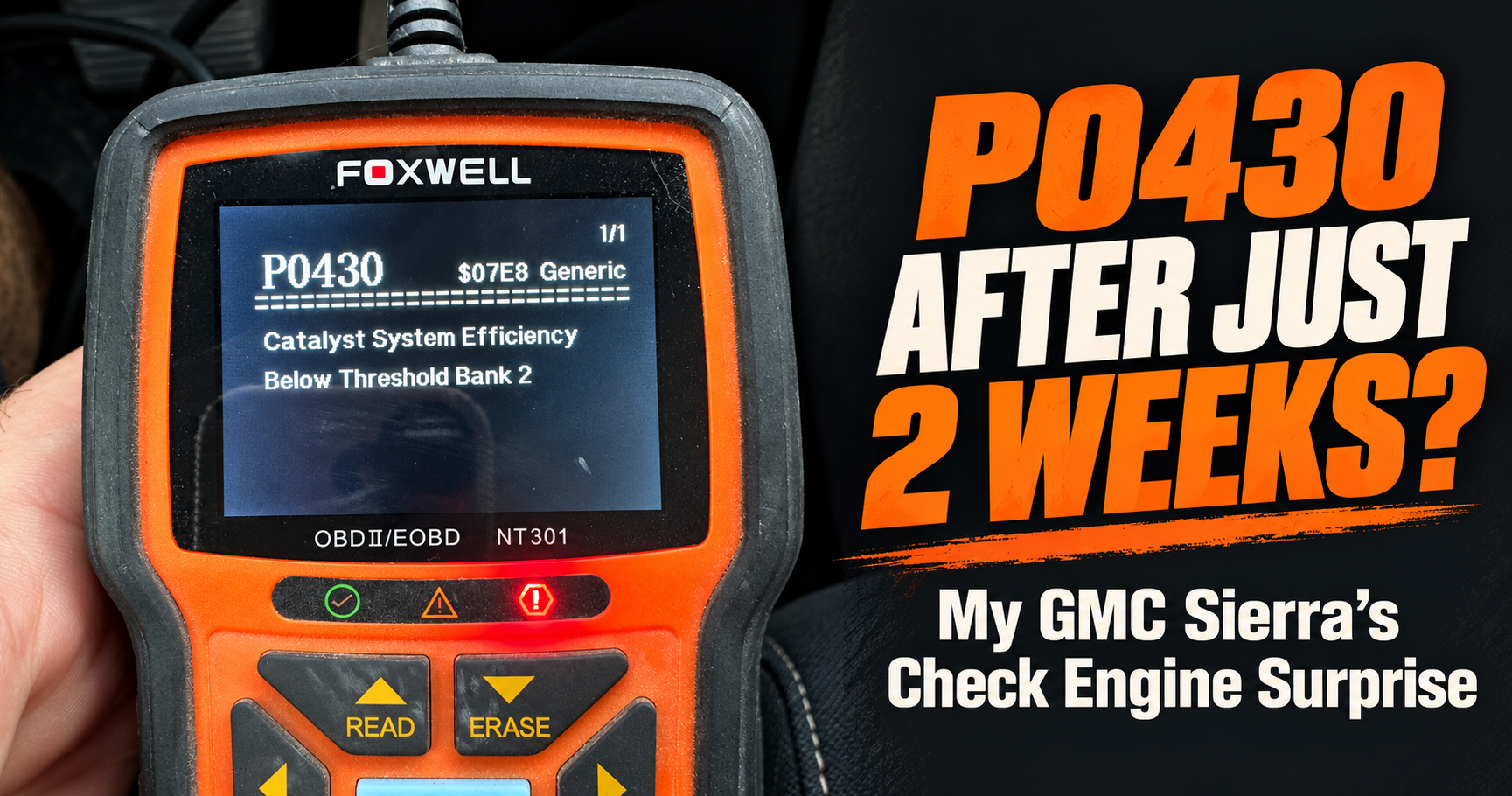
No. I previously wrote about the P0430 reading on my GMC Sierra and what its scanner screen actually told me. P0430 concerns catalyst system efficiency. P0455 concerns the fuel-vapor control system.
Both can turn on a check engine light, and both can make me worry when I first see them. But they call for different checks. I wouldn’t use a fix suggested for one code to guess at the other.
Questions I had after seeing the code
Does “large leak” mean there’s a big hole in the gas tank?
No. It means the EVAP system failed its large-leak check. The code doesn’t identify a hole, a location, or a failed part. I’d look for visible fuel and take any strong gas smell seriously, but I wouldn’t assume the tank is punctured from P0455 alone.
Can I just tighten something at the fuel opening?
There’s no screw-on cap on our 2018 Enclave to tighten. I can check that the spring-loaded opening isn’t obviously obstructed and that a portable-can funnel adapter hasn’t been left inserted. If the code remains, the system needs a proper diagnosis.
Will filling the tank make the light go away?
I wouldn’t count on it. Refueling might help me notice a pattern, but adding gas doesn’t repair a faulty seal, hose, or valve. I’d avoid repeatedly topping off the tank after the pump shuts off and follow the fueling instructions in the owner’s manual.
Is this probably an expensive repair?
The code alone can’t answer that. The cause might be relatively simple, or it might take more time and parts to repair. I’d get a diagnosis and an estimate before deciding what it will cost. Buying several parts on a guess can become expensive fast.
What do we know for sure about our Enclave right now?
We know that our 2018 Buick Enclave AWD displayed P0455 on my Foxwell code reader and that it has a capless fuel filler. We don’t yet know where the EVAP system failed its test or what repair it needs. I’ll update this if we find the cause, because the actual fix will be more useful than pretending I already know it.
About the author: Daxon Weaver writes about the vehicles his family owns and the problems he encounters while using them, including this 2018 Buick Enclave AWD.