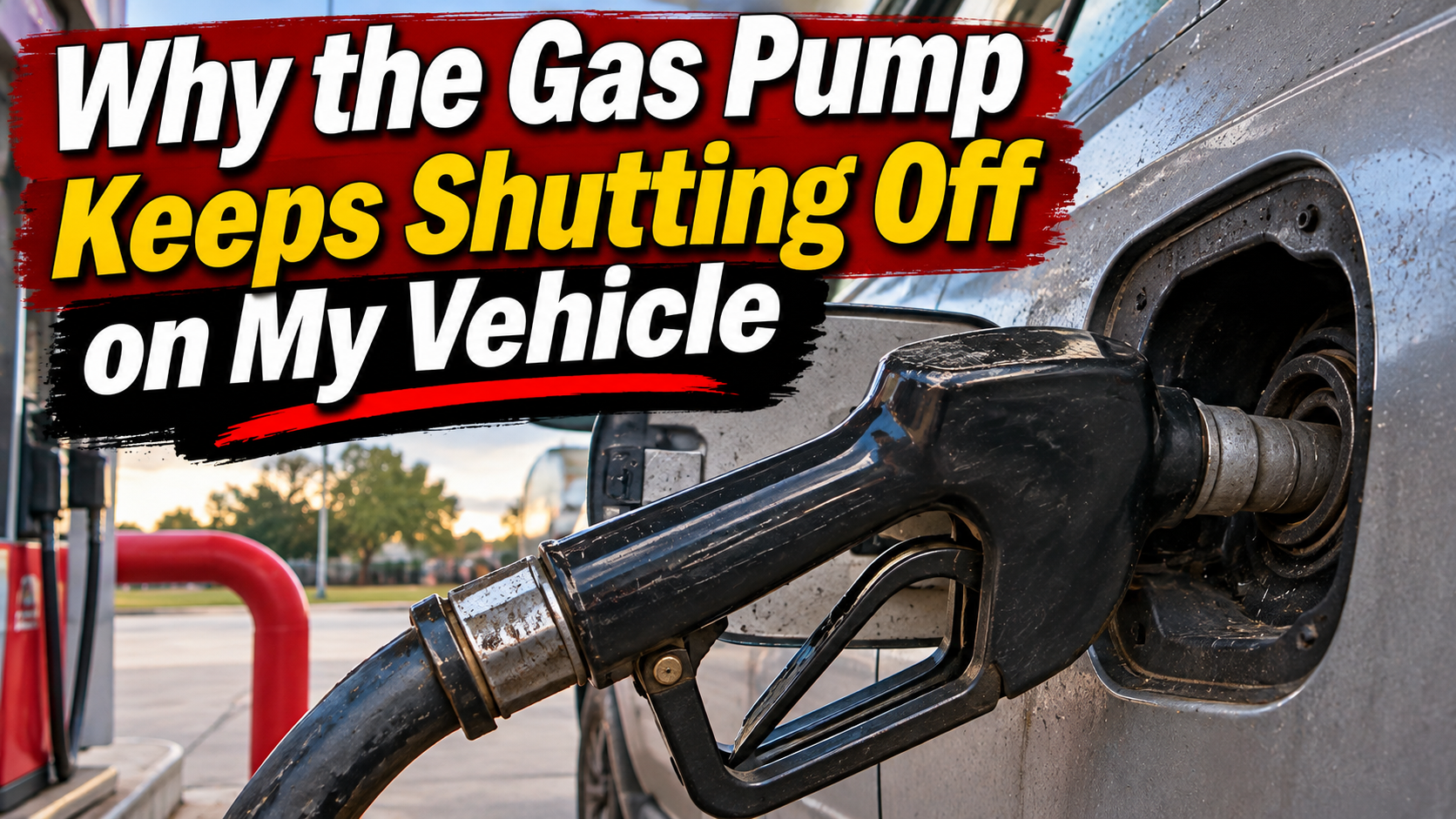
For years, filling our 2011 Hyundai Sonata has been a pain. I can’t just put the nozzle in and squeeze the handle like I do with a normal car. If the gas flows too fast, the pump clicks off almost immediately.
Worse, gas has sprayed back out of the filler opening, onto us and onto the ground. We’ve learned to squeeze the handle very, very slowly to get fuel into the tank without making a mess.
That workaround has gotten us through a lot of fill-ups. It hasn’t fixed whatever is happening inside the car. Now that our Sonata has passed 300,000 miles, I want to be especially careful about which repairs are worth paying for, but fuel spraying out at the pump is a problem I wouldn’t dismiss as an old-car quirk.
What happens when we fill our Sonata
The problem isn’t that the tank is already full. We pull in needing gas, start filling, and the nozzle shuts off long before we’re done.
If I squeeze the handle lightly enough, the gas goes in. Try to fill at an ordinary speed, and I risk another click or fuel coming back out of the opening.
That’s the detail I’d lead with at a repair shop. “The pump keeps shutting off” could describe a bad nozzle at one station. “Our car has needed an extremely slow fill for years, and fuel has sprayed back out” gives them a much clearer symptom to investigate.
I don’t know which part of our Sonata is causing it. We haven’t had a repair confirmed, and I’m not going to claim that a certain valve or hose has failed just because it sounds plausible.


Why would the nozzle shut off before the tank is full?
A gas station nozzle shuts itself off when fuel reaches the sensing area near its tip. It doesn’t know what the Sonata’s dashboard gauge says.
If gasoline backs up near the nozzle while the tank is still taking fuel, the nozzle can behave as though the tank is full. That fits what we see at the pump, but it doesn’t explain why fuel is backing up on our car.
The fuel has to travel through the filler and into the tank. As it goes in, air and fuel vapor have to move through the vehicle’s venting system. A problem along that path can make a car difficult to fill.
I’d want a mechanic to look at the whole filling and venting path, starting with the symptom we can actually describe. I wouldn’t want them to choose a part based only on an online list of common causes.

Why going painfully slow seems to help
When I barely squeeze the pump handle, gas enters at a slower rate. On our Sonata, that gives us a way to fill without the nozzle immediately clicking off.
To me, that makes a flow or venting problem worth investigating. It does not prove the vent valve is bad. The filler path and other parts of the system still need to be considered.
It’s easy to get used to a workaround when you’ve owned a car for years. You stand there longer, watch the handle closely, and tell yourself, “That’s just how this car is.”
But the fact that a slow fill helps doesn’t make the spray-back harmless. I don’t want the next fill-up to leave gasoline on someone again.
Fuel spraying back out is the part I take seriously
An early pump click is annoying. Gasoline coming back out of the filler opening is a different level of problem.
When that happens, I’d stop pumping immediately, tell the station attendant about fuel on the ground, and follow the station’s directions. I wouldn’t pull the nozzle partly out and try again at a different angle while fuel is splashing around.
If gas gets on my skin, I’d wash it off promptly with water and soap. If clothing is wet with gasoline, I’d change out of it rather than sit in it and continue the trip. If it gets in someone’s eyes, I’d rinse with plenty of water and get help.
I’d also keep the engine off while refueling and stay away from cigarettes or any other ignition source. The goal is to stop the spill, not find a clever way to keep the pump running.
We’ve managed this for years by filling extremely slowly. Looking at it now, I’d rather have the Sonata inspected than keep accepting the chance of another spray-back.


Could it just be the gas station pump?
One faulty nozzle can click off early. If this had happened only once, I’d try another pump before deciding the car was at fault.
Our situation has gone on for years, though. I wouldn’t explain away a long-running, repeatable problem with “must be that pump,” especially after gas has come back out of the car’s filler opening.
I still wouldn’t tell a mechanic that I’ve tested every pump or station. I’d tell them exactly what we know: this has been a repeated problem when we fill our Sonata, normal flow makes the nozzle shut off, and we’ve had fuel spray back.
If I were gathering more information before the appointment, I’d make a note of whether it behaves the same way at different stations. I wouldn’t deliberately provoke another spill just to prove the point.
What parts would I want checked?
I’d ask the shop to inspect the filler neck and its path to the tank. I’d also ask them to check how the tank vents while fuel is going in, including the relevant lines and EVAP components on our particular Sonata.
A restriction, damage, or a valve that isn’t operating as it should could make filling difficult. The shop needs to determine whether any of those possibilities apply to our car.
I would not walk in and ask them to replace a charcoal canister just because I saw one mentioned online. I also wouldn’t ask for a fuel pump. The pump inside the car that supplies the engine is a different part from the nozzle that keeps clicking off at the station.
What I’d ask is: “Can you diagnose why gas backs up and sprays out when this car is filled at a normal rate?”
Then I’d want to know what they found before approving a repair.


Does a check engine light have to come on?
No. I wouldn’t use the absence of a dashboard warning to decide the filling problem isn’t real. We can see and feel what happens at the gas station.
If a check engine light is on, I’d read and save the codes before clearing them. Those codes might help the shop, but I wouldn’t assume they identify the exact reason gas is coming back out.

I recently wrote about the P0455 code we read on our Buick Enclave and what we do and don’t know from it. That is a different vehicle and a different experience. I wouldn’t transfer its scanner result to our Sonata or claim the two cars have the same problem.
Does our Sonata’s gas cap cause this?
Our 2011 Sonata has a regular fuel cap. I’d make sure it’s installed properly after filling, especially if a check engine light appeared.
But tightening the cap doesn’t explain why fuel sprays back while the nozzle is in the filler opening. I wouldn’t stop there and call the problem solved.
This is also where car advice online can get confusing. Our newer Buick Enclave has a capless filler, while our older Sonata has a cap. Advice about one vehicle’s fuel opening doesn’t automatically fit the other.
Would I keep driving a 300,000-mile car with this problem?
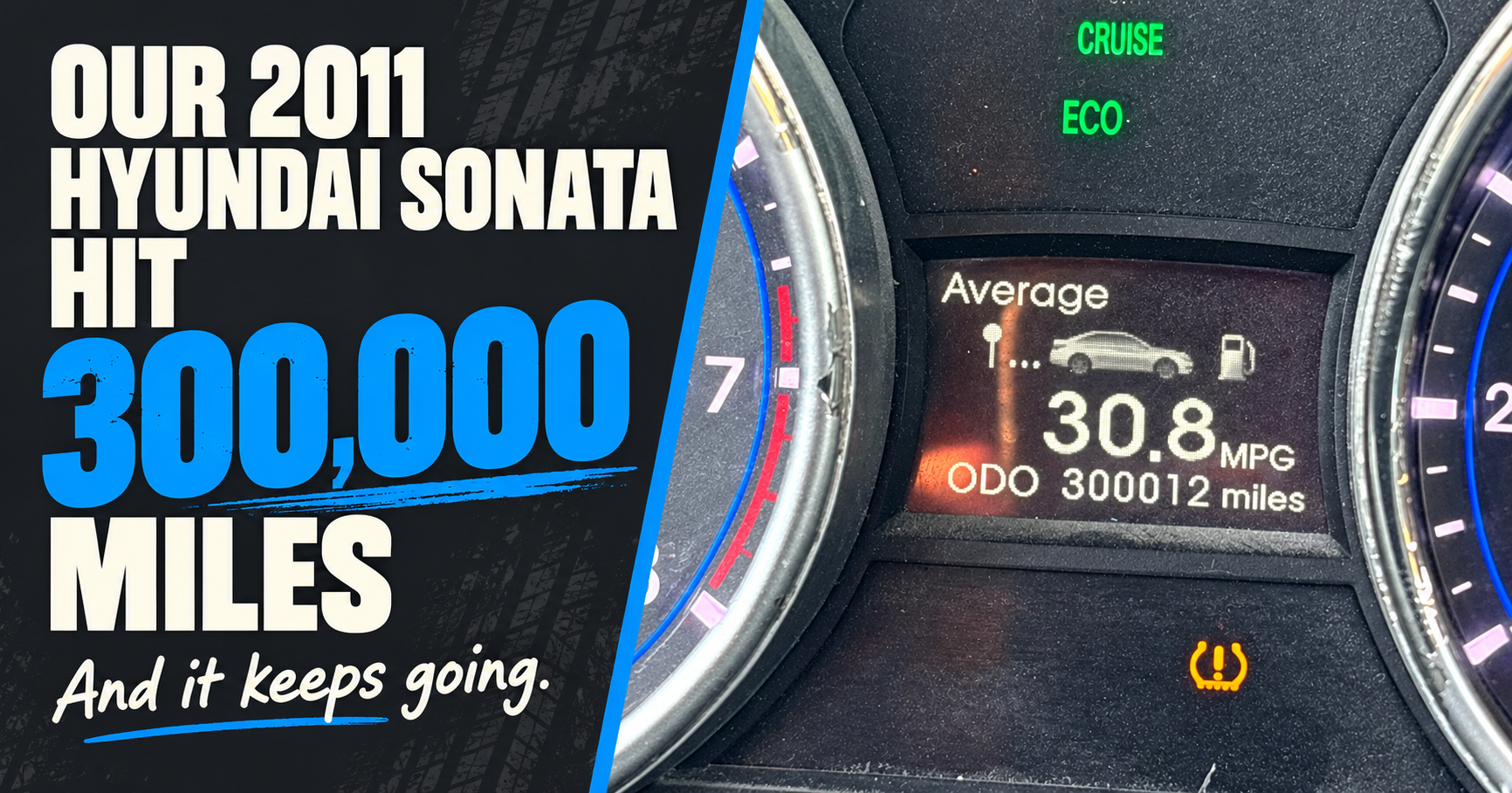
Our Sonata reaching 300,000 miles is part of why I’ve been willing to keep it on the road. We paid about $5,500 for it years ago when it had roughly 150,000 miles. It has given us a lot of use since then.
I don’t think every annoyance on a high-mileage car calls for an expensive repair. I do think a problem that can spray gasoline onto a person and the ground deserves a proper look.
I’d get a diagnosis and a written estimate, then decide whether the repair makes sense for the car. Until I know the cause and cost, I can’t honestly say whether this will be a small fix or a larger job.
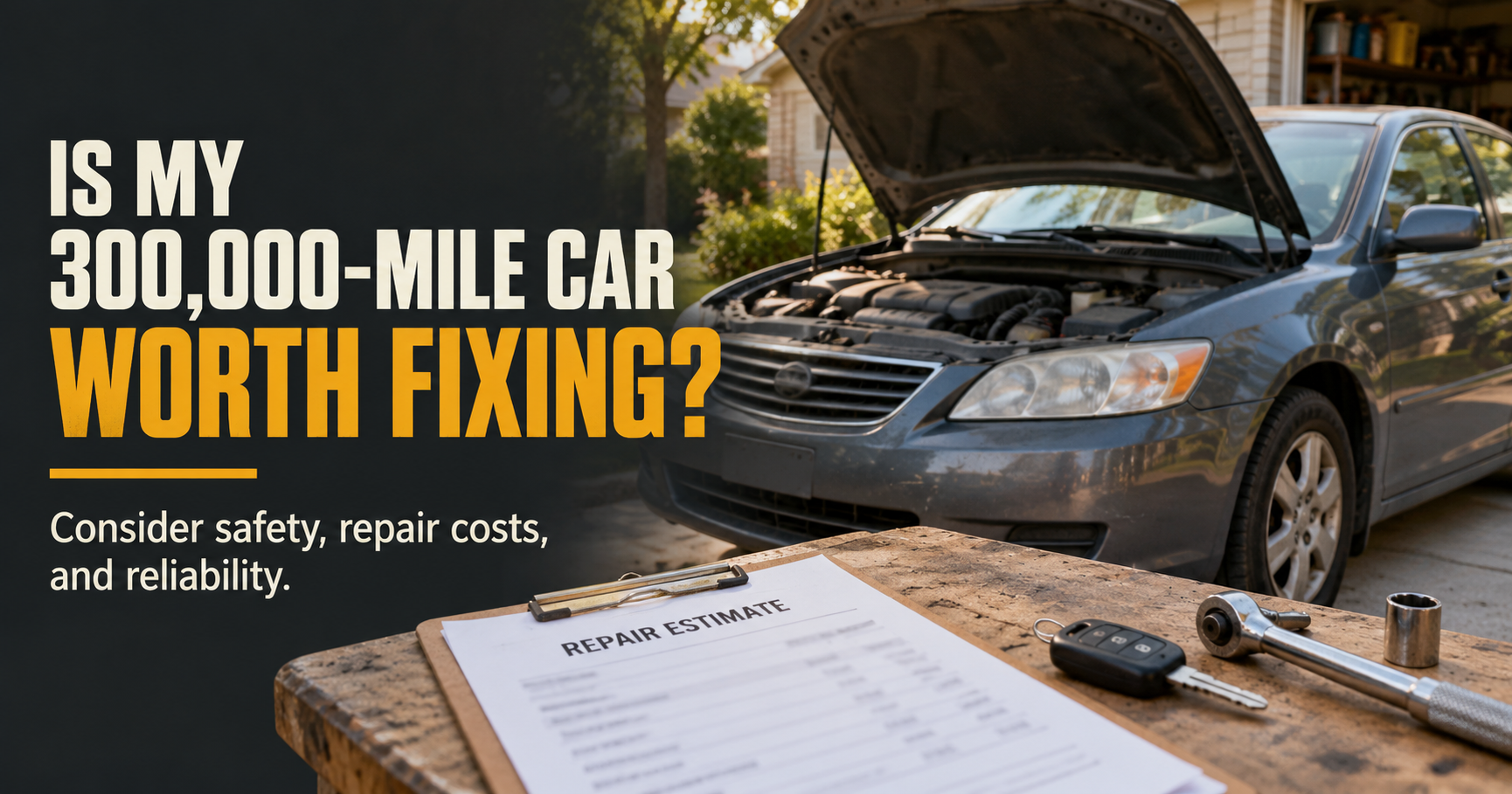
That’s the same practical approach I take when deciding whether our 300,000-mile car is worth fixing. The car’s low resale value matters, but so does what happens if we leave a safety problem alone.
What I’d tell the shop
I’d say this plainly:
“Our 2011 Hyundai Sonata has been hard to fill for years. If we pump gas at a normal speed, the station nozzle keeps shutting off. We have to fill extremely slowly, and gasoline has sometimes sprayed back out of the filler opening onto us and the ground. Can you check the filler and tank venting system and tell us what’s causing it?”
I’d also mention any check engine codes we’ve actually read on the Sonata, if there are any. I wouldn’t bring them a code from the Buick and let the two stories get mixed together.
If they recommend a part, I’d ask what they found that points to it. That’s a reasonable question when several things could cause a hard-to-fill complaint.
Why can we fill the Sonata slowly but not normally?
Slowing the flow changes how quickly gas enters the filler. That may keep it from backing up near the nozzle, but it doesn’t tell us where the underlying problem is. The filler and venting system need to be checked.
Should we try holding the nozzle partly out?
I wouldn’t. We’ve already had fuel spray back. I don’t want to defeat the nozzle’s normal position or shutoff and risk another spill.
Is this the same thing as topping off a full tank?
No. Our pump has clicked off when we were trying to put gas into a tank that still needed it. Even so, I wouldn’t keep forcing fuel in after a normal full-tank shutoff. The two situations can look similar at the handle, so I’d pay attention to how much fuel the car has actually taken.
Do we know what repair our Sonata needs?
Not yet. What we know firsthand is that a normal-speed fill repeatedly shuts the nozzle off and that gas has sprayed back out. I’ll update this if we have the system diagnosed and can say what actually fixed our car.
About the author: Daxon Weaver owns the 2011 Hyundai Sonata in this story. After buying it at around 150,000 miles, his family drove it past 300,000 and has dealt with its hard-to-fill tank for years.