
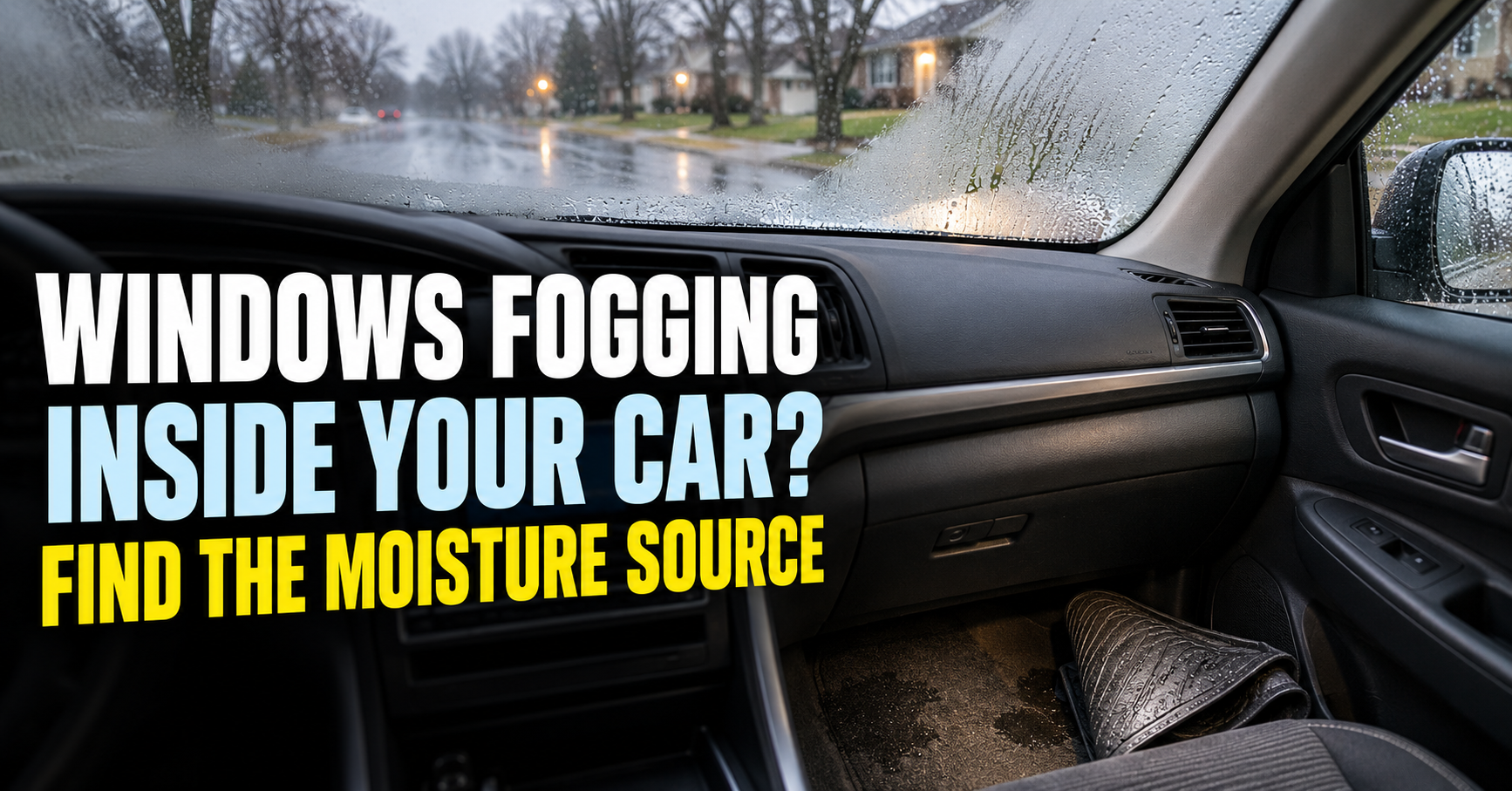
You clear the windshield, pull onto the road, and a few minutes later the fog creeps back across the glass. Turning the fan up helps for a moment. Wiping it with your sleeve leaves a smear. Now you are driving while trying to look through a cloudy patch that keeps growing.
Fog on the inside of your car windows means moisture in the cabin air is collecting on cooler glass. Wet shoes and a cold morning can be enough to cause it. But windows that fog heavily on every drive, refuse to clear, or develop a greasy film may be telling you something else. I would first check how the defroster is set, then look for a source of moisture that should not be inside the car.
Clear the glass before you drive
Set the airflow to the front windshield defrost position and turn the fan up. Switch from recirculated air to fresh outside air if your car allows it. Set a comfortable warm temperature and leave the air conditioning enabled when the system permits; A/C can remove moisture from the air even when you want warm air at the windshield.
Some automatic climate systems choose those settings when you press the defrost button. Others give you more manual control. If you are unsure which symbol selects fresh air, check the owner’s manual while parked.
If the windshield is already too foggy to see through, pull over safely before working through the settings. A slightly open side window can help exchange damp cabin air for outside air, but you still need a clear view before continuing. Our guide to a car heater blowing cold air can help if the defroster is getting airflow but never produces useful heat.
Once visibility is restored, pay attention to how quickly the fog returns. Windows that clear and stay clear may have needed a settings change. Fog that returns repeatedly gives you a reason to look for moisture inside the vehicle.


Make sure the fog really is on the inside
Before diagnosing the heater or A/C, check which side of the glass is wet. Touch a small area of the windshield from inside the parked car with a clean, dry cloth. If that spot clears, the condensation is on the cabin side. If it does not change but the wipers clear it, the moisture is outside.
This distinction matters on humid days. Cold A/C can cool the windshield enough for outside moisture to collect on the glass. In that case, the cabin may be dry and the defroster may be working normally. The wipers or a change in windshield temperature can clear the outside condensation.
Inside fog calls for a closer look at cabin humidity, airflow, and the defroster. Do that check while parked, especially if visibility is already poor.



Is recirculation keeping the moisture trapped?
The recirculation button tells the system to reuse air from inside the car. That can be helpful in some conditions, but a car full of damp coats, wet floor mats, and breathing passengers can quickly fill that air with moisture.
If recirculation stays on, the defroster may keep blowing humid cabin air over the windshield. Switching to fresh air often makes a noticeable difference. If the windows begin to clear and remain clear after that change, you have found an important part of the problem.
Do not assume that fresh air alone will solve a car with soaked carpet or a leak. It helps remove moisture from the air, but the source will keep adding more until you deal with it.
Wet floor mats can fog more glass than you expect
I would check the carpets next, including under removable floor mats. A rubber mat can hold melted snow or rainwater where you can see it. It can also hide moisture in the carpet below. Press a dry paper towel against the front and rear footwells and look for dampness.
Think about what has been carried into the car lately. Wet boots, umbrellas, jackets, sports gear, and towels can release moisture as the cabin warms. A car parked outside on a cold night then collects that moisture on the windows.
Remove wet items and empty standing water from the mats. If the carpet itself is damp, find out why before relying on the heater to dry it. Water may have been tracked in, but a door seal, window seal, sunroof drain, or another entry point could also be letting it in. Note which area is wet and whether it gets worse after rain or after running the A/C. Those details help narrow down the source.
If the interior smells musty and the same carpet remains damp for days, treat it as a water-intrusion problem that needs inspection. Clearing the glass each morning will not dry what is underneath.

Check whether the defroster is actually moving air
Put your hand near the windshield vents while parked and turn the fan through its speeds. You should be able to tell whether air is reaching the glass and whether the volume changes.
Little or no airflow at every vent points toward a blower problem. Airflow from the dashboard or floor vents but almost none at the windshield points more toward an air-direction control problem. If airflow is weak everywhere, a restricted cabin air filter is another possibility.
The cabin air filter traps debris before air moves through the ventilation system. If it is badly clogged, the defroster may struggle to move enough air across the glass. Check the filter using the procedure for your vehicle and replace it if it is heavily restricted. A filter is a sensible first check for weak airflow, but it will not repair a soaked carpet or a coolant leak.
If the fan blows strongly at the windshield yet the glass still fogs heavily, look harder at moisture and the temperature or A/C settings.
Does the glass feel greasy or smell sweet?
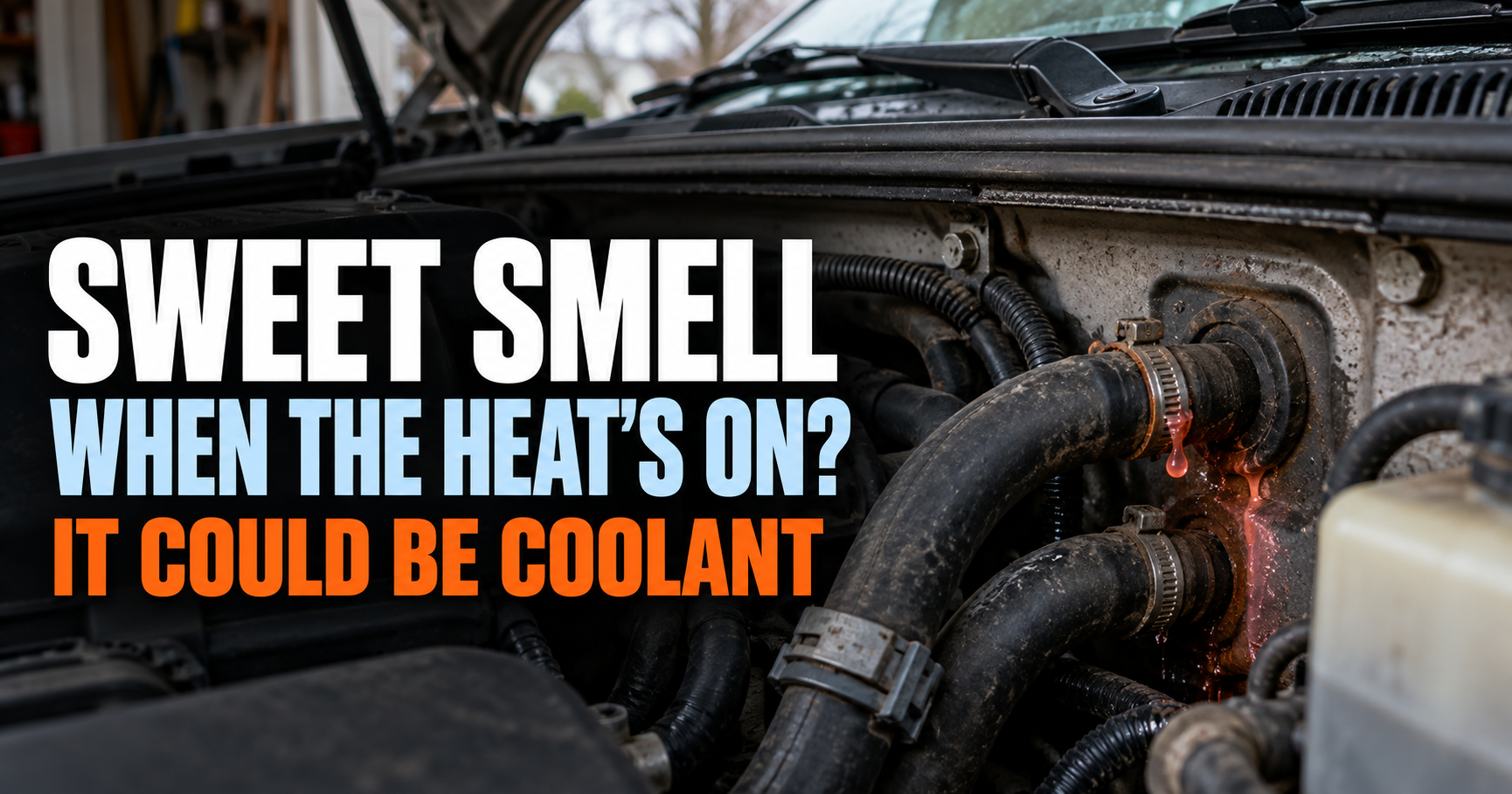
Ordinary condensation leaves water droplets that generally wipe away cleanly. A recurring greasy or hazy film, especially with a sweet chemical smell, deserves different attention. Engine coolant leaking from the heater core can leave a film on interior glass and may also dampen the passenger-side carpet.
Check the coolant level only after the engine is completely cold, following your owner’s manual. Do not open a hot cooling system. A falling coolant level, sweet cabin smell, and persistent windshield film are useful symptoms to report together. None alone proves the heater core is leaking, but that combination calls for prompt diagnosis.

This is also a reason to distinguish coolant from ordinary rainwater under a floor mat. If you find moisture inside or a puddle beneath the car, our guide to identifying car fluid leaks can help you describe its location and appearance. Avoid tasting or handling an unknown fluid.

A possible heater-core leak is more than an annoyance. It can reduce visibility and allow the engine to lose coolant. If the temperature warning appears or the engine starts running hot, stop driving safely. If the engine starts running hot, follow this engine overheating guidance before continuing to drive.



What if the A/C does not seem to help?
Air conditioning removes moisture as it cools air, which is why it can help defog a windshield even when the temperature control is set warm. Some vehicles manage A/C operation automatically in defrost mode. Others may limit compressor operation under certain conditions, including very low outside temperatures. Follow your vehicle’s controls rather than assuming the A/C button must behave the same way in every car.
If the system cools poorly in ordinary warm-weather use and the windows are difficult to defog, mention both symptoms to a shop. The A/C system may not be removing moisture as effectively as it should. But do not jump straight to a refrigerant recharge because the windshield fogs. Wet carpeting, recirculation, and low airflow can all cause the same complaint with a functioning A/C system.

If the heater also stays cold after the engine has warmed, that matters too. An engine that is not reaching normal temperature or a heater that is not delivering heat can weaken defrost performance. If you notice that heat arrives only once the car is moving, the pattern in our heater-works-while-driving guide may help you describe what is happening.
Why does the fog appear when passengers get in?
People add moisture to the air simply by breathing. On a cold day, several passengers in a small car can fog the windows quickly, especially if everyone has wet coats or shoes. That does not automatically mean a part has failed.
Here is the distinction I would watch: does the defroster clear the glass and keep it clear with fresh air selected, or does fog return even with good airflow? A crowded car on a cold, damp morning may need a higher fan speed for a while. Windows that remain difficult to clear after the passengers leave warrant a closer check for trapped water, poor airflow, or a system fault.
This is one reason the rear windows can fog before the windshield. They may receive less direct airflow from the front defroster. Use the rear-window defogger for the back glass if equipped, and keep its glass clean. The rear defogger’s heating lines serve a different purpose from the front windshield vents.


Clean the inside glass so you can judge the problem
A dirty windshield makes light scatter and can leave the glass looking hazy after the moisture has gone. Skin oils, cleaning-product residue, and ordinary cabin film can make condensation harder to clear cleanly.
Clean the interior glass with a product suitable for automotive windows and a clean microfiber cloth. If your vehicle has aftermarket window film, use a cleaner appropriate for that film. Work while parked and give the glass a second pass with a dry cloth so you can tell whether the remaining haze is residue or new condensation.
Cleaning helps visibility, but it will not fix a source of moisture. If the film quickly returns along with a sweet smell or damp carpet, have the car inspected.
What to tell the shop if the fog keeps returning
Describe when it happens: first thing in the morning, only during rain, when several people are in the car, or every time the heater runs. Say whether the fog is on the inside or outside of the glass. Note whether fresh air and defrost clear it, and whether the fan blows strongly at the windshield vents.
Mention any wet footwell, musty odor, sweet smell, coolant loss, weak heater, or poor A/C performance. Those clues point toward different inspections. A shop investigating rainwater under a rear floor mat will start somewhere different from one investigating a sweet film on the windshield.
Ask what they found that explains the moisture or poor clearing. A cabin air filter may need replacement, but if the carpet is repeatedly wet, you also need to know where the water entered.
Frequently asked questions
Why do my car windows fog up inside overnight?
Moisture left inside the car can condense on cold glass overnight. Check for wet mats, damp carpeting, and items left in the cabin. If it happens repeatedly after rain, look for water entering the vehicle rather than assuming the weather alone is responsible.
Should I use hot or cold air to clear the windshield?
Use the front defrost setting with strong airflow, select fresh air, and use a comfortable warm setting. Allow the A/C to run when your vehicle’s system permits because it can remove moisture. The most useful combination depends on the conditions and your car’s climate controls.
Why does recirculation make the windows fog up?
Recirculation reuses air already inside the vehicle. If that air is humid from passengers or wet items, moisture can continue collecting on the cold glass. Switching to fresh air often helps the defroster clear it.
Can a bad cabin air filter cause foggy windows?
A heavily clogged filter can restrict airflow and make the windshield harder to clear. It is worth checking if airflow from the vents is weak. If the air blows strongly but the glass keeps fogging, look for a moisture source and review the climate settings too.
Is a sweet smell with foggy glass serious?
It can be. A sweet smell, recurring film on the inside glass, damp carpet, or a falling coolant level can point toward a heater-core leak. Have it inspected promptly, and stop driving if the engine temperature rises or you cannot keep the windshield clear.
About the Author: Morgan Ellis writes practical troubleshooting guides for Why Is My Car, helping drivers notice the details that separate an everyday nuisance from a problem that needs repair.


