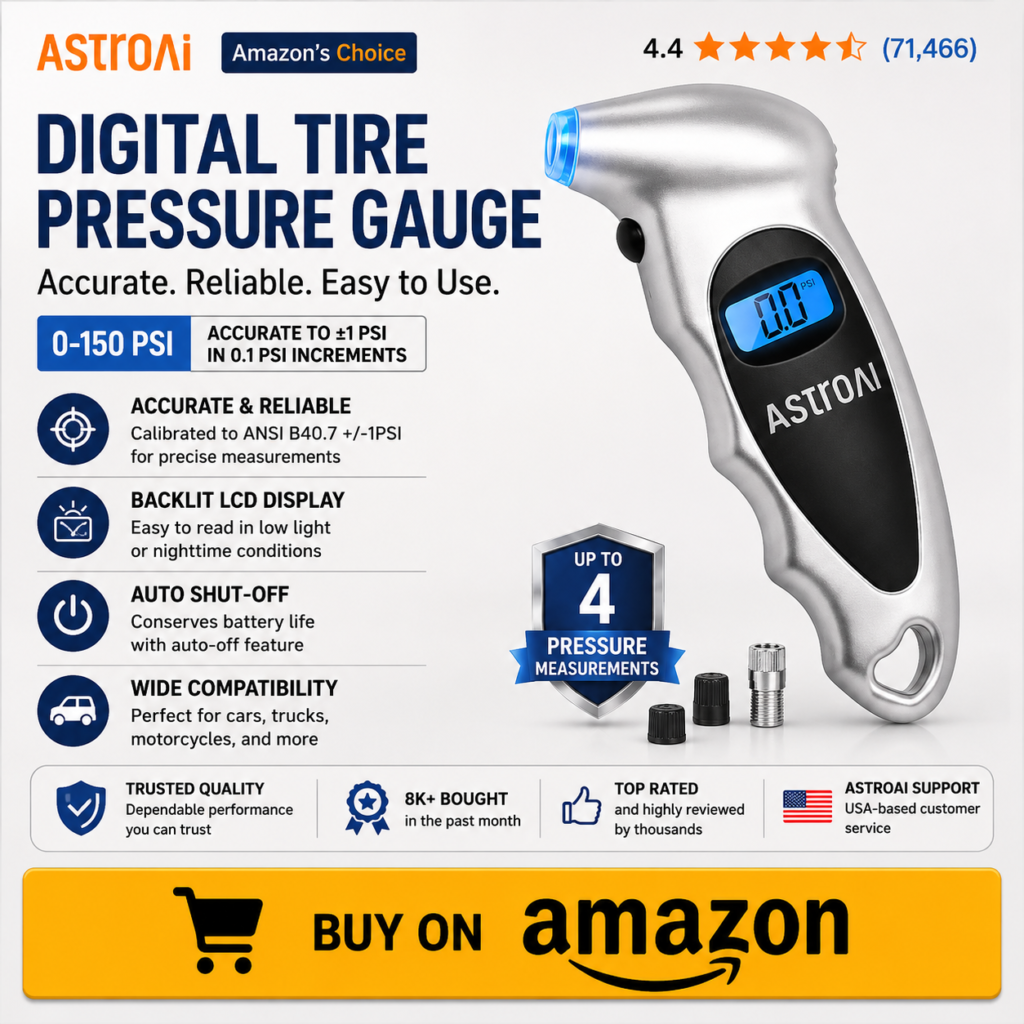
The AstroAI tire pressure gauge reads to 0.1 PSI with ANSI-calibrated accuracy and a backlit display. Here’s why it beats cheap stick gauges and how to use it correctly.
Tire pressure is the single most ignored maintenance item on most vehicles — and it directly affects safety, fuel economy, and tire life. The problem isn’t that drivers don’t care. It’s that checking tire pressure is annoying with a cheap stick gauge that’s hard to read and inconsistent. The AstroAI Digital Tire Pressure Gauge fixes that. Clear backlit display, accurate readings to 0.1 PSI, and it fits in a glove box. No excuses anymore. Drivers preparing for roadside tire problems may also want a cordless tool for roadside tire changes that works without a compressor or outlet.
Your tires lose approximately 1 PSI per month naturally, and another 1 PSI for every 10-degree drop in outside temperature. By winter, tires that were properly inflated in September can be 5–8 PSI low. That affects braking distance, handling, and fuel economy in ways most drivers never connect back to tire pressure.
Why a Digital Gauge Beats a Stick or Dial Gauge
Pencil-style stick gauges are cheap and they work — barely. The sliding scale is difficult to read accurately, and cheap ones vary by 3–5 PSI from one reading to the next. That’s not good enough when your target pressure is 35 PSI and you’re trying to hit it precisely.
Dial gauges are more accurate but bulkier and more fragile. The needle can get knocked out of calibration from a drop.
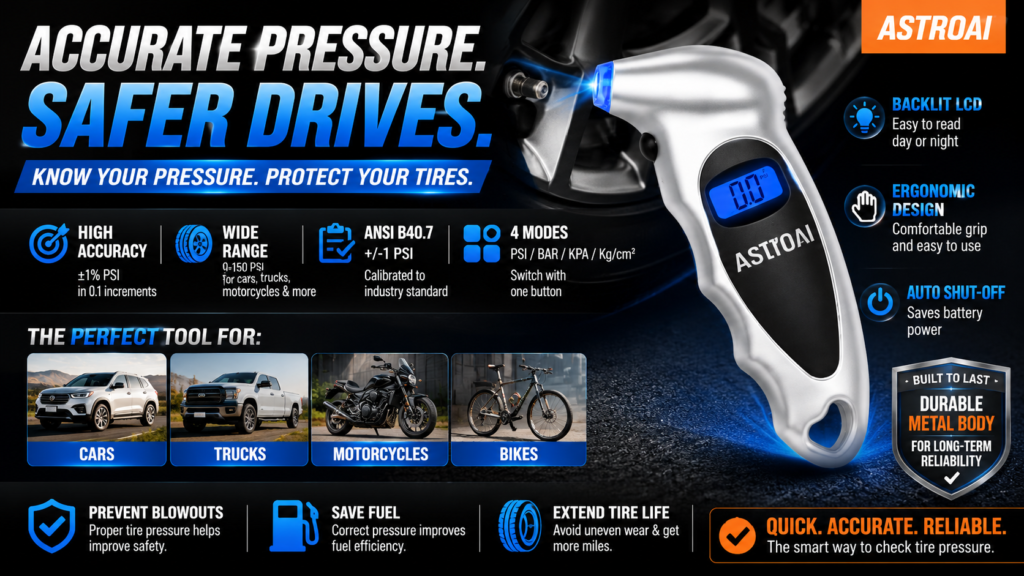
A quality digital gauge like the AstroAI gives you a crisp number on a clear display within a second of pressing on the valve stem. Accurate to within 1 PSI, calibrated to a recognized accuracy standard, and readable in the dark with the backlight. For a tool you should be using monthly, it’s worth having one that makes the job easy.
What the ANSI B40.7 Calibration Means
The ±1 PSI accuracy claim is backed by calibration to ANSI B40.7 — an American National Standards Institute standard for pressure gauges. That’s not just marketing language — it means the gauge has been built and tested to meet a defined accuracy specification. Most cheap gauges carry no such certification.
For tire pressure specifically, ±1 PSI accuracy is excellent. The difference between 34 and 36 PSI matters for even tire wear and handling. The difference between 30 and 37 PSI — which a cheap gauge might show as the same — matters for safety.
How to Check Your Tire Pressure Correctly
Step 1: Check tires when cold — before driving more than a mile, or after the car has sat for at least 3 hours. Driving heats tires and increases pressure by 4–8 PSI, which will give you a false high reading.
Step 2: Find the correct pressure for your vehicle on the sticker inside the driver’s door jamb — not the number on the tire sidewall, which is the maximum pressure the tire can handle, not the recommended operating pressure.
Step 3: Remove the valve stem cap and press the gauge firmly onto the valve. Press straight on — a slight angle causes air to release and gives a low reading.
Step 4: Read the display. Compare to your target pressure. Add air or release pressure as needed. A portable tire inflator for emergencies can help you add air when you’re away from a gas station.
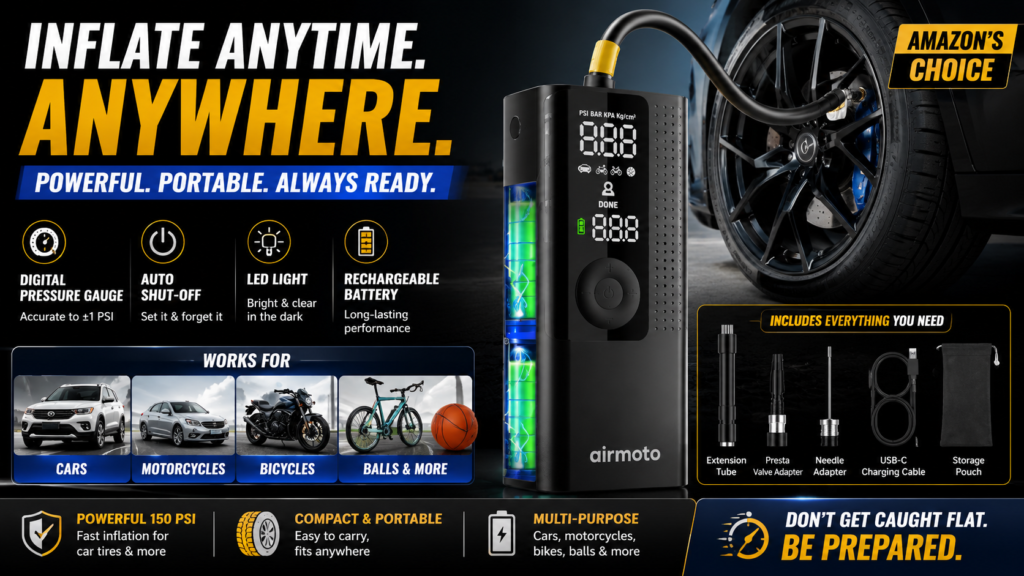
Step 5: Recheck after adding air — most air compressors slightly overshoot the target. A cordless unit such as Portable Tire Inflator Review – Cordless and Auto Shut-Off can make those small pressure corrections easier away from a compressor.
Step 6: Replace the valve cap.
Features Worth Noting
The backlit LCD stays on long enough to read comfortably in low light — useful when checking tires in a dark garage or parking structure. The deflation button on the back of the gauge lets you release excess pressure precisely without needing a separate tool. It reads in PSI, BAR, kPa, and kg/cm² — useful if you’re inflating tires from a tire spec that uses metric units. Powered by two AAA batteries included in the package.
See the AstroAI Tire Gauge on Amazon →
Low Tire Pressure Can Make Your Car Pull
One of the first signs of an underinflated tire isn’t always a warning light on your dashboard. Even a small difference in tire pressure from one side of the vehicle to the other can cause your car to drift or pull while driving.
If you’ve noticed yourself constantly correcting the steering wheel, don’t assume you need an expensive repair. Start by checking all four tires, then read our guide explaining why a car pulls to one side to learn what else could be causing the problem.
Frequently Asked Questions
How often should I check my tire pressure?
Once a month is the standard recommendation, and additionally before any long road trip. In fall and winter when temperatures drop quickly, check more frequently — cold weather causes rapid pressure loss.
What PSI should my tires be?
It varies by vehicle. The correct pressure for your car is on the sticker inside the driver’s door jamb, not the number molded into the tire sidewall. Most passenger cars run 32–36 PSI. SUVs and trucks often run 35–45 PSI depending on load and design.
Can low tire pressure cause my car to shake?
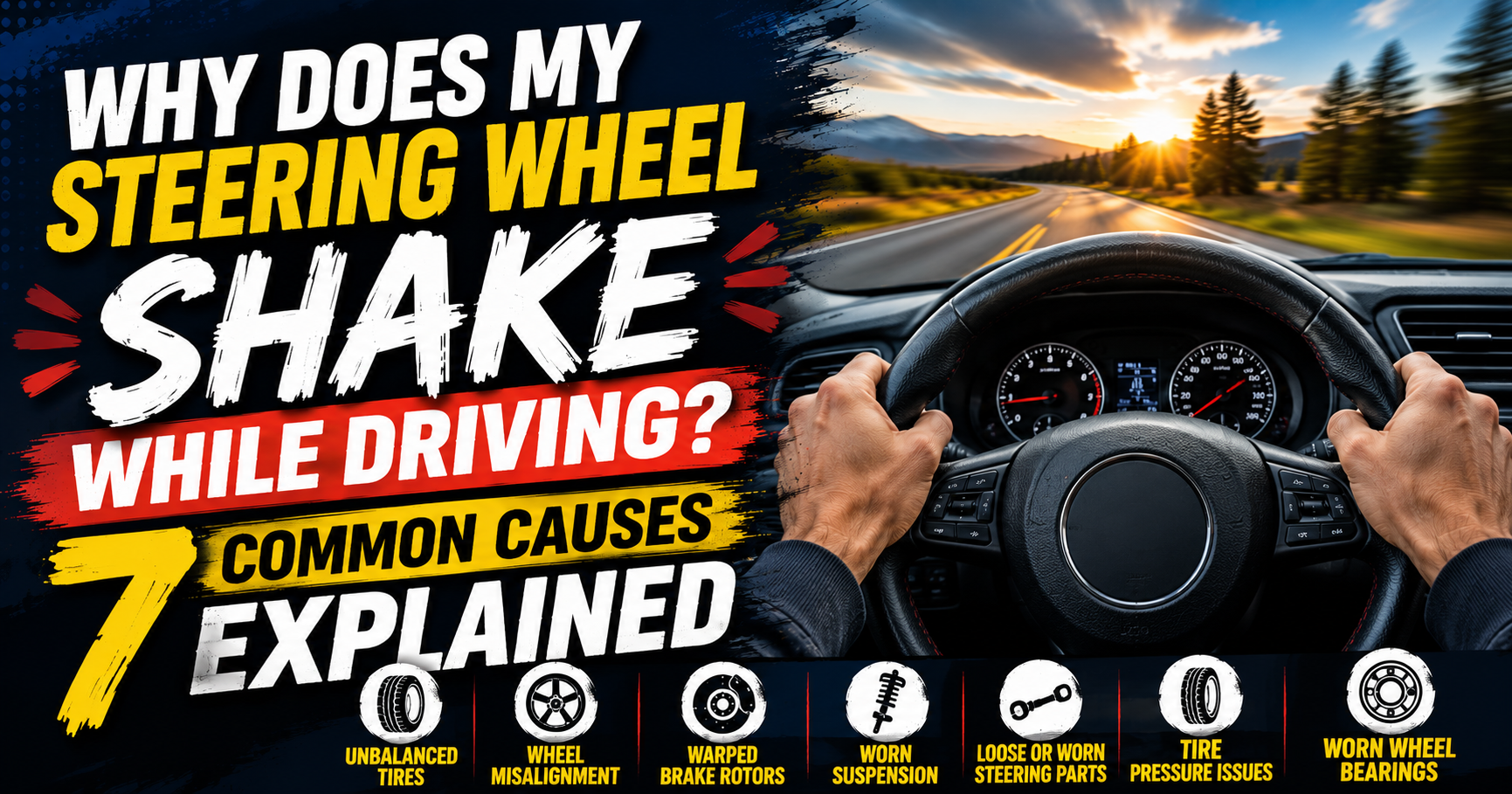
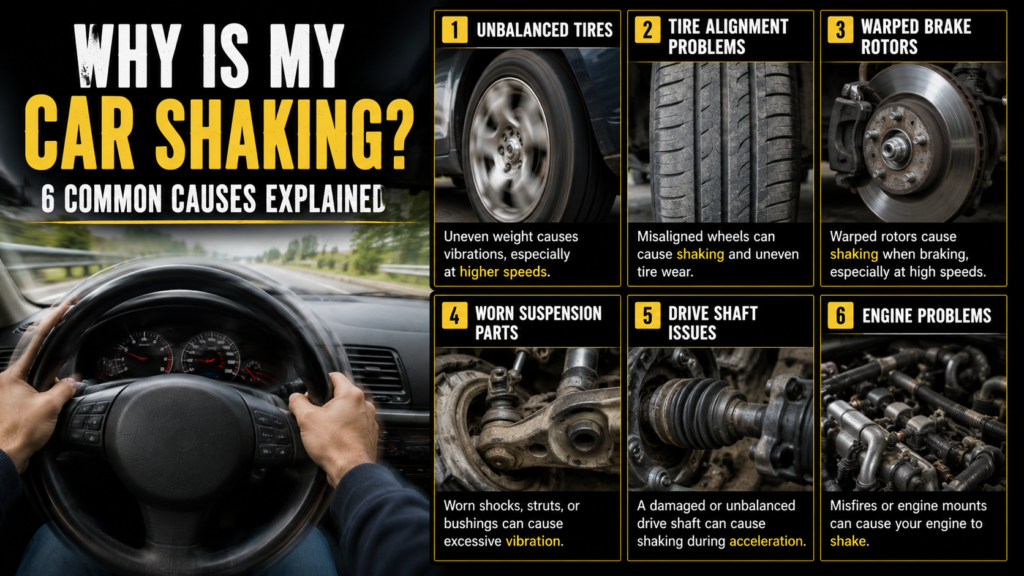
Yes. Significantly underinflated tires cause handling instability and can produce a rough, bouncy ride that feels similar to a wheel balance problem. Check pressure before assuming you have a suspension or balance issue. If checking pressure does not resolve the problem, underinflated tires and wheel shake covers other causes of steering vibration and wheel shake.
Does this gauge work on truck tires?
Yes. The 0–150 PSI range covers standard passenger trucks and SUVs running 35–80 PSI. It doesn’t cover commercial truck tires that run 100+ PSI — those require a heavy-duty gauge rated to higher pressures.
How do I know if my gauge is accurate?
Compare against a known-accurate gauge — most gas station air machines display pressure and are reasonably accurate. If your readings match within 1–2 PSI, your gauge is performing correctly. The ANSI B40.7 calibration on the AstroAI means it’s accurate out of the box without needing calibration.
Dana has been diagnosing car problems for over a decade — first out of necessity (three kids, one income, no money for shop rates) and eventually out of genuine passion. She’s the person her whole neighborhood texts when a warning light comes on. Dana writes for WhyIsMyCar.com to give everyday drivers the kind of straight talk she wished she’d had when she first started figuring this stuff out on her own. Based in Ohio.