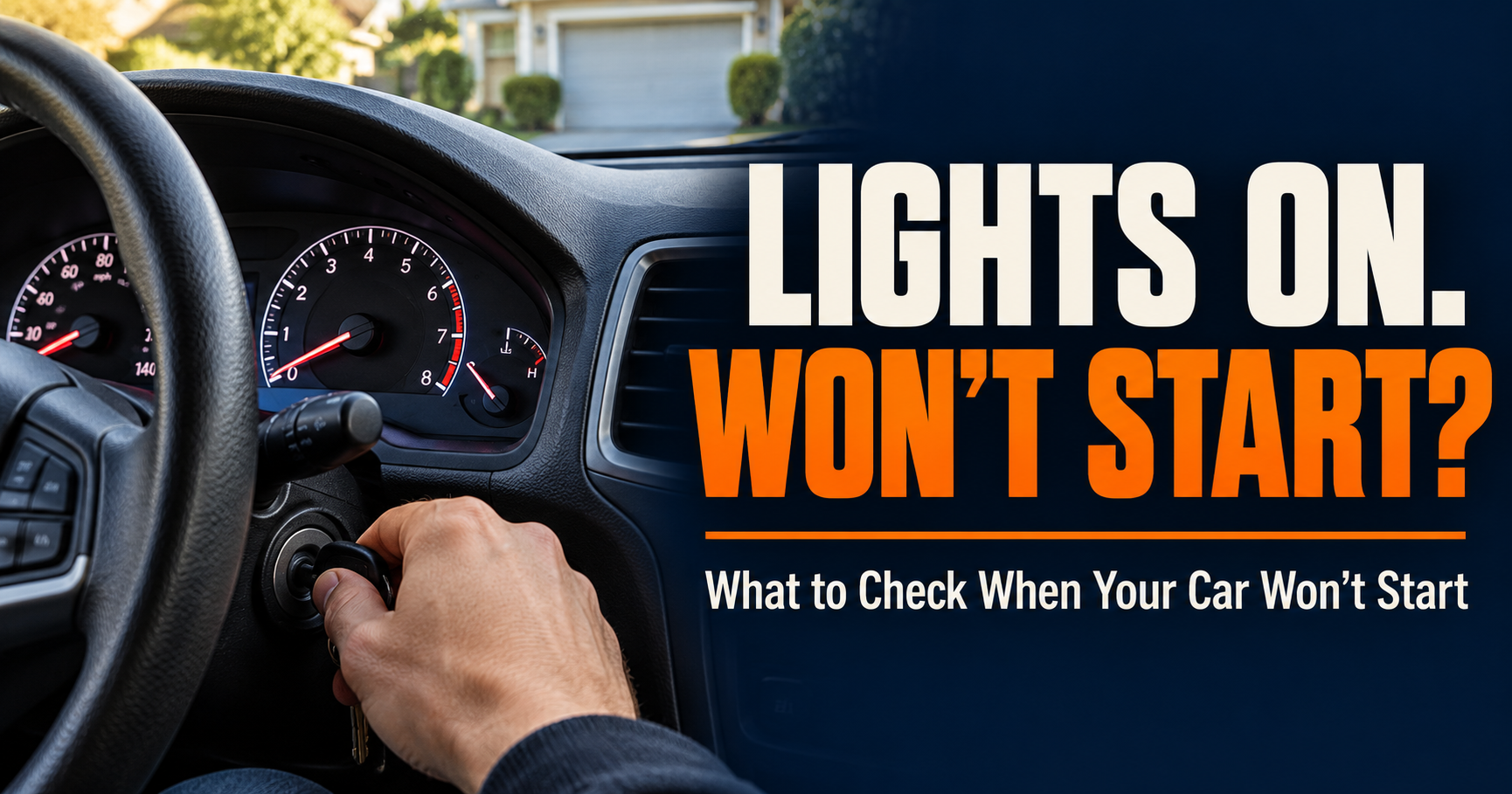
My headlights turn on. The dashboard lights up. Maybe the radio even plays. But when I try to start the car, it doesn’t go anywhere.
It’s tempting to say, “Well, the battery must be fine because the lights work.” That’s the first assumption I’d put aside.Turning on lights takes much less power than turning an engine over. A weak battery can do one and fail at the other.
Before I buy a battery or call the starter bad, I’d pay attention to what happens during the start attempt. Does the engine turn over? Do I hear quick clicks, one click, or nothing? Do the lights go dim when I turn the key?
Those details narrow the problem down faster than the fact that the radio works.
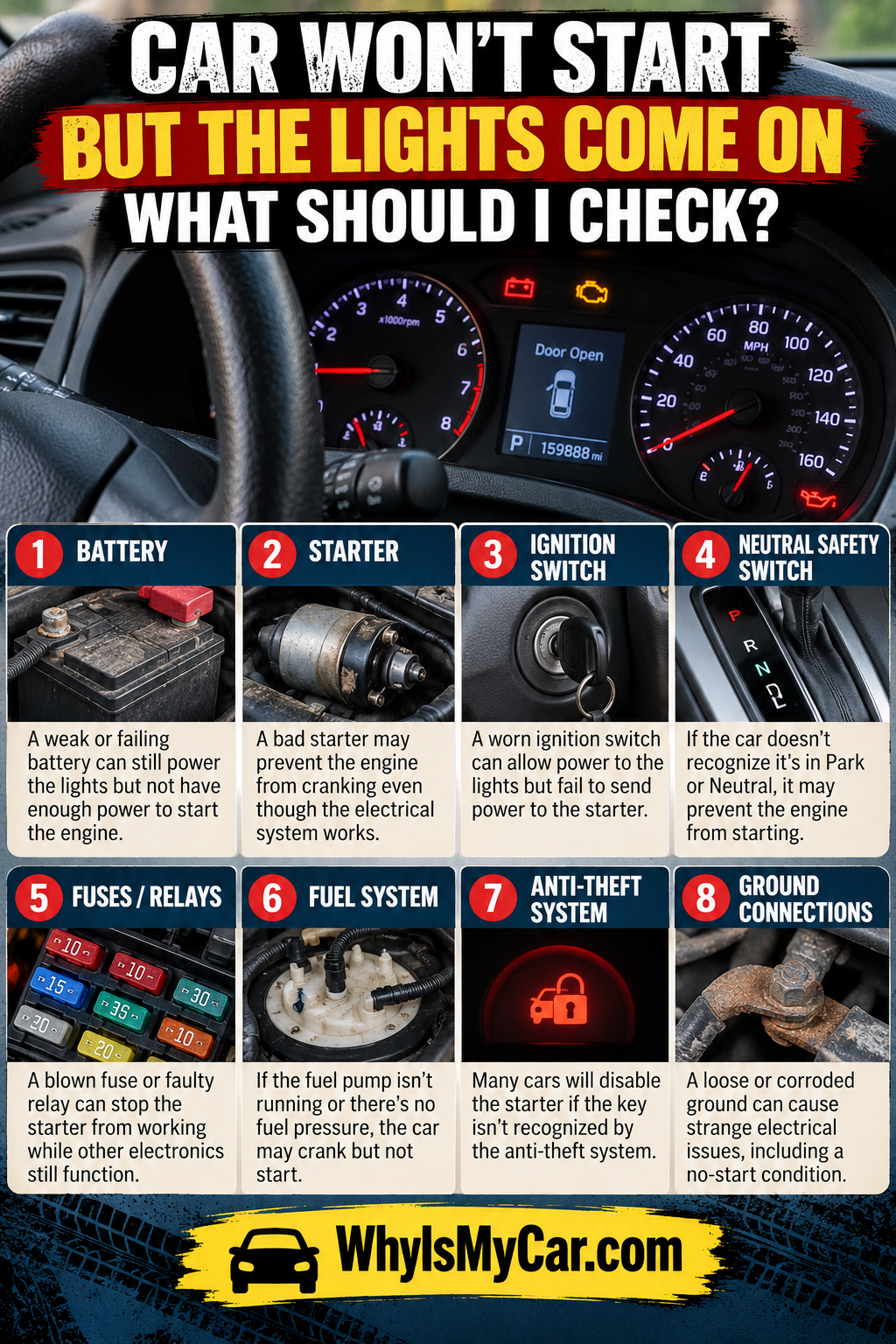
Working lights do not rule out a weak battery
The starter needs a large burst of electrical power to crank the engine. A headlight, dashboard display, or radio needs far less.
That means a battery can have enough power for the accessories but not enough to start the car. Poor battery connections can create a similar situation: small electrical loads work, but the heavy current needed by the starter can’t get through properly.
I’d watch the lights while trying to start, not just before. If they get very dim or go out during the attempt, I’d look closely at battery charge and connections.
If they stay bright and absolutely nothing happens, I’d still check the battery, but I’d also start thinking about the start-command circuit, a safety switch, the starter, or a key-recognition problem.
First question: does the engine turn over?
This is where I’d split the problem in two.
“Cranking” means I can hear the starter turning the engine. It makes that familiar repeated rrr-rrr-rrr sound before an engine starts.
If I hear normal cranking but the engine never fires up, the starter is already doing its main job. I’d look beyond a simple weak-battery explanation.
If the engine doesn’t crank at all, the trouble is more likely in the battery, connections, starting circuit, starter, or a system preventing the starter from operating.
AAA also separates no-start problems by what the engine does when I try to start it in its guide to common no-start causes. That one observation is worth making before I touch anything under the hood.
The lights work and I hear rapid clicking
Several fast clicks usually send me toward low power reaching the starter.
The battery might be discharged or too weak to supply the starter’s heavy demand. The terminals could be loose or corroded. A cable or ground connection could also be getting in the way.
I wouldn’t rule out the battery because the dash lights look bright. I’d check the terminals and try a proper jump-start if it’s safe and appropriate for the vehicle.
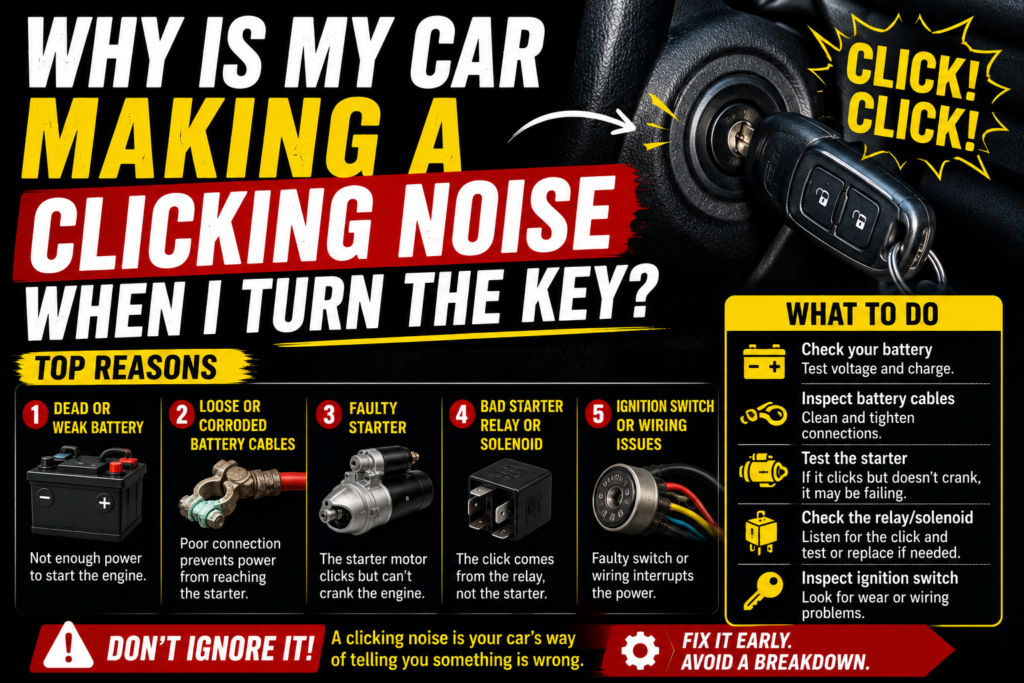
I explain the difference between quick clicks and other sounds in what I’d check when a car clicks but won’t start. Here, the important point is that lights plus rapid clicking can still be a battery-power problem.
The lights work and I hear one solid click
One click makes me think differently from a string of rapid clicks.
It may mean the starter’s solenoid is responding, but the starter motor isn’t turning the engine. A weak battery or bad connection can still cause that, so I wouldn’t order a starter based on the sound alone.
I’d want battery charge and cable connections checked first. If those test well and the starter receives the proper signal and power but doesn’t turn, then the starter itself becomes a stronger suspect.
This is why I’d tell a shop, “I hear one click when I turn the key,” rather than simply, “It clicks.”
The lights work, but there’s no click and no crank
Silence can be harder to sort out because the starter may not be receiving a command to operate.
I’d begin with the easy things. Is an automatic transmission fully in Park? If it doesn’t start there, does it behave differently in Neutral, with my foot firmly on the brake? If it has a manual transmission, am I pressing the clutch fully?
A vehicle may deliberately prevent cranking if it doesn’t recognize the selected gear or the required pedal input. I wouldn’t force the shifter or assume a safety switch has failed just because one attempt in Neutral doesn’t work.
I’d also look for a security or key warning on the dash. If the car doesn’t recognize its key or fob, its anti-theft system may prevent starting. Trying a spare key or following the owner’s manual’s dead-fob procedure may help identify that situation.
If those checks change nothing, I’d want the battery and starting circuit tested. A bad relay, ignition switch, starter connection, or starter motor could be involved, depending on the vehicle.
The engine cranks normally but won’t start
If I hear a strong, normal cranking sound, I’d stop focusing only on whether the lights work. The engine is turning. Now I need to know why it won’t run.
I’d check the fuel gauge, including whether the gauge is reliable. I’d notice whether the engine tries to catch, briefly starts and stalls, or never sounds close to starting.
Fuel delivery, ignition, engine sensors, and anti-theft problems are among the possibilities. A code reader may provide a clue, but a car can have a no-start problem without a helpful check engine code showing on a basic scanner.
I wouldn’t keep cranking over and over until the battery goes flat. A few careful attempts and good notes for a technician are more useful than turning a no-start problem into a no-start and dead-battery problem.
What if the radio works too?
The radio doesn’t settle the question either.
A radio may play with a battery that can’t produce enough current to crank the engine. It also may work in an accessory key position even if the vehicle won’t complete a start attempt.
I’d treat “the lights and radio still work” as useful information about some electrical power being available. I wouldn’t translate it into “the battery tested good.”
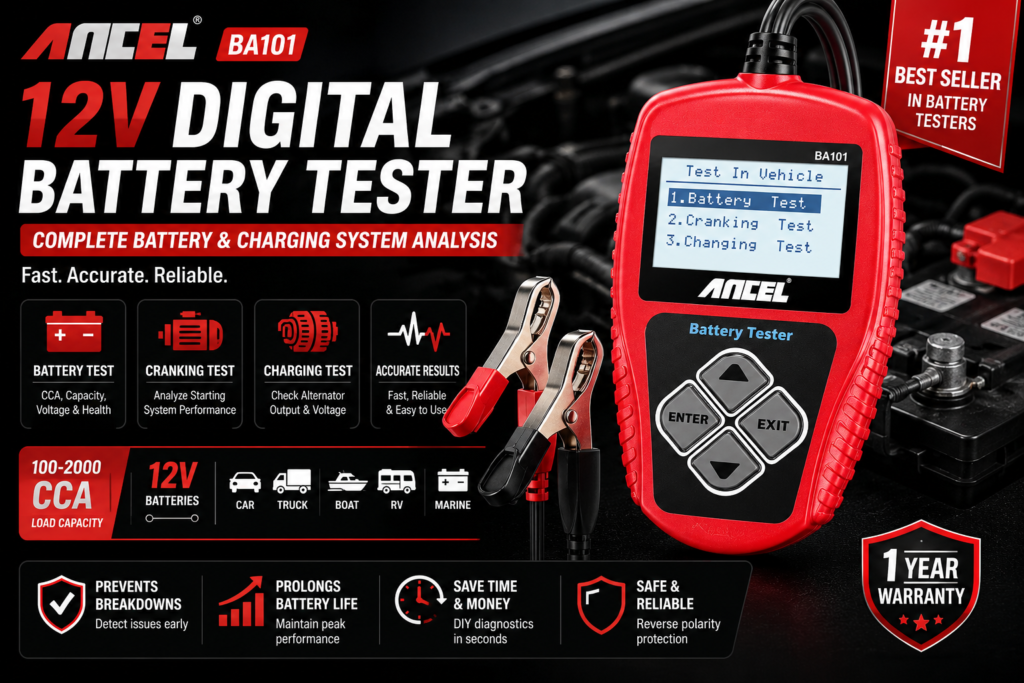
A proper battery test puts more demand on the battery than a radio does. That’s the test I’d want before paying for a starter.
Do the lights dim when I try to start?
I’d ask somebody to watch the headlights, or I’d watch the dashboard while attempting to start.
If the lights dim dramatically, the starter may be drawing power while the battery or its connections struggle to supply it. That points me back toward a battery and cable inspection.
If the lights stay about the same and I hear nothing, the starter may not be engaging at all. That could involve a control, switch, relay, wiring, or starter issue.
I wouldn’t treat either result as a final diagnosis. Modern vehicles can turn accessories off during cranking by design, and their displays don’t all behave alike. It’s a clue to report along with the sounds I hear.
Would a jump-start answer the question?
It can help narrow things down, but it isn’t a complete test.
If the car cranks strongly and starts with a proper jump, I’d suspect that the battery was low or that there’s trouble delivering power through its connections. I’d still ask why the battery was low. It could be old, it might not be charging while I drive, or something may be draining it while parked.
If a jump doesn’t help, I wouldn’t instantly call the starter bad. Jumper clamps need good contact, a jump pack needs adequate charge, and badly corroded terminals can interfere with the attempt.
If the engine already cranks normally but won’t fire, adding more battery power may not address the real problem.
I’d use the vehicle’s recommended jump-start points and instructions. If the battery is damaged, leaking, or swollen, I wouldn’t try to jump it.
Could the alternator be involved if the lights still work?
Yes, but the timing matters.
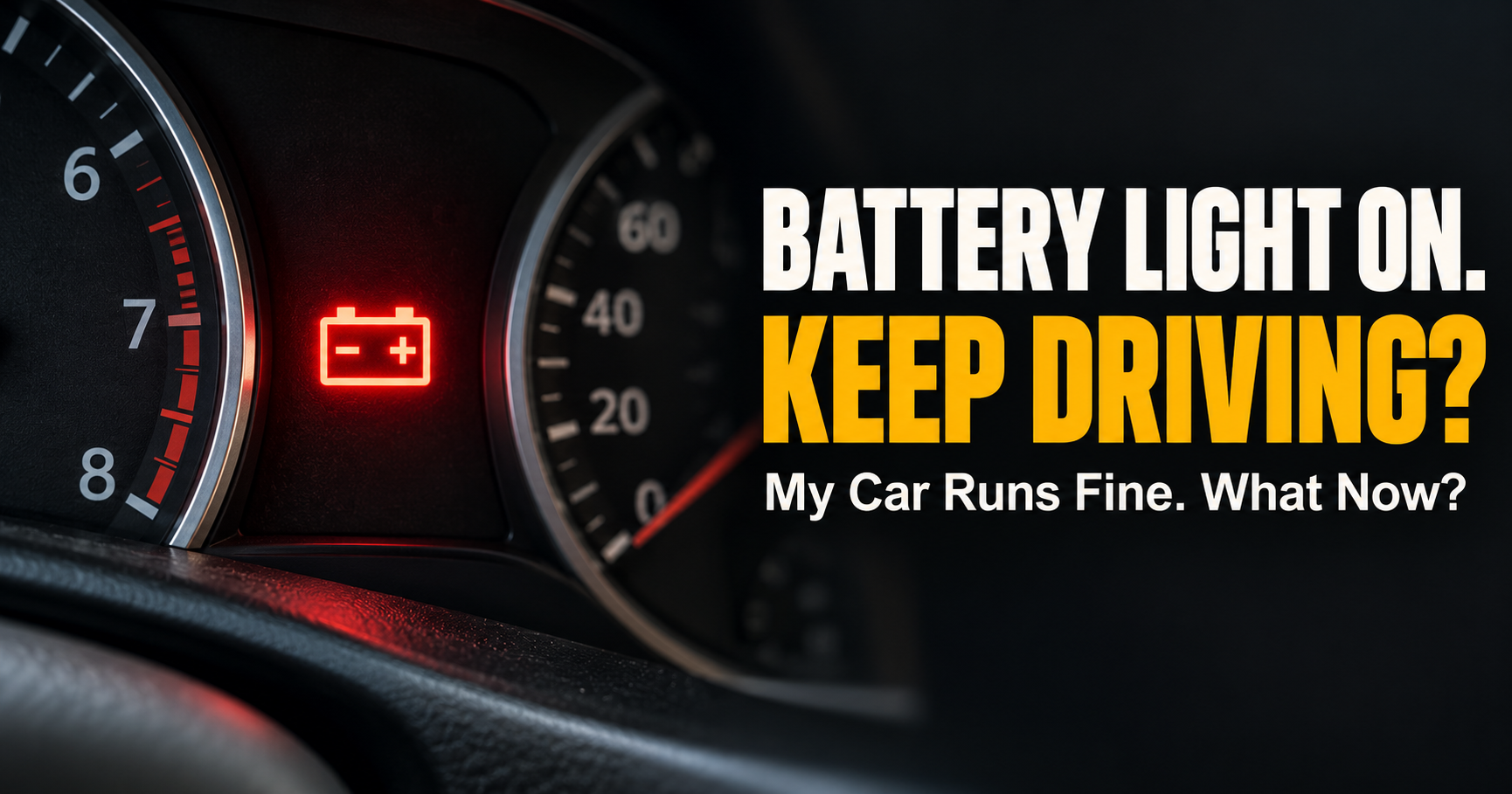
The alternator charges the battery while the engine runs. If it failed during the last drive, the battery could now be too low to start the car while still having enough energy to light up the dash.
If I get the car started, I’d have both the battery and charging system tested. A new battery won’t stay charged if the alternator or its connections aren’t doing their job.
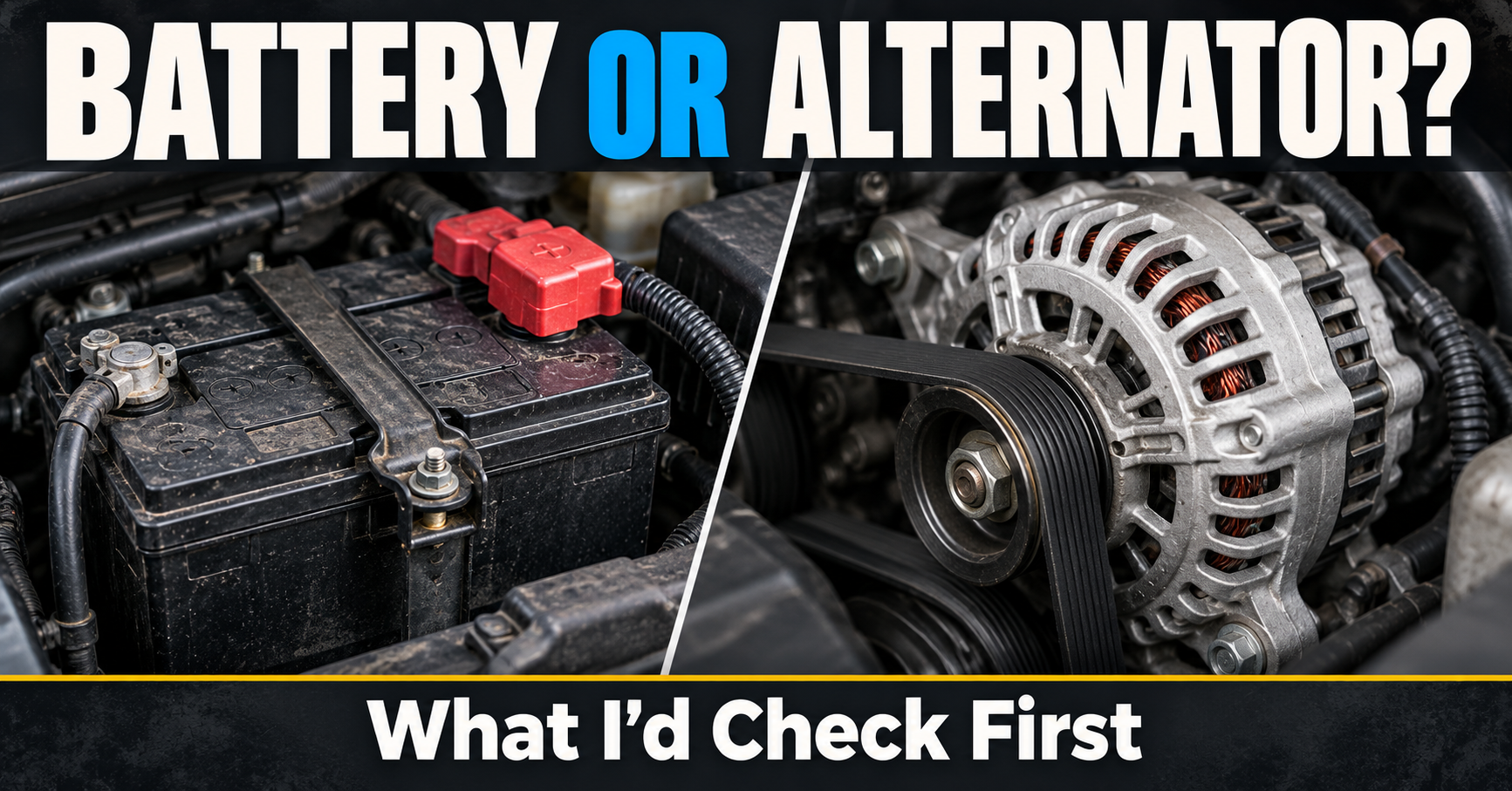
I’ve laid out how I’d tell those two problems apart in my battery-versus-alternator guide. For the current no-start, I’d start by describing whether the engine cranks and what happens to the lights.
What can I check under the hood before calling a shop?
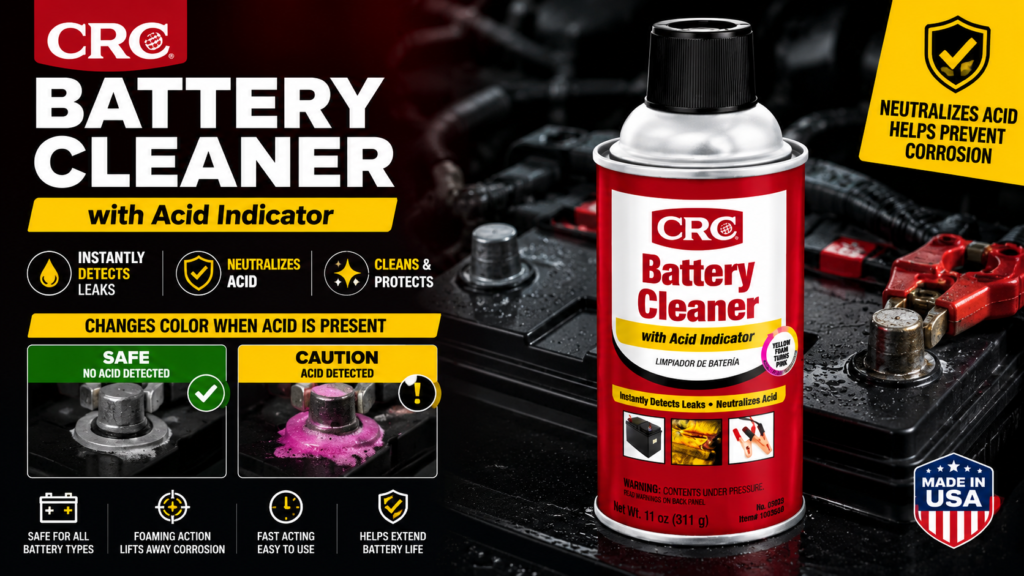
With the engine off, I’d look at the battery terminals. Are the clamps firmly attached? Is there heavy white, blue, or greenish buildup? Does a cable look broken or badly damaged?
A terminal can look close to normal at a glance and still be loose. I wouldn’t grab bare metal with a tool and start tightening things without knowing the safe procedure for my vehicle, but I would tell the technician what I noticed.
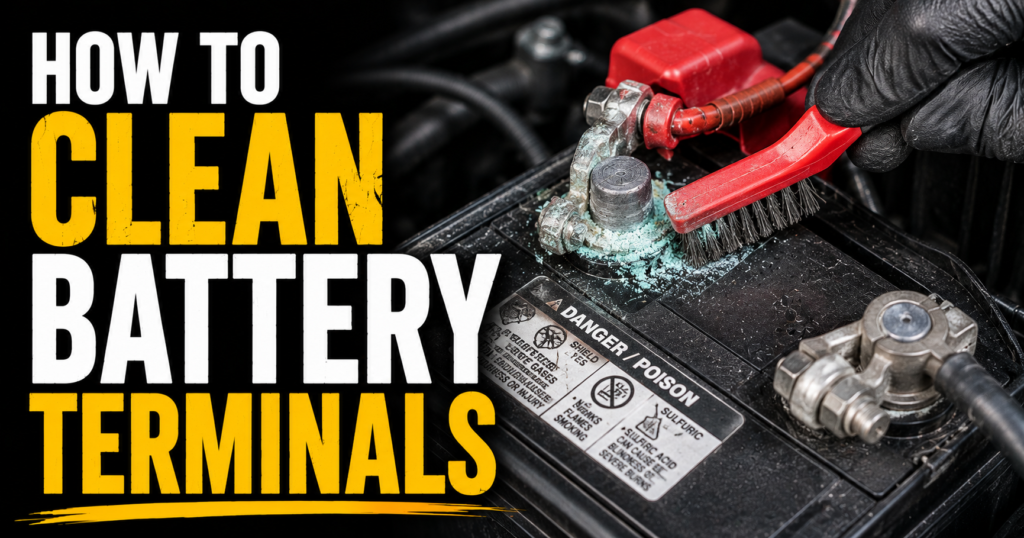
If corrosion is clearly present, that needs attention. My guide to cleaning battery terminals safely covers that job. Cleaning them isn’t a substitute for testing a battery that may already be worn out.
I’d also look at the dash for a security message, charging warning, or other unusual indicator. I’d take a photo of any message before it disappears.
What if it starts in Neutral but not Park?
That’s a valuable clue.
An automatic-transmission vehicle is designed to start only in allowed gear positions. If it consistently starts in Neutral but not Park, I’d tell a mechanic exactly that. The shifter position, adjustment, or related safety circuit may need inspection.
I wouldn’t make a habit of starting it in Neutral and ignore the difference. I’d keep my foot on the brake, set the parking brake as appropriate, and get the problem diagnosed.
What if it starts after I jiggle the key or try again?
Intermittent problems can make a battery seem fine one moment and bad the next.
I’d notice what action changed the result. Was it moving the shifter? Trying a spare key? Waiting a minute? Moving a loose battery cable? Those details point toward different systems.
I wouldn’t deliberately wiggle battery connections while someone else tries to start the car. I’d document the pattern and have the connections and starting circuit inspected safely.
A car that starts on the third attempt can still leave me stranded on the fourth. I’d use the successful start as a chance to get it tested, not as proof the problem fixed itself.
What should I tell the mechanic?
I’d give them a description that separates the possibilities:
“The headlights and radio come on. When I turn the key, I hear rapid clicking, and the engine doesn’t turn over.”
Or:
“The dash lights come on, I hear one click, and the engine doesn’t crank.”
Or:
“The engine cranks at its normal speed, but it never starts.”
I’d add whether a jump helped, whether it starts in Neutral, whether there’s a security message, and whether the problem happened after the car sat or after a drive.
That’s much more useful than telling the shop, “The battery is good because the lights work.” I’d ask them to test the battery and connections first, then follow the evidence into the starter circuit or engine systems.
What would I avoid buying first?
I wouldn’t buy a battery solely because it failed to start once. I wouldn’t buy a starter solely because I heard a click. And I wouldn’t buy an alternator because the car needed a jump.
Each of those parts could be the answer in the right situation. None is proven by working lights.
I’d spend a little time noticing the cranking sound, looking for obvious connection trouble, and getting the relevant system tested. That gives me a better chance of fixing the reason the car won’t start instead of replacing the first part someone guessed.
About the author: Daxon Weaver owns a 2015 GMC Sierra 4×4 and a 2011 Hyundai Sonata that passed 300,000 miles. He writes about the vehicle questions he works through before paying for repairs.