
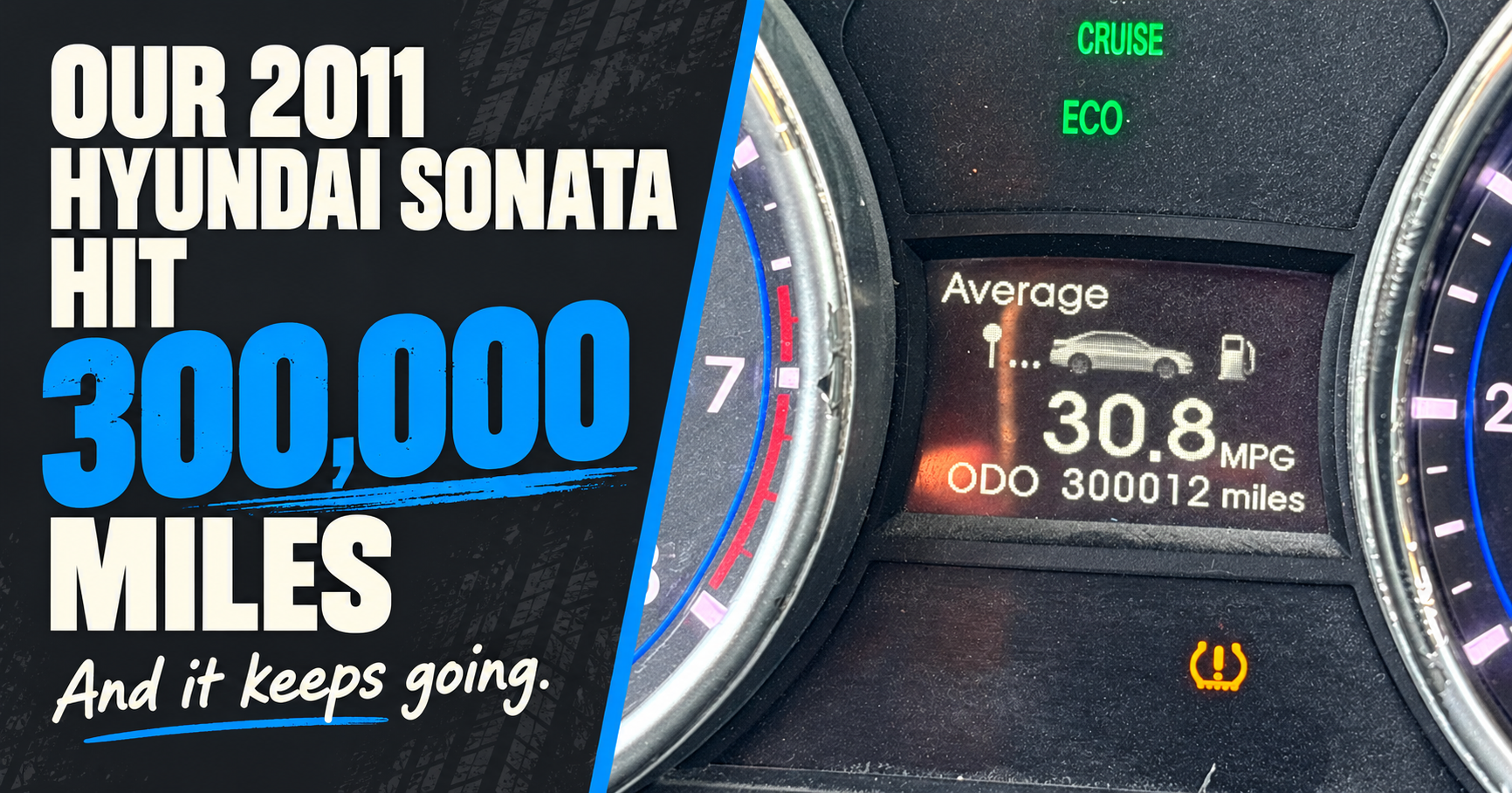
Our 2011 Hyundai Sonata just passed 300,000 miles.
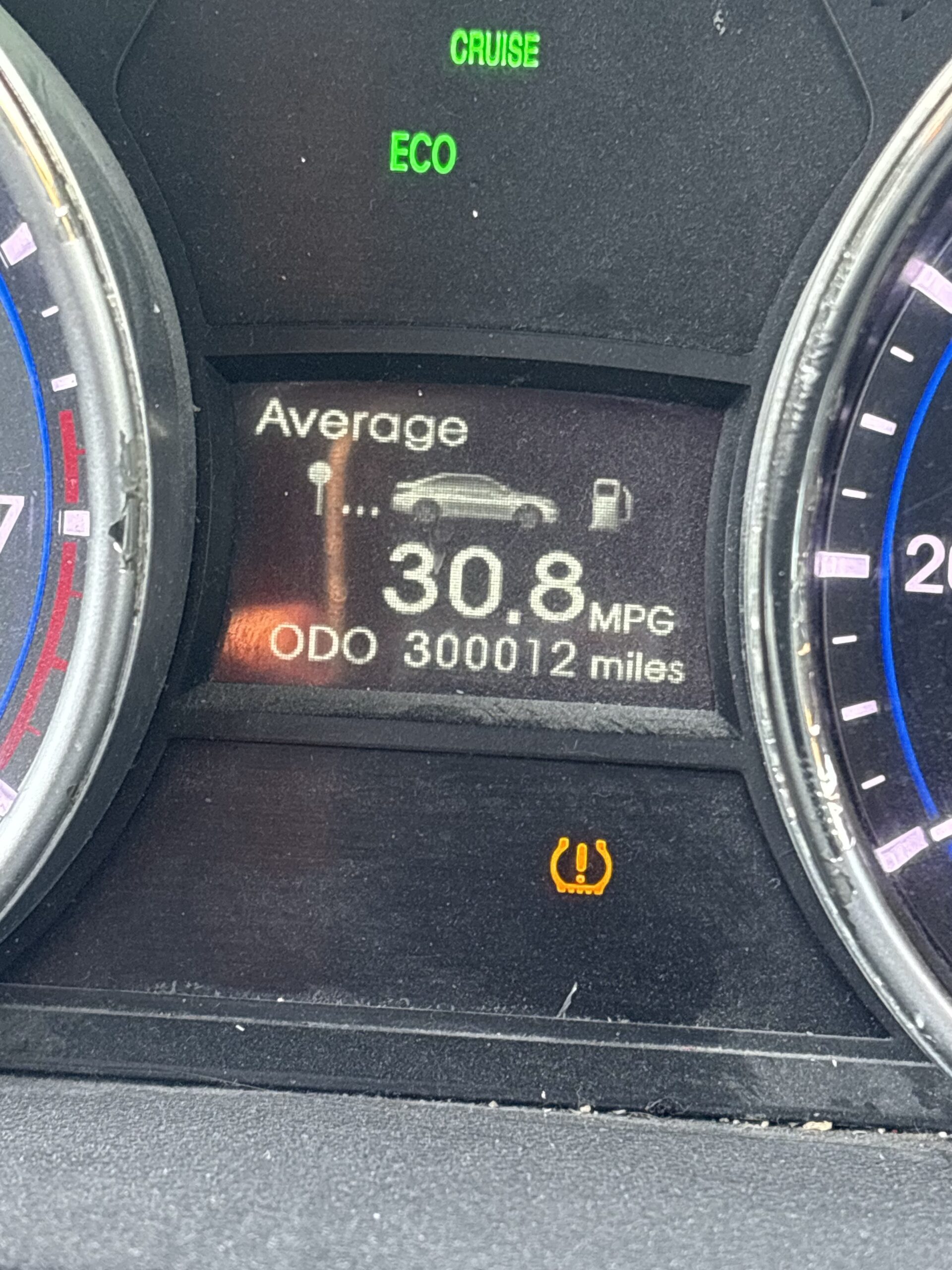
I took a photo when the odometer read 300,012, because that number still feels a little ridiculous to me. We paid about $5,500 for this car roughly eight years ago, when it had around 150,000 miles on it. At the time, I wasn’t buying a car I expected to drive for another 150,000 miles.
But here we are. It starts, runs, and keeps taking us where we need to go.
I’m not going to pretend it has been perfect. The automatic light function no longer works the way it should, so we turn the lights on and off manually. We’ve dealt with ball joints over the years. The exhaust has rust that needs patching, and the plastic panel beneath the engine has come loose and needs attention.
That is the car I’m talking about: an old sedan with real problems that has still given us a lot more use than I expected for what we paid.
The $5,500 purchase looks different at 300,000 miles
The Sonata had about 150,000 miles when we bought it. Now it has passed 300,000. That means we’ve put approximately 150,000 miles of our own on it.
If I divide the $5,500 purchase price by those miles, it comes to roughly 3.7 cents per mile for the purchase itself. That isn’t our total cost of driving. It leaves out fuel, insurance, tires, repairs, and maintenance. I haven’t kept a complete spreadsheet that would let me give an honest all-in number.
Still, it helps explain why I feel differently about this car than I did when we bought it. The original $5,500 has been spread across eight years and an enormous amount of driving.
Some cars impress you with how they look on the lot. This one won me over by continuing to run.

The problems it has had are part of the story
The light issue is annoying in a very ordinary way. Something in the automatic operation is no longer working right, so we have to remember to turn the lights on and off ourselves. I don’t know the exact electrical cause, and I’m not going to call it a diagnosed short when it hasn’t been diagnosed.
The ball joints have needed attention over time. That is the kind of wear you cannot ignore just because the car has already traveled a long way. Steering and suspension still need to be sound, whether the odometer says 30,000 or 300,000.
Then there’s the rusting exhaust that needs patching. The plastic panel under the engine has also started hanging down. Anyone who has kept an older car on the road knows how these things add up. One day you notice a noise. Another day you look underneath and see something that was securely attached last year isn’t anymore.
I can live with an old car needing work. I still want to know what the work is, what it will cost, and whether a problem affects safety before I decide to keep driving it.
I don’t know that every 2011 Sonata would do this
This car has made me a believer in the one sitting in our driveway. That is different from promising that every 2011 Hyundai Sonata will reach 300,000 miles.
I don’t know what another car’s previous owner did, how it was maintained, or which major parts it may have had replaced. Even with ours, I’m sharing the ownership story we actually know rather than claiming that every original component has lasted the full 300,000 miles.
What I can say is that we bought ours at roughly 150,000 miles, paid about $5,500, and have used it for about eight more years. It is still running at 300,000 miles despite the hiccups I’ve described. That has earned my respect.
If I were shopping for another older Sonata, I would judge the individual car. I’d want to know how it runs now, what repairs are documented, how much rust it has, and whether any safety recalls affecting its VIN have been completed. A model name and an impressive odometer photo can only tell you so much.
Is a 300,000-mile car still worth fixing?
This is the question I keep coming back to.
I doubt our Sonata would bring much money if we sold it today. I suspect its resale value is closer to junkyard money than to what it is worth to us as a running car. That is my assessment, not a professional appraisal.
So when something needs repair, I don’t compare the bill only with what someone might pay me for the car. I also compare it with the cost of replacing a car we already own and know.
A modest repair that keeps a dependable car usable may make sense even if it represents a large share of its resale value. A major repair is a different decision. I would want to know what failed, whether the rest of the car is sound, and how much confidence the repair would buy us.
I don’t have a magic dollar cutoff. At this mileage, I would take each problem as it comes. The car’s low resale value does not make a dangerous ball joint or an exhaust leak something to overlook.

What I’m paying closer attention to now
I’m happy it reached 300,000 miles. I’m also realistic about what an older car needs from its owner.
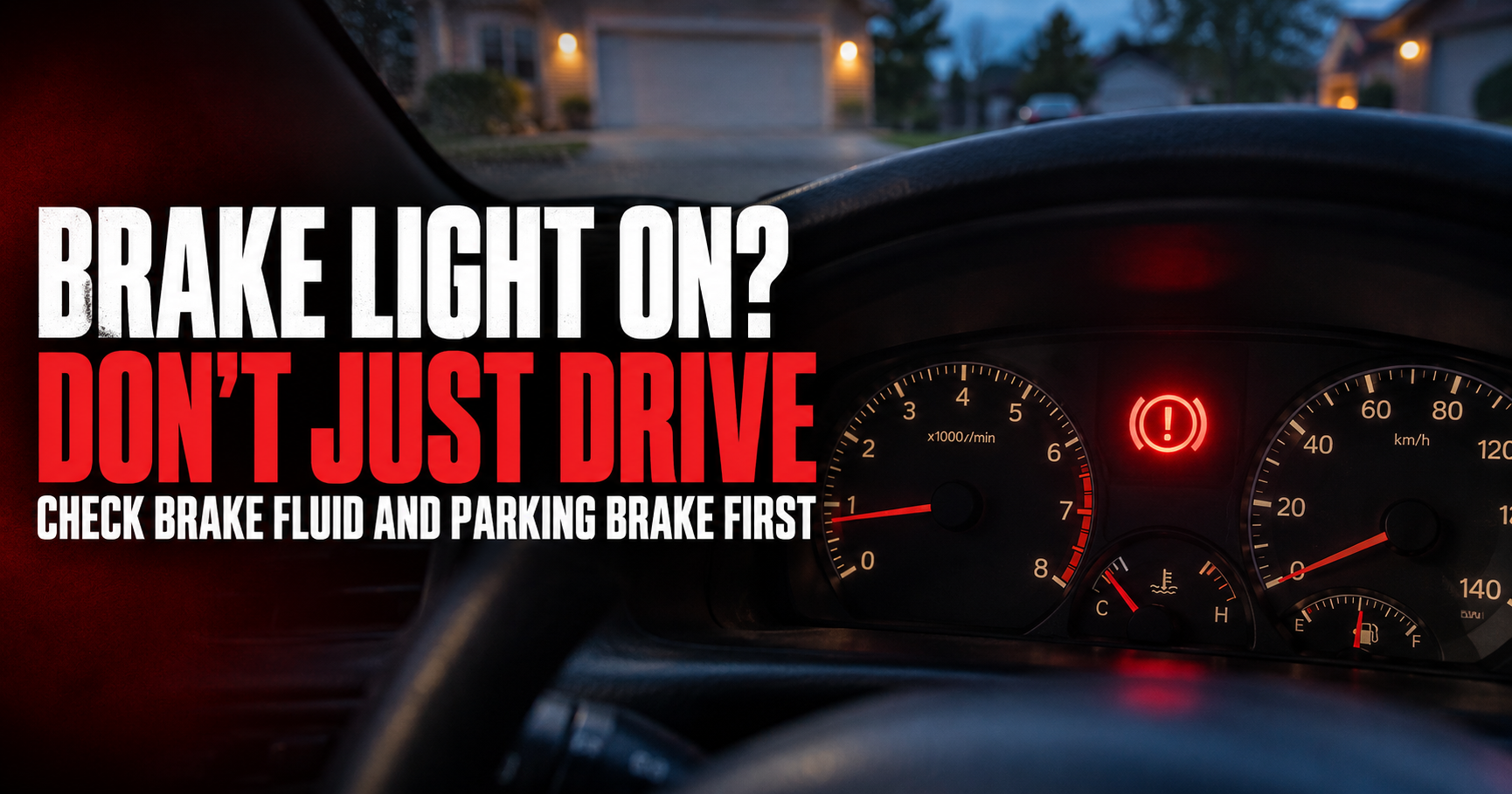
The exhaust rust needs to be looked at and repaired appropriately. I don’t want exhaust gases getting into the cabin. The loose plastic beneath the engine needs to be secured, repaired, or replaced as appropriate rather than left to drag or come off on the road. And any loose or worn suspension part deserves an actual inspection.
The photo also shows the tire-pressure warning light illuminated. The photo does not tell me whether a tire is low or the monitoring system has a fault. The next step is to check the tires with a gauge against the pressure listed on the driver’s door placard, then investigate the warning if the pressures are correct.
That may sound like it takes some shine off the milestone. To me, it makes the story more honest. A car does not get a pass on safety because I’m proud of its odometer.
Why I’d rather keep driving it
At this point, selling the Sonata for very little and then paying thousands for another unknown used car does not automatically sound like an upgrade.
We know this car’s habits. We know about the light switch, the exhaust rust, and the panel underneath. When a new issue appears, we can decide whether it makes sense to repair it. As long as it remains safe and practical to keep on the road, I’d rather get the use out of it than retire it simply because the odometer has rolled past a big number.
That does not mean I’ll keep it at any cost. There may come a repair or a combination of problems that changes the math. I just don’t think 300,000 miles by itself is the reason to give up on a car that still runs.
We have already gotten roughly another 150,000 miles out of a $5,500 purchase. Every additional stretch of reliable use is a bonus.

What 300,000 miles taught me about this car
When we bought the Sonata, 150,000 miles sounded like a lot. Now I look at the dash and see twice that number.
I still notice the things that need fixing. Turning the lights on manually is a nuisance. Rusted exhaust and a loose underbody panel aren’t charming little signs of character. They’re work to deal with.
But I also notice that the car keeps going. After eight years of ownership, that matters more to me than whether it can still look or feel new.
I took the odometer photo because I wanted to remember the moment. We crossed 300,000 miles in a car I bought for about $5,500, and it was still running. I don’t know how many more miles it has in it. For now, I’m glad we didn’t count it out at 150,000.
About the Author: Daxon Weaver owns the 2011 Hyundai Sonata in this story. He writes about the car problems, repairs, and ownership decisions he has actually encountered for Why Is My Car.


