
The heater feels fine once you are moving. Then you stop at a light, and the air from the vents turns cool. A few minutes after you pull away, the heat comes back.
That change matters. Your engine runs at a higher speed while driving than it does at idle, which can change how coolant moves through the heating system. A low coolant level or poor coolant circulation may show up at idle first. But the pattern does not identify one failed part by itself, and the first thing to check is what your engine temperature is doing at the same time.
Watch the temperature gauge when the heat fades
On your next normal drive, note where the temperature gauge settles after the engine warms up. Then pay attention to it when the heater turns cool at a stop. If your car displays a temperature warning instead of a gauge, watch for that warning.
If the gauge stays in its usual range, the engine may be producing heat normally while the heater core receives too little hot coolant at idle. An air-mixing problem inside the dashboard is another possibility. You will need a few more clues to separate them.
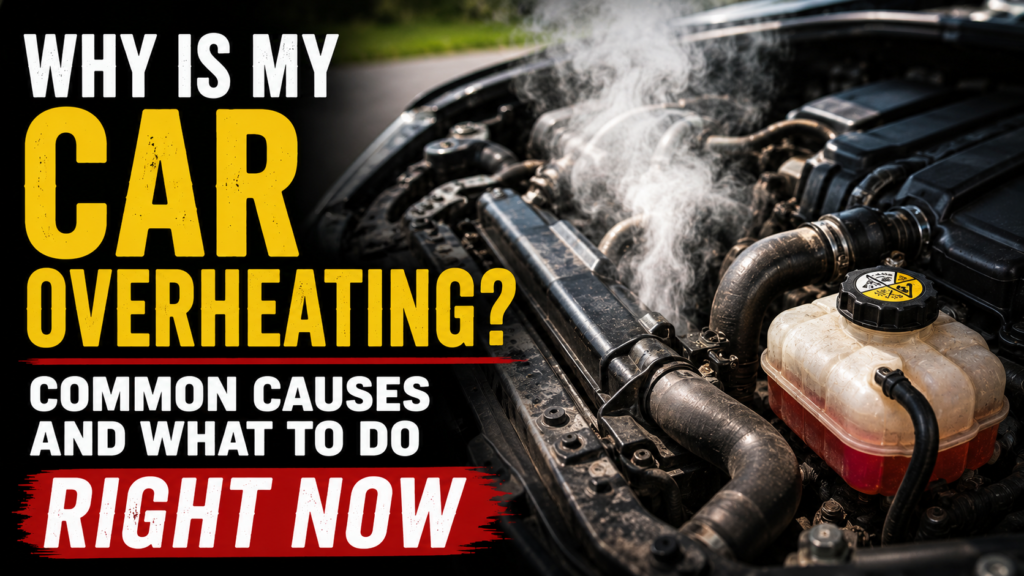
If the gauge climbs while you are stopped, pull over safely and shut the engine off if it reaches the hot range or a warning appears. The cabin losing heat alongside a rising engine temperature can be a sign of a cooling-system problem that threatens the engine. Do not continue driving just because the vents get warm again when you accelerate. Our guide to what to do when a car starts overheating explains the immediate steps.
If the gauge stays unusually low throughout the drive, the engine may not be reaching its normal operating temperature. A thermostat stuck open is one possibility, although it usually causes generally weak heat rather than a sharp change every time you stop.
The gauge is a clue, not a complete cooling-system test. Still, recording what it does gives a mechanic a much better starting point than “the heater acts up sometimes.”

Low coolant can make heat disappear at idle
Most gasoline-powered cars heat the cabin by sending hot engine coolant through a small heater core behind the dashboard. The blower moves air across that core and out of the vents. If coolant is low, the heater core may not receive a steady supply.
That can produce a frustrating pattern: acceptable heat while driving, weaker heat as the engine returns to idle, then warmth again when engine speed rises. It can also happen alongside gurgling from behind the dashboard or a heater that alternates between hot and cold.
Check the coolant level only when the engine is completely cold, following your owner’s manual. Look at the markings on the correct reservoir. Do not open a pressurized coolant cap while the engine is hot. Hot coolant can cause serious burns.
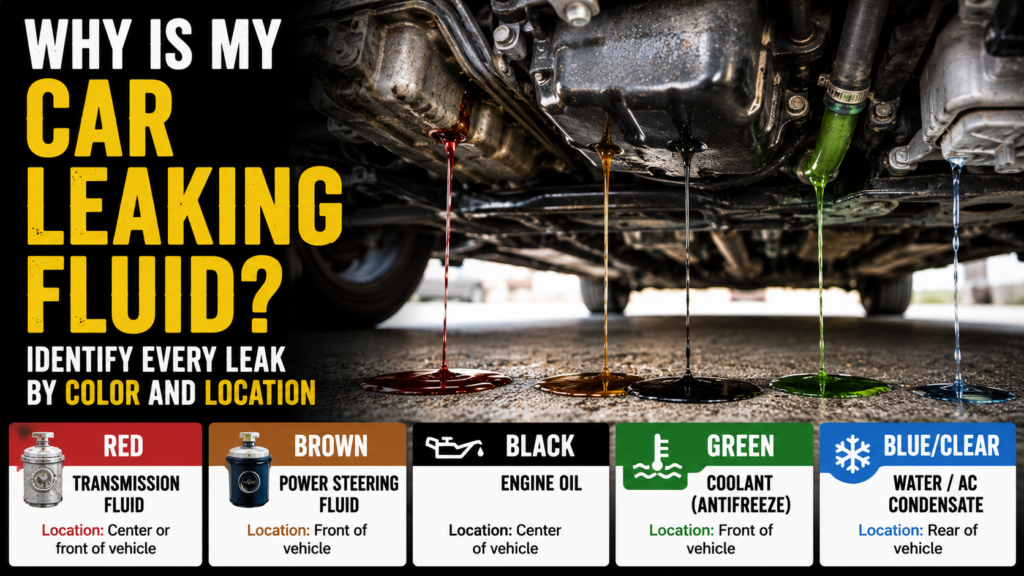
If the level is low, the next question is where the coolant went. Look for a puddle after parking, damp hose connections, or dried residue around the reservoir and cooling-system parts. Our fluid-leak identification guide can help you describe what you see.
Use the coolant specification listed for your vehicle if you need to add coolant. Adding the correct fluid may restore heat temporarily, but a level that keeps falling needs a leak inspection. If the reservoir is empty, you find an active leak, or the engine runs hot, arrange an inspection before driving farther.
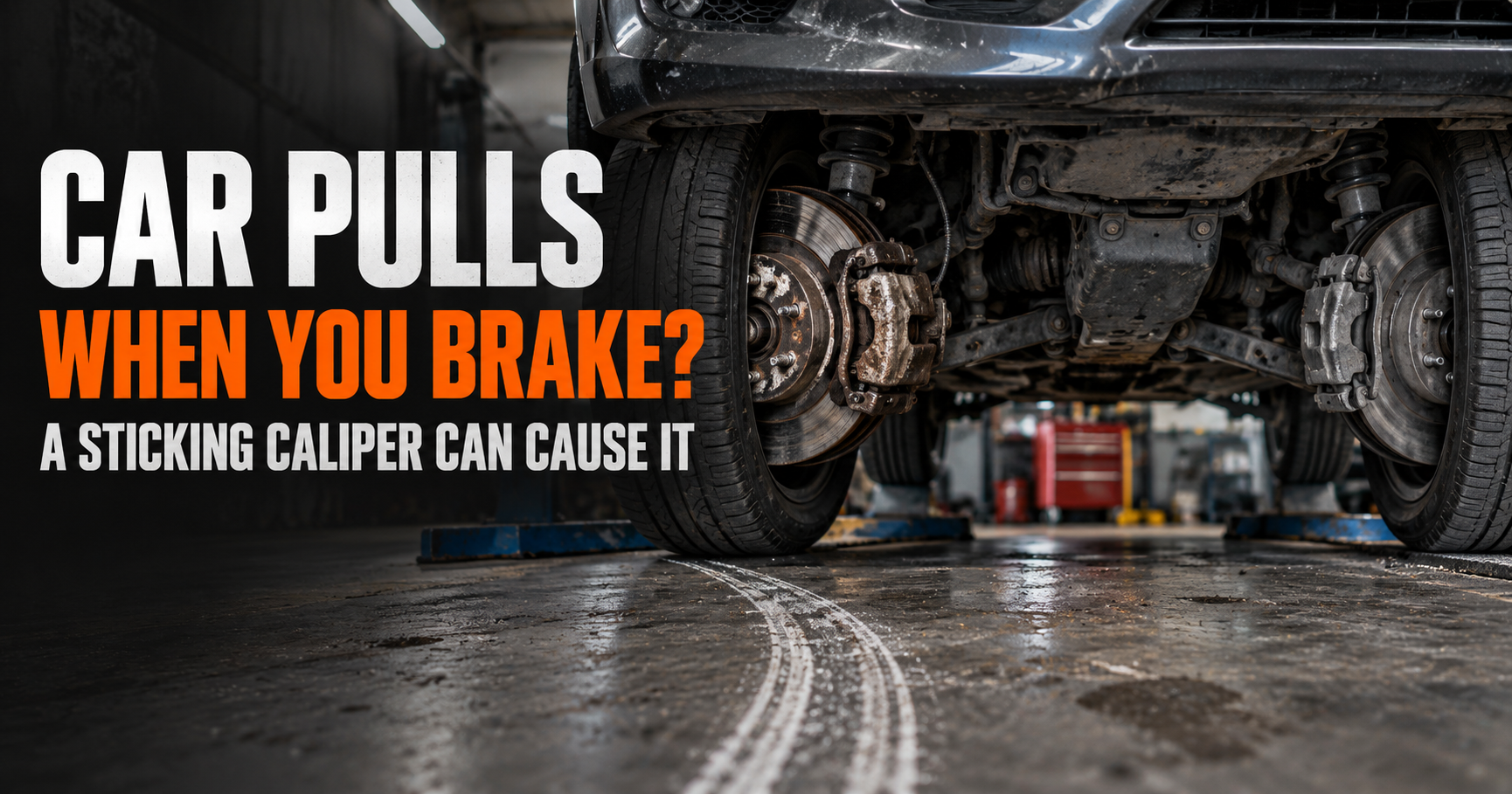
Air trapped in the cooling system can cause the same pattern
This detail becomes especially useful if the trouble started right after a coolant change, hose replacement, radiator repair, or other cooling-system work. Air left in the system can interfere with steady coolant flow through the heater core. Heat may come and go as the engine speed changes.
Tell the shop exactly when the symptom began. “It started the day after the radiator was replaced” is more useful than simply saying the heater is unreliable. The system may need to be checked for leaks and filled using the correct procedure for that vehicle.
Avoid assuming it only needs to be “burped.” If coolant keeps disappearing after the system has been properly filled, a leak or another fault may still be present. Likewise, repeatedly adding coolant without finding the cause can hide a problem until the engine overheats.
What if the coolant level is full?
A full reservoir makes a low level less obvious as the cause, but it does not prove that coolant is flowing through the heater core as it should. The cooling system’s layout varies by vehicle, and the reservoir alone cannot show what is happening throughout the system.
Ask whether the shop can confirm flow through the heater circuit. A technician may compare temperatures at the heater hoses and check how the system behaves at idle and at a modestly higher engine speed. Those observations can help distinguish a flow problem from a dashboard temperature-control problem.
Do not reach for those hoses yourself while the engine is running. Hot parts can burn you, and an electric cooling fan may start unexpectedly. This is a diagnostic check for a technician with access to the vehicle’s service information.
Restricted heater-core passages, a flow-control valve on vehicles that use one, or a circulation problem elsewhere in the cooling system can all affect heat. Which one applies depends on the vehicle and what testing shows. “It gets warm when I rev it” is a reason to test coolant flow, not a reason to order a water pump immediately. If the testing instead finds minor seepage in the cooling system, minor coolant leak treatment outlines when a chemical leak treatment may help and when proper repair is necessary.
Could the water pump be failing?
It is possible, but the heater pattern alone does not diagnose a water pump. The pump circulates coolant through the engine, and a circulation problem can become more noticeable at idle. Yet low coolant and trapped air can create similar symptoms.
A shop should look for supporting evidence. Is the engine also running hot? Is coolant leaking near the pump? Is there an unusual noise? Does the heater-circuit flow change in a way that fits the diagnosis? The answer will vary by vehicle, especially because cooling-system designs differ.
If someone recommends a water pump solely because the vents warm up when you press the accelerator, ask what test or observation rules out the simpler possibilities. That question can prevent an expensive repair that leaves the heater doing exactly the same thing.
Could it be the thermostat?
A thermostat stuck open can leave an engine slow to warm and make the heater feel weak. The useful distinction is what happens over the whole drive.
If heat improves mainly because the engine finally warms up after several miles, then grows weak again during prolonged idling in very cold weather, engine operating temperature deserves attention. A shop can check the actual temperature rather than relying on a quick glance at the dashboard gauge.
If the engine reaches and holds its normal temperature but the vents turn cold almost every time you stop, a thermostat is less convincing as the first guess. Coolant level, heater-circuit flow, and the cabin temperature controls deserve examination.
A thermostat stuck closed presents a different concern: engine overheating. If the gauge is rising into the hot range, treat that as an overheating problem rather than continuing to troubleshoot cabin comfort from the driver’s seat.


Check whether airflow changes or only the temperature
Keep the fan at one setting while you compare driving and idling. Does the amount of air coming from the vent stay about the same while its temperature changes? Or does the airflow itself become weak?
Steady airflow that turns cold points you toward heat delivery or air mixing. The blower is doing its job of moving air, but that air is no longer being warmed effectively.
Airflow that drops at idle is a different clue. A blower or electrical problem may need checking, particularly if the fan speed audibly changes. Note whether headlights or other electrical equipment also behave differently. Do not confuse a loss of airflow with a loss of heat; the repair paths are different.
If your vehicle has automatic or dual-zone climate control, set both sides to the same high temperature for this comparison. A temperature door that fails to move correctly can make the vent output seem inconsistent even when the engine and coolant are fine. Clicking behind the dashboard or one side staying cold while the other stays warm makes the controls worth investigating.
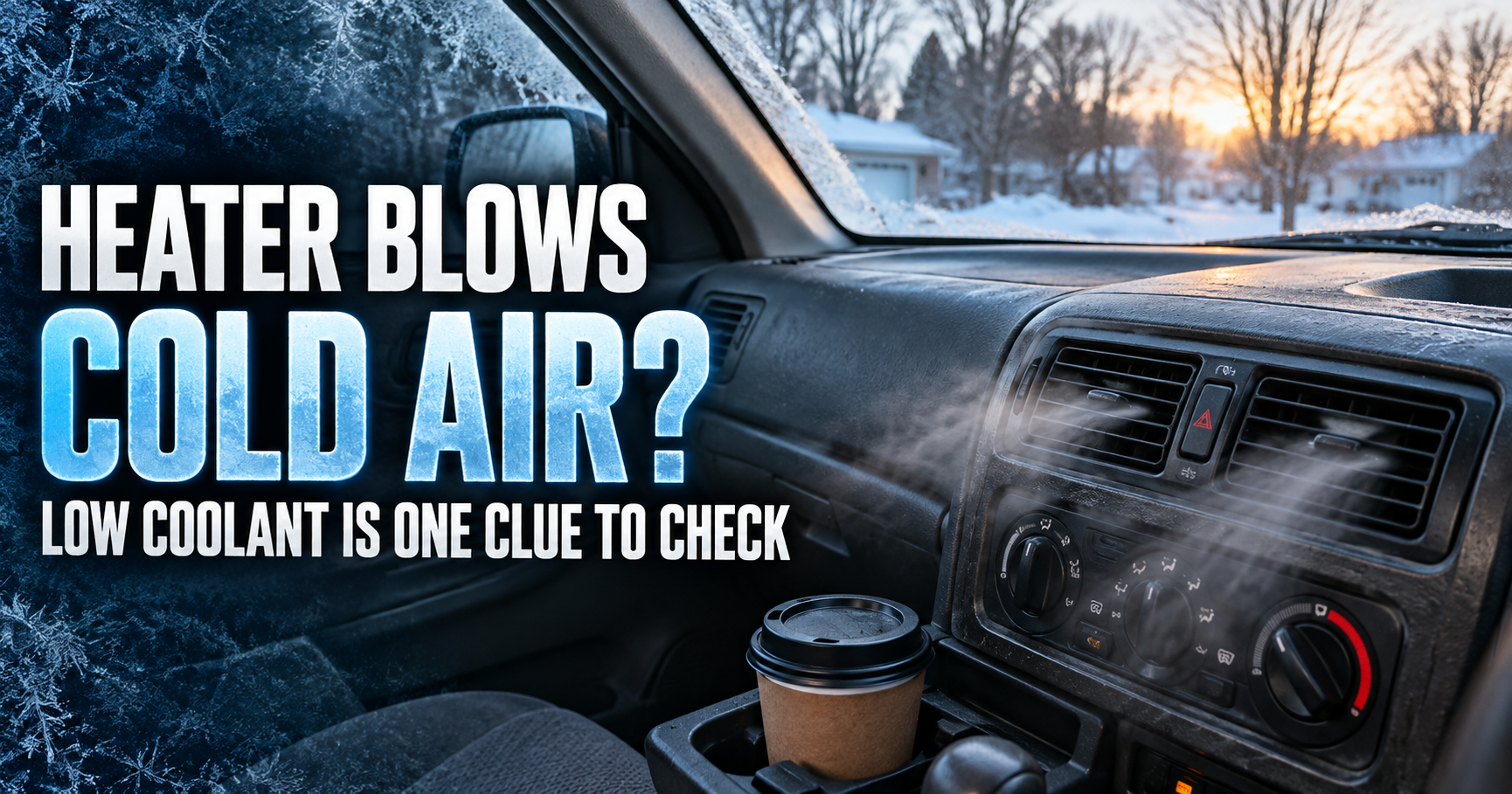
Our broader guide to a car heater blowing cold air covers the other patterns, including a heater that never warms up at all.
Don’t overlook a leak inside the car
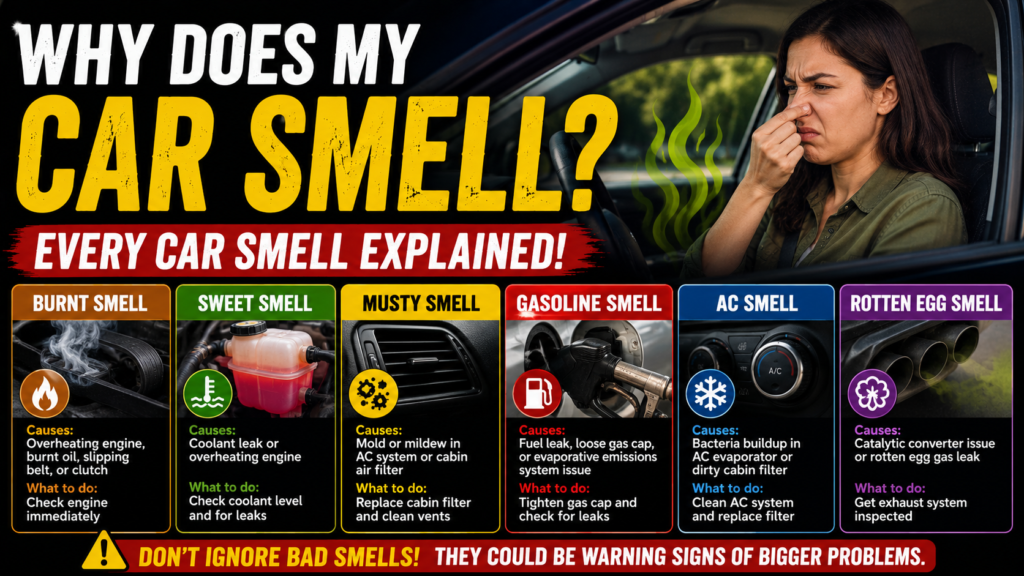
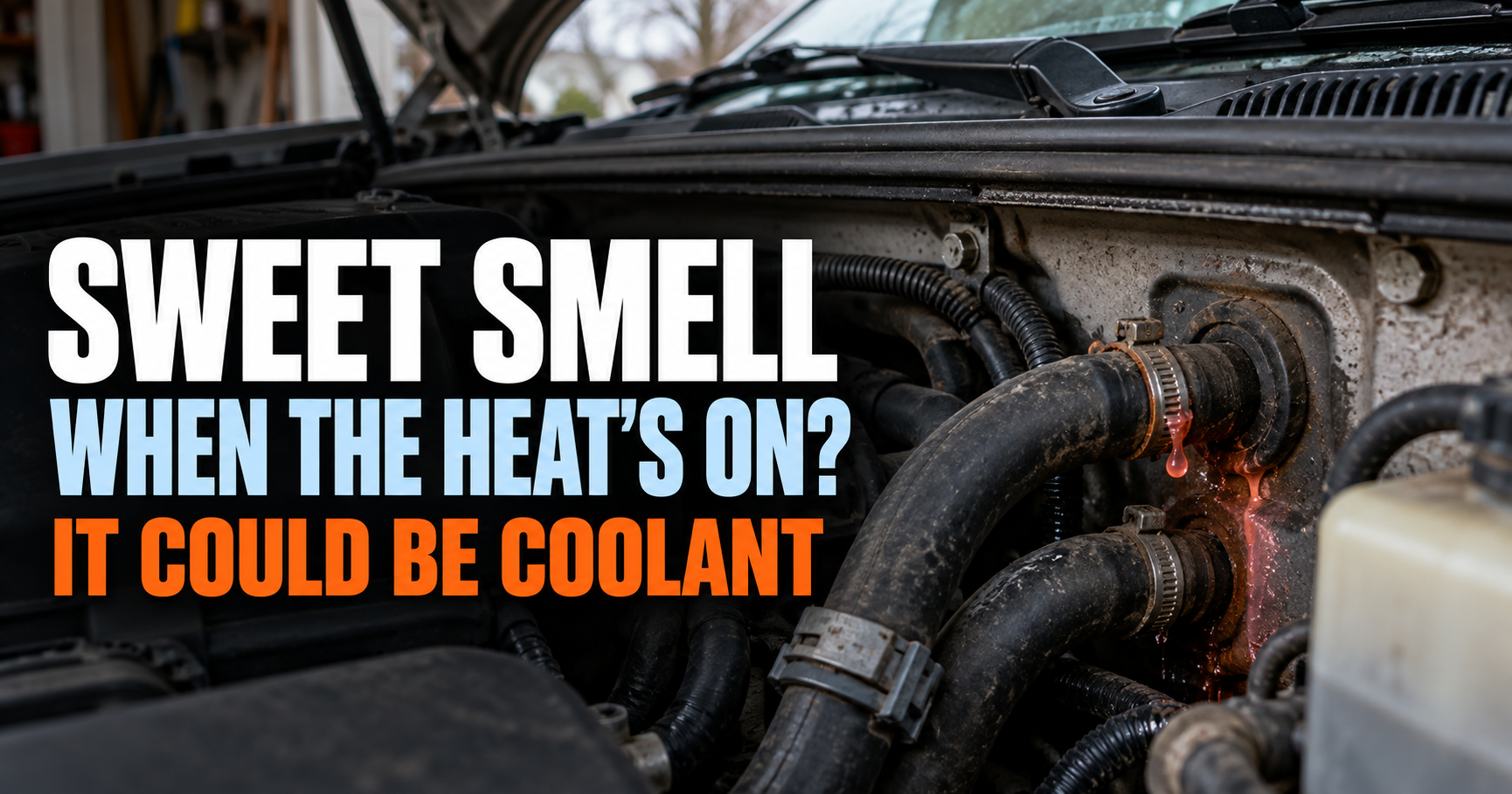
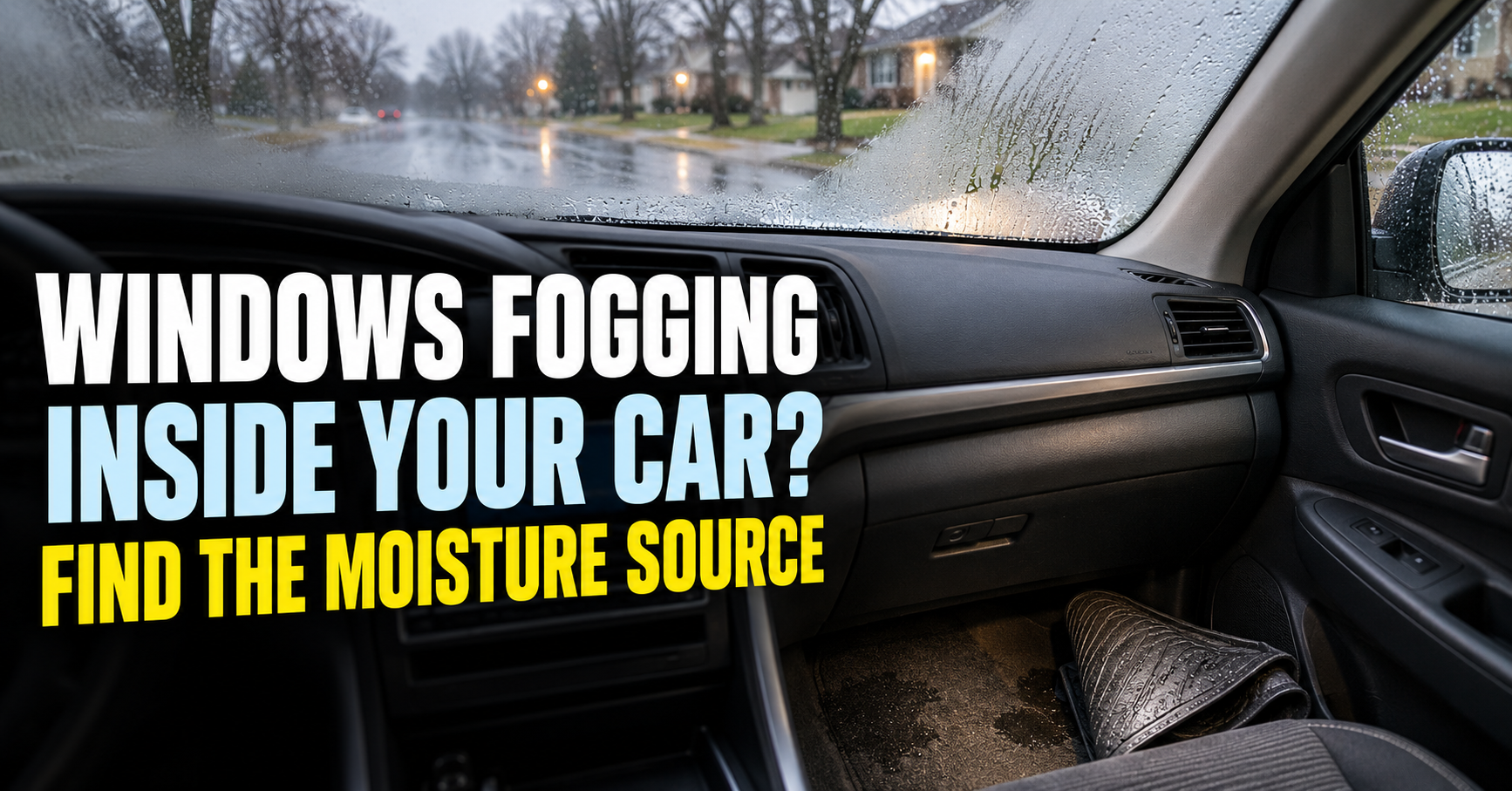
A heater-core leak can bring clues into the cabin. Pay attention to a sweet chemical smell, dampness near the passenger footwell, or a persistent film on the inside of the windshield. If you notice them, tell the shop even if you have not seen a puddle under the car. Those cabin clues are also covered in this guide to sweet chemical smell from a car, including what different odors may indicate.
Those signs call for prompt inspection. They can also affect your ability to keep the windshield clear. If you cannot maintain a clear view of the road, stop somewhere safe rather than trying to drive through fogged glass.
A leaking heater core is different from one with restricted flow. Both can affect heating, but they require different repairs. The smell, moisture, coolant level, and shop inspection help separate them.

When is it safe to keep driving?
Stop driving if the temperature warning appears, the gauge moves into the hot range, steam comes from under the hood, or you find substantial coolant loss. Pull over safely, turn off the engine, and let it cool. Never remove a coolant or radiator cap while the system is hot.
If the engine temperature remains normal, coolant is at the correct cold level, and visibility is clear, intermittent cabin heat may allow you to arrange a repair without an immediate tow. Monitor the gauge and do not ignore a symptom that is becoming more frequent. Cold air at idle can be the first clue of a leak that later becomes serious.
Defrost matters too. Even with a mechanically healthy engine, a heater that cannot clear the windshield may make driving unsafe in cold or damp weather.
The details that will speed up diagnosis
Before scheduling service, write down how the heater behaves during one ordinary drive. How long does it take to become warm? Does it cool immediately at a stoplight or only after several minutes of idling? Does it warm up again as soon as you accelerate? Does the temperature gauge move when this happens?
Check the coolant level once the engine has cooled completely and note whether you have had to add any. Mention recent cooling-system work, a coolant smell, wet carpet, dashboard clicking, weak airflow, or a warning light. You do not need to identify the failed part. You need to give the shop a pattern it can reproduce.
A good inspection should answer three questions: Is the engine reaching a normal temperature? Is hot coolant reaching the heater core consistently at idle? Is the cabin control system directing air through it? Those answers narrow the repair far more reliably than the phrase “heater only works while driving.” For more symptom-based checks beyond this heater issue, browse common vehicle problem guides.



Frequently asked questions
Why does my heater turn cold at stoplights but hot on the highway?
The change can point to low coolant, trapped air, or another problem affecting coolant flow through the heater at idle. Check what the engine temperature gauge does, then check the coolant level after the engine is completely cold. The pattern does not identify a specific failed part without further testing.
Will adding coolant fix heat that disappears at idle?
If the level is low, restoring it with the coolant specified for your vehicle may bring the heat back. You still need to find out why it was low. If the level falls again, the underlying problem remains, and the engine could overheat.
Does this symptom mean I need a new water pump?
Not necessarily. A pump problem is one possibility, but low coolant or air in the system can cause similar changes. Ask for evidence of a circulation problem before authorizing pump replacement.
Why did this start after a coolant flush?
Air may have remained in the system, or a leak may be allowing the level to drop after the service. Tell the shop when the symptom began and ask it to verify the fill procedure, coolant level, and system integrity.
Can I leave the car idling until the heat comes back?
Idling longer will not repair a low coolant level or circulation fault. If the temperature gauge rises or a warning appears, shut the engine off after pulling over safely. If the engine temperature is normal but the heat fades at idle, arrange a diagnosis instead of relying on a longer warm-up.
About the Author: Morgan Ellis writes practical troubleshooting guides for Why Is My Car, helping drivers describe changing symptoms clearly, recognize warning signs, and ask useful questions before approving a repair.

