You get in your car, turn the key, and instead of the engine starting — click. Or maybe rapid clicking, like a machine gun. Either way the car isn’t starting and you need to know why right now.
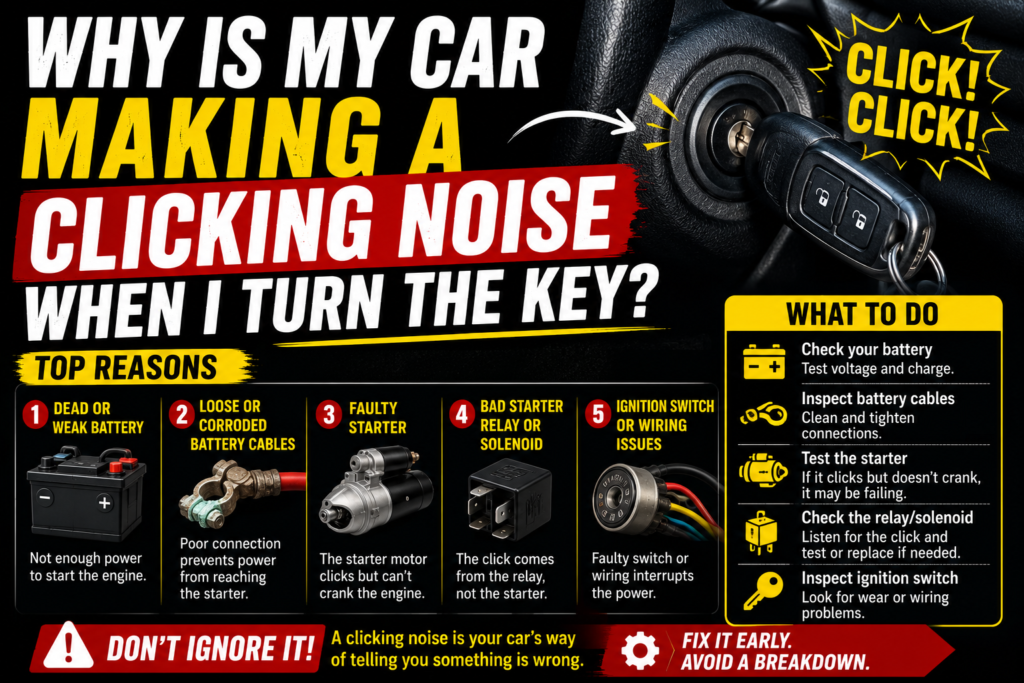
The good news is that a clicking noise when you turn the key is one of the most diagnosable car problems there is. The type of click tells you almost exactly what’s wrong before you even open the hood. One single click means something completely different from rapid clicking — and knowing the difference saves you from calling a tow truck for something you can fix in ten minutes on the side of the road.
Quick Answer: A single loud click when turning the key usually means a bad starter or starter solenoid. Rapid clicking — multiple clicks in fast succession — almost always means a dead or weak battery. Both can leave you stranded, but the fix is completely different. Read on to find out exactly which one you’re dealing with and what to do about it.
Single Click When Turning the Key
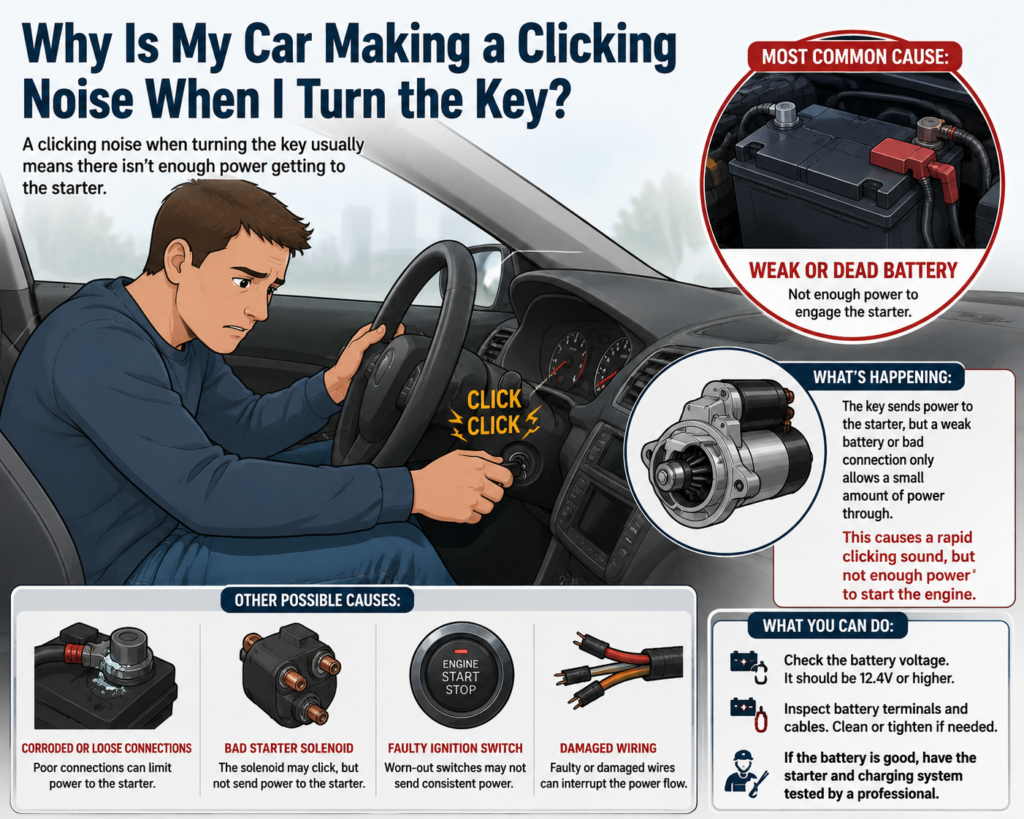
One loud click — just one — when you turn the key is the starter solenoid engaging but the starter motor not following through. The solenoid is a small electromagnetic switch that sends power to the starter motor. When you hear one click and nothing else, the solenoid fired but the motor didn’t spin. If the battery checks out, Car Won’t Start But Battery Is Fine – What’s Actually Wrong can help distinguish the starter from other no-start causes.
What Causes a Single Click
Bad starter motor. The starter motor itself has failed — worn brushes, a seized armature, or a burned winding. The solenoid engages correctly but the motor it’s supposed to power is dead. This is the most common cause of a single click on a vehicle that otherwise has good battery voltage.
Faulty starter solenoid. On some vehicles the solenoid is a separate component from the starter. A solenoid that’s failing may engage — producing the click — without properly completing the circuit to the motor.
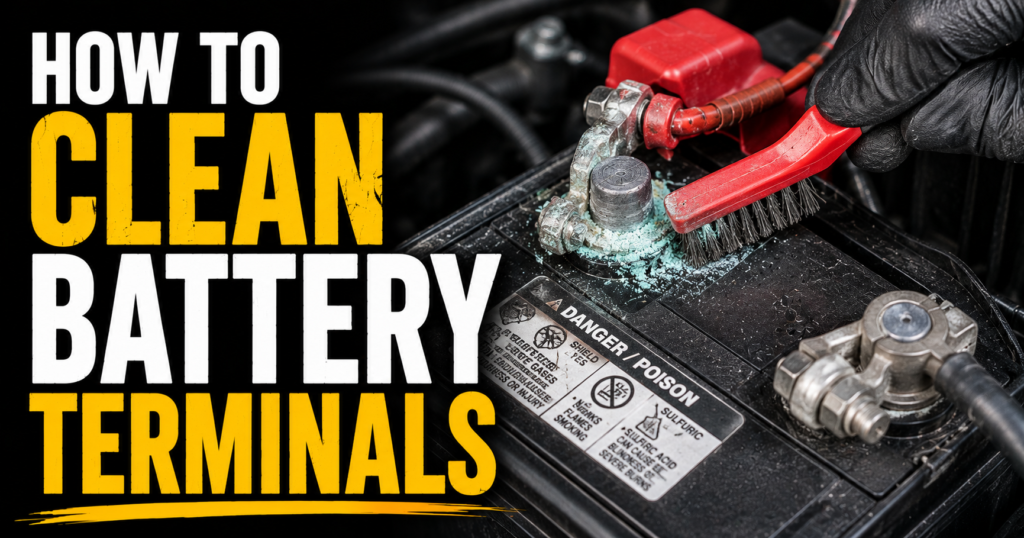
Poor electrical connection. A corroded or loose battery cable, a bad ground connection, or a corroded starter terminal can prevent enough current from reaching the starter even when the battery is fully charged. The solenoid clicks with the small amount of current it receives but the motor never gets the high current it needs to spin. If corrosion is suspected, How to Clean Battery Terminals – The Right Way in 10 Minutes shows the safest way to restore the connection before testing the starter.
Engine seized. In rare cases a single click with a fully charged battery and good starter can mean the engine itself is seized — the starter can’t turn it because it’s locked up internally. This is usually accompanied by other symptoms like the engine suddenly stopping and refusing to restart, and is the most serious scenario on this list.
How to Diagnose a Single Click
First, check battery voltage with a digital multimeter. A fully charged battery reads 12.6 volts or higher at rest. If voltage is good, the battery isn’t the problem and you’re likely looking at the starter or connections. Check the battery terminals and cable ends for corrosion — clean them with battery cleaner spray and retry. If the click persists with clean connections and good voltage, the starter needs to be tested or replaced.
A trick that sometimes works on a stuck starter: tap the starter body firmly with a hammer while a helper turns the key. A starter with worn brushes sometimes starts after a tap — this doesn’t fix it permanently but confirms the starter is the problem and gets you moving one more time.
Rapid Clicking — Multiple Clicks Fast
Rapid clicking — a fast series of clicks when you turn the key — is almost always the battery. Specifically, it’s the starter solenoid clicking repeatedly because there isn’t enough current to hold it engaged long enough to spin the motor. Each click is the solenoid trying and failing, trying and failing, over and over in rapid succession. When this symptom appears during a freeze, Car Won’t Start in Cold Weather – Why It Happens and How to Fix It covers why cold temperatures expose a weak battery and make starting harder.
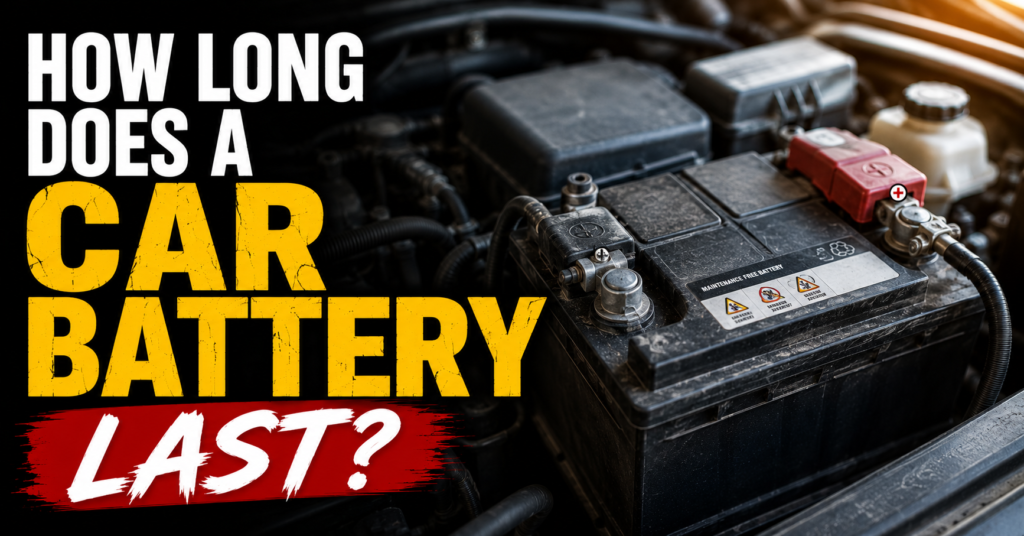
This is the dead or dying battery sound. You’ve probably heard it before. It’s one of the most recognizable sounds in automotive trouble — and one of the most fixable. If rapid clicking keeps returning, How Long Does a Car Battery Last? Signs It’s Failing covers the warning signs that a battery may be nearing the end of its life.
What Causes Rapid Clicking
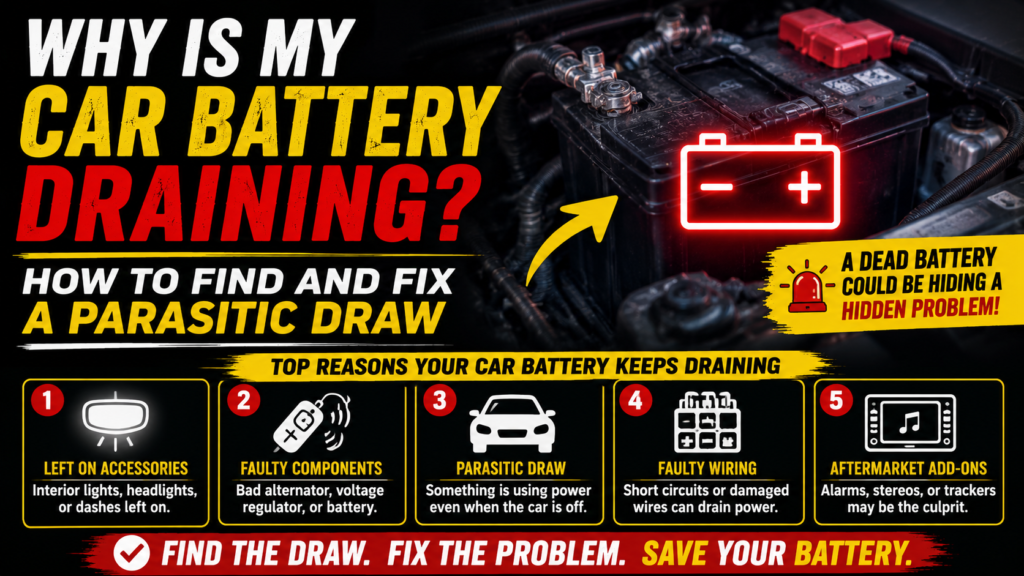
Dead battery. The battery has discharged below the threshold needed to start the engine. This happens from leaving lights on, a parasitic draw draining it overnight, or a battery that’s simply reached the end of its life. Check our full guide on why car batteries drain if this keeps happening repeatedly.
Weak or failing battery. A battery that’s on its last legs may have enough charge to power accessories — lights, radio, power windows — but not enough to deliver the high current burst the starter needs. The accessories working fine while the car won’t start is a classic sign of a weak battery rather than a completely dead one.
Corroded battery terminals. Heavy corrosion on the battery terminals creates resistance that prevents full current delivery to the starter. The battery itself may be fine but the connection is too poor to pass the current needed for starting. This is worth checking before assuming the battery is dead.
Bad ground connection. The negative battery cable connects to the vehicle chassis and engine block — these ground connections complete the circuit for the starter. A corroded or loose ground produces the same rapid clicking as a dead battery because current can’t return through the circuit properly.
What To Do Right Now
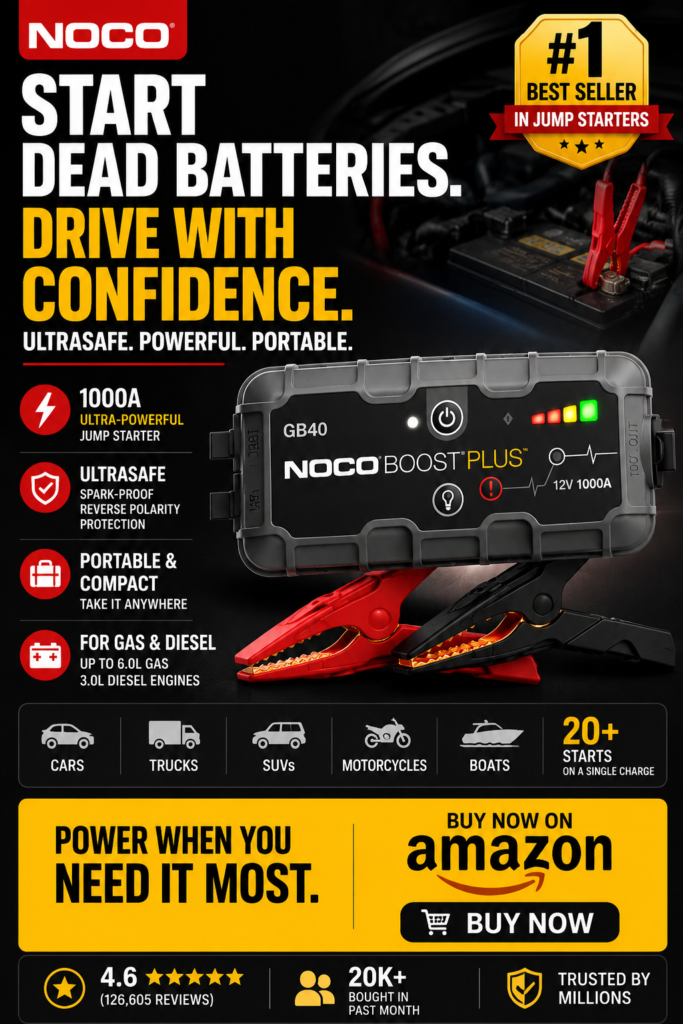
If you’re stranded with rapid clicking, a jump start is your fastest solution. If you have a NOCO Boost GB40 jump starter in your trunk, connect it and the car starts in seconds — no second vehicle needed. If you’re relying on jumper cables, you need another vehicle and a good connection — let the charging vehicle run for a few minutes before attempting to start.
After getting the car started, drive for at least 20–30 minutes to allow the alternator to recharge the battery. Don’t shut the engine off until you’re somewhere you can address the underlying issue — because if the battery is dead rather than just discharged, it may not restart after you shut it off again.
How to Tell the Difference Between a Dead Battery and a Bad Starter
This is the question everyone asks — and the answer is straightforward once you know what to look for.
Rapid clicking = almost certainly battery. A starter doesn’t make rapid clicking sounds — the solenoid does, and it clicks rapidly when it can’t hold engagement due to low current. If you hear fast clicking, start with the battery.
Single click = likely starter. One firm click with no follow-through, on a vehicle where the battery voltage tests good and the terminals are clean, points strongly to the starter.
Jump start test. If a jump start gets the car running, the battery was the problem — either discharged or failing. If a jump start makes no difference and you still get a single click, the starter is the more likely culprit since jumping provides full battery voltage and the starter still didn’t engage.
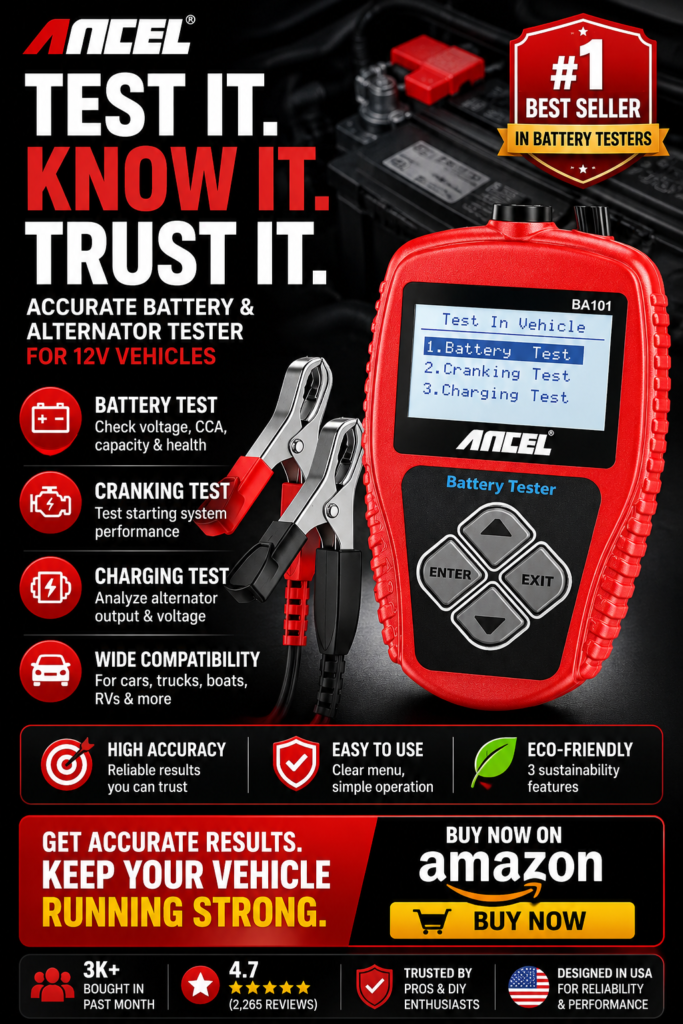
Battery tester. The fastest definitive answer. The ANCEL BA101 battery tester tells you in seconds whether your battery is good, needs charging, or needs replacement — eliminating the guesswork entirely. It also tests alternator output and starter draw, giving you a complete picture of the starting system in under two minutes.
Other Clicking Noises That Aren’t the Starter
Not all clicking noises happen at startup. Here are a few other clicking scenarios worth knowing about.
Clicking When Turning the Steering Wheel
A clicking or popping noise when turning — especially at low speeds or in parking lots — is almost always a CV axle joint. The constant velocity joints on front-wheel-drive vehicles wear over time and click when the axle is at full steering angle. The clicking gets worse over time and eventually the joint can fail completely. It’s worth having inspected if you hear it consistently when turning.
Clicking From the Engine at Idle
A ticking or clicking noise from the engine at idle — especially on cold startup that fades as the engine warms — is often related to valve train noise. Low oil, oil that’s broken down and lost viscosity, or hydraulic lifters that aren’t pumping up fully until oil pressure builds can all produce this noise. Check your oil level and condition first. Sea Foam Motor Treatment added to the crankcase helps dissolve sludge and restore oil flow to lifters that are ticking from restricted passages.
Clicking From the Wheels While Driving
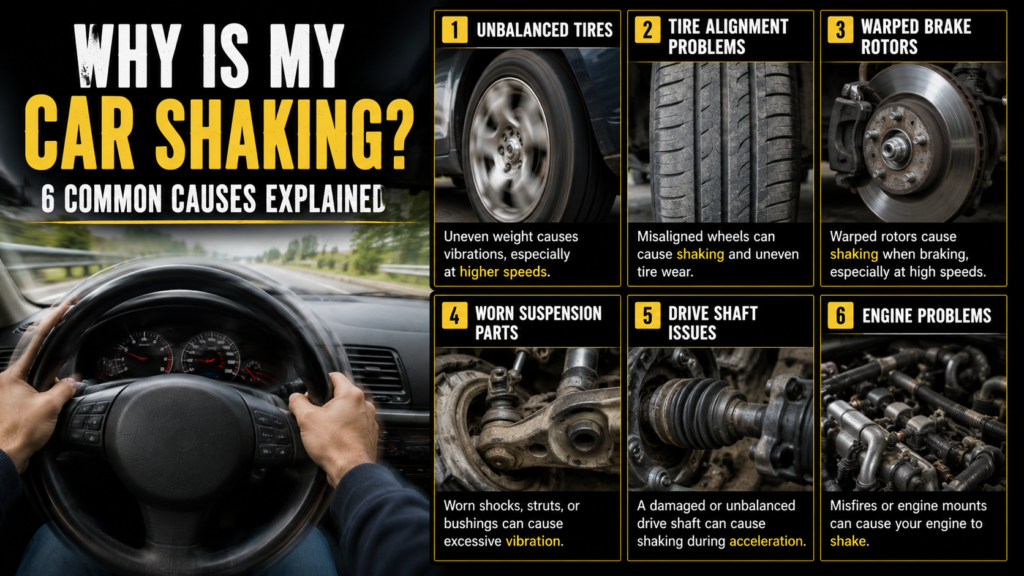
A rhythmic clicking that matches wheel speed — getting faster as you accelerate — often indicates a stone or debris lodged in the brake caliper or wheel area. It can also indicate a damaged wheel bearing in early stages, or a loose hubcap. If the clicking changes when you brake or turn, it’s worth getting the wheels inspected.
What to Do If Your Car Won’t Start at All
If you’re stuck somewhere with a car that won’t start, here’s the fastest path to getting moving.
Rapid clicking: Attempt a jump start. If you have a portable jump starter like the NOCO GB40, connect it and try to start. If you don’t, call for jump start assistance or flag down another driver. Once running, drive straight to an auto parts store — most will test your battery and alternator for free.
Single click: Check battery terminals for corrosion first — clean if needed and retry. Check that both battery cables are tight. If voltage tests good and connections are clean, the starter likely needs replacement. This usually requires a tow unless you can confirm the tap-the-starter trick gets you one more start.
No click at all: No sound whatsoever when you turn the key points to a completely dead battery, a blown fusible link, a failed ignition switch, or a failed neutral safety switch (which prevents starting in any gear other than park or neutral). Try moving the shifter firmly into park and retrying — sometimes the neutral safety switch doesn’t register park correctly.
Preventing This From Happening Again
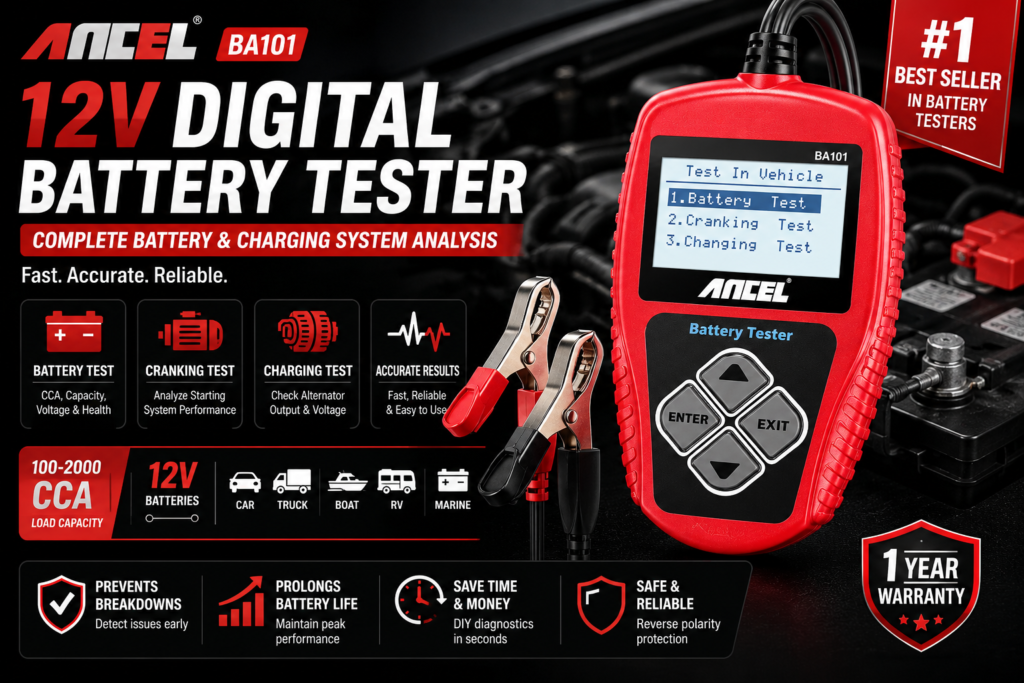
Most no-start situations are preventable with basic maintenance. Test your battery every fall before winter — cold temperatures reduce battery capacity significantly and a marginal battery that made it through summer often won’t survive January. The ANCEL BA101 battery tester does this in under two minutes and tells you definitively whether the battery needs replacement before it leaves you stranded.
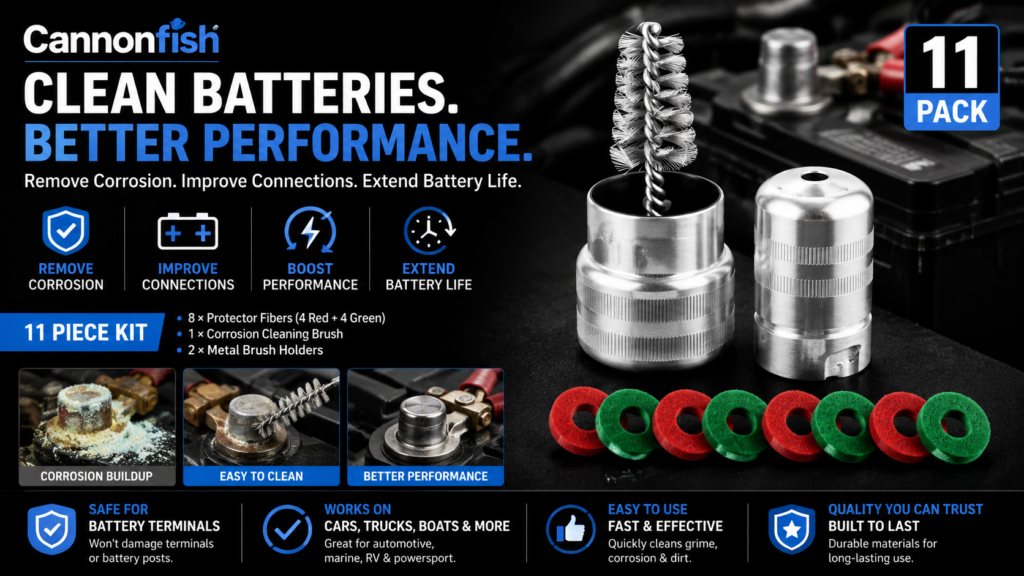
Keep battery terminals clean — corrosion is a silent killer of starting reliability. A battery terminal brush kit and five minutes twice a year keeps connections clean and current flowing freely.
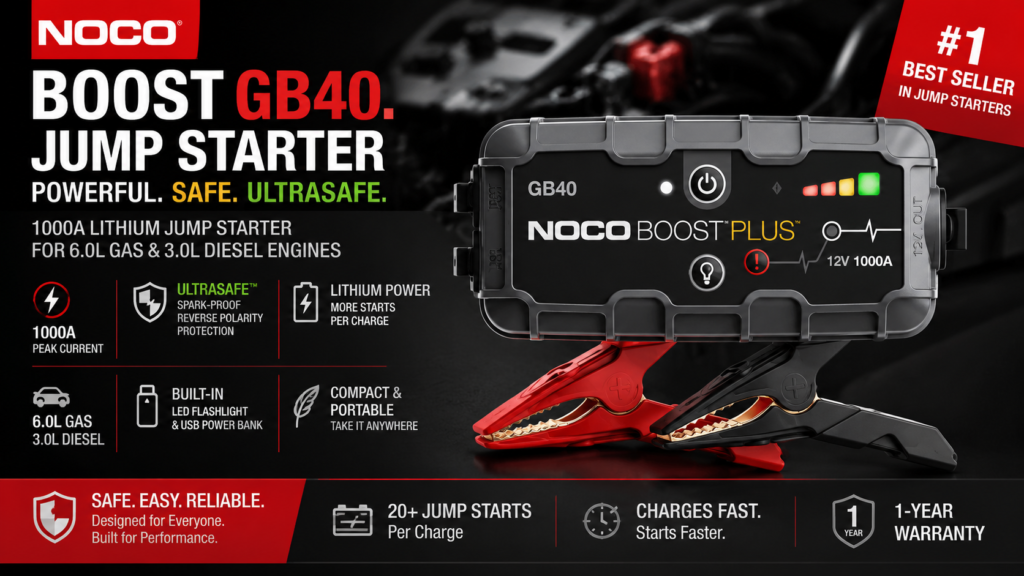
And keep a portable jump starter in your trunk. It weighs almost nothing, lives in a glove box, and turns a stranded situation into a five-minute inconvenience.
Frequently Asked Questions
My car clicks once and won’t start but the battery is new — what’s wrong?
A new battery rules out battery failure but not connection problems. Check that the terminals are tight and corrosion-free. A new battery with a loose or corroded terminal connection can produce exactly the same single click as a bad starter. If connections are clean and tight and the problem persists, the starter is the next component to test.
Can a bad alternator cause clicking when starting?
Indirectly yes. An alternator that’s undercharging sends the battery into each start attempt already partially depleted. Over time the battery never fully recharges and eventually doesn’t have enough charge to start the engine — producing the rapid clicking of a low battery. Test charging voltage with the engine running — 13.7–14.7 volts is correct. Below 13.5 volts suggests an undercharging alternator.
Why does my car click once and then start fine on the second try?
An intermittent single click that resolves on a second attempt often indicates a starter that’s developing a flat spot on the armature — a worn section that occasionally lands in the wrong position. The second attempt rotates it slightly and finds a good section. This gets worse over time — plan on starter replacement before it fails completely.
Is it safe to keep driving if my car clicks before starting but eventually starts?
No — an intermittent no-start is a reliable predictor of a complete no-start in the near future. The component that’s failing — battery, starter, or connection — is getting worse. Address it while you still have the option of driving to a shop rather than being towed from wherever it finally fails completely.
How much does a starter replacement cost?
Starters typically run $150–$350 for the part depending on the vehicle. Labor adds $100–$300 depending on how accessible the starter is — some are easy one-hour jobs, others require removing other components to reach. Total repair usually runs $250–$600 at a shop. On many vehicles it’s a straightforward DIY job with basic tools.
About the Author: Jake Merritt
Jake spent eight years as a service advisor at a regional auto dealership before going independent. He’s owned everything from a ’98 Civic with 240,000 miles to a diesel truck that taught him more than any training course. He started writing for WhyIsMyCar.com because he was tired of watching people get talked into repairs they didn’t need — or ignore problems that were genuinely serious. Jake lives in Tennessee with his wife, two kids, and a garage that’s never quite organized enough.