
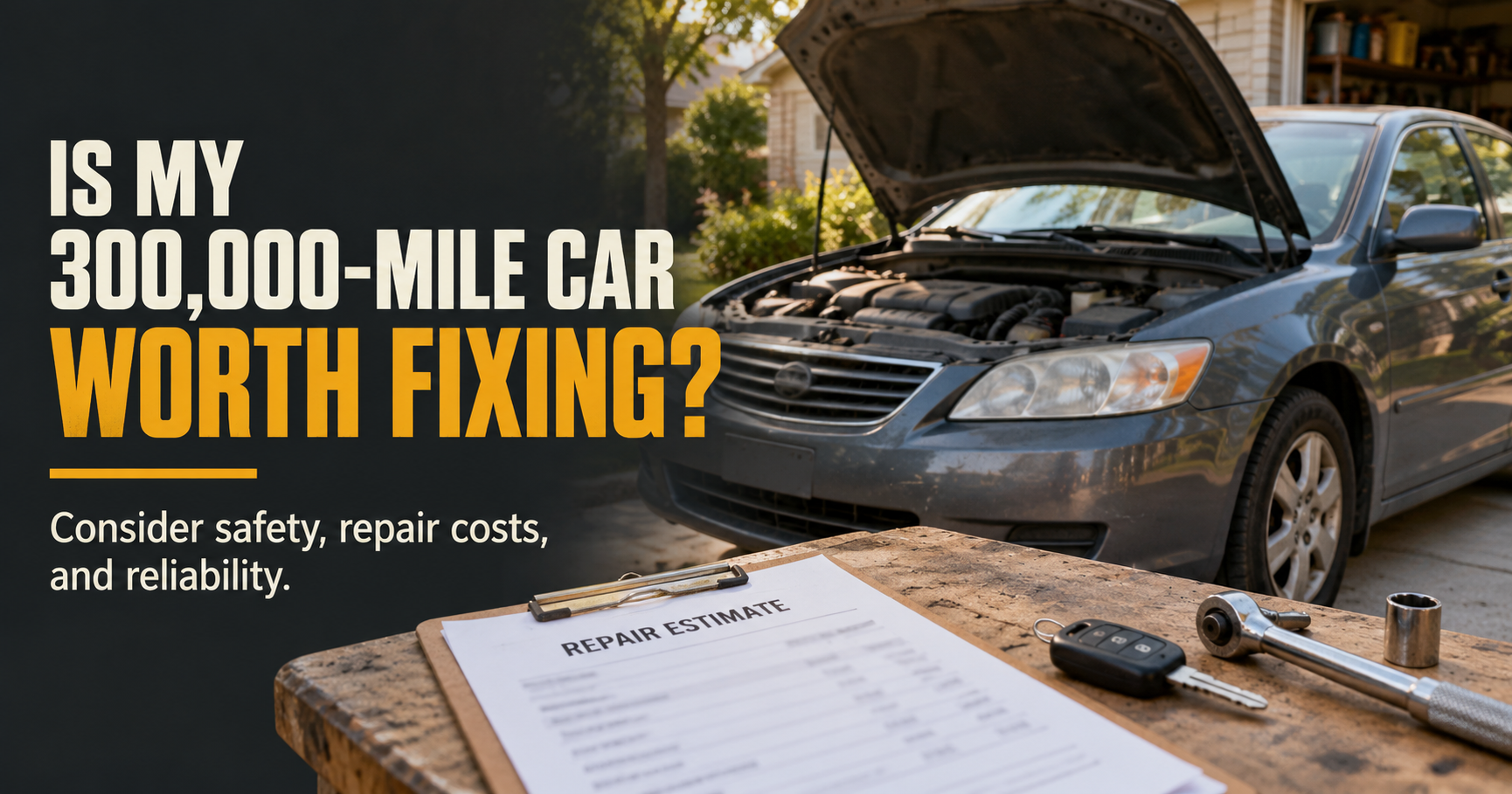
The mechanic gives you an estimate, and your first thought is, This car has 300,000 miles. Am I really going to spend that much on it?
I get why that number makes people hesitate. Our 2011 Hyundai Sonata recently crossed 300,000 miles, and we’ve had to make our own calls about what’s worth fixing. It still runs, but it hasn’t reached this point without worn parts and other headaches.
The answer isn’t hidden in the odometer. It depends on what broke, what condition the rest of the car is in, and what replacing it would actually cost you.

Start With the Repair, Not the Mileage
There’s a big difference between a car that needs one known repair and a car with several expensive problems waiting in line.
Before deciding, I’d ask the mechanic to walk me through the estimate in plain English. What needs attention right now? What can wait? Is this likely to solve the problem, or is the shop still trying to pin down the cause?
I’d also ask what they see elsewhere on the car. If the engine, transmission, frame, and other major systems look sound, one repair may be easier to justify. If the mechanic sees multiple costly problems developing, that changes the decision.
For an expensive or uncertain diagnosis, a second opinion can help. The FTC advises getting a written estimate and understanding the work before authorizing a repair.
A Safety Problem Isn’t One to Put Off
Some repairs can wait while you think things over. Others need an answer before you keep driving.
If the problem involves braking, steering, suspension, tires, or exhaust leaking into the cabin, I’d ask the shop whether the car is safe to drive as it sits. Get a direct answer instead of assuming you can nurse it along.
We’ve dealt with ball joints over the years on our Sonata. That’s the kind of work I take more seriously than a cosmetic annoyance. The car being worth little on paper wouldn’t make an unsafe part okay to ignore.

Compare the Repair Bill With Your Replacement Cost
It’s tempting to say, “The repair costs more than the car is worth, so I’m done.” But the car’s resale value isn’t the whole comparison.
If you replace it, what would you buy? How much would that vehicle cost after taxes and fees? Would you need a payment? Would it need tires or repairs soon after you bought it?
Say a repair costs $1,200 and you hope to get another year out of the car. That repair works out to $100 a month over those 12 months. It isn’t a promise the car will last that long, and it doesn’t include normal upkeep or another surprise repair. It’s simply a way to put the estimate beside the cost of another car.
Consumer Reports recommends looking at repair cost over the additional months you expect to keep a vehicle when weighing whether to fix or replace it.
What Our 300,000-Mile Sonata Has Taught Me
We bought our 2011 Sonata for about $5,500 with roughly 150,000 miles on it. About eight years later, the odometer passed 300,000. That’s a lot of use from a car we bought used.
It hasn’t been perfect. We’ve replaced ball joints over time, dealt with exhaust rust, and had a plastic panel underneath the engine come loose. The automatic light function stopped working properly, so we turn the lights on and off ourselves.
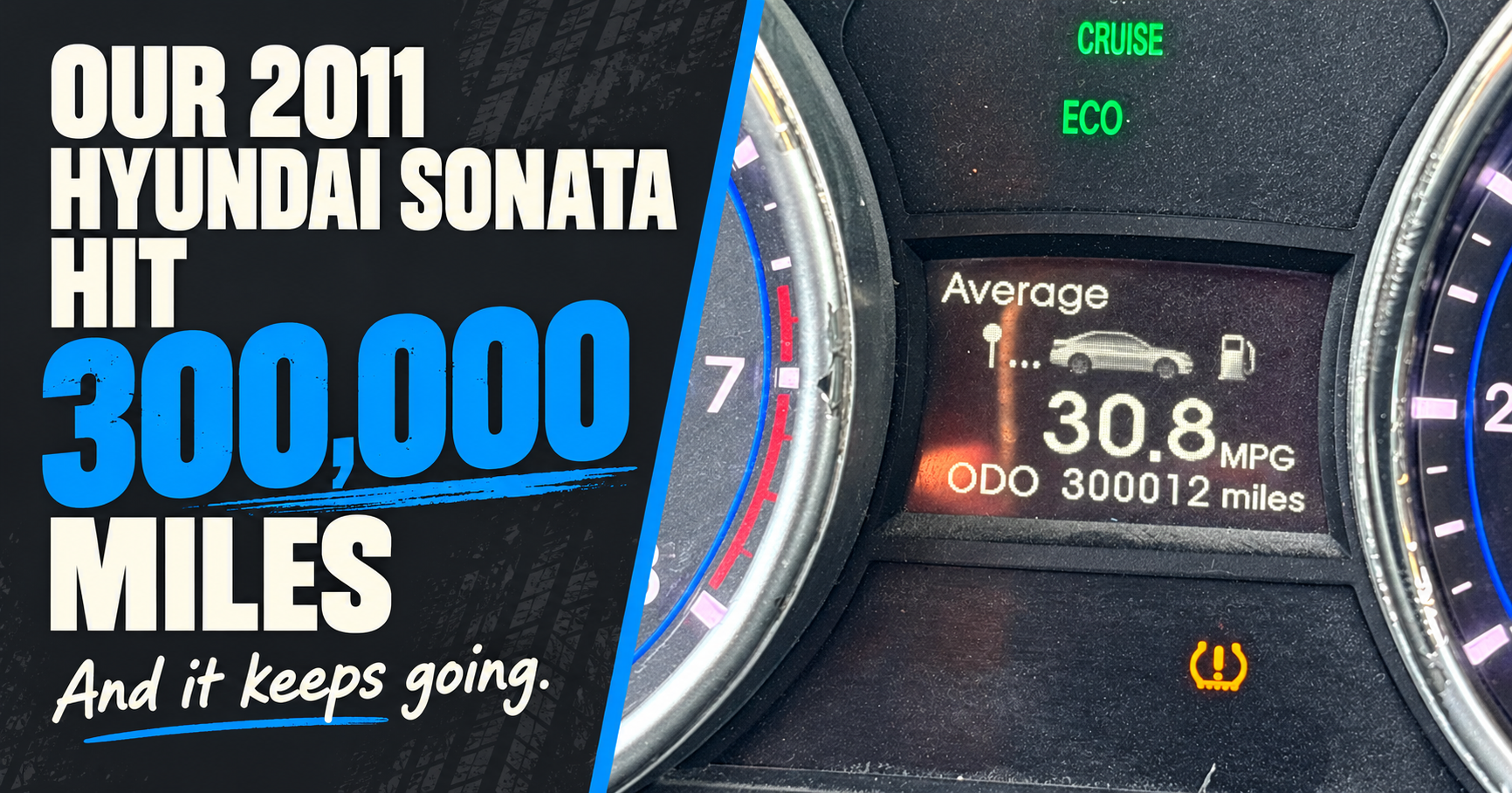
You can read the full story of how our Sonata made it to 300,000 miles if you want to see what ownership has actually looked like for us.
I don’t know how many more miles it has in it. That uncertainty is part of owning any very high-mileage car. But I also wouldn’t replace a running car solely because the odometer rolled over a big number.

Don’t Base Today’s Decision on What You Paid Years Ago
Our $5,500 purchase price helps explain why we feel good about the car. It doesn’t tell us whether the next repair is worth paying for.
That money has already been spent. The useful question now is: If we pay for this repair, are we likely to have safe, useful transportation at a cost that works for us?
I’d want to know what else the car needs before spending heavily. A modest repair on a car that otherwise runs well feels different from a major repair followed by a list of other urgent problems.
When I’d Lean Toward Fixing It
I’d be more comfortable repairing a 300,000-mile car when the shop can clearly identify the problem and the rest of the car checks out reasonably well.
I’d also consider how the car has treated me recently. Has it been dependable between normal repairs, or am I arranging my week around the possibility that it won’t start? Those experiences count, even though they don’t appear on the estimate.
A replacement used car brings uncertainty of its own. Before buying one, the FTC recommends getting a vehicle history report and an independent inspection. Even then, you’re learning a different car’s condition from scratch.

When I’d Start Looking for Another Car
I’d start planning to move on if a mechanic found serious structural rust, several major repairs due at once, or a problem that couldn’t be fixed well enough to make the car safe and dependable.
I’d also look at how much disruption the breakdowns cause. If you need the car every day and keep missing work or arranging rides, the cost goes beyond parts and labor.
For now, our Sonata still runs and serves its purpose. When the next repair comes, I’ll judge that repair on its own merits, ask what else the car needs, and compare the total with a realistic replacement. That seems more useful than deciding that 300,000 miles automatically means it’s done.
About the author: Morgan Ellis writes practical car ownership and troubleshooting guides for Why Is My Car. This article draws on the site owner’s documented experience with a 300,000-mile Sonata and explains how readers can discuss repair decisions with their own mechanic.


