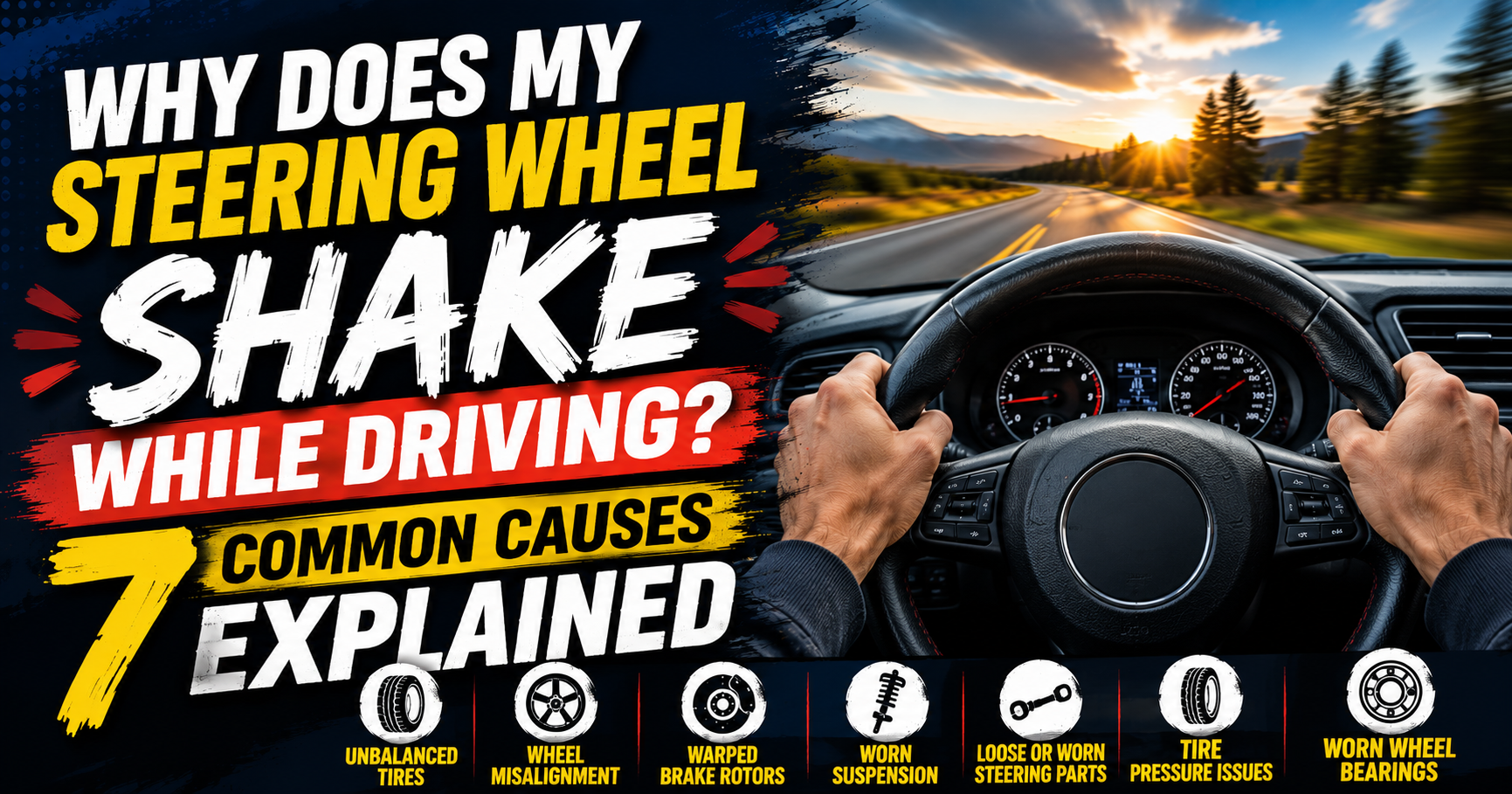
You’re driving down the highway when you notice something doesn’t feel quite right. The steering wheel starts vibrating in your hands. Maybe it’s a slight shake at first, or maybe it’s shaking enough that you instinctively tighten your grip.
A shaking steering wheel is one of those problems you should never ignore. Sometimes the cause is simple, like tires that need balancing. Other times, it can point to worn suspension parts, brake problems, or damaged wheels that need attention before they become a bigger safety issue.
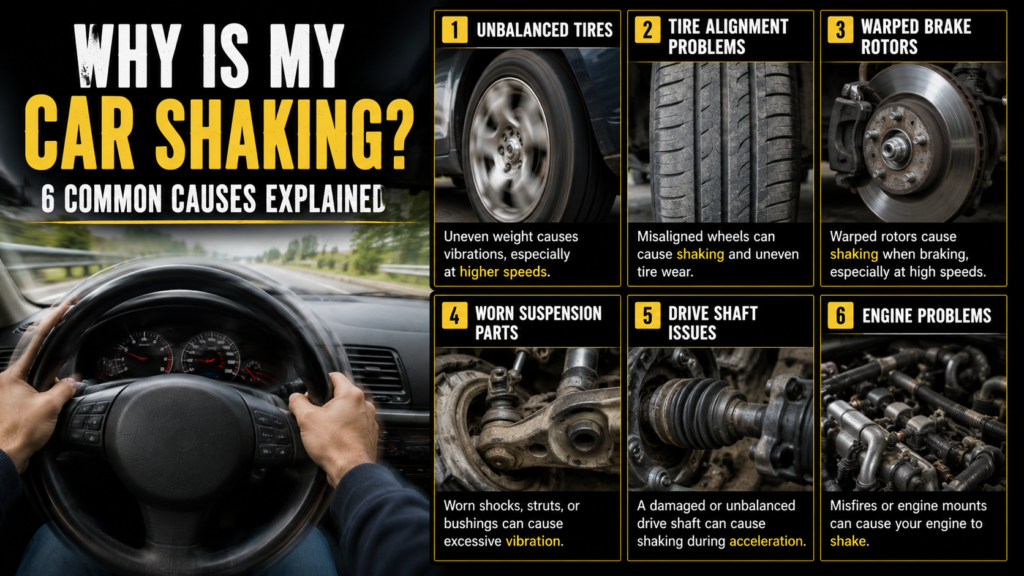
The good news is that the cause is often easier to narrow down than many people think. For symptoms beyond the steering wheel, Why Is My Car Shaking? 6 Common Causes Explained breaks down the most common causes by when the vibration occurs.
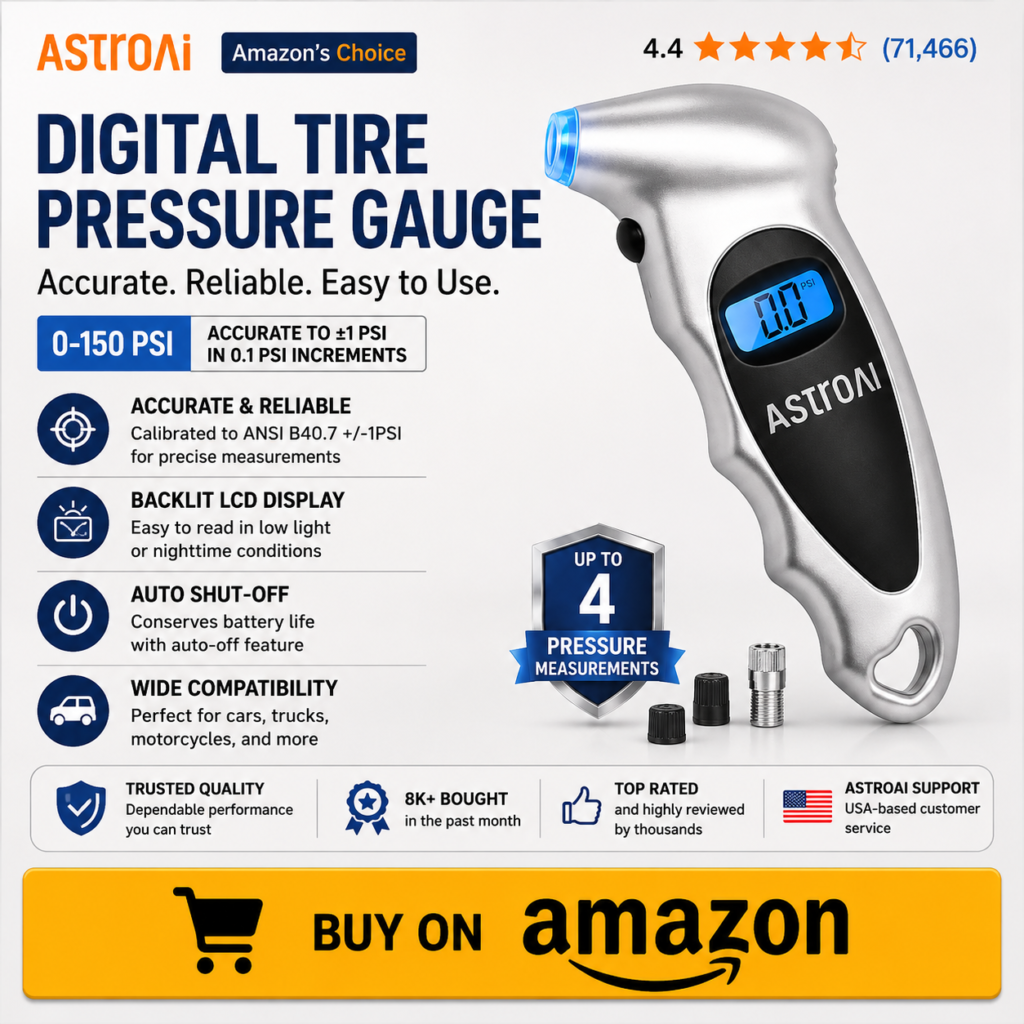
Before assuming the worst, start by checking your tire pressure. Tires that are significantly underinflated can contribute to poor handling and vibrations. I always keep a quality digital gauge in my glove box because it’s one of the quickest things to check. If you don’t already own one, you can see why I recommend the AstroAI Digital Tire Pressure Gauge here: https://amzn.to/3PkTs1P.
Why Is My Steering Wheel Shaking?
Your steering wheel is directly connected to your vehicle’s steering and suspension system.
If something isn’t rotating smoothly or one of the steering components develops excessive play, you’ll often feel it through the steering wheel before you notice anything else.
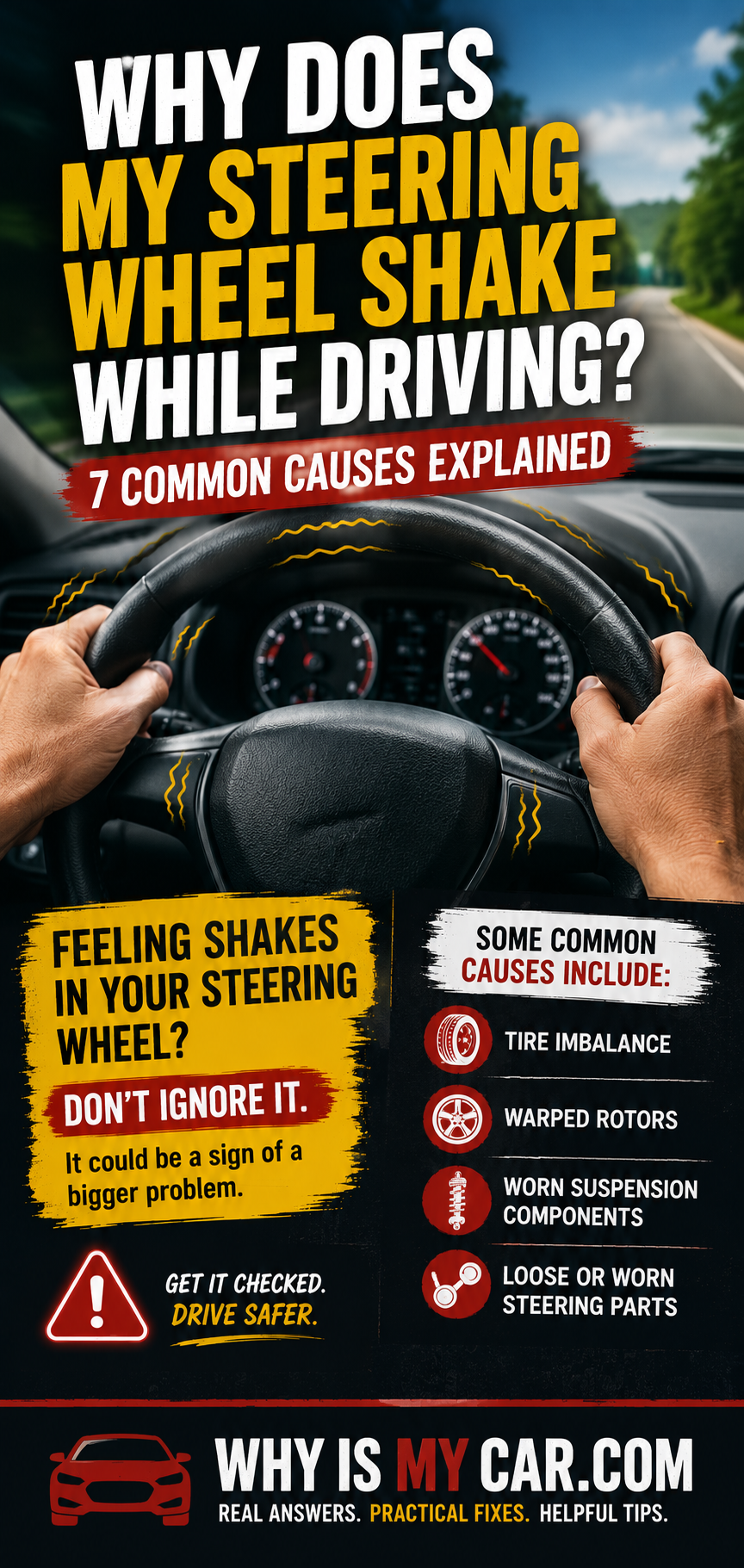
Pay close attention to when the shaking happens because that’s one of the biggest clues.
Ask yourself:
- Does it only happen at highway speeds?
- Does it happen while braking?
- Does it get worse while turning?
- Does it disappear at lower speeds?
- Is the shaking getting worse over time?
The answers help narrow down the possible causes.



1. Tires That Need to Be Balanced
This is probably the most common cause of a steering wheel that shakes while driving.
As tires wear, lose wheel weights, or receive minor damage, they can become unbalanced.
At lower speeds, you may not notice anything unusual.
Once you reach about 50 to 70 mph, however, the imbalance becomes much more noticeable, causing the steering wheel to vibrate.
Other signs include:
- The vibration gets worse as speed increases.
- The shaking is strongest on the highway.
- The vehicle otherwise drives normally.
- No warning lights are on.
Fortunately, balancing tires is usually one of the least expensive fixes.


2. Incorrect Tire Pressure
It’s surprising how often improper tire pressure causes handling complaints.
If one or more tires are significantly underinflated, they won’t roll the same way as the others.
Besides affecting fuel economy and tire wear, incorrect pressure can contribute to steering vibration and poor handling.
Check all four tires while they’re cold and inflate them to the pressure listed on the driver’s door sticker.
If you discover one tire keeps losing air, don’t ignore it. You may have a slow leak that needs repair.

If you need to add air at home or on the road, take a look at my review of this portable cordless tire inflator that makes topping off your tires quick and easy.
3. A Bent Wheel
Potholes, curbs, and road debris can bend an aluminum wheel without causing a flat tire.
Even a slight bend can create vibrations that become obvious as your speed increases.
In many cases, you’ll notice:
- The shaking begins after hitting a pothole.
- The vibration gets worse with speed.
- Tire pressure stays normal.
- The steering wheel feels smooth at lower speeds.
A tire shop can usually inspect the wheels and determine whether one has been bent.
4. Uneven Tire Wear
Not every vibration is caused by the wheel itself.
Tires that develop uneven tread wear, flat spots, or internal belt separation can also create noticeable steering wheel shake.
Run your hand across the tread.
If one tire feels rough, cupped, or has alternating high and low spots, uneven tire wear could be contributing to the vibration.
In some cases, replacing the damaged tire is the only permanent solution.
5. Wheel Alignment Problems
Although poor wheel alignment more commonly causes a vehicle to drift left or right, it can sometimes contribute to steering wheel vibration as well, especially when combined with worn tires.
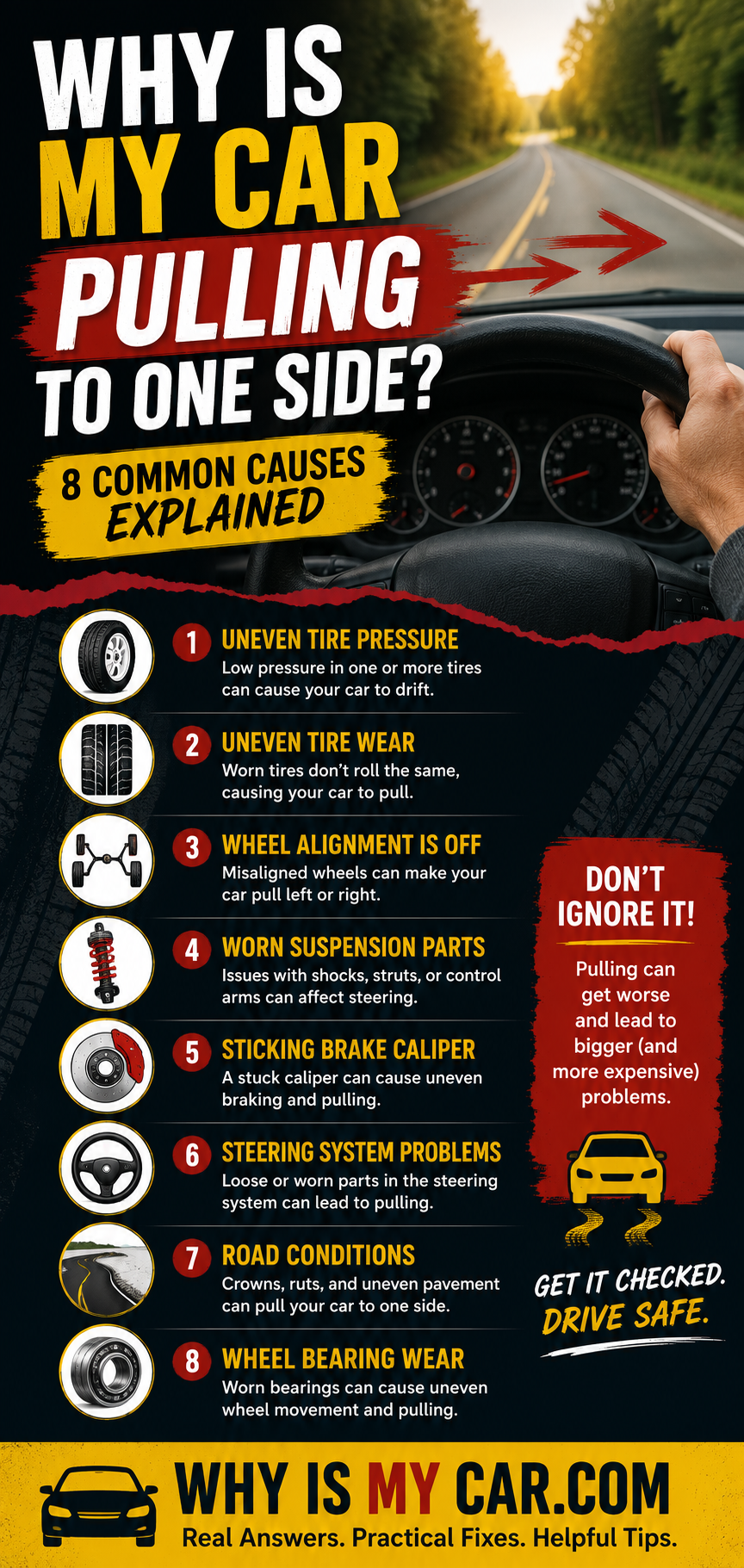
If your vehicle also seems to drift while driving straight, I recommend reading my guide explaining why a car pulls to one side and what usually causes it.
An alignment won’t fix every vibration problem, but it’s an important piece of the puzzle when diagnosing steering concerns.
6. Worn Steering or Suspension Components
If your tires and wheels check out, it’s time to look at the steering and suspension system.
Over time, components like tie rod ends, ball joints, control arm bushings, and wheel bearings wear out. As they develop looseness, they can allow the front wheels to move slightly when they shouldn’t, creating vibrations that travel directly into the steering wheel.
Besides the shaking, you may also notice:
- Clunking noises over bumps.
- Loose or wandering steering.
- Uneven tire wear.
- The steering wheel no longer returns to center smoothly.
- Your vehicle feels unstable on rough roads.
These parts are critical to safe steering, so they shouldn’t be ignored if they’re worn.
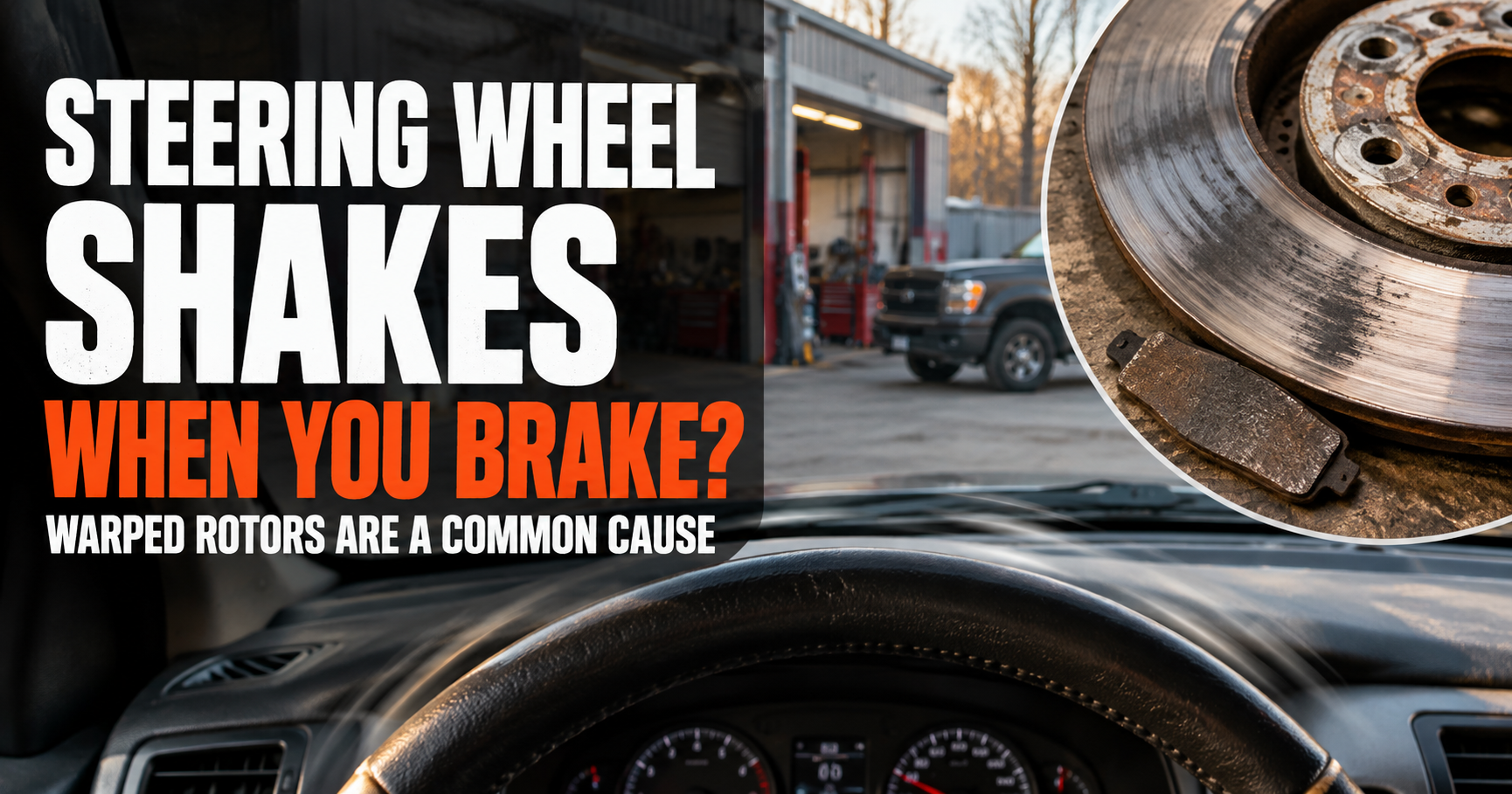
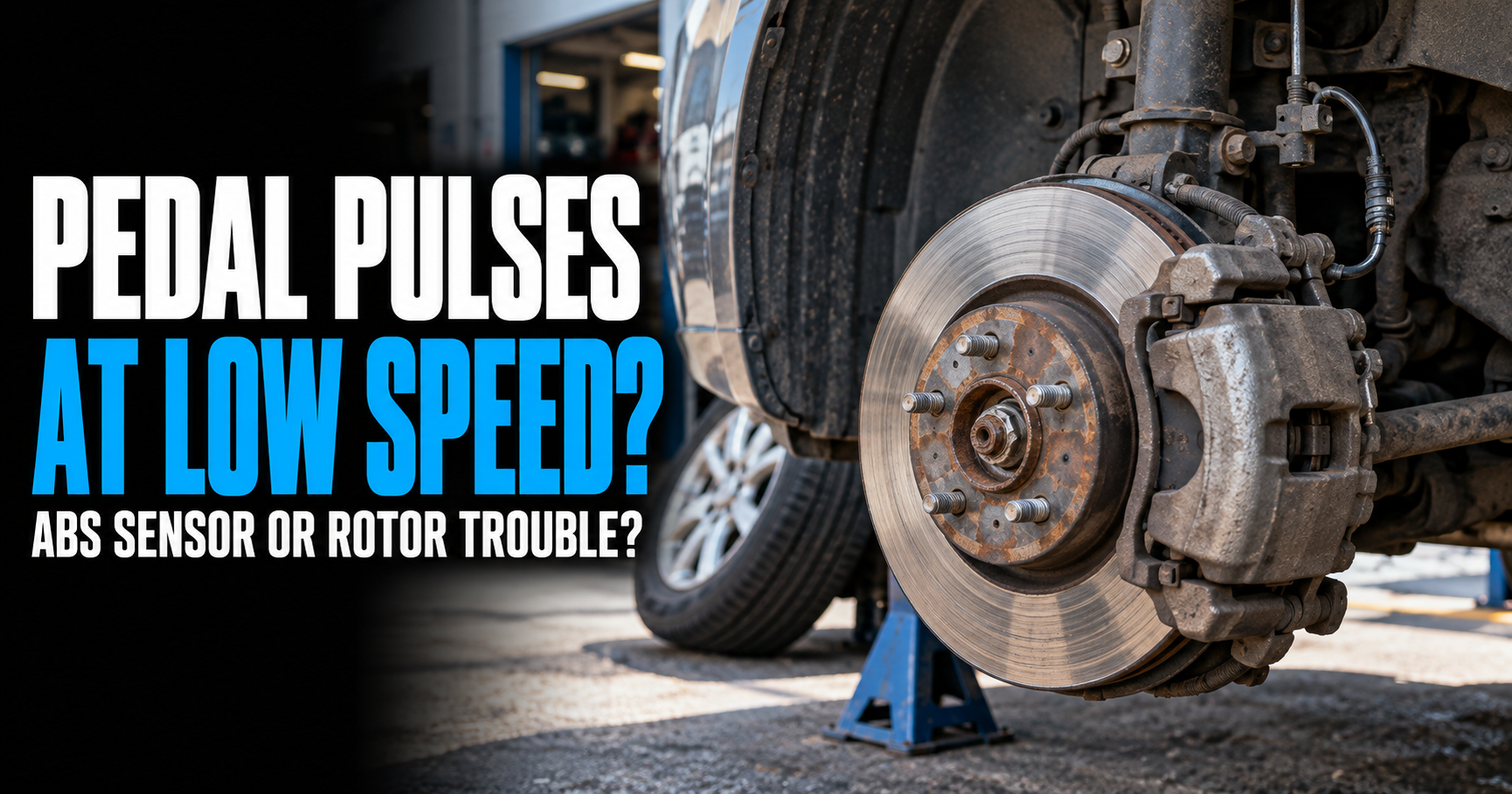
7. Brake Rotor Problems
If your steering wheel only shakes while you’re pressing the brake pedal, warped or uneven brake rotors are one of the first things I’d suspect.
As the brake pads squeeze against an uneven rotor, the braking force changes slightly with each rotation. That pulsing travels through the steering system and is felt in the steering wheel.
Common signs include:
- The steering wheel only shakes while braking.
- The brake pedal may pulse.
- The vibration becomes more noticeable during harder stops.
- You may hear squealing or grinding if the brake pads are also worn.
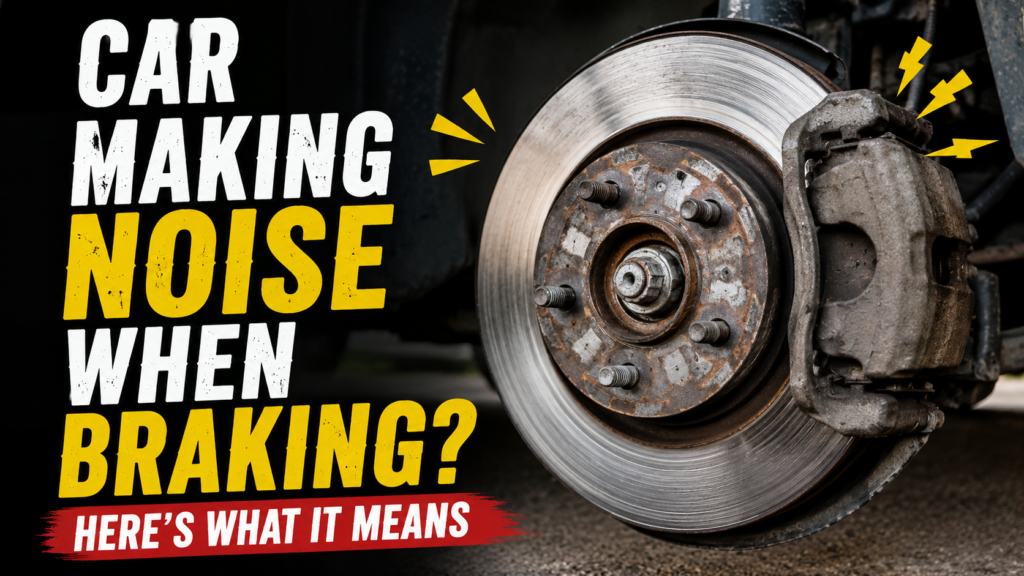
If you’ve started hearing noises when slowing down, my article explaining what different brake noises usually meancan help you narrow down the cause.
Could It Be Something Else?
Yes.
While the seven causes above are responsible for most steering wheel vibrations, there are a few other possibilities worth mentioning.
Less common causes include:
- Loose lug nuts.
- Damaged CV axles.
- Worn engine or transmission mounts.
- Steering rack problems.
- Poorly installed aftermarket wheels.
These issues are less common than tire or suspension problems, but they’re still worth checking if the obvious causes have been ruled out.
Is It Safe to Drive With a Shaking Steering Wheel?
That depends on what’s causing the vibration.
If the steering wheel has a slight vibration caused by tires that simply need balancing, driving a short distance to a repair shop is usually reasonable.
However, if the shaking is severe, suddenly appeared, or is accompanied by steering problems, unusual noises, or braking issues, I wouldn’t continue driving any farther than necessary.
Steering and suspension problems tend to get worse over time, not better.
If your steering wheel is vibrating enough that it affects your ability to control the vehicle, have it inspected before continuing to drive.


How to Diagnose the Problem Yourself
Before scheduling an appointment, there are a few simple things you can check at home.
Start by measuring the air pressure in all four tires. A a tire pressure gauge makes that first pressure check easier to perform accurately.
Next, walk around the vehicle and inspect each tire for uneven tread wear, bulges, cuts, or anything embedded in the tread.
If everything looks normal, think about when the vibration occurs.
Does it happen:
- Only above 60 mph?
- Only while braking?
- Only while turning?
- At every speed?
Those observations provide valuable clues and can save both time and money during diagnosis.
When You Should Have It Inspected
Sometimes the cause is obvious.
Other times, it takes a professional inspection to pinpoint the problem.
I recommend having the vehicle checked if:
- The vibration is getting worse.
- The steering feels loose.
- The vehicle pulls left or right.
- You hear clunking or grinding noises.
- The brake pedal pulses.
- Tire wear suddenly becomes uneven.
Waiting too long can allow a relatively inexpensive repair to turn into a much larger one.
Fortunately, many steering wheel vibration problems are caught early and repaired before they become serious.

Keeping a few basic tools in your garage also makes diagnosing these issues much easier. Besides a good tire pressure gauge, I always recommend having a portable tire inflator for topping off low tires at home and a quality torque wrench for properly tightening lug nuts after rotating or replacing a tire. They’re two inexpensive tools that every car owner will eventually use.
6. Worn Steering or Suspension Components
If your tires and wheels check out, it’s time to look at the steering and suspension system.
Over time, components like tie rod ends, ball joints, control arm bushings, and wheel bearings wear out. As they develop looseness, they can allow the front wheels to move slightly when they shouldn’t, creating vibrations that travel directly into the steering wheel.
Besides the shaking, you may also notice:
- Clunking noises over bumps.
- Loose or wandering steering.
- Uneven tire wear.
- The steering wheel no longer returns to center smoothly.
- Your vehicle feels unstable on rough roads.
These parts are critical to safe steering, so they shouldn’t be ignored if they’re worn.
7. Brake Rotor Problems
If your steering wheel only shakes while you’re pressing the brake pedal, warped or uneven brake rotors are one of the first things I’d suspect.
As the brake pads squeeze against an uneven rotor, the braking force changes slightly with each rotation. That pulsing travels through the steering system and is felt in the steering wheel.
Common signs include:
- The steering wheel only shakes while braking.
- The brake pedal may pulse.
- The vibration becomes more noticeable during harder stops.
- You may hear squealing or grinding if the brake pads are also worn.
If you’ve started hearing noises when slowing down, my article explaining what different brake noises usually meancan help you narrow down the cause.
Could It Be Something Else?
Yes.
While the seven causes above are responsible for most steering wheel vibrations, there are a few other possibilities worth mentioning.
Less common causes include:
- Loose lug nuts.
- Damaged CV axles.
- Worn engine or transmission mounts.
- Steering rack problems.
- Poorly installed aftermarket wheels.
These issues are less common than tire or suspension problems, but they’re still worth checking if the obvious causes have been ruled out.
Is It Safe to Drive With a Shaking Steering Wheel?
That depends on what’s causing the vibration.
If the steering wheel has a slight vibration caused by tires that simply need balancing, driving a short distance to a repair shop is usually reasonable.
However, if the shaking is severe, suddenly appeared, or is accompanied by steering problems, unusual noises, or braking issues, I wouldn’t continue driving any farther than necessary.
Steering and suspension problems tend to get worse over time, not better.
If your steering wheel is vibrating enough that it affects your ability to control the vehicle, have it inspected before continuing to drive.
How to Diagnose the Problem Yourself
Before scheduling an appointment, there are a few simple things you can check at home.
Start by measuring the air pressure in all four tires.
Next, walk around the vehicle and inspect each tire for uneven tread wear, bulges, cuts, or anything embedded in the tread.
If everything looks normal, think about when the vibration occurs.
Does it happen:
- Only above 60 mph?
- Only while braking?
- Only while turning?
- At every speed?
Those observations provide valuable clues and can save both time and money during diagnosis.
When You Should Have It Inspected
Sometimes the cause is obvious.
Other times, it takes a professional inspection to pinpoint the problem.
I recommend having the vehicle checked if:
- The vibration is getting worse.
- The steering feels loose.
- The vehicle pulls left or right.
- You hear clunking or grinding noises.
- The brake pedal pulses.
- Tire wear suddenly becomes uneven.
Waiting too long can allow a relatively inexpensive repair to turn into a much larger one.
Fortunately, many steering wheel vibration problems are caught early and repaired before they become serious.
Keeping a few basic tools in your garage also makes diagnosing these issues much easier. Besides a good tire pressure gauge, I always recommend having a portable tire inflator for topping off low tires at home and a quality torque wrench for properly tightening lug nuts after rotating or replacing a tire. They’re two inexpensive tools that every car owner will eventually use.