
Finding a fresh rock chip in your windshield is frustrating. One second you’re driving down the highway, and the next you hear that unmistakable pop as a small rock strikes the glass. At first, it may look like nothing more than a tiny white dot, but don’t let its size fool you. That little chip can quickly grow into a crack stretching across your windshield, leaving you with a repair bill that could cost several hundred dollars.
The good news is that many small windshield chips can be repaired at home if you act quickly. The key is fixing the damage before dirt, moisture, temperature changes, and road vibrations have a chance to make things worse.
If the damage is still small, I recommend taking care of it right away instead of waiting to see what happens.
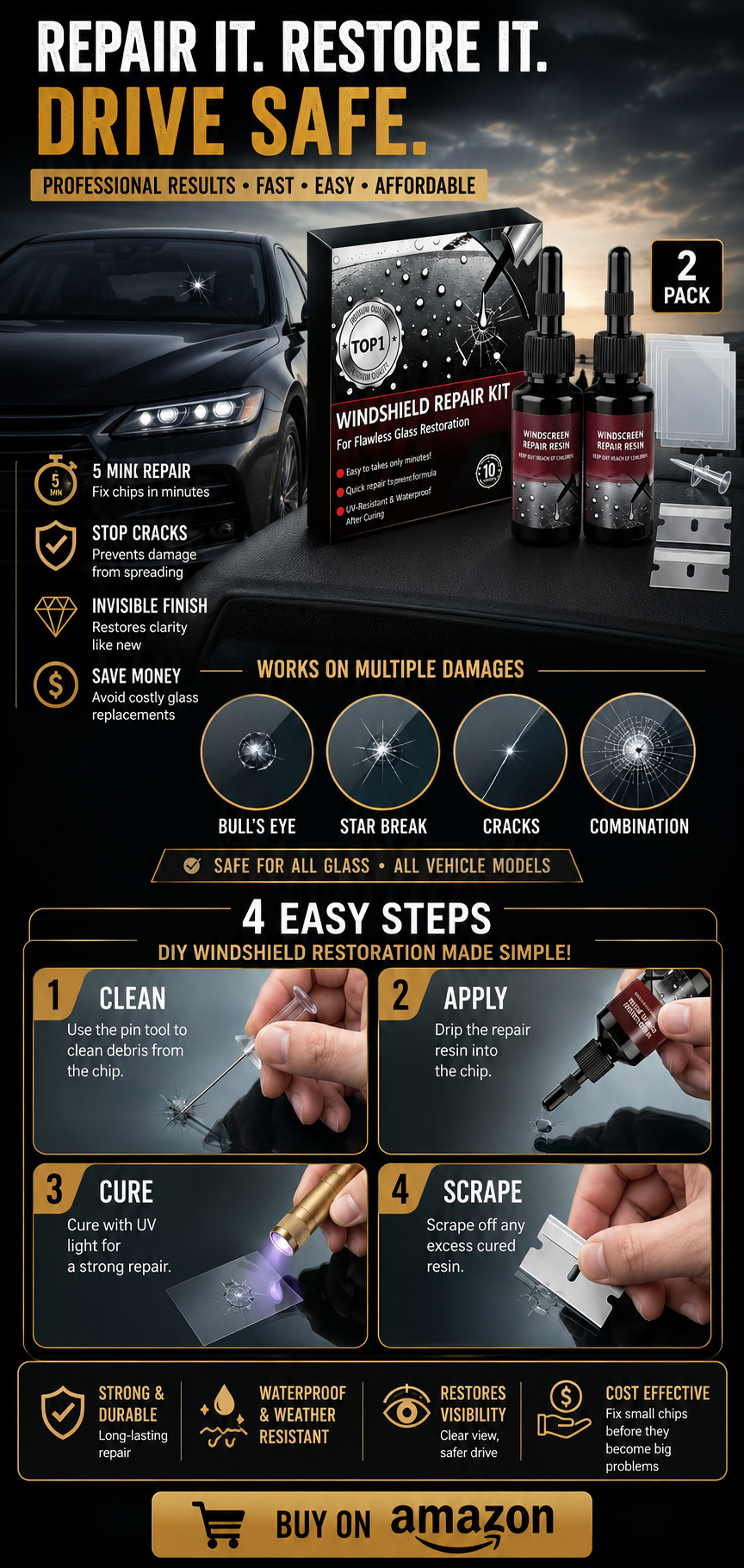
This 2-Pack Nano Windshield Repair Kit is an inexpensive option that only takes a few minutes to use, and repairing a chip early is almost always cheaper than replacing an entire windshield. You can check today’s price here: https://amzn.to/4eWtlXC.
Why You Should Never Ignore a Small Rock Chip
One of the biggest mistakes people make is assuming a tiny chip isn’t urgent.

Modern windshields are made from two layers of glass with a layer of laminated plastic between them. While this design makes the windshield much safer during an accident, it also means that damage in the outer layer is constantly under stress. That laminated construction matters during an emergency, so this emergency glass-breaking guidance explains why escape tools are intended for side or rear windows instead.
Every time you:
- Hit a pothole
- Close your car door
- Drive over railroad tracks
- Park in the hot sun
- Start your car on a freezing morning
- Turn on the defroster
…the glass expands, contracts, and flexes ever so slightly.
That repeated stress is often enough to turn a repairable chip into a crack that can no longer be fixed.
I’ve seen people ignore a chip for weeks because it looked harmless, only to wake up one cold morning and find a crack running halfway across the windshield. At that point, a simple repair kit usually isn’t an option anymore.
What Causes Windshield Chips?
Most windshield chips happen because of flying road debris.
Common causes include:
- Gravel thrown from dump trucks.
- Loose rocks from construction zones.
- Highway debris.
- Small stones kicked up by other vehicles.
- Hail.
- Tree branches.
- Ice chunks falling from other vehicles during winter.
Unfortunately, even if you drive carefully, there’s no way to completely avoid road hazards.
The best thing you can do is repair damage while it’s still small.


Can Every Windshield Chip Be Repaired?
No.
The size, depth, location, and type of damage all determine whether a repair is likely to be successful.
Generally speaking, DIY windshield repair works best when:
- The chip is smaller than a quarter.
- The crack is less than a few inches long.
- The damage isn’t directly on the edge of the windshield.
- The inner layer of glass hasn’t been damaged.
- The chip is clean and hasn’t filled with dirt or water.

If your windshield has a long crack stretching across the glass, a repair kit probably won’t solve the problem.
Likewise, if the damage is directly in the driver’s line of sight, replacement is often the safer option because even a successful repair can leave behind slight distortion.
How Does a Windshield Repair Kit Actually Work?
Many people assume these kits simply cover the damage with clear glue.
That’s not how they work.
Instead, the repair process uses a specially formulated resin that flows deep into the damaged area. Once cured, the resin bonds with the damaged glass, helping restore strength while reducing the appearance of the chip.
No repair kit can make every chip completely invisible, especially if the damage is older or contaminated with dirt. The real goal is preventing that chip from spreading into a crack that requires replacing the entire windshield.
That’s why timing matters so much.

Signs You Should Repair the Chip Immediately
If you notice any of these, don’t wait:
- The chip happened within the last day or two.
- The weather forecast calls for freezing temperatures.
- A heat wave is coming.
- The chip has tiny cracks starting to spread outward.
- You’re planning a long road trip.
- You drive rough gravel roads regularly.
The longer the damage sits, the less likely you’ll get a clean repair.
How to Fix a Rock Chip in Your Windshield
Repairing a windshield chip is much easier than most people expect.
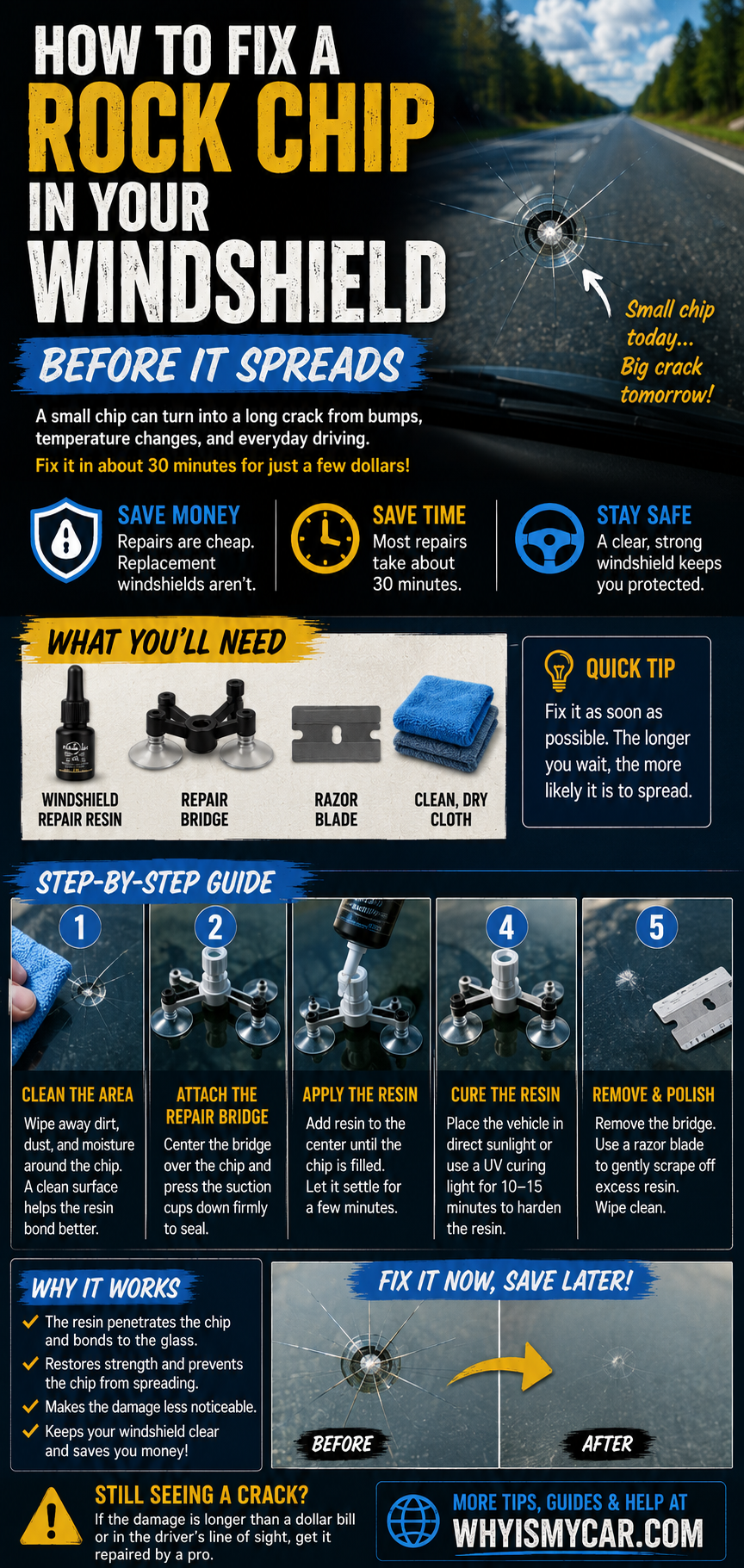
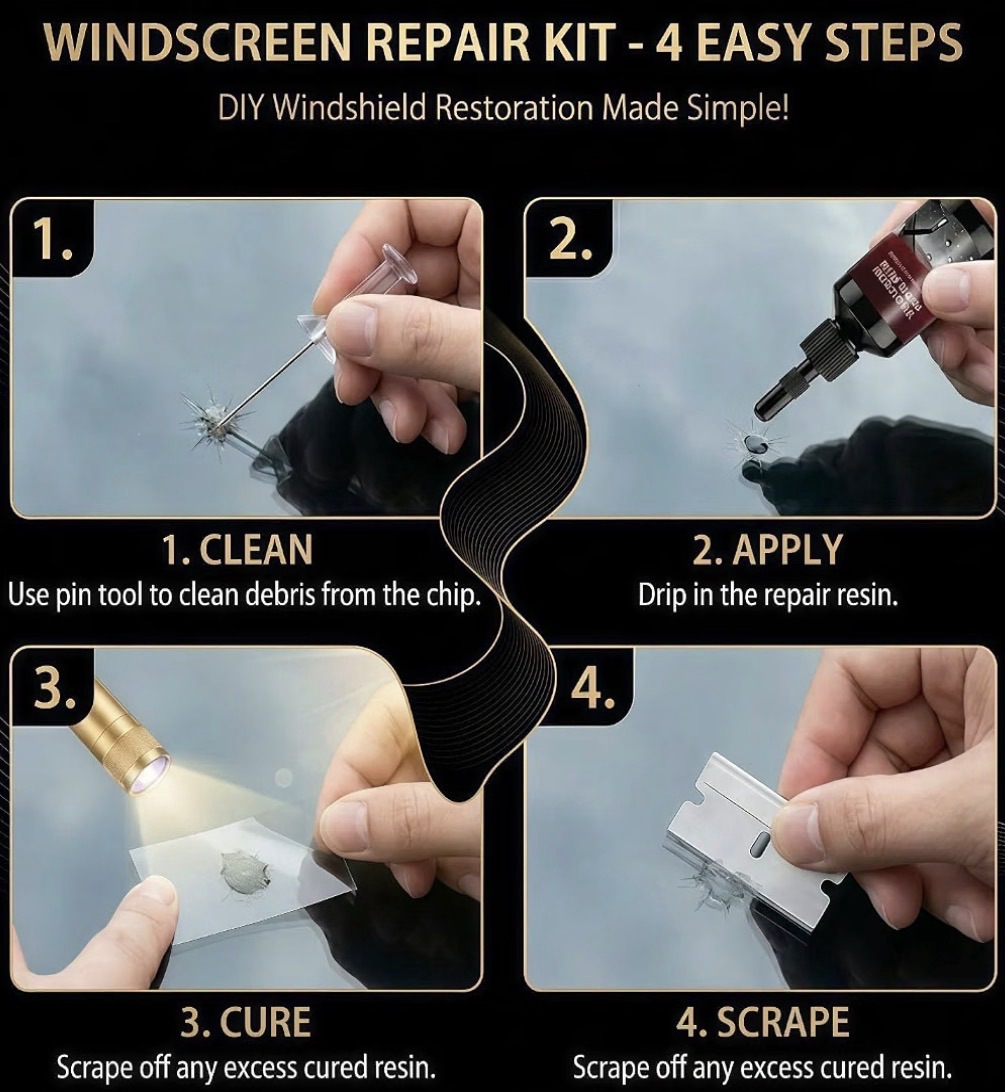
Clean the Area
Before doing anything else, make sure the damaged area is dry and free from loose dirt.
Avoid scrubbing aggressively because you don’t want to force debris deeper into the chip.
Position the Repair Tool
Follow the kit’s instructions carefully to center the repair tool directly over the damaged area.
Taking an extra minute here usually leads to better results.
Apply the Repair Resin
Slowly inject the repair resin into the chip.
The resin needs time to flow into the tiny cracks that formed during the impact.
Don’t rush this step.
Allow the Resin to Cure
Most repair kits use sunlight or a curing strip to harden the resin.
Once fully cured, carefully scrape away any excess material with the included razor blade.
After the repair, you’ll usually notice that the chip is much less visible than before while also being much less likely to spread.
Should You Repair It Yourself or Pay a Glass Shop?
That depends on the damage.
For small, fresh rock chips, repairing the windshield yourself is often a smart choice. It costs far less than replacing the entire windshield and usually takes less than 30 minutes from start to finish.

However, if the crack has already grown several inches, reaches the edge of the windshield, or interferes with your view while driving, professional replacement is usually the better investment. If replacement cannot happen immediately, driving with a cracked windshield explains which types of damage may allow short-term driving and which require immediate attention.
One thing I’ve learned over the years is that waiting almost never saves money. Small chips usually become expensive cracks, not the other way around.
If your windshield was just chipped today, this is exactly the type of repair the 2-Pack Nano Windshield Repair Kit was designed for. You can see the current price and read customer feedback here: https://amzn.to/4eWtlXC.

Keeping your windshield in good condition is only part of staying safe on the road. If your headlights have become cloudy over time, you’ll be surprised how much brighter they can become after using a quality restoration kit. I covered the entire process in my guide to restoring oxidized headlights with the CERAKOTE kit. Better visibility through the windshield doesn’t help much if your headlights can’t properly illuminate the road ahead.
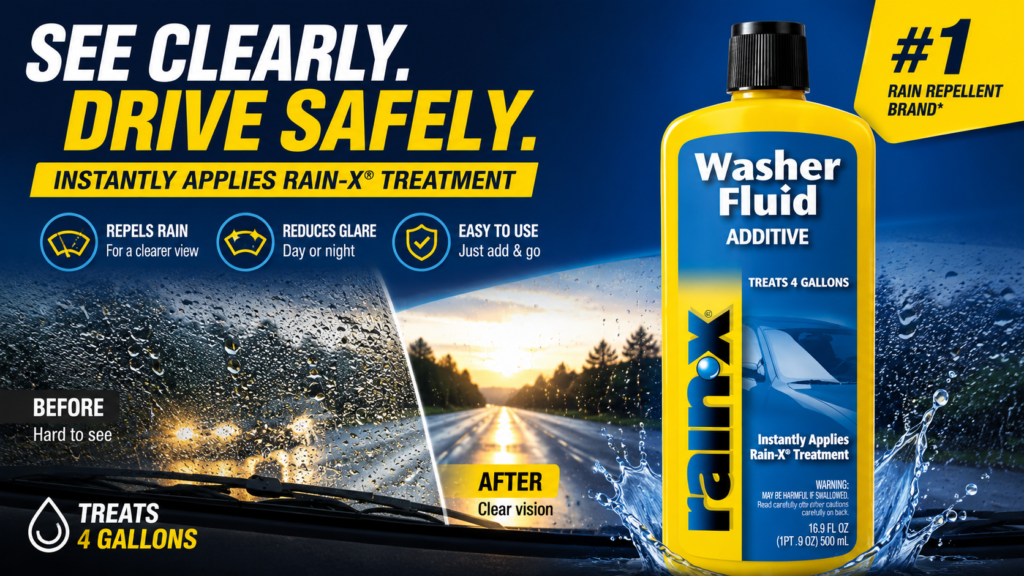
Likewise, after repairing the glass, I always recommend improving wet-weather visibility by adding a quality washer fluid treatment. You can learn why it’s one of my favorite inexpensive upgrades in this Rain-X washer fluid additive review.
Mistakes That Can Ruin a Windshield Chip Repair
Even the best windshield repair kit can’t overcome a few common mistakes. If you want the repair to last, it’s worth taking a little extra time to avoid these problems.
Waiting Too Long
Time is your biggest enemy.
As you continue driving, tiny particles of dirt, road dust, and moisture can work their way into the damaged glass. Once contaminants get inside the chip, the repair resin may not bond as well, making the finished repair more noticeable and less effective.
If you notice a fresh rock chip, try to repair it as soon as you reasonably can.
Repairing the Glass in the Rain
Water trapped inside the damaged area can interfere with the repair resin.
If your windshield is wet, dry it thoroughly before attempting the repair. It’s also best to avoid making repairs during heavy rain or when the windshield is covered with condensation.
Ignoring the Instructions
Most windshield repair kits follow the same basic process, but every manufacturer has slightly different directions.
Take a few minutes to read through the instructions before you begin. Rushing through the repair can leave air bubbles inside the resin or prevent it from completely filling the damaged area.
Expecting the Chip to Completely Disappear
This is probably the biggest misconception people have.
A successful windshield repair doesn’t always make the damage invisible.
Instead, the goal is to stabilize the damaged glass so the chip is far less likely to spread into a larger crack. In many cases, you’ll still be able to find the repaired area if you know exactly where to look.
How Much Does It Cost to Repair a Windshield Chip?
The cost depends on whether you repair it yourself or hire a professional.
A DIY repair kit is usually the least expensive option and can often repair multiple chips before you need another kit.
Professional chip repairs typically cost much more but are still far less expensive than replacing an entire windshield.
Once the damage turns into a long crack, however, replacement often becomes the only practical solution. Depending on your vehicle, that can easily cost several hundred dollars or even more if your windshield includes cameras, rain sensors, or advanced driver assistance systems.
That’s why fixing a small chip early is usually the most affordable choice.
Does Auto Insurance Cover Windshield Chip Repair?
Many comprehensive insurance policies include some level of glass coverage.
Depending on your policy and where you live, your insurance company may pay for chip repairs or even waive the deductible for minor windshield repairs because fixing a chip costs them much less than replacing the entire windshield later.
Before paying out of pocket for a replacement, it’s worth checking with your insurance company to see what your policy covers.
Even if you have coverage, many people still choose to repair a small chip themselves simply because it’s quick, inexpensive, and doesn’t require scheduling an appointment.
Can Heat and Cold Really Make a Chip Spread?
Absolutely.
Glass naturally expands when it gets hot and contracts when it gets cold.
A damaged windshield is already under stress, so rapid temperature changes can put even more pressure on the weakened area.
Some of the most common situations that cause chips to spread include:
- Turning the defroster on full blast during freezing weather.
- Parking in direct summer sunlight.
- Washing a hot windshield with cold water.
- Driving from a warm garage into freezing temperatures.
- Leaving your vehicle outside during overnight freezes.
While you can’t control the weather, repairing the damage before extreme temperatures arrive gives you the best chance of preventing a crack.
How to Help Prevent Future Windshield Chips
Unfortunately, there isn’t a way to completely prevent rock chips.
However, a few simple habits can reduce your chances of getting one.
Try to leave extra space behind dump trucks, gravel trucks, and construction vehicles whenever possible. Those vehicles are responsible for many windshield chips because loose rocks can bounce out from underneath their tires.
If you’re driving through an active construction zone or on freshly chipped roads, reducing your speed can also help lower the impact from flying debris.
Finally, don’t ignore a tiny chip if one does happen. A repair that takes just a few minutes today could save you from replacing the entire windshield later.
Questions People Often Ask
Can I drive immediately after repairing a windshield chip?
Most repair kits recommend allowing the resin enough time to cure before exposing the windshield to heavy rain or washing the vehicle.
Following the curing time listed in the instructions will give you the best results.
Will a repaired windshield crack again?
A properly repaired chip is much less likely to spread than an untreated one, but no repair can guarantee the glass will never crack again. A second rock strike or another major impact can still damage the windshield.
Can I repair an old windshield chip?
Sometimes.
Older chips that have filled with dirt or moisture are generally harder to repair than fresh damage. That’s another reason it’s best to fix the chip as soon as you notice it.
Is it worth keeping a windshield repair kit in the garage?
I think so.
Just like keeping jumper cables or a portable tire inflator handy, having a windshield repair kit ready means you can deal with the problem immediately instead of waiting days to order one after the damage occurs.

Speaking of emergency gear, I also recommend keeping a fully stocked roadside emergency kit in your vehicle. You never know when you’ll need basic supplies after an unexpected roadside incident.

Another smart addition is a portable tire inflator that you can keep in your trunk. Flat tires and windshield damage often seem to happen at the worst possible times, so being prepared can make a stressful situation much easier to handle.
Is a DIY Windshield Repair Worth It?
For many drivers, I think the answer is yes.
If the damage is fresh, relatively small, and hasn’t spread into a long crack, a quality repair kit can save both time and money. Instead of scheduling an appointment, dropping your vehicle off, and paying for a professional repair, you can often take care of the problem in your own garage or driveway.
Of course, every windshield chip is different. Some impacts are simply too severe to repair, and safety should always come first. If the damage blocks your vision while driving or extends to the edge of the windshield, replacing the glass is usually the better choice.
For the average stone chip that just happened on the highway, though, acting quickly gives you the best chance of stopping the damage before it grows.
If your windshield was recently hit by a rock, you can see the current price of the 2-Pack Nano Windshield Repair Kit here: https://amzn.to/4eWtlXC.
A Few Final Tips Before You Start
Before opening the repair kit, remember these simple tips:
- Repair the chip as soon as possible.
- Make sure the damaged area is completely dry.
- Read the instructions before applying the resin.
- Don’t expect the repair to make the chip completely invisible.
- Give the resin enough time to cure before washing your vehicle.
Taking your time usually leads to a better repair than trying to rush through the process.
Frequently Asked Questions
Can a windshield chip turn into a crack overnight?
Yes.
I’ve seen small chips spread overnight after temperatures dropped below freezing. The expansion and contraction of the glass can put enough stress on the damaged area to create a crack by the next morning.
What’s the largest windshield chip you can repair?
It depends on the type of damage and the repair kit you’re using, but most DIY kits work best on chips that are no larger than about the size of a quarter. Once the damage grows beyond that, professional repair or replacement is usually recommended.
Can I wash my car after repairing a windshield chip?
It’s best to wait until the repair resin has fully cured. Check the instructions included with your repair kit for the recommended curing time before using a pressure washer or running your vehicle through a car wash.
Can cold weather affect a windshield repair?
Yes.
Very cold temperatures can slow the curing process, while excessive heat may cause the resin to cure too quickly. Following the temperature recommendations included with the repair kit will usually produce the best results.
Will windshield wipers damage a repaired chip?
Not if the repair was completed properly. Once the resin has cured and any excess material has been removed, your windshield wipers should operate normally.
Looking for large truck version, such as dump trucks and semi trucks? Check out this article!
Don’t Ignore the Small Stuff
One thing I’ve learned over the years is that little vehicle problems rarely stay little.
A small windshield chip becomes a cracked windshield.
A weak battery becomes a car that won’t start.
A strange noise becomes an expensive repair.
Taking care of minor issues early is almost always cheaper than waiting until something fails completely.
If your vehicle has also been showing other warning signs lately, you may find these guides helpful:
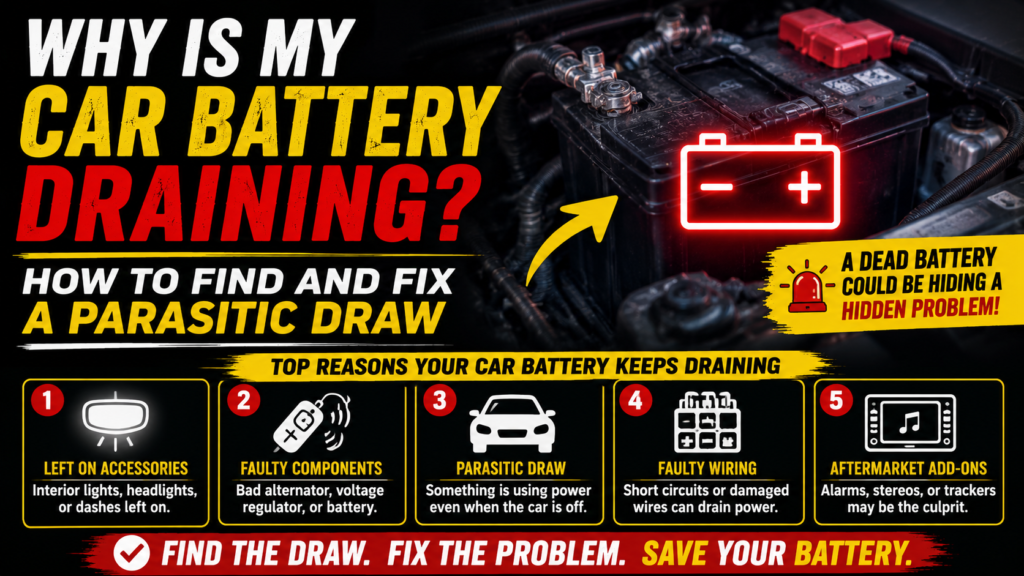
If your battery has been giving you trouble, check out my guide on what causes a car battery to keep going dead. It’s one of the most common problems drivers run into.

If your engine suddenly becomes harder to start, you should also read about why a car clicks but won’t start before assuming the battery is the only problem.

And if your dashboard suddenly lights up, my guide explaining the most common reasons a check engine light comes on can help you understand what your vehicle may be trying to tell you.
About the Author
Dax Weaver is the founder of WhyIsMyCar.com and enjoys helping everyday drivers better understand their vehicles without overwhelming them with technical jargon. He researches common automotive problems, tests tools and products when practical, and shares straightforward advice that helps readers make informed decisions about repairs, maintenance, and vehicle ownership. His goal is simple: explain car problems in plain English so anyone can understand what’s happening and know what to do next.