Most drivers have no idea how old their car battery is until the day it dies. And it always dies at the worst possible moment — cold morning, parking lot, middle of nowhere. The truth is car batteries give you plenty of warning signs before they fail completely. You just have to know what to look for.
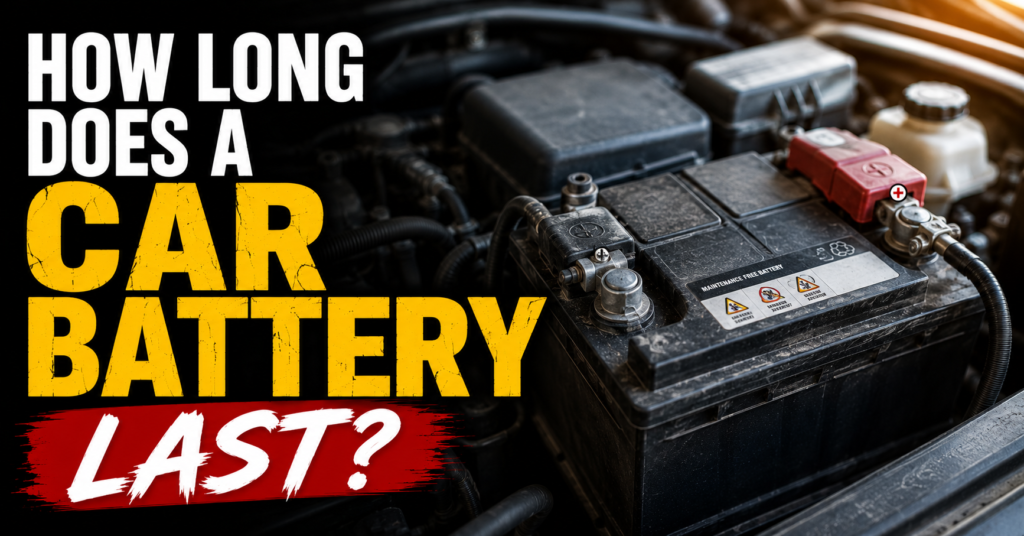
This guide covers how long car batteries actually last, what shortens their life, the warning signs that yours is on the way out, and exactly when to replace it before it leaves you stranded.
Quick Answer: Most car batteries last 3–5 years under normal conditions. Hot climates shorten battery life significantly — sometimes to 2–3 years. Cold climates reduce battery capacity but don’t necessarily shorten overall life as much as heat does. If your battery is over 4 years old and hasn’t been tested recently, test it now before it fails on you.
How Long Does a Car Battery Actually Last
The honest answer is 3–5 years for most drivers under normal conditions. That’s the range where the vast majority of batteries fail — some earlier, some later, but 3–5 years is the window where you should start paying attention.
Premium batteries — AGM and enhanced flooded batteries — often last 4–7 years. Standard flooded lead-acid batteries, which are what most vehicles come with from the factory, sit in the 3–5 year range. Budget batteries from discount sources sometimes fail in 2–3 years.
The problem is that “lasting” doesn’t mean performing well up to the day of failure. A battery that’s 4 years old may still start the car every day while delivering significantly reduced cold cranking amps — meaning it’s marginal in cold weather, slow to recover after accessories drain it, and one bad morning away from leaving you stranded.

What Shortens Battery Life
Heat — The Biggest Battery Killer
This surprises most people who assume cold weather is the enemy. Heat is actually harder on battery chemistry than cold. High temperatures accelerate the internal corrosion and water loss inside the battery that degrades capacity over time. Drivers in hot climates — Arizona, Texas, Florida — routinely see batteries fail in 2–3 years. Under-hood temperatures on hot days can reach 200°F or more, creating conditions that accelerate battery degradation even when the car isn’t running.
Deep Discharge Cycles
Car batteries are designed for shallow cycling — a quick discharge during starting followed by immediate recharge from the alternator. Deep discharges — running the battery down from leaving lights on, a parasitic draw, or extended storage — damage the lead plates inside the battery. Every deep discharge cycle reduces total battery capacity. A battery that’s been deeply discharged multiple times ages faster than one that’s been maintained properly.
Chronic Undercharging
A battery that never fully recharges — from too many short trips, a failing alternator, or a parasitic draw keeping the charge low — sulfates over time. Sulfation is the buildup of lead sulfate crystals on the battery plates that reduces capacity and eventually prevents the battery from accepting a full charge. It’s one of the leading causes of premature battery failure.
Vibration
Excessive vibration shakes the internal components of the battery — loosening the active material from the plates and causing internal shorts. A battery that’s not properly secured in its tray vibrates with every bump and pothole. The hold-down bracket isn’t optional — it’s protecting the battery from vibration damage.
Infrequent Use
A car that sits for weeks at a time allows the battery to self-discharge below healthy levels. Modern vehicles draw a small amount of current constantly — the clock, the alarm, the key fob receiver — and a car that sits long enough will eventually drain the battery flat. Batteries that sit discharged for extended periods sulfate and lose capacity permanently.
Warning Signs Your Battery Is Failing
Slow or Labored Cranking
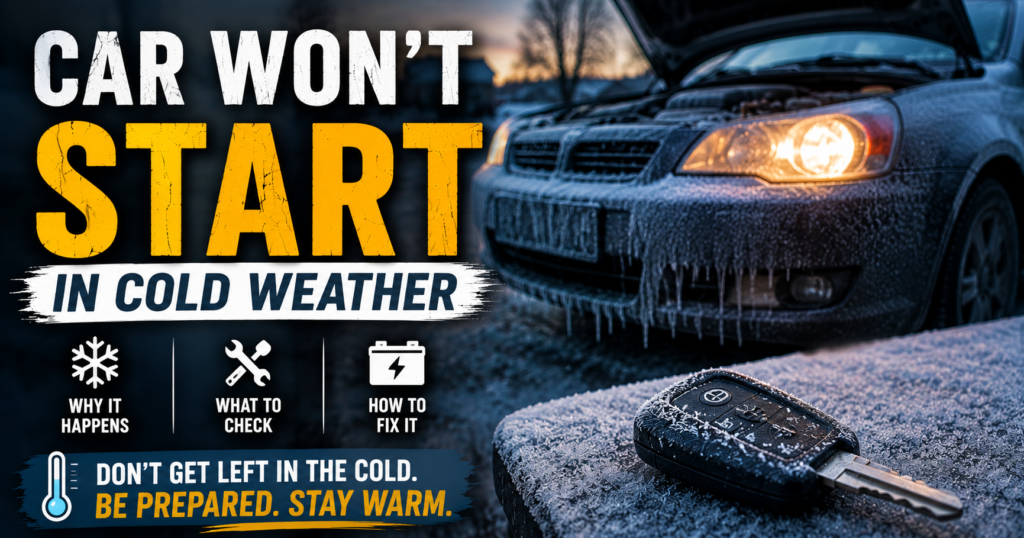
The most reliable early warning sign. When you turn the key and the engine cranks noticeably slower than it used to — especially on cold mornings — the battery is losing capacity. It still has enough to start the car but not the healthy reserve it once had. This is the window where replacement is cheap and convenient rather than urgent and stranded.
Needing a Jump Start
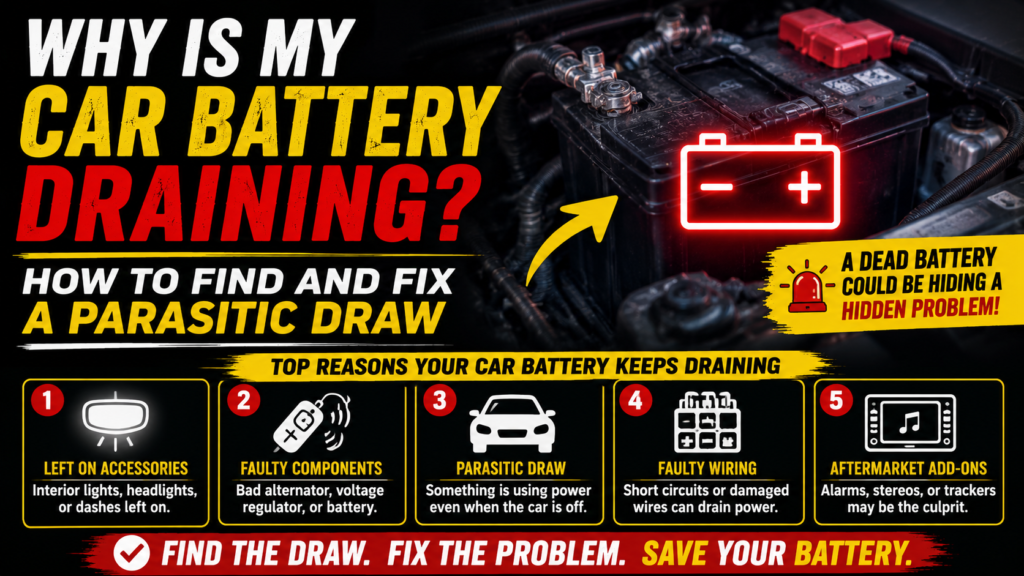
One jump start after leaving lights on accidentally is one thing. Two jump starts in a month with no obvious cause is a failing battery. See our guide on why car batteries drain to rule out a parasitic draw — but if the battery tests weak, replacement is the answer regardless of what caused the discharge.
Battery Warning Light

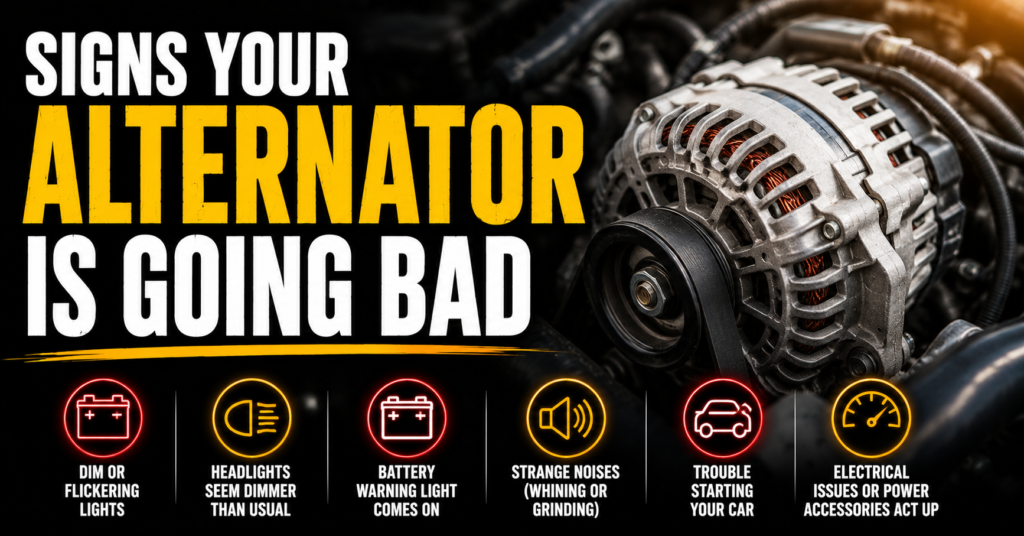
The battery warning light on your dashboard indicates a problem with the charging system — either the battery, the alternator, or the wiring between them. It doesn’t specifically tell you which component is failing, which is why testing both is important when this light appears. An OBD2 scanner reads charging system codes that narrow down the source.
Electrical Gremlins
Flickering lights, accessories that reset randomly, power windows that move slowly, and infotainment systems that reboot without reason are all symptoms of a battery that can’t maintain stable voltage. Modern vehicles are sensitive to voltage fluctuations — a weak battery that sags under load produces the voltage instability that causes these symptoms.
Swollen or Bloated Battery Case
A battery case that’s visibly swollen or bulging is being overcharged or has been exposed to excessive heat. The internal gases have nowhere to go and pressurize the case. A swollen battery is a safety concern — it can leak acid and in severe cases rupture. Replace it immediately and check your charging voltage to confirm the alternator isn’t overcharging. If charging problems are accompanied by an unusual odor, what a rotten egg smell indicates explains what to check next.
Corrosion Buildup
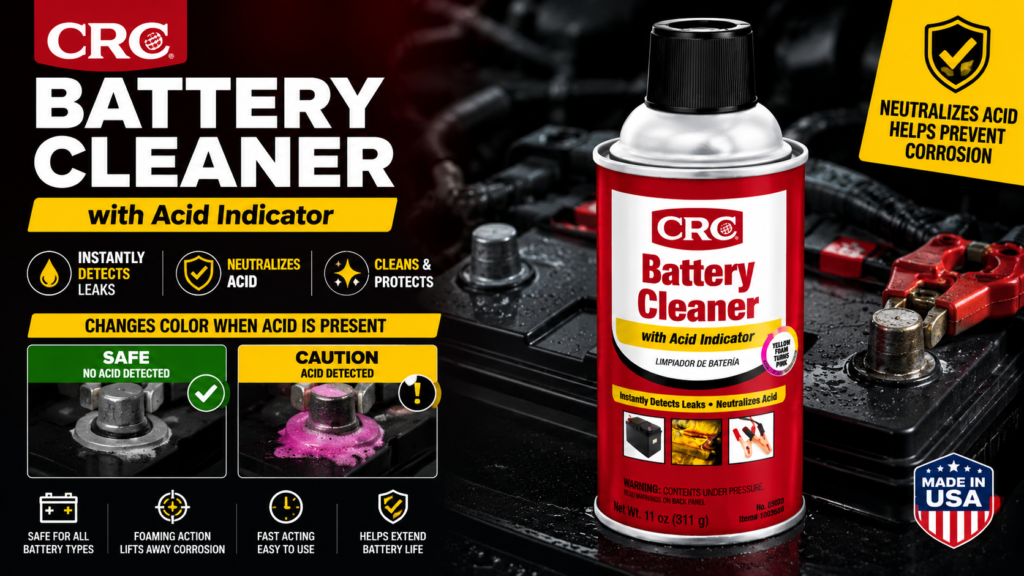
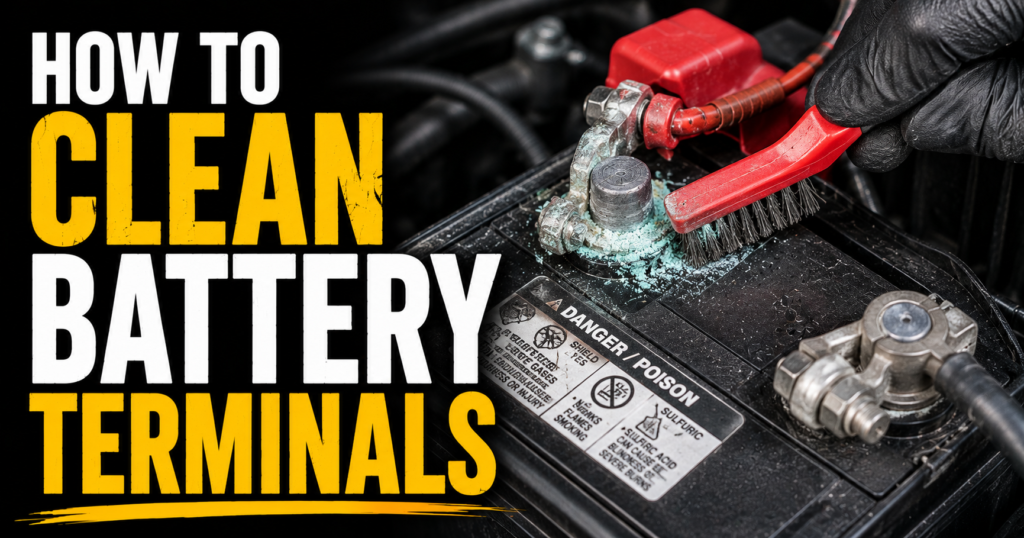
Some corrosion on battery terminals over time is normal. Heavy, recurring corrosion — especially on the positive terminal — can indicate the battery is venting gases, which accelerates corrosion formation. Clean terminals with a battery terminal cleaner and a terminal brush kit and monitor whether it returns quickly — rapid reoccurrence points to a battery that needs replacement.
How to Test Your Battery at Home
Don’t wait for failure to find out where your battery stands. Testing takes two minutes and gives you a definitive answer.

The ANCEL BA101 battery tester connects to your battery terminals and reads actual cold cranking amps — comparing what the battery delivers against its rated capacity. A battery rated at 600 CCA that’s only delivering 380 CCA is significantly degraded even if it’s starting the car every day. The tester gives you a clear result: Good, Recharge, Replace, or Bad Cell. No interpretation required.

You can also get a basic voltage reading with a digital multimeter. A fully charged battery at rest reads 12.6 volts or higher. Below 12.4 volts it’s partially discharged. Below 12.0 volts it’s significantly discharged and may indicate a battery that can’t hold a full charge. With the engine running, charging voltage at the battery terminals should read 13.7–14.7 volts — anything outside that range points to an alternator issue.
Most auto parts stores also test batteries for free if you bring the vehicle in or remove the battery and bring it to the counter.
When to Replace Your Battery
Replace your battery when the tester says replace — not when it finally dies on you. The window between “testing weak” and “failing completely” is usually weeks to a few months. That’s a window where you control the timing and cost rather than the battery controlling it for you.
As a general rule — test your battery every fall before cold weather. Cold temperatures reduce battery capacity by 20–50% depending on temperature. A battery that’s borderline in September is a battery that won’t start your car in January. Catching it in fall means replacing it on a comfortable afternoon rather than in a parking lot in freezing temperatures.
If your battery is over 4 years old and has never been tested, test it now. Age alone isn’t a reason to replace a battery that tests healthy — but it is a reason to know where it stands.
Extending Your Battery’s Life
A few simple habits meaningfully extend battery life and reduce the chance of premature failure.

Keep terminals clean. Corrosion increases resistance and makes the battery work harder to deliver current. Clean terminals once or twice a year with a proper terminal brush kit and apply anti-corrosion washers after cleaning.
Drive regularly and long enough. Short trips don’t give the alternator enough time to fully recharge what the starter used. If you primarily drive short distances, a battery maintainer plugged in at home keeps the battery at full charge between drives.
Don’t leave accessories running with the engine off. Phone chargers, lights, and electronics left on while the car is off drain the battery through deep discharge cycles that shorten its life.
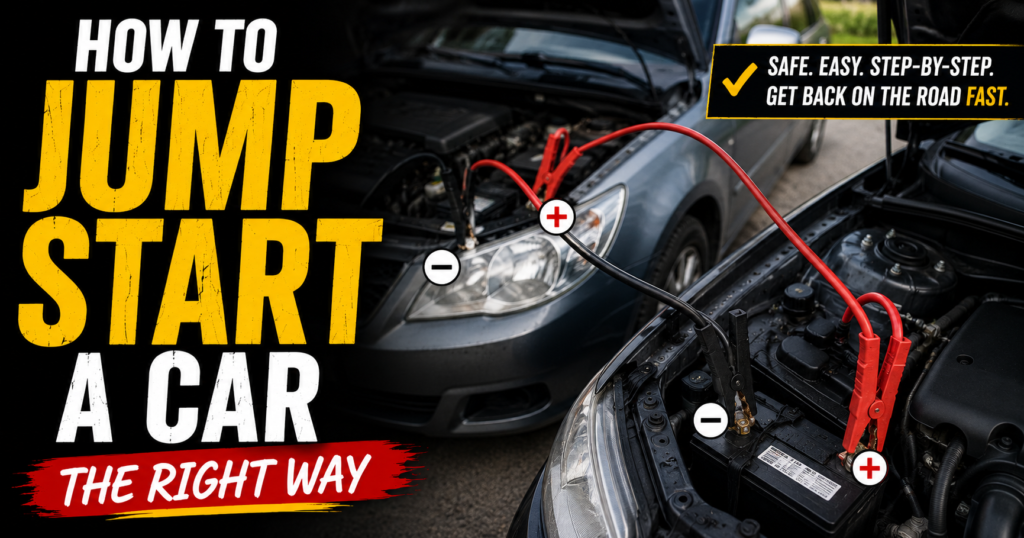
Keep a jump starter in the car. Even a well-maintained battery can fail unexpectedly. A jump starter in the trunk means a dead battery is a minor inconvenience rather than a major ordeal.

Frequently Asked Questions
How do I know how old my battery is?
Most batteries have a date code stamped or stickered on the case. It’s typically a letter and number combination — the letter represents the month (A=January, B=February, etc.) and the number represents the year (4=2024, 3=2023). Some batteries use a straightforward month/year format. If you can’t find a date code, an auto parts store can often look it up by the battery’s serial number.
Does cold weather kill car batteries?
Cold weather reduces battery capacity — a battery that’s 100% capable at 70°F may only deliver 60% of its rated capacity at 0°F. This is why batteries that are borderline in fall fail in winter. Cold itself doesn’t permanently damage a healthy battery the way heat does, but it exposes weakness that was already there. A battery that struggles in cold weather needs replacement regardless of its age.
Can a car battery recharge itself?
No — a car battery cannot recharge itself. It recharges from the alternator while the engine runs. Driving for 20–30 minutes after a jump start recharges a discharged battery. A battery left disconnected and discharged doesn’t recover on its own — it needs a charger or the alternator to put charge back in.
Is it worth buying a more expensive battery?
Generally yes. Premium AGM batteries last significantly longer than standard flooded batteries — often 5–7 years vs 3–5 — and perform better in extreme temperatures. The price difference is usually $50–$100, which is easily justified by the additional years of life and the reduced chance of a failure at an inconvenient time.
My new battery keeps dying — is it defective?
A new battery that keeps dying is almost certainly being drained by a parasitic draw rather than being defective. New batteries don’t typically fail — they get drained. Check our complete guide on finding and fixing a parasitic draw to identify what’s draining it.
About the Author: Dana Callahan
Dana has been diagnosing car problems for over a decade — first out of necessity (three kids, one income, no money for shop rates) and eventually out of genuine passion. She’s the person her whole neighborhood texts when a warning light comes on. Dana writes for WhyIsMyCar.com to give everyday drivers the kind of straight talk she wished she’d had when she first started figuring this stuff out on her own. Based in Ohio.