A shop’s impact gun overtightens oil filters every time. Here’s the simple wrench that removes them without the struggle — and fits virtually any vehicle.
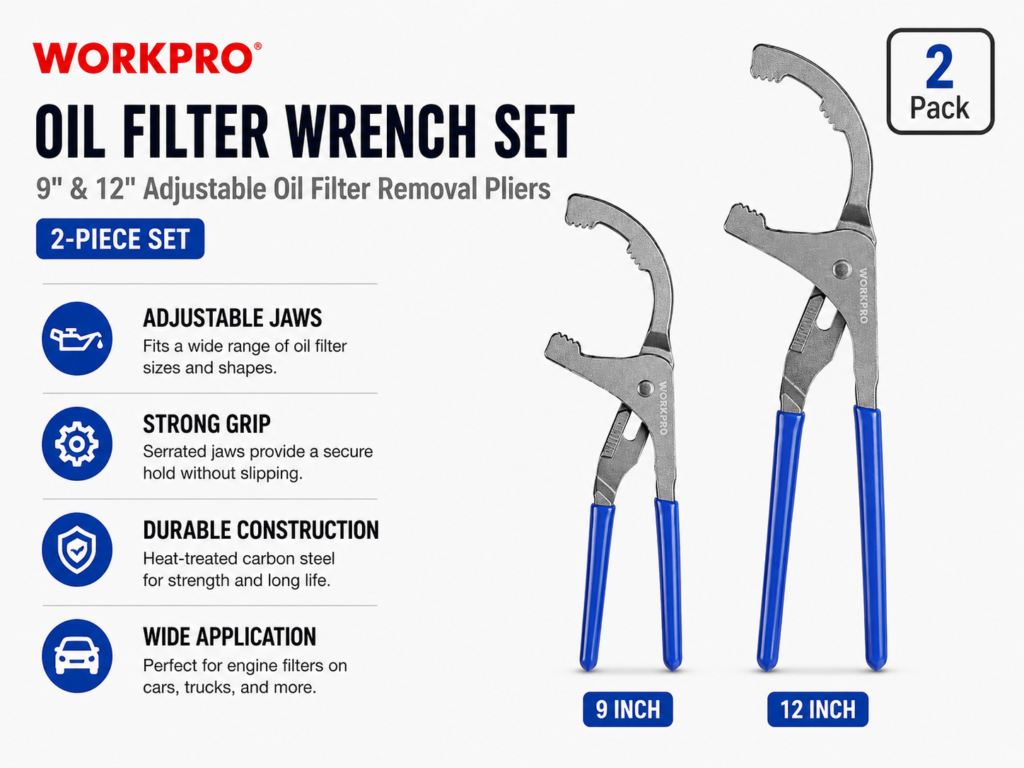
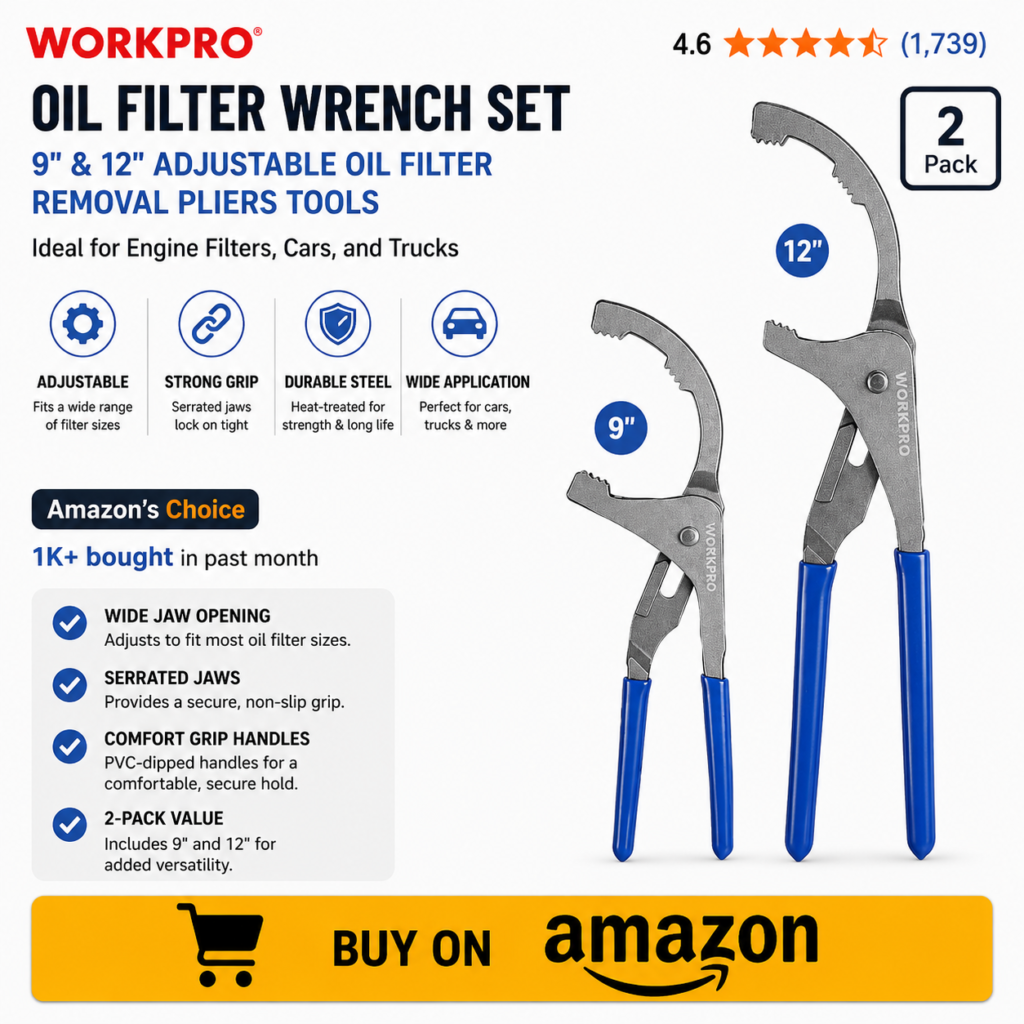
Changing your own oil is one of the most straightforward car maintenance tasks there is — until you try to break loose an oil filter that was overtightened by a shop’s impact gun. At that point, bare hands and a rag get you nowhere. An oil filter wrench is the simple tool that turns a potentially skin-shredding struggle into a five-second task. The WORKPRO 2-piece adjustable set handles virtually any oil filter size on any passenger vehicle.
The pliers-style design grips any round filter — the harder you pull, the tighter the grip. No more trying to find the exact cup-style socket for your specific filter, and no more slipping off a hot, oil-coated filter while your knuckles head toward the engine block.
Why You Need an Oil Filter Wrench
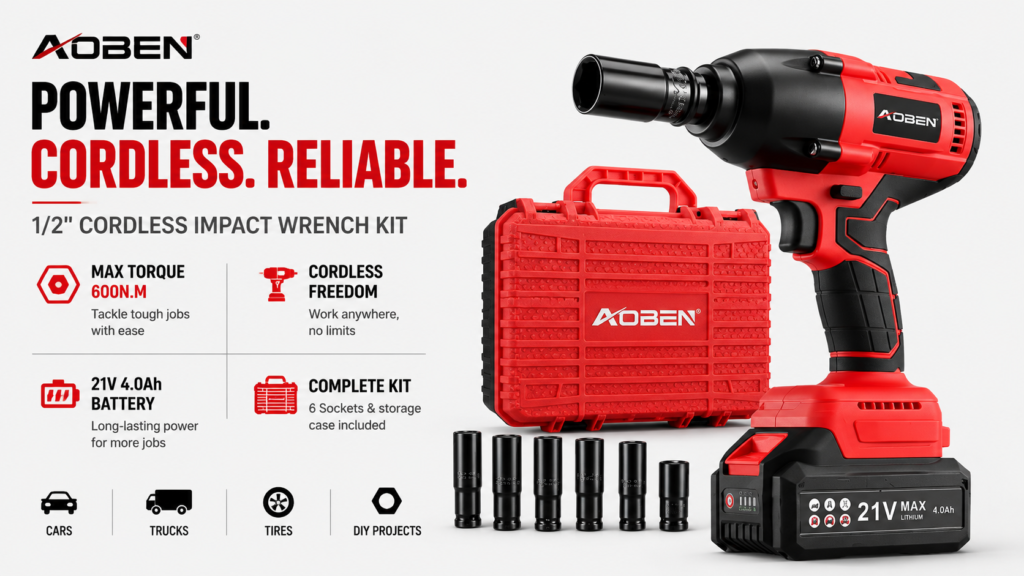
When a shop changes your oil, the filter usually gets tightened with an impact wrench or by a technician who cranks it down far harder than the hand-tight-plus-three-quarter-turn spec calls for. The result is a filter that’s impossible to remove by hand at the next oil change — even with a good grip and a rag. The Best Cordless Impact Wrench for Changing Tires – Honest Review explains why impact tools are useful for stubborn automotive fasteners but should not replace careful hand-tightening for oil filters.
A shop oil filter socket set requires knowing the exact cap size for your specific filter — and those vary not just by vehicle but sometimes by filter brand. A pliers-style wrench like this one is self-adjusting and grips any filter, making it genuinely universal.
How the 9-Inch and 12-Inch Sizes Work Together
The 9-inch wrench handles smaller filters on compact cars, 4-cylinder engines, and motorcycles. The 12-inch handles larger filters on V6, V8, and truck engines where the filter is physically bigger and often installed in a more awkward location requiring longer reach. Having both sizes means one of them fits correctly regardless of what you’re working on.
The longer handle of the 12-inch provides significantly more leverage on filters that are really stuck — important when dealing with a filter that’s been overtightened or that’s corroded to the threads. More handle equals more mechanical advantage without having to resort to a breaker bar or puncturing the filter.



How to Use It Without Making a Mess
Step 1: Position a drain pan under the oil filter before starting. Even a partially empty filter holds a surprising amount of oil.
Step 2: Grip the filter with the wrench jaws fully open, then close them around the body of the filter — not the sealing surface at the top.
Step 3: Turn counterclockwise. The self-tightening jaw design means the grip increases as you apply turning force.
Step 4: Once loose, finish removing by hand. Have a rag ready — the filter will drip oil as it comes off the threads.
Step 5: Before installing the new filter, apply a thin film of clean engine oil to the new filter’s rubber gasket. Install hand-tight plus three-quarter turn. Do not overtighten with the wrench — hand installation is correct and prevents the stuck-filter problem for the next change.
Other Uses Beyond Oil Filters
The pliers-style wrench works on fuel filters, water filter housings, pool filter cartridge housings, and any other round canister that needs to be twisted off. It’s a genuinely versatile tool that earns space in a garage beyond just oil change day.
See the WORKPRO Oil Filter Wrench Set on Amazon →

Frequently Asked Questions
Will it work on my specific vehicle?
The adjustable jaw handles oil filters from approximately 2.5 to 6 inches in diameter — covering the vast majority of passenger cars, trucks, and SUVs. Very large diesel truck filters and some specialty filters may fall outside that range.
Can it damage the filter?
On removal, minor deformation of the filter canister is possible on extremely stuck filters — but since you’re removing a used filter, this doesn’t matter. On installation, use hand tightening only — the wrench is for removal, not installation.
What if the filter is in a really awkward location?
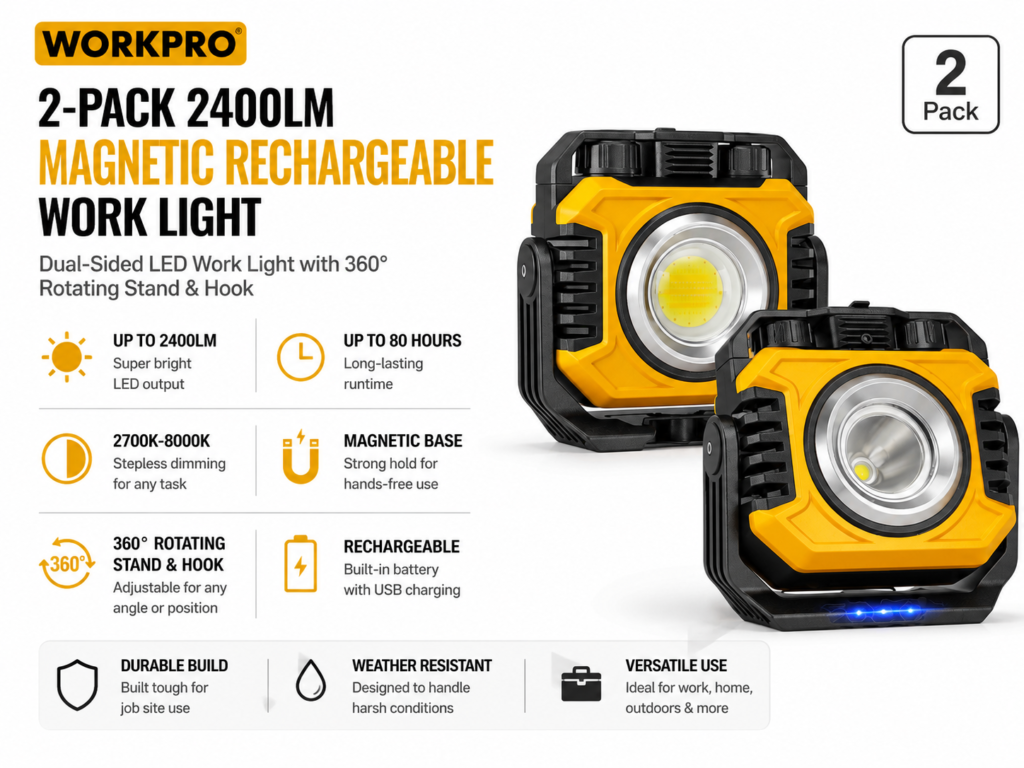
Many vehicles put oil filters in locations with limited access — recessed in the engine bay or oriented at an angle that makes grip difficult. The 12-inch handle helps by providing reach into tighter spaces. For extremely inaccessible filters, a cup-style socket specific to your filter size and a ratchet or breaker bar may be more effective. When access is limited, work lights for tight engine spaces can help you see the filter and surrounding clearance without holding a flashlight.
How tight should I install the new oil filter?
Hand-tight plus three-quarter turn after the gasket contacts the sealing surface. That’s the spec. No tools required for installation — which is exactly why you need a wrench to remove a filter that was overtightened by someone who didn’t follow this spec.
Jake spent eight years as a service advisor at a regional auto dealership before going independent. He’s owned everything from a ’98 Civic with 240,000 miles to a diesel truck that taught him more than any training course. He started writing for WhyIsMyCar.com because he was tired of watching people get talked into repairs they didn’t need — or ignore problems that were genuinely serious. Jake lives in Tennessee with his wife, two kids, and a garage that’s never quite organized enough.