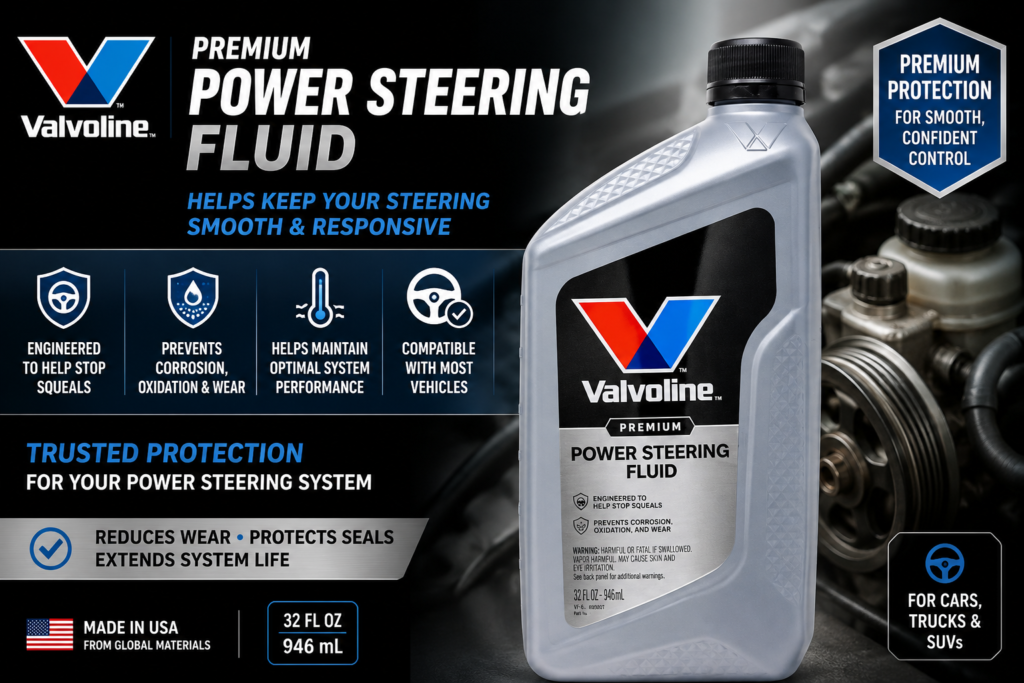
Whining steering, stiff wheel, or low fluid? Valvoline Power Steering Fluid meets GM, Chrysler, and Ford specs. Here’s when to use it and how to top off your system. You can see the site's affiliate-link policy before deciding whether this product information is useful for your vehicle.
Power steering fluid is one of those maintenance items that most drivers never think about until something goes wrong. A whining or groaning steering wheel, stiff steering at low speeds, or a visible fluid leak under the front of the car — these are all signs that the power steering system needs attention. Valvoline Power Steering Fluid is a straightforward, high-quality solution for maintaining the system that makes turning your car feel effortless.
A steering pump that’s running low on fluid or running on degraded fluid works harder than it should, generates excess heat, and wears faster. Topping off or flushing the system with fresh Valvoline fluid is a simple preventive step that extends pump and rack life significantly.
Signs Your Power Steering Fluid Needs Attention
Whining or Groaning When Turning
A power steering pump that whines or groans — especially when turning at low speeds or with the wheel near full lock — is typically low on fluid or running on air-contaminated fluid. Check the reservoir first. If it’s low, top it off and check for leaks. If it’s at the right level but still noisy, the fluid may be old and aerated.
Stiff or Heavy Steering
Steering that requires noticeably more effort than it used to — especially in cold weather — often points to low fluid level or fluid that has thickened with age and temperature breakdown. Fresh fluid restores proper hydraulic pressure and makes steering feel light and responsive again.
Dark or Dirty Fluid
Healthy power steering fluid is clear to slightly amber. Fluid that’s dark brown, black, or has visible particles in it is degraded and contaminated. Old fluid loses its lubrication and anti-wear properties and accelerates wear on the pump and rack seals. A fluid flush at this point is the right call.
Visible Leak
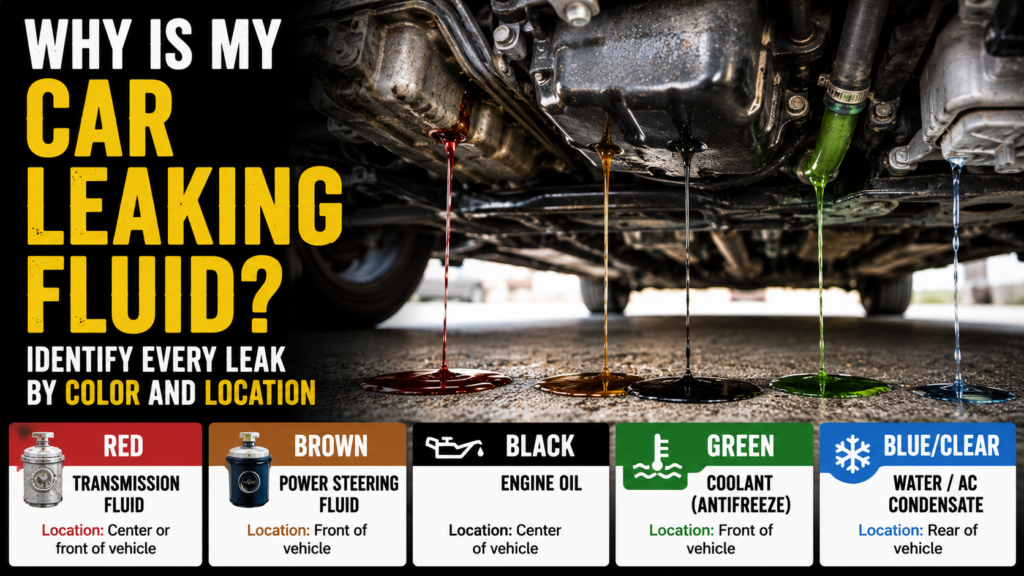
Power steering fluid leaks leave reddish or clear oily spots under the front of the vehicle. Common leak points are the steering rack seals, hose connections, and the pump itself. Keeping the reservoir topped off while addressing the leak source prevents pump damage from running low. When the fluid type or source is unclear, Why Is My Car Leaking Fluid? Identify Every Leak by Color and Location can help narrow it down by color, location, and smell.
How to Check and Top Off Power Steering Fluid
Step 1: Locate the power steering reservoir — it’s typically a small translucent plastic reservoir near the front of the engine with a steering wheel symbol on the cap.
Step 2: Check the level against the MIN and MAX markings on the reservoir. Some reservoirs have both cold and hot level markings — check cold before starting the engine for the most accurate reading.
Step 3: If low, add Valvoline Power Steering Fluid slowly using a funnel to avoid spills. Add a small amount at a time and recheck the level.
Step 4: Do not overfill — fluid expands when hot and overfilling can cause foaming and overflow.
Step 5: Start the engine and turn the steering wheel lock to lock a few times to work fresh fluid through the system. Recheck the level and top off if needed.
Compatibility
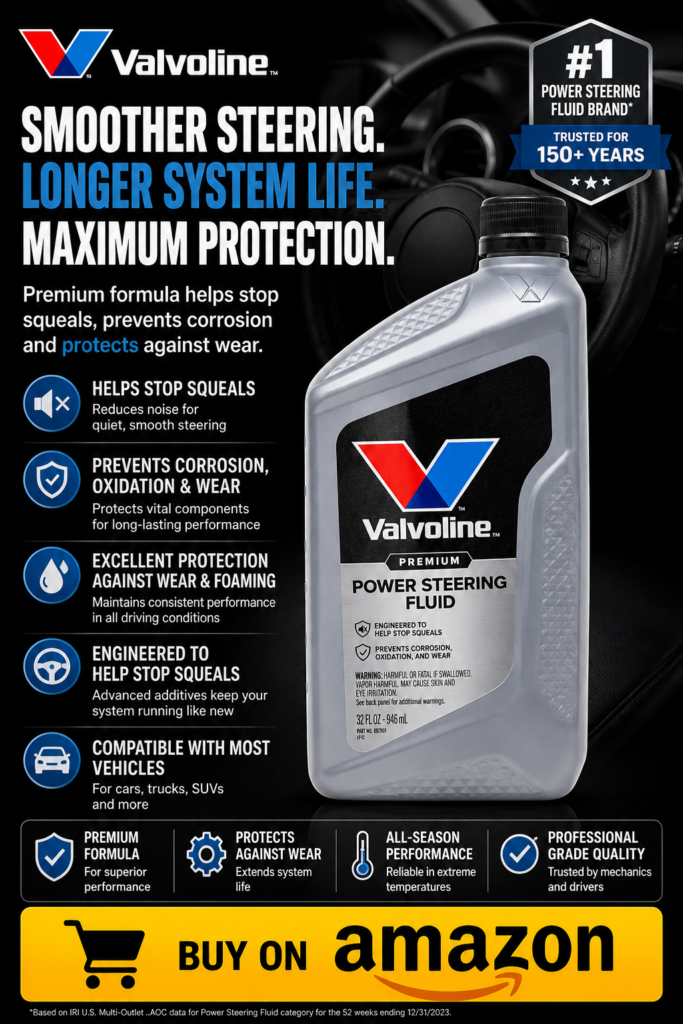
This fluid meets GM Power Steering Fluid spec 1050017, Chrysler MS-5931, and Ford spec M2C195-A. It works in most domestic vehicles and many imports. Always check your owner’s manual for the specific fluid type required — some vehicles, particularly European brands and newer vehicles, require a different specification fluid. Using the wrong type can damage seals. The same specification check matters when choosing specific fluid type required for an automatic transmission.
See Valvoline Power Steering Fluid on Amazon →
Frequently Asked Questions
How often should power steering fluid be changed?
Most manufacturers don’t specify a strict interval, but flushing the system every 50,000–75,000 miles or when the fluid appears dark is a reasonable guideline. Vehicles with known steering rack issues or those that leak and get topped off frequently benefit from more regular changes.
Can I mix power steering fluid brands?
Generally yes, as long as the fluid meets the same specification. Mixing different specification types — for example, mixing a standard ATF-based fluid with a European-spec fluid — can cause seal degradation. Stick to the same type as what’s already in the system.
My car has electric power steering — does it use fluid?
No. Electric power steering systems use a motor rather than a hydraulic pump, so there’s no fluid reservoir. If your vehicle has EPS, you don’t need power steering fluid at all.
Will adding power steering fluid fix a whining pump?
If the whining is caused by low fluid, yes — topping off often resolves it immediately. If the pump is whining despite full fluid level, the pump itself may be failing internally and fluid won’t fix mechanical wear.
Ryan is a former fleet mechanic who spent twelve years maintaining commercial vehicles before transitioning to writing about automotive issues for regular drivers. He’s worked on everything from economy sedans to full-size diesel trucks and has a particular obsession with electrical gremlins that make no sense until suddenly they do. Ryan contributes to WhyIsMyCar.com because most car content online is either too technical or too vague — he aims for the middle ground where people actually learn something.