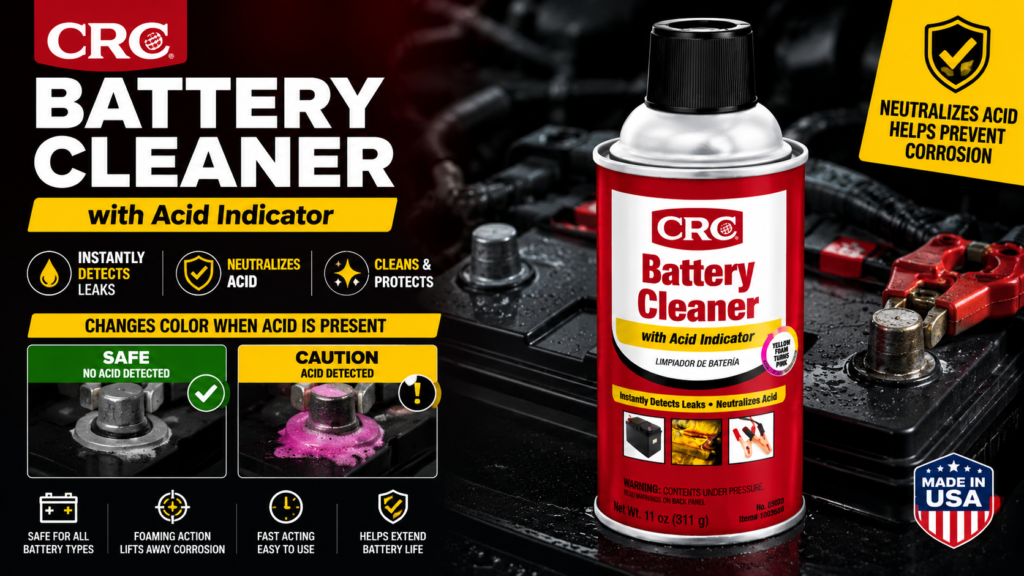
Battery corrosion causes more car problems than most people realize. CRC Battery Cleaner neutralizes it in minutes — here’s exactly how to use it.
Battery corrosion is one of those problems that sneaks up on you. That blue-white crusty buildup on your battery terminals looks minor but it’s actively causing problems — poor electrical connections, slow cranking, hard starting, and eventually complete electrical failure. CRC Battery Cleaner with Acid Indicator is the fastest, easiest fix for it. Spray it on, watch it foam, wipe it off. Done.
Corroded battery terminals are the hidden cause behind a surprising number of car complaints — slow cranking, lights flickering, power accessories acting up, even intermittent no-start conditions. Before you replace an alternator, a battery, or a starter, clean the terminals. You might be amazed what a $10 can of spray fixes. A Battery Terminal Cleaning Brush Kit – What’s in It and Does It Work? provides the scrubbing tools needed to finish the job after the cleaner loosens the corrosion.
What Battery Corrosion Actually Does to Your Car
Battery terminals are the electrical bridge between your battery and every system in your car. Corrosion is a poor conductor — it resists electrical flow. Even a thin layer of that white or blue-green crust increases resistance enough to cause real problems.

A corroded positive terminal makes the battery look weaker than it is, causing slow cranking. A corroded negative terminal creates a poor ground, which can cause seemingly unrelated electrical problems throughout the vehicle — lights dimming, sensors giving erratic readings, accessories cutting out. Cleaning the terminals often resolves these issues instantly. If cleaning does not restore normal starting, car clicks from poor connections helps interpret whether the remaining symptom points to the battery or starter.
How the Acid Indicator Works
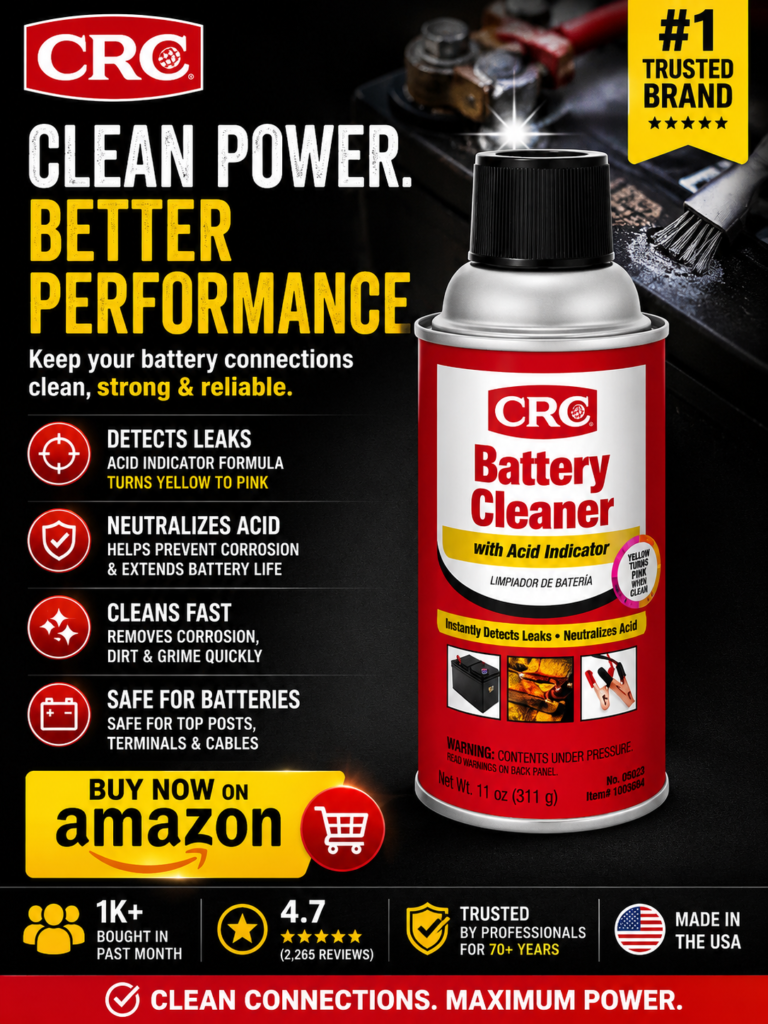
The acid indicator is genuinely useful. Battery corrosion contains sulfuric acid residue, and spraying CRC Battery Cleaner onto it causes a color change — the solution turns bright yellow or red wherever acid is present. This tells you exactly how bad the corrosion is and whether you’ve neutralized it completely after cleaning. Once the foaming stops and the color returns to clear or light yellow, the acid has been neutralized.
This also helps you spot acid migration — corrosion that has spread beyond the terminals to nearby cables, the battery tray, or surrounding plastic. Catching and neutralizing it there prevents long-term damage to those components.


How to Clean Your Battery Terminals With CRC
Step 1: Turn off the engine. Disconnect the negative cable first, then the positive.
Step 2: Spray CRC Battery Cleaner generously over both terminals, the cable ends, and any areas showing visible corrosion. Watch the color change — yellow or red means acid is present and being neutralized.
Step 3: Let it foam and work for 30–60 seconds.
Step 4: Use a wire brush or battery terminal cleaning tool to scrub away loosened deposits. Spray again if needed.
Step 5: Rinse with a small amount of water, then dry thoroughly.
Step 6: Reconnect cables — positive first, then negative. Apply a thin coat of dielectric grease or battery terminal protector spray to slow future corrosion buildup.
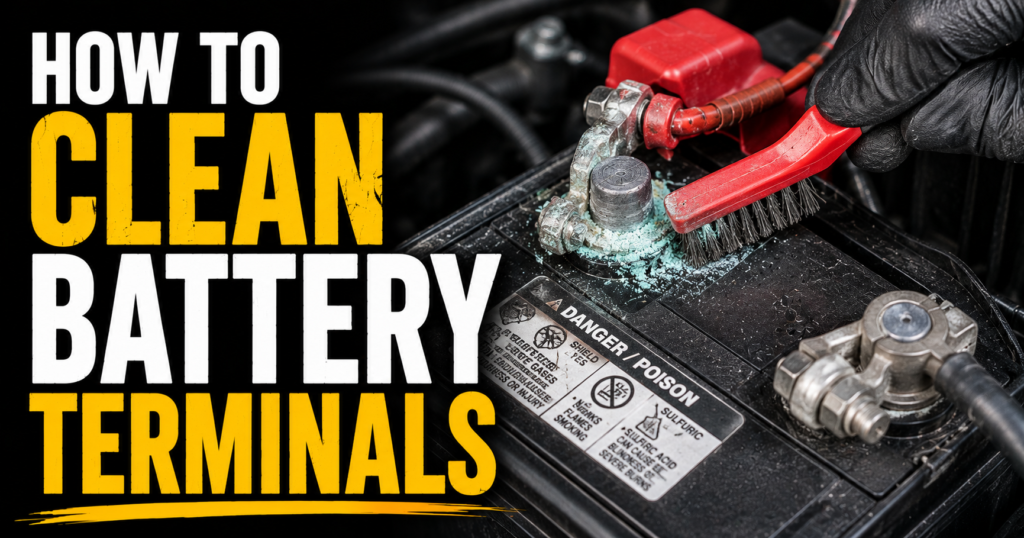
The whole process takes less than 10 minutes and costs almost nothing. It’s one of the highest ROI maintenance tasks you can do on any vehicle. For the complete tool list and safety sequence, How to Clean Battery Terminals – The Right Way in 10 Minutes walks through the job from disconnection to final reconnection.
Safe on Your Car’s Components
CRC’s formula is safe on paint, plastic, and rubber — important since battery terminals are surrounded by all three. It won’t strip paint from your engine bay or degrade plastic battery covers or cable insulation. Rinse off any overspray on painted surfaces after cleaning just to be safe.
See CRC Battery Cleaner on Amazon →


Frequently Asked Questions
What causes battery terminal corrosion?
Corrosion forms when hydrogen gas released during charging reacts with the atmosphere. On the negative terminal, corrosion is usually caused by undercharging. On the positive terminal, it typically means overcharging. Both can also result from a loose battery connection allowing acid to seep out around the terminal post.
Can I use baking soda and water instead?
Yes — baking soda neutralizes battery acid just like this spray does. The advantage of CRC is the acid indicator that shows you where acid is and whether it’s fully neutralized, plus the spray delivery is faster and less messy than mixing and pouring a baking soda solution.
How often should I clean my battery terminals?
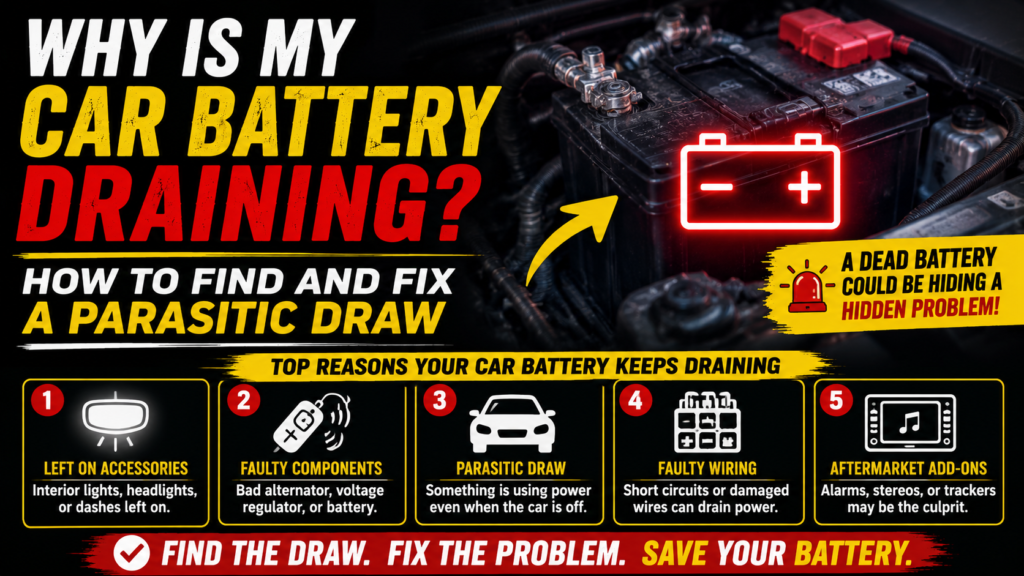
Check them every 6 months or when you notice starting issues. Light corrosion every 1–2 years is normal depending on climate and battery condition. Heavy, recurring corrosion can indicate a failing battery or charging system issue worth investigating. When corrosion and starting problems continue despite clean terminals, investigate a recurring battery drain before replacing more parts.
Will cleaning the terminals fix my slow cranking?
If corrosion is the cause, yes — often dramatically. Clean terminals, restart the car, and notice the difference in crank speed immediately. If cranking is still slow after cleaning, the battery itself may be weak and worth testing with a battery tester.
Ryan is a former fleet mechanic who spent twelve years maintaining commercial vehicles before transitioning to writing about automotive issues for regular drivers. He’s worked on everything from economy sedans to full-size diesel trucks and has a particular obsession with electrical gremlins that make no sense until suddenly they do. Ryan contributes to WhyIsMyCar.com because most car content online is either too technical or too vague — he aims for the middle ground where people actually learn something.