Diagnose hard starting, stalling, and poor fuel economy with the BETOOLL fuel pressure tester. Here’s what it does, how to use it, and when you need one.
Hard starting, poor acceleration, stalling at idle, and mysteriously bad fuel economy — these symptoms have one thing in common. They all point straight at the fuel system. But without a fuel pressure tester, diagnosing fuel delivery problems means guessing. The BETOOLL Fuel Pressure Tester Kit gives you hard numbers so you stop guessing and start fixing. If fuel pressure testing is part of a broader no-start problem, the Car Won’t Start But Battery Is Fine – What’s Actually Wrong helps organize the next diagnostic steps.
Fuel pumps, fuel pressure regulators, and clogged fuel filters all cause overlapping symptoms that are nearly impossible to distinguish without measuring actual fuel pressure. A shop charges $80–$150 just to hook up a fuel pressure gauge and tell you what it reads. This kit lets you do it yourself for less than that — and keep the tool forever. When fuel pressure checks do not explain the symptoms, compression testing for engine problems can help investigate mechanical problems inside the engine.
Why Fuel Pressure Testing Matters
Your engine needs fuel delivered at a specific pressure to run correctly. Too low and the engine runs lean — not enough fuel, rough performance, possible overheating. Too high and it runs rich — too much fuel, black smoke, fouled spark plugs, wasted gas. A failing fuel pressure regulator can cause pressure to spike or drop unpredictably, making the car feel completely erratic.
The only way to know what’s actually happening in your fuel system is to measure it. Every other diagnosis method is an educated guess.
What the BETOOLL Kit Includes
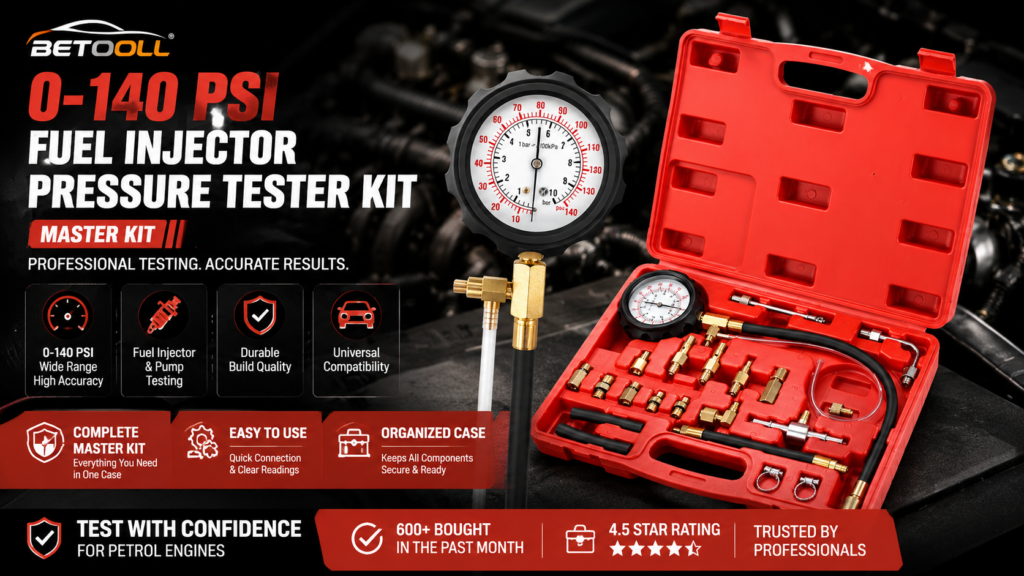
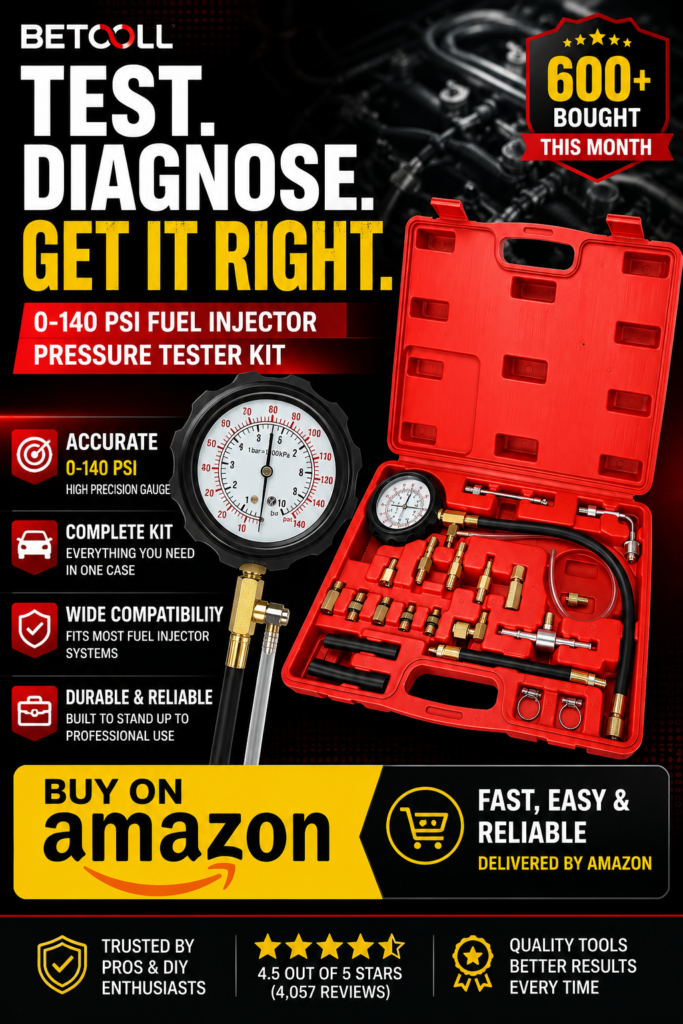
The kit includes a 0–140 PSI analog gauge with a large, easy-to-read dial, a flexible hose assembly, and a comprehensive set of fittings and adapters that cover a wide range of domestic and import vehicles. The adapters connect to Schrader valves on fuel injected systems and to carburetor inlets on older vehicles — making this a genuinely versatile kit rather than a single-application tool.
The gauge holds pressure after the pump is off, which is useful for checking fuel pressure bleed-down — an important diagnostic step that tells you whether your fuel pressure regulator or injectors are leaking fuel back into the return line when the engine is off.
Common Fuel System Symptoms This Tool Diagnoses
Hard Starting or Long Crank Before Starting
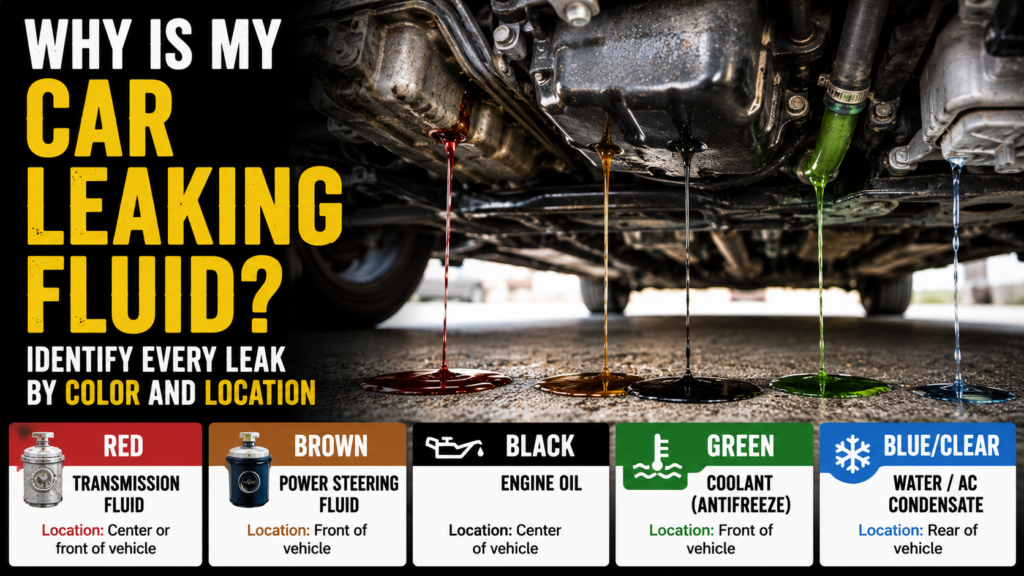
If fuel pressure drops to zero when the engine is off and takes several seconds of cranking to build back up, the system isn’t holding pressure. This points to a leaking injector, a bad fuel pressure regulator, or a check valve failure in the fuel pump itself.
Stalling at Idle
An engine that stalls at idle but restarts fine often has fuel pressure dropping below the minimum threshold at low demand. Connect the gauge, start the engine, and watch whether pressure holds steady or drops at idle. For a separate approach to fuel-system maintenance, see how the Sea Foam fuel-tank application is intended to clean fuel injectors.
Poor Acceleration and Hesitation
If pressure drops significantly under load — when you accelerate hard — the fuel pump may not be able to keep up with demand. This shows up as hesitation, stumbling, or a flat spot in acceleration that disappears at steady speed.
Consistently Bad Fuel Economy
A fuel pressure regulator stuck in the high-pressure position causes the engine to run excessively rich — burning more fuel than necessary. Measuring pressure at idle against the manufacturer’s specification tells you immediately if the regulator is out of range.
How to Use the BETOOLL Fuel Pressure Tester
Step 1: Relieve fuel system pressure before connecting anything. On most fuel-injected vehicles, pull the fuel pump fuse and crank the engine until it stalls — this removes residual pressure safely.
Step 2: Select the correct adapter for your vehicle’s fuel rail Schrader valve or fuel line fitting.
Step 3: Connect the tester to the fuel rail test port or inline with the fuel line.
Step 4: Start the engine and read the pressure at idle. Compare to your vehicle’s specification (found in a service manual or a quick online search for your make, model, and year).
Step 5: Rev the engine and watch for pressure drop under load.
Step 6: Turn the engine off and watch how quickly pressure drops. It should hold for several minutes. Rapid drop indicates a leak in the system.
Who Needs This Tool
Anyone dealing with fuel-related symptoms who wants a definitive answer before spending money on parts. A new fuel pump runs $150–$400 installed — testing pressure first confirms whether that’s actually what you need. A fuel pressure tester that costs a fraction of that diagnostic fee is an obvious investment for any serious DIYer or anyone who owns older vehicles prone to fuel system issues.
See the BETOOLL Fuel Pressure Tester on Amazon →
Frequently Asked Questions
What fuel pressure should my car have?
It varies by vehicle and fuel system design. Port-injected engines typically run 35–65 PSI. Direct injection systems run much higher — 500–2000 PSI — and require a different type of tester. Carbureted engines run 4–7 PSI. Check your vehicle’s service manual for the exact specification.
Can this tester damage my fuel system?
Not if used correctly. The key step is relieving system pressure before connecting the tester. Connecting to a pressurized system without the right adapter can cause fuel to spray — always follow the pressure-relief step first.
Will it work on my older carbureted vehicle?
Yes. The kit includes fittings for carbureted systems operating in the 0–15 PSI range, making it compatible with older domestic vehicles as well as modern fuel-injected engines.
How do I know if my fuel pump is failing vs my fuel pressure regulator?
A failing pump typically shows low pressure that drops further under load. A failing regulator shows either consistently high or low pressure that doesn’t respond correctly to engine demand. Measuring both at idle and under throttle gives you the data to tell them apart.
Ryan is a former fleet mechanic who spent twelve years maintaining commercial vehicles before transitioning to writing about automotive issues for regular drivers. He’s worked on everything from economy sedans to full-size diesel trucks and has a particular obsession with electrical gremlins that make no sense until suddenly they do. Ryan contributes to WhyIsMyCar.com because most car content online is either too technical or too vague — he aims for the middle ground where people actually learn something.