
Frequently Asked Questions
These are the questions we hear most often from drivers who find this site. If your question isn’t answered here, use our Contact page and we’ll help.
About the Site
Who writes the content on WhyIsMyCar.com?
Our content is written by a rotating team of automotive writers with real shop backgrounds — former service advisors, fleet mechanics, and experienced DIYers. We don’t use generic content mills or publish anything we wouldn’t stand behind. You can read more on our About Us page.
Is the information on this site accurate?
We make every effort to ensure accuracy, but vehicles vary significantly by make, model, year, and trim level. The information on this site is for general educational purposes. When in doubt about your specific vehicle, consult a qualified mechanic or your owner’s manual. See our Terms of Service for our full disclaimer.
Do you make money from this site?
Yes — through display advertising and Amazon affiliate commissions. When you click a product link and buy something on Amazon, we earn a small commission at no extra cost to you. Our editorial content is never influenced by these relationships. Full details are in our Affiliate Disclosure.
Check Engine Light Questions
Is it safe to drive with my check engine light on?
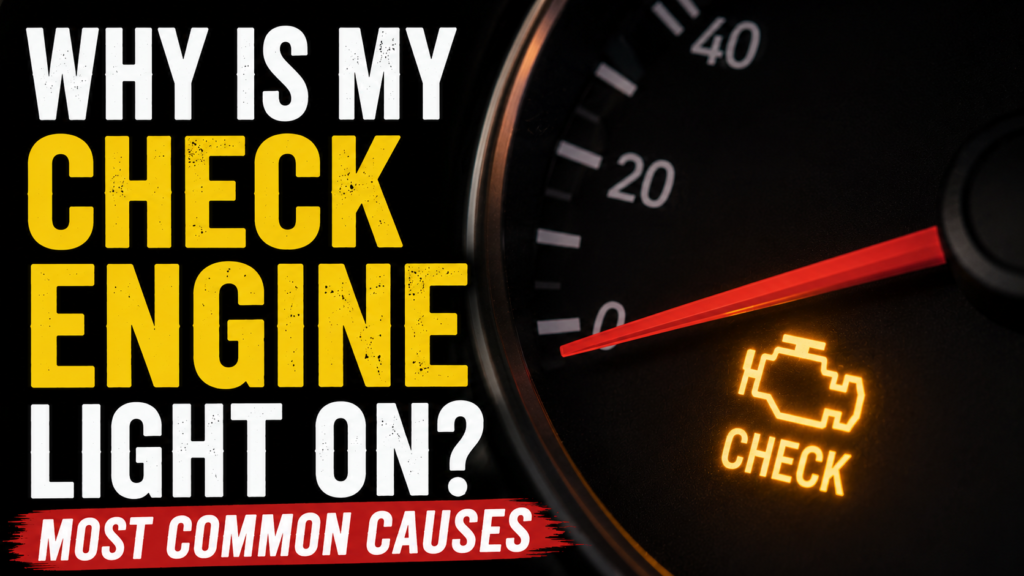
It depends on the code. A steady check engine light usually means something needs attention but isn’t an immediate emergency — a loose gas cap, a failing oxygen sensor, or a misfiring cylinder. A flashing check engine light means stop driving as soon as safely possible — active misfires can damage your catalytic converter quickly. Read our article on why your check engine light is on to understand the most common causes.
Can I clear my check engine light myself?
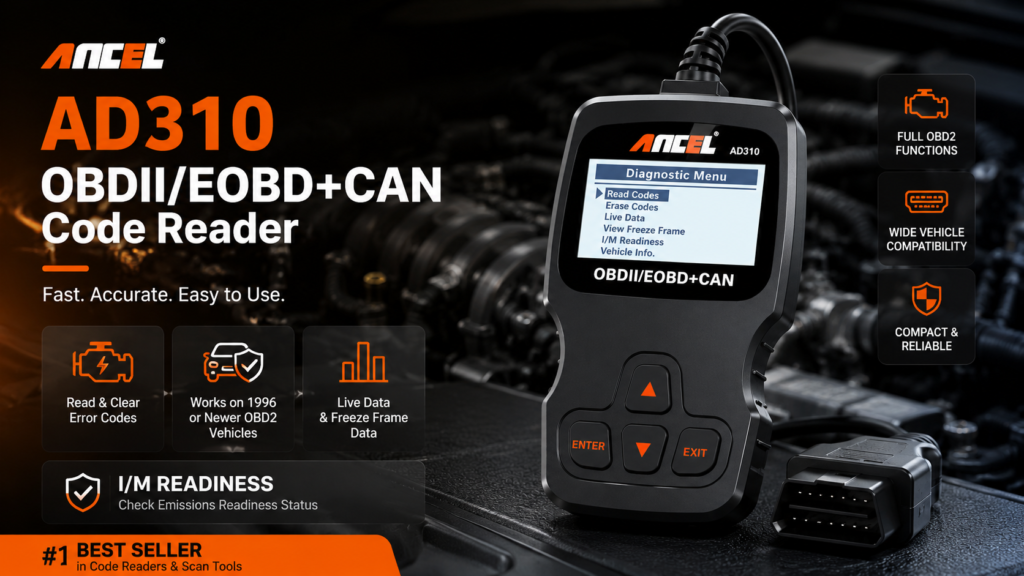
Yes — with an OBD2 scanner. After fixing the underlying issue, plug in a scanner and use the erase function to clear the code and turn off the light. If you clear it without fixing the problem, the light will return within one or two drive cycles. The ANCEL AD310 review explains how a handheld scanner reads and clears diagnostic codes: ANCEL AD310 OBD2 Scanner Review – Is It Worth It?.
My check engine light came on after getting gas — what is it?
Nine times out of ten this is a loose gas cap. Tighten it until it clicks, drive normally for a day, and the light often clears on its own. If it doesn’t clear within a day or two, have the code read — it may be an evaporative emission system fault related to the fuel cap or fuel vapor system. When the light does not clear, an OBD2 diagnostic scanner can help retrieve the stored fault code before you decide what to inspect next.
Car Noises
My car makes a grinding noise when I brake — is it dangerous?
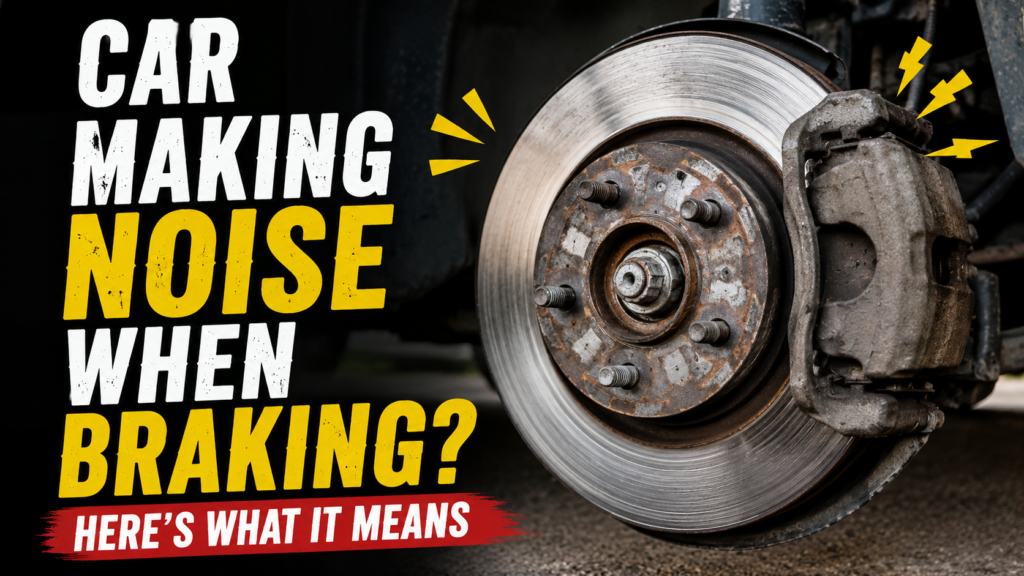
Yes, potentially. Grinding during braking almost always means metal-on-metal contact — your brake pads have worn completely through and the caliper or backing plate is grinding against the rotor. This is a safety issue. Get it looked at immediately. Read our full article on car noises when braking for a breakdown of what different brake sounds mean.
My car shakes at highway speed — what causes that?
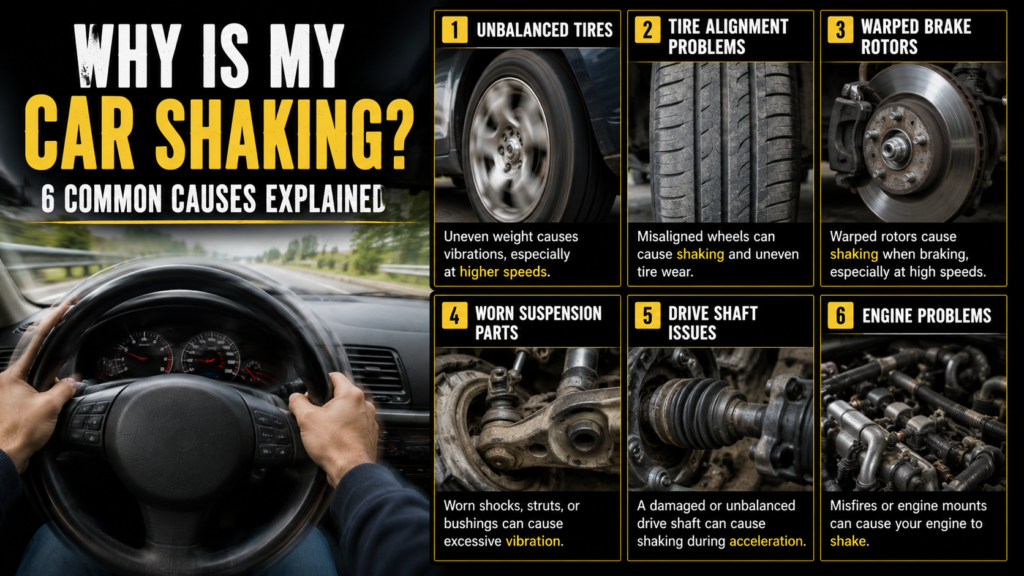
Highway-speed vibration is most commonly caused by unbalanced or out-of-round tires, wheel balance issues, or worn suspension components. If the shaking happens only when braking at speed, warped brake rotors are the likely cause. Read our article on why your car is shaking for all the common causes.
What does a knocking sound from the engine mean?
Engine knock — a metallic tapping or knocking from the engine — can range from minor (low oil, low-octane fuel in a high-compression engine) to serious (rod bearing failure, piston slap). Low oil pressure knock on cold startup that goes away is one thing. Persistent knock under load is a serious warning sign that needs immediate diagnosis.
Battery and Electrical
How do I know if my battery or my alternator is the problem?
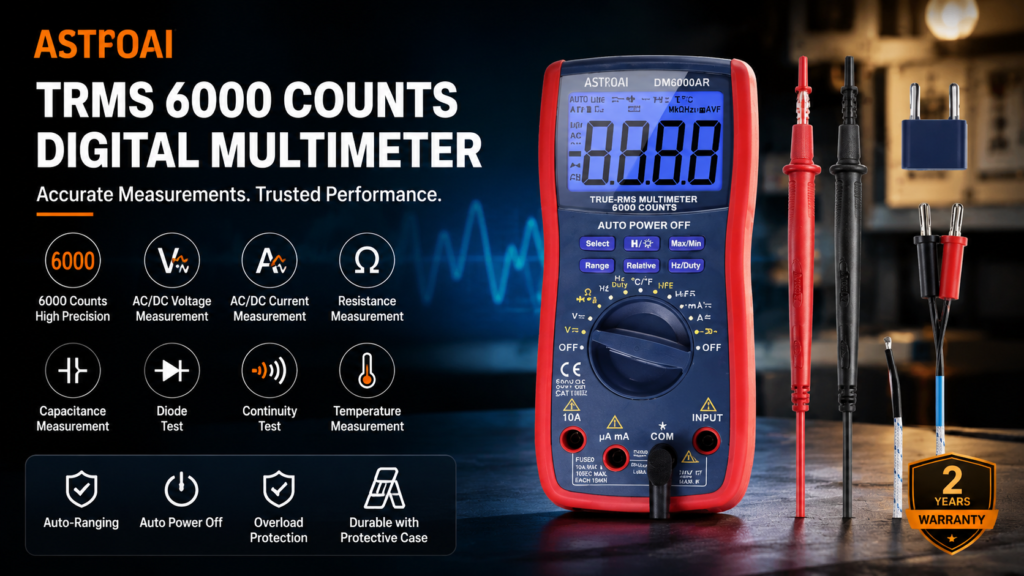
A multimeter or battery tester tells you definitively. At rest, a healthy battery reads 12.6V or higher. With the engine running, a healthy charging system reads 13.7–14.7V at the battery terminals. Below 13.5V with the engine running points to the alternator. Below 12.2V at rest with the engine off points to the battery. Guessing and replacing parts randomly is expensive — test first. The AstroAI Digital Multimeter Review – Best for Car Owners? explains how to take these battery and alternator readings at home.
My battery keeps dying overnight — what’s draining it?
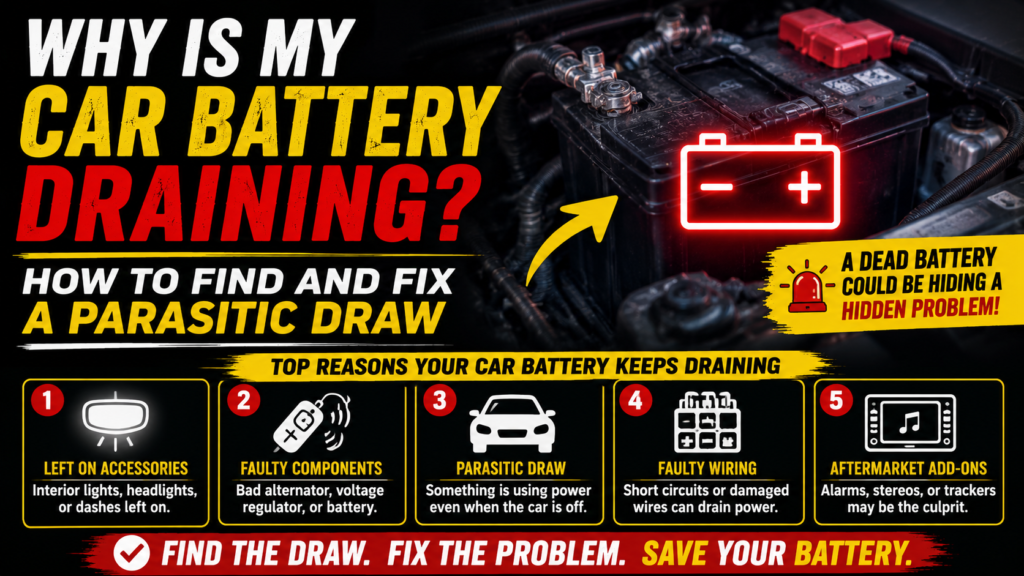
Something is drawing power when the car is off — called a parasitic drain. Common culprits include a trunk or glove box light staying on, a faulty relay, an aftermarket accessory wired incorrectly, or a failing module that doesn’t go to sleep properly. A multimeter in current mode can isolate the circuit causing the drain by pulling fuses one at a time. Drivers dealing with repeated dead batteries can use Why Is My Car Battery Draining? How to Find and Fix a Parasitic Draw to test the circuit and track down the source.
Tires and Wheels
How often should I check my tire pressure?
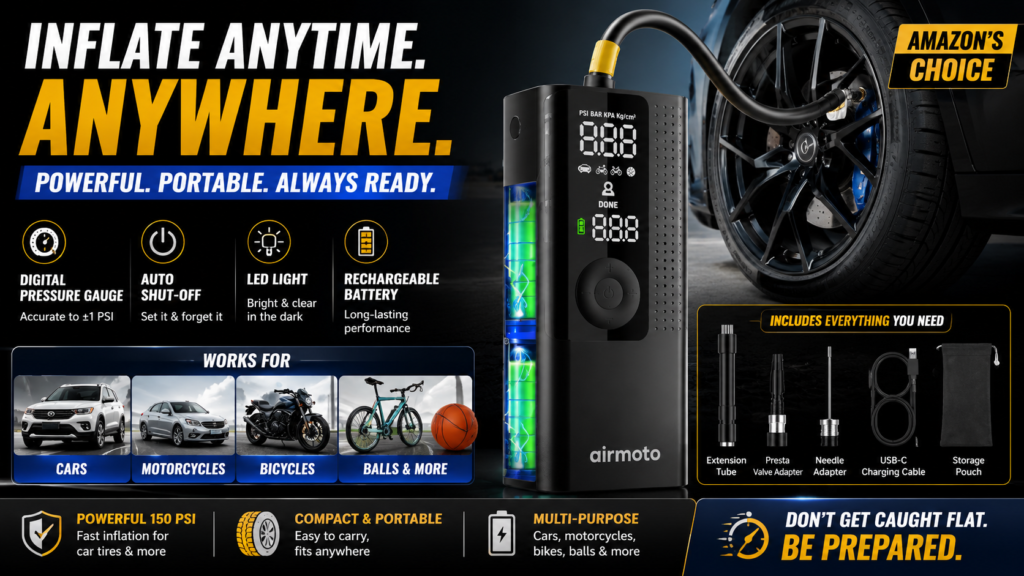
Once a month is the standard recommendation, and before any long road trip. Cold weather causes pressure to drop — for every 10-degree Fahrenheit drop in temperature, tires lose approximately 1 PSI. Check more frequently in fall and winter. A cordless inflator makes these monthly and seasonal pressure checks easier to handle at home or on the road: Portable Tire Inflator Review – Cordless and Auto Shut-Off.
What PSI should my tires be?
The correct pressure for your vehicle is on the sticker inside your driver’s door jamb — not the number on the tire sidewall (that’s the maximum the tire can hold, not the recommended operating pressure). Most passenger cars run 32–36 PSI. SUVs and trucks often run higher.
Products and Tools
What tools do I actually need to do basic car maintenance at home?
For basic maintenance, a good OBD2 scanner, a multimeter, a torque wrench, a quality socket set, and a tire pressure gauge cover the majority of what home mechanics need. Browse our recommended products for tools we’ve evaluated and stand behind.
Do fuel system cleaners actually work?
For maintenance cleaning and mild deposit buildup, yes — quality fuel system cleaners from brands like Sea Foam and Valvoline dissolve varnish and carbon deposits from fuel injectors and combustion chambers. They won’t fix severely clogged injectors or mechanical problems, but as a maintenance tool used regularly they make a real difference, especially on high-mileage engines.