
There it is — that little amber glow on your dashboard that somehow manages to ruin your entire morning. The check engine light is the most misunderstood warning light in any car, mostly because it doesn’t tell you what’s wrong, just that something is. It could be something as minor as a loose gas cap or as serious as a failing catalytic converter. Knowing the difference before you walk into a shop could save you hundreds of dollars.
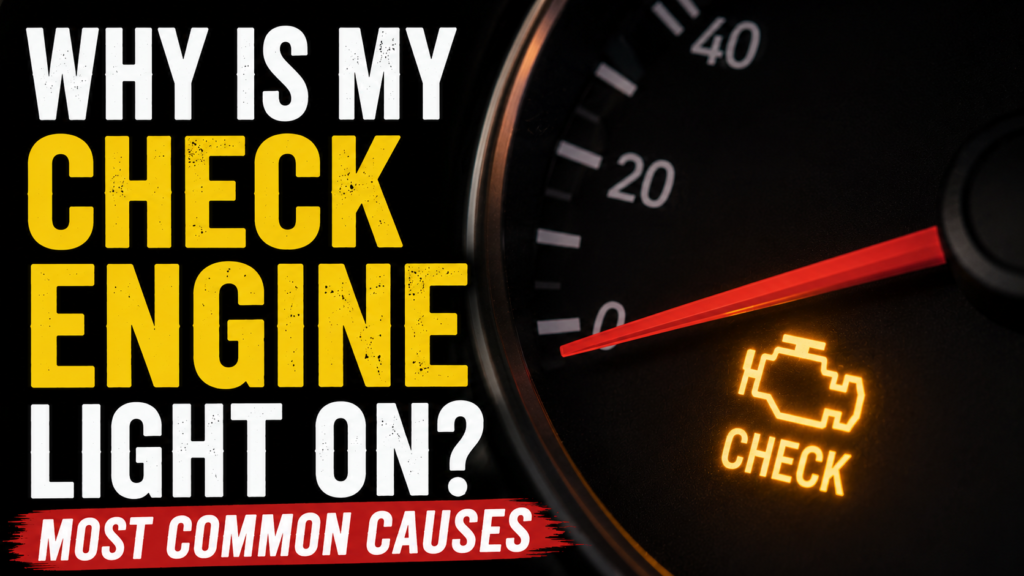
Quick Answer: The check engine light comes on when your car’s computer detects a fault in the engine, emissions, or related systems. The most common causes are a loose or faulty gas cap, failing oxygen sensor, bad catalytic converter, misfiring spark plugs, or a failing mass airflow sensor. You can’t know for certain without reading the fault code — but you can narrow it down fast. If the light is flashing, stop driving immediately.
The single most important thing to understand about the check engine light is this: solid means investigate soon, flashing means stop now. A steady light gives you time to diagnose properly. A flashing check engine light means your engine is actively misfiring in a way that can destroy your catalytic converter in minutes. Those two situations are not the same thing at all. The FAQ also covers common triggers and what to do when the light stays on.
Here’s everything you need to know about what’s actually going on and what to do about it.
What Actually Triggers the Check Engine Light
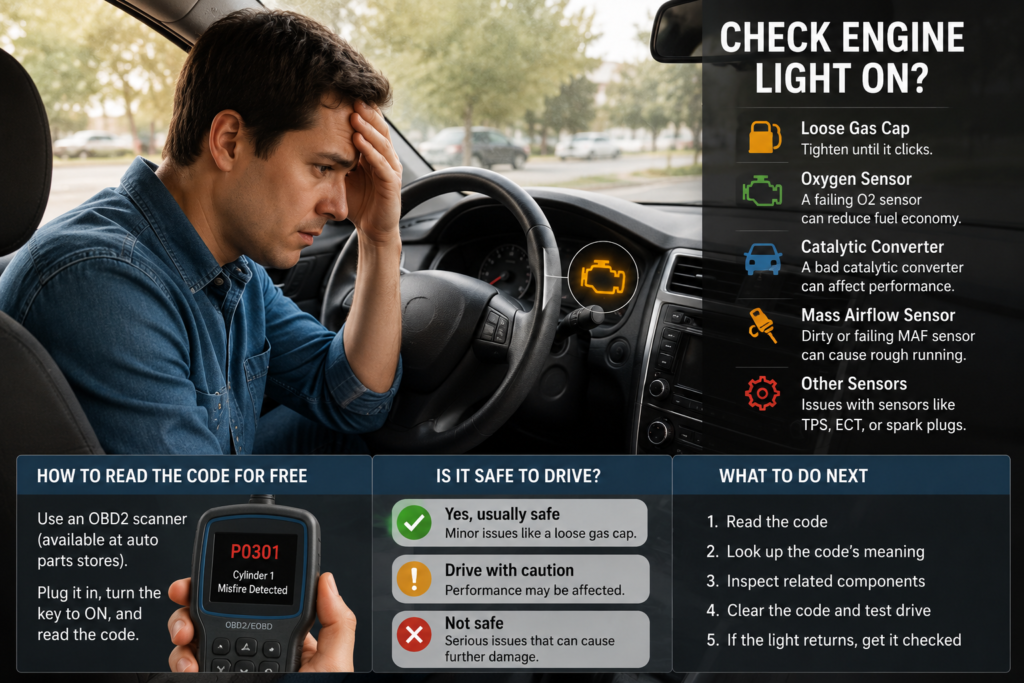
Your car has a computer system called the ECU — engine control unit — that constantly monitors dozens of sensors throughout the engine and emissions system. When any reading falls outside the expected range, the ECU stores a fault code and turns on the check engine light. There are literally hundreds of possible fault codes, but a handful of them account for the vast majority of check engine lights on the road today.
1. Loose or Damaged Gas Cap
This is the one everyone hopes for — and it’s surprisingly common. Your fuel system is a sealed system, and the gas cap is part of that seal. If the cap is loose, cracked, or missing its gasket, the system detects a pressure leak and throws a code. It’s called an EVAP leak — evaporative emissions system leak — and it’s one of the most frequent check engine triggers out there.
What to do: Pull over safely, take off your gas cap, and put it back on firmly until it clicks. Drive normally for a day or two. If that was the issue, the light will turn itself off after a few drive cycles. If you recently filled up and the light came on shortly after, this is almost certainly your culprit.
What it costs to fix: A new gas cap is $10–$30. That’s it. Best case scenario on a check engine light.
2. Failing Oxygen Sensor
Oxygen sensors measure how much unburned oxygen is in your exhaust, which tells the computer how efficiently the engine is burning fuel. Most cars have two to four of them — one before and one after the catalytic converter on each bank of the engine. When one fails, the computer can’t properly regulate the fuel mixture, which hurts fuel economy and can eventually damage the catalytic converter if left long enough.
What it feels like: Often nothing noticeable at first. You might see slightly worse fuel economy, or the engine might run a little rough. Many people have no symptoms at all until the light comes on.
What it costs to fix: Oxygen sensors themselves are $20–$100 depending on the vehicle and which sensor it is. Labor adds $50–$150 typically. Total: $100–$300 in most cases. The code will tell you exactly which sensor is failing so you’re not guessing.
3. Failing Catalytic Converter
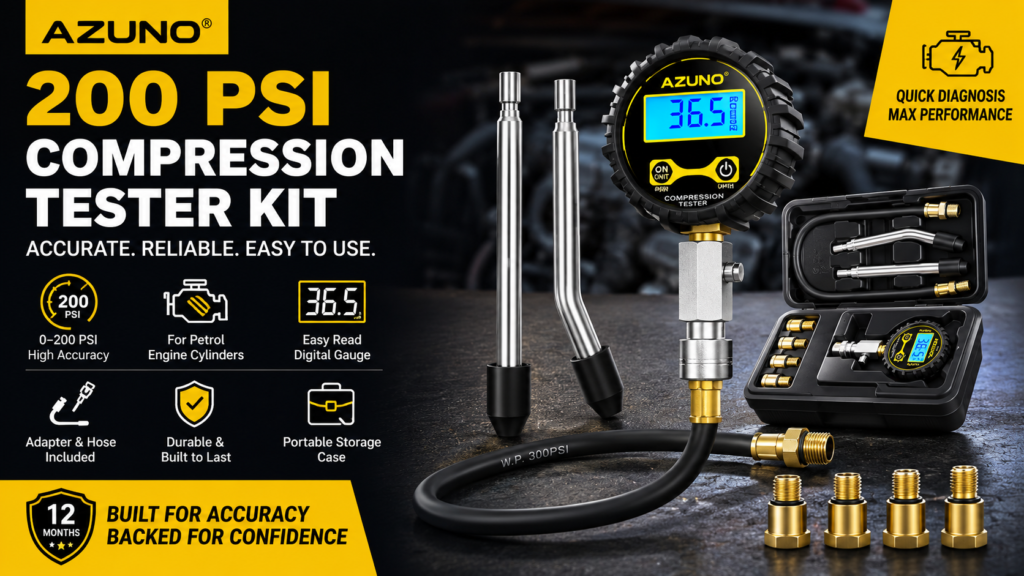
The catalytic converter reduces harmful emissions by converting exhaust gases into less toxic compounds. They last a long time — often 100,000 miles or more — but they do fail eventually, especially if they’ve been damaged by prolonged misfires, oil burning, or coolant leaks into the combustion chamber. When misfires are accompanied by oil burning or coolant loss, a Best Compression Tester Kit for Home Mechanics – Honest Review can help evaluate possible internal engine problems.
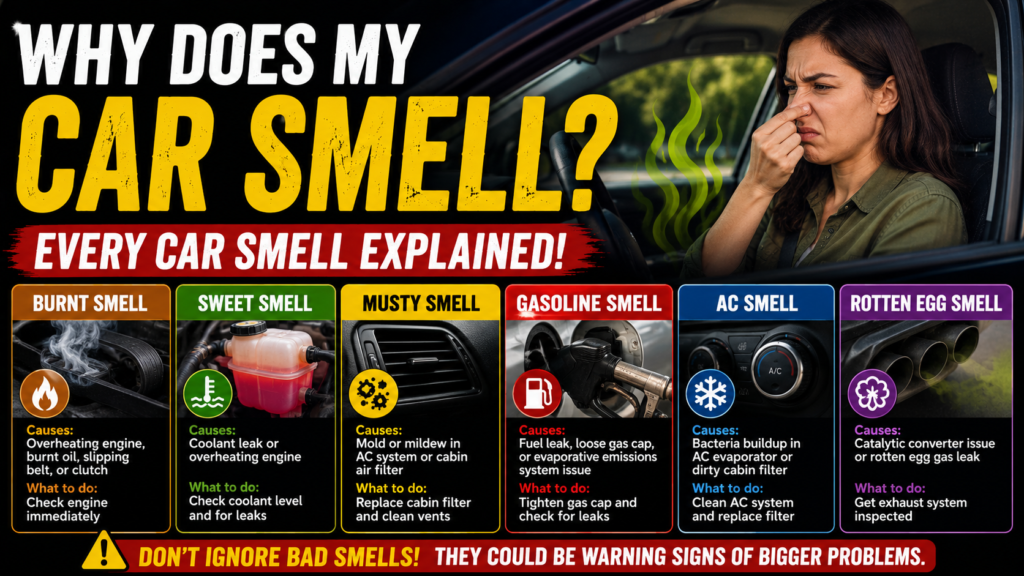
What it feels like: Reduced power, especially during acceleration. A rotten egg smell from the exhaust is a classic sign of a failing cat. Fuel economy may drop noticeably. That rotten-egg odor is one of several diagnostic clues covered in Why Does My Car Smell? Every Car Smell Explained.
What it costs to fix: This is the expensive one. Catalytic converter replacement typically runs $800–$2,500 depending on the vehicle, whether it’s an OEM or aftermarket part, and which converter is failing. Some vehicles have multiple converters. This is also one of the most frequently stolen car parts, so if yours disappears overnight you’ll know immediately — the exhaust will sound like a race car and the check engine light will be on before you leave the driveway.
4. Misfiring Spark Plugs or Ignition Coils
When a spark plug or ignition coil fails, that cylinder stops firing properly. The computer detects the misfire and stores a specific code that identifies exactly which cylinder is the problem. This is one of the most useful codes you can pull because it points you directly at the issue.
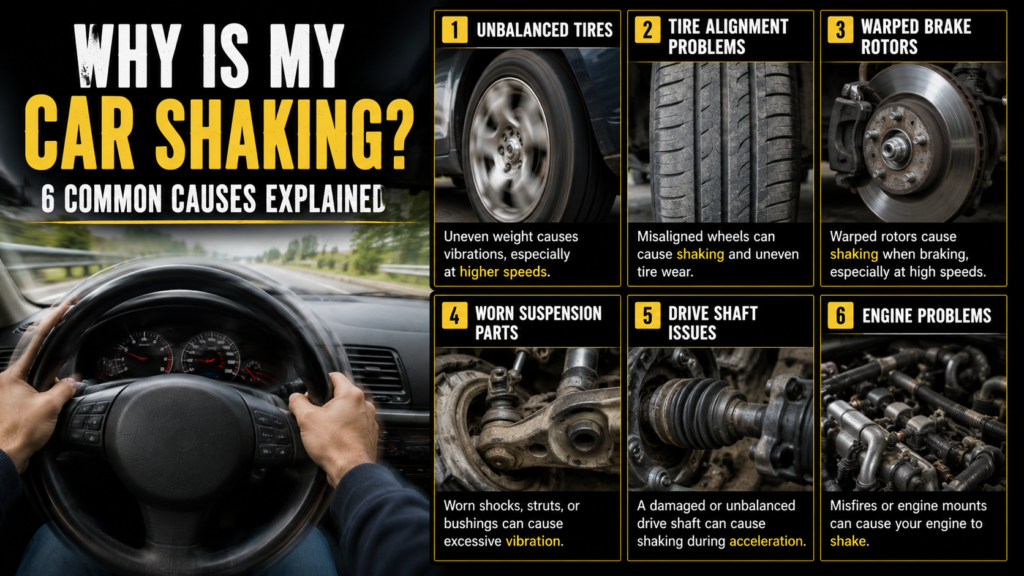
What it feels like: Rough idle, shaking at low speeds or at a stop, reduced power, and sometimes a noticeable stumble when accelerating. If your car is shaking at idle or during acceleration, a misfire is one of the first things to investigate.
What it costs to fix: Spark plugs are $80–$200 for a full set with labor on most engines. Ignition coils are $150–$400 per coil with labor depending on accessibility. If the misfire code points to one cylinder, start with the coil and plug on that cylinder before replacing everything.
A flashing check engine light almost always means an active misfire severe enough to damage the catalytic converter. If your light is flashing and you feel the engine stumbling, pull over and call for help. Do not keep driving.
5. Mass Airflow Sensor Failure
The mass airflow sensor (MAF) measures how much air is entering the engine so the computer knows how much fuel to inject. A dirty or failing MAF causes the computer to miscalculate that ratio, leading to a rich or lean fuel mixture — too much fuel or too little.
What it feels like: Rough idle, hesitation during acceleration, poor fuel economy, and sometimes stalling. The car may feel sluggish overall.
What it costs to fix: A MAF sensor is $80–$300 for the part depending on the vehicle. Labor is usually minimal since they’re generally easy to access. Interestingly, a dirty MAF sensor can sometimes be cleaned with MAF sensor cleaner spray rather than replaced — a $10 fix worth trying first.
6. Thermostat or Coolant Temperature Sensor
If the engine runs too cold for too long — often because a thermostat is stuck open — the computer detects an inefficient warm-up cycle and flags it. A failing coolant temperature sensor can send incorrect readings that throw off fuel trim and trigger a light as well.
What it feels like: The temperature gauge taking a very long time to reach normal operating range, or sitting lower than usual. Heater may also take longer to produce warm air.
What it costs to fix: Thermostats are $150–$350 installed. Coolant temperature sensors are usually $100–$200.
How to Find Out Exactly What Your Check Engine Light Means
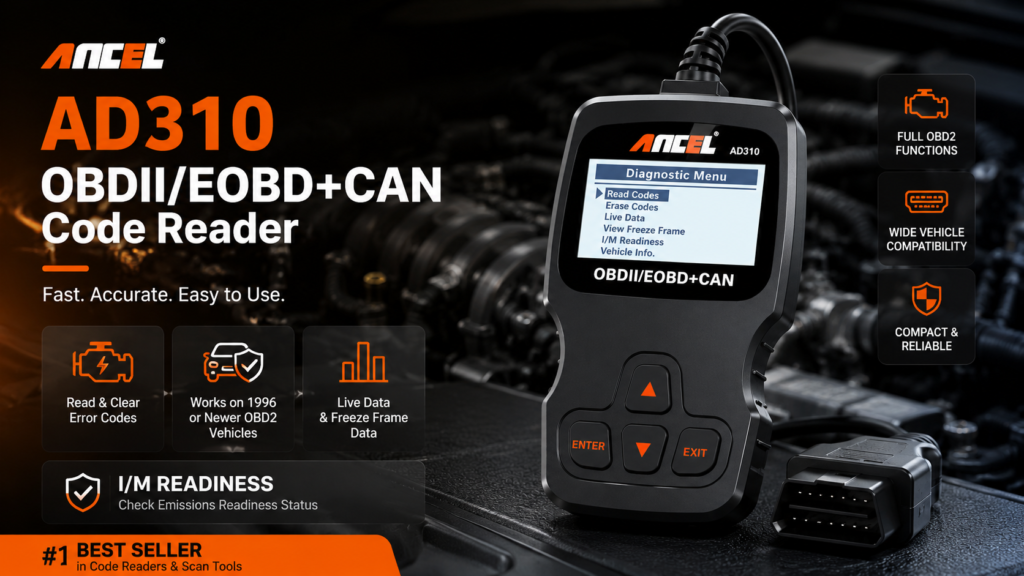
The check engine light itself tells you nothing specific. The fault code stored in your car’s computer tells you everything. Here’s how to get it: The ANCEL AD310 OBD2 Scanner Review – Is It Worth It? can read that stored code at home without a trip to the parts store.
Free Code Reading at Auto Parts Stores
AutoZone, O’Reilly Auto Parts, Advance Auto Parts, and most other parts stores will read your codes for free. Walk in, they plug a scanner into your OBD2 port (under the dashboard on the driver’s side), and it spits out a code like P0420 or P0301. They’ll tell you what it means and what part is typically associated with it. This costs you nothing and takes five minutes. If you want to read those codes at home, a handheld OBD2 scanner can connect through the same OBD2 port.
Buy Your Own OBD2 Scanner
If you want to read codes yourself anytime without driving to a parts store, a basic Bluetooth OBD2 scanner plugs into your car and pairs with a free app on your phone. Good ones start around $25–$40 and are genuinely useful to own. You can read codes, clear them, and monitor live engine data. Once you own one, you’ll wonder why you waited.
What the Code Tells You
Codes follow a pattern. The letter tells you which system: P = powertrain (engine/transmission), B = body, C = chassis, U = network. The numbers narrow it down further. P0300 is a random misfire. P0301 is a misfire on cylinder 1 specifically. P0420 is a catalytic converter efficiency code. P0171 is a lean fuel mixture. Each code points toward a specific system, which dramatically narrows what you need to look at.

Can You Drive With the Check Engine Light On?
Solid light, car running normally: Yes, for a reasonable amount of time. Get the code read within a few days. Don’t ignore it indefinitely — some issues that feel fine now will damage other components if left unaddressed.
Solid light, noticeable symptoms (rough idle, poor power, bad fuel economy): Get it checked soon. The symptoms are telling you the issue is affecting performance, not just tripping a sensor.
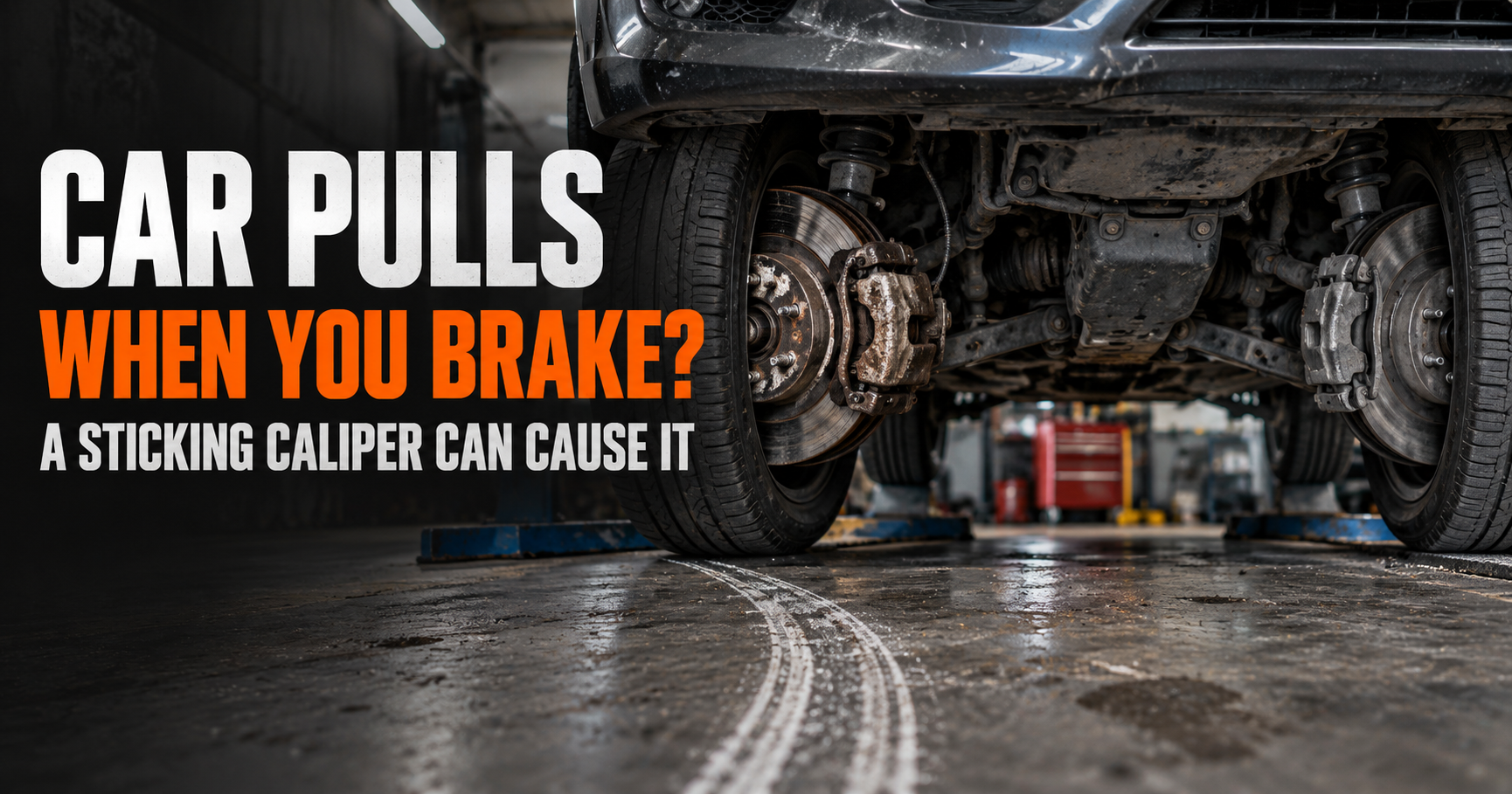
Flashing light: No. Pull over when safe and do not continue driving. A flashing check engine light almost always means an active misfire that can destroy a catalytic converter — a $1,500+ repair — in a very short time. It can also indicate engine damage in progress.
Check engine light on with other warning lights (temperature, oil pressure): Stop driving immediately. Multiple warning lights together often signal a serious problem that can cause engine damage very quickly.
What To Do Right Now
Step 1: Check if your gas cap is tight. Seriously. Do it first before anything else.
Step 2: Note whether the light is solid or flashing. Flashing = stop driving.
Step 3: Pay attention to how the car feels. Any shaking, rough idling, or unusual noises alongside the light narrow down the cause significantly.
Step 4: Get the code read — free at any auto parts store or with your own scanner.
Step 5: Research the specific code before you go to a shop. Knowing what P0420 or P0301 means before someone tells you means you walk in informed and are far less likely to get upsold on things you don’t need.
Frequently Asked Questions
Will the check engine light turn off by itself?
Sometimes, yes. If the underlying issue resolves itself — like a loose gas cap that you tightened — the light will turn off on its own after several drive cycles, usually within a day or two of normal driving. However, if the fault condition is still present, the light will stay on. Never assume it turned off because the problem went away. Pull the code to confirm.
Can I pass inspection with my check engine light on?
In most states, no. A check engine light is an automatic emissions test failure in states that require OBD2 testing. Even if you clear the code right before your inspection, the monitors need time to run through their cycles — if they haven’t completed, the car will still fail. You generally need 50–100 miles of normal driving after clearing a code before the monitors are ready.
Is it safe to clear the check engine light myself?
You can clear it with an OBD2 scanner, and it will turn off — but if the underlying problem is still there, it will come back within a drive cycle or two. Clearing the code doesn’t fix anything; it just resets the light. The one time clearing is useful is after you’ve actually fixed the issue and want to confirm the light doesn’t return.
Why did my check engine light come on after getting gas?
The gas cap is almost certainly the cause. If the cap wasn’t tightened properly or if the cap itself is cracking and losing its seal, the evaporative emissions system detects a leak and turns the light on. Tighten the cap firmly and give it a couple of days. A new gas cap costs less than $25 at any auto parts store if the current one is damaged.
My check engine light came on and off on its own. Should I worry?
An intermittent check engine light usually means an intermittent fault — something that’s not failing consistently yet but is starting to. These are actually worth taking seriously because intermittent problems are harder to diagnose once they become permanent. Get the code read even if the light is currently off — the code often remains stored in the computer even after the light resets itself.
About the Author: Ryan Fowler
Ryan is a former fleet mechanic who spent twelve years maintaining commercial vehicles before transitioning to writing about automotive issues for regular drivers. He’s worked on everything from economy sedans to full-size diesel trucks and has a particular obsession with electrical gremlins that make no sense until suddenly they do. Ryan contributes to WhyIsMyCar.com because most car content online is either too technical or too vague — he aims for the middle ground where people actually learn something.